Ferrari F355 Berlinetta Leather Interior Preservation for Show Preparation
This Ferrari F355 Berlinetta was already in very good overall condition when its owner brought it in ahead of an upcoming car show. The brief was not a rebuild — it was Ferrari F355 leather restoration in the truest sense: correct the driver's seat bolster wear, repair the scratches on both door cards, stabilize a few small age-related cracks, and bring the cabin back into visual balance without making any single area look newer than the leather around it. All work was completed on-site in New Jersey.
Project Overview
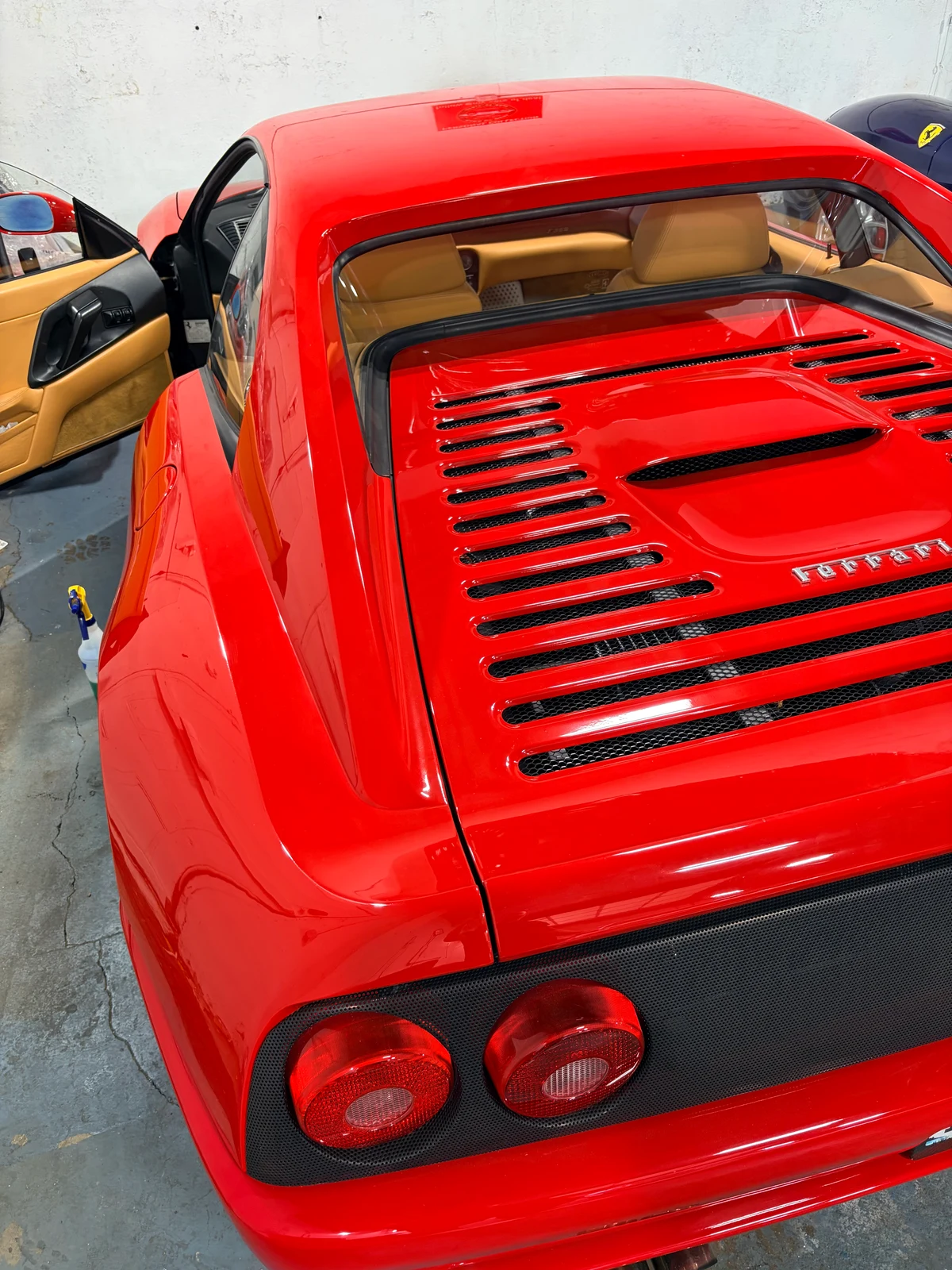
Preparing a Well-Preserved F355 for Exhibition
The Ferrari F355 Berlinetta is the fixed-roof coupe variant of Ferrari's mid-1990s V8 line, known for its exposed rear deck louvers and one of the more analog, driver-focused cabins Ferrari built in that era. Cars from this generation are old enough now that even well-maintained examples carry some honest wear in the cabin — and this F355 was no exception.
The owner's objective was straightforward: get the interior presenting cleanly and consistently for an upcoming automotive show. This was never framed as a full interior rebuild or a reupholstery project. The leather was original, largely sound, and worth keeping that way — the task was to correct the specific areas that had started to distract from an otherwise well-kept cabin.
That distinction matters. Premium leather restoration is not about making one individual panel look newer than everything around it. It is about preserving originality, correcting damage, and restoring visual balance so the entire interior looks naturally consistent.
Condition Before Restoration
Nothing in the cabin was catastrophic. What the F355 showed was the normal, cumulative wear of a car that has been driven and enjoyed — concentrated in a few specific, identifiable areas.
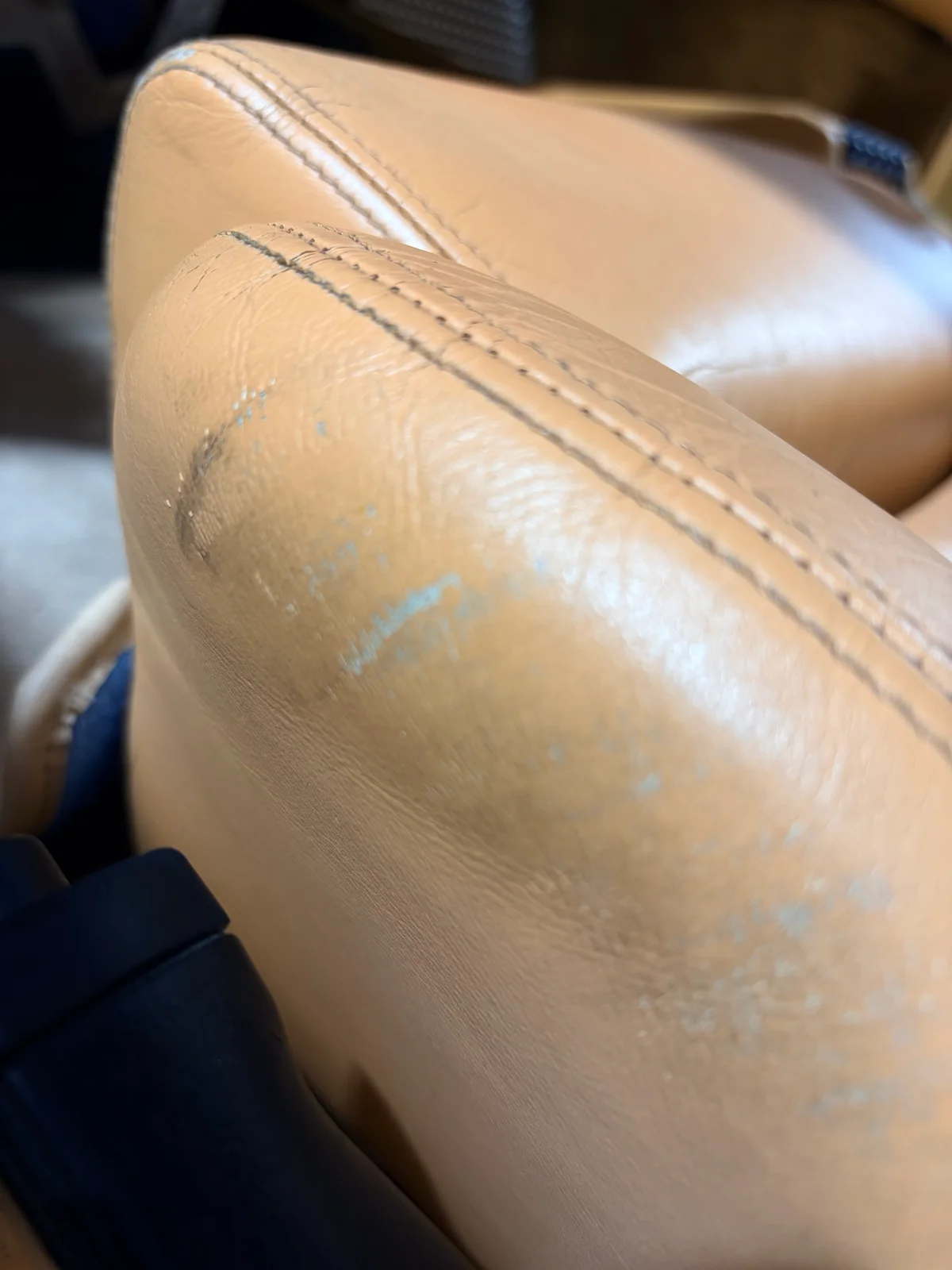
- Driver's lower side bolster — entry and exit wear: The lower bolster on the driver's seat showed the most concentrated damage — light creasing, a few small surface cracks, and denim discoloration transferred from years of sliding in and out of a low cockpit. The leather remained structurally sound; the damage was surface-level but visually noticeable against the rest of the seat.
- Seat surface — light creasing and finish wear: Beyond the bolster, the seat showed light creasing and uneven finish wear typical of age rather than any single event — the kind of gradual change that happens across an entire interior at slightly different rates.
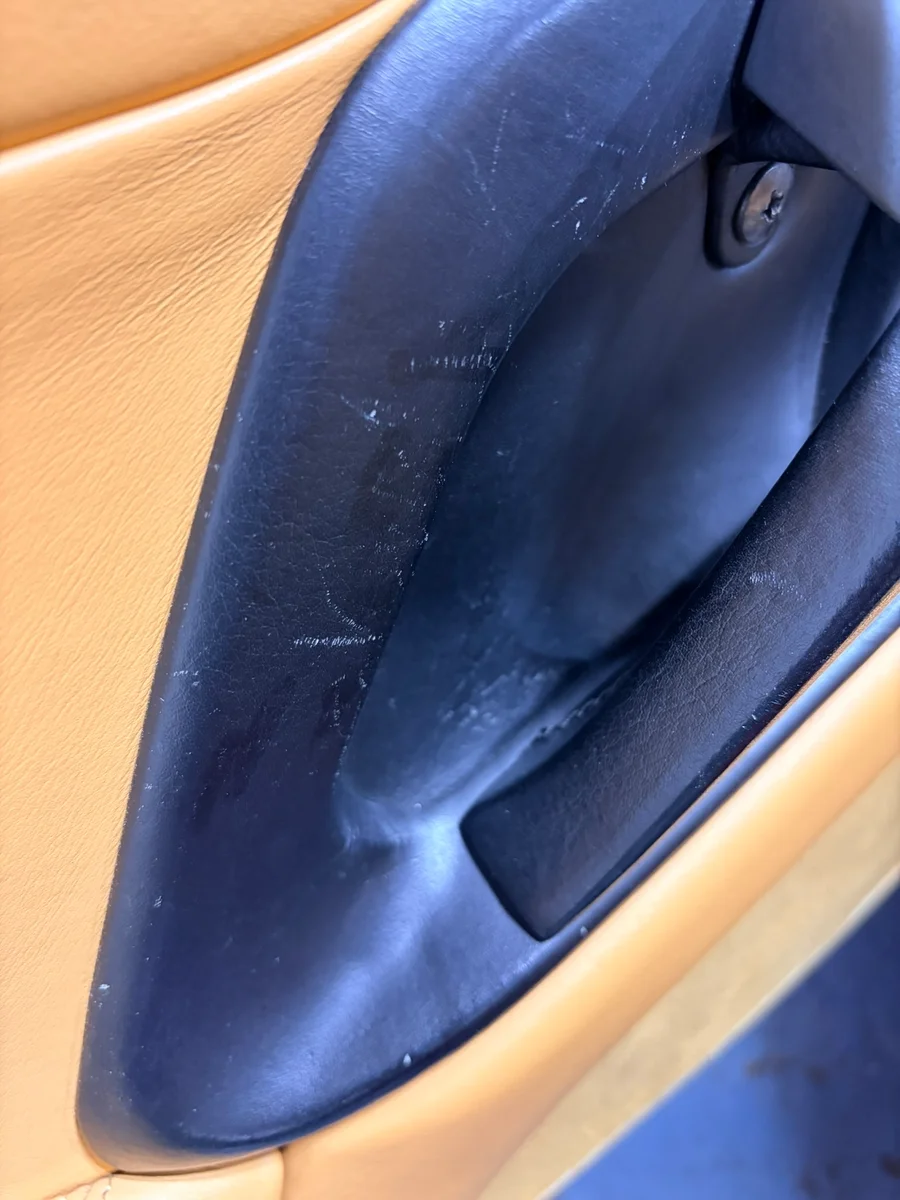
- Door card — interior handle surround scratches: The leather-wrapped interior door handle surround on the driver's door showed a cluster of fine surface scratches, visible as light scuffing across the handle bezel.
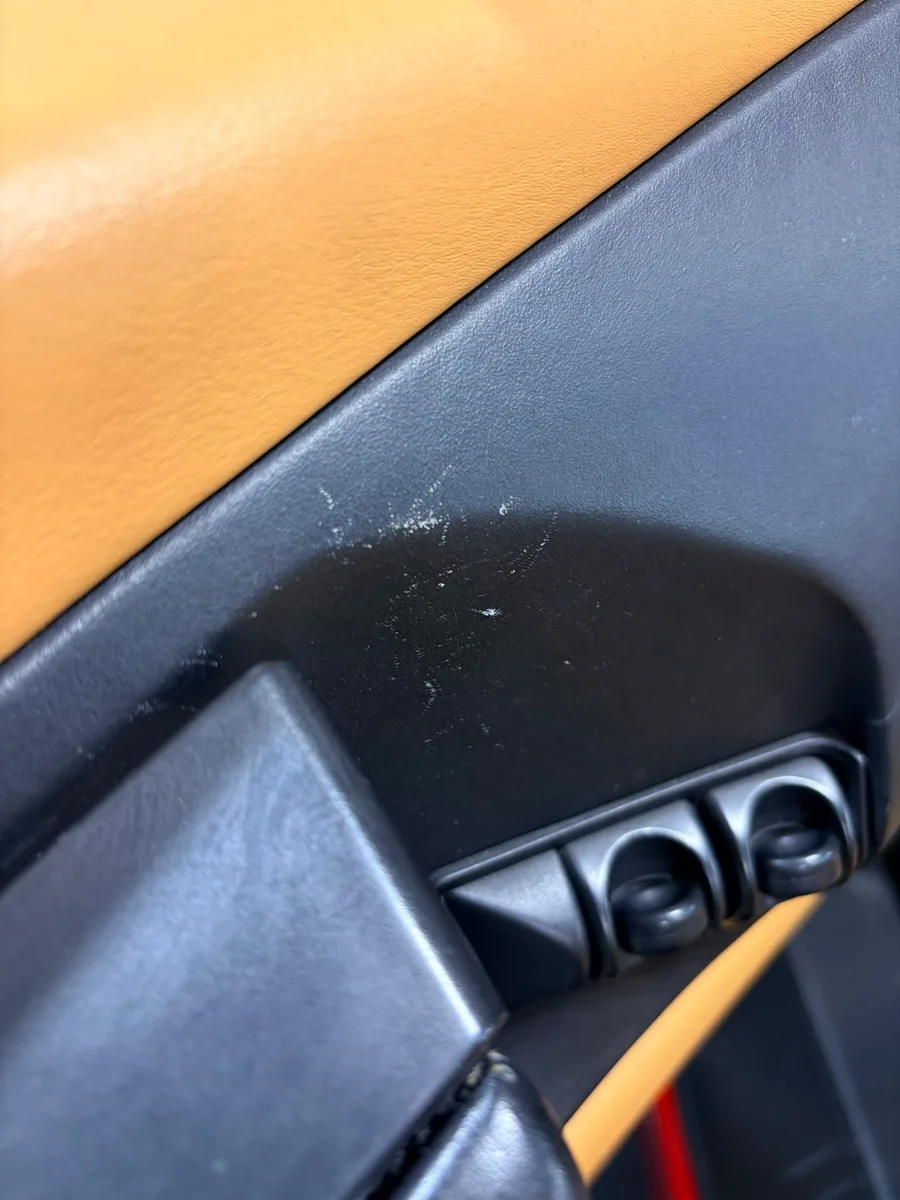
- Door card — window switch panel scratches: A second area near the window switch panel on the same door card showed additional light scratching and scuff marks from repeated contact.
- Small cosmetic imperfections throughout the cabin: Several smaller, lower-contrast marks were present across other interior surfaces — minor enough individually, but contributing to a slight inconsistency between the high-contact areas and the better-preserved leather around them.
Why Preservation Was the Right Call
A car being prepared for a show creates a temptation to over-correct — to push the repaired areas past the condition of the leather around them, as visible proof of the work. That approach backfires on a car like this. An F355 interior that has aged evenly for decades will always look wrong if one seat bolster suddenly looks ten years newer than the seat cushion next to it.
The approach here was preservation-focused and restrained by design. The objectives were:
- Correct the wear and scratches that were actually distracting, and nothing more
- Stabilize the small existing cracks so they don't continue to spread
- Match repaired areas to the tone, sheen, and texture of the surrounding original leather
- Preserve the original leather's character rather than filling it smooth
- Bring the cabin back into visual balance instead of making one section stand out
This is what separates sympathetic restoration from a repaint: the finished repair is meant to read as part of the same interior, not as a patch. For show preparation specifically, an age-appropriate finish that looks naturally integrated tells a more credible story than a seat that looks like it came out of a different, newer car.
Restoration Process
Inspection and Condition Assessment
The original leather and existing finish were inspected across the cabin — driver's seat bolster, seat cushion, both door cards, and the smaller contact points around the console. The goal was to separate cosmetic wear that could be corrected from anything structural, and to identify reference areas of leather that had aged well and could guide the color match.
Cleaning and Surface Preparation
All leather surfaces received a thorough, pH-balanced cleaning before any repair work began. The driver's bolster in particular had accumulated denim transfer and body oils within the surface cracking from years of entry and exit. The affected areas were then prepared to accept repair compound and colorant.
Stabilization of Existing Cracks
The small age-related cracks on the driver's bolster were stabilized rather than aggressively filled — flexible compound was worked into the damage to consolidate the surface and slow further deterioration, while preserving the leather's natural grain rather than sanding it smooth.
Bolster and Door Card Repair
The driver's lower side bolster — the area that takes the most contact getting in and out of a low cockpit like the F355's — received targeted repair to correct the surface wear and creasing. The scratches and scuffs on both leather door cards, concentrated around the interior handle and window switch surrounds, were repaired in the same controlled, localized manner.
Custom Color Matching
A custom pigment blend was mixed on-site against the F355's tan leather as it exists today, using the least-worn areas of the interior as the reference. Aged leather rarely matches a single factory code evenly across the cabin, so the blend was refined through test applications until it integrated with the tone variation already present.
Controlled Refinishing
Color and finish were applied only to the repaired areas and blended into the surrounding, untouched leather — not reapplied across entire panels. Building the finish in thin, controlled passes kept the sheen level consistent with the rest of the original leather rather than introducing a flatter or glossier patch.
Before and After — Driver's Seat Bolster
The same bolster area, corrected and color matched to the surrounding leather rather than refinished to a uniform, brand-new-looking surface.
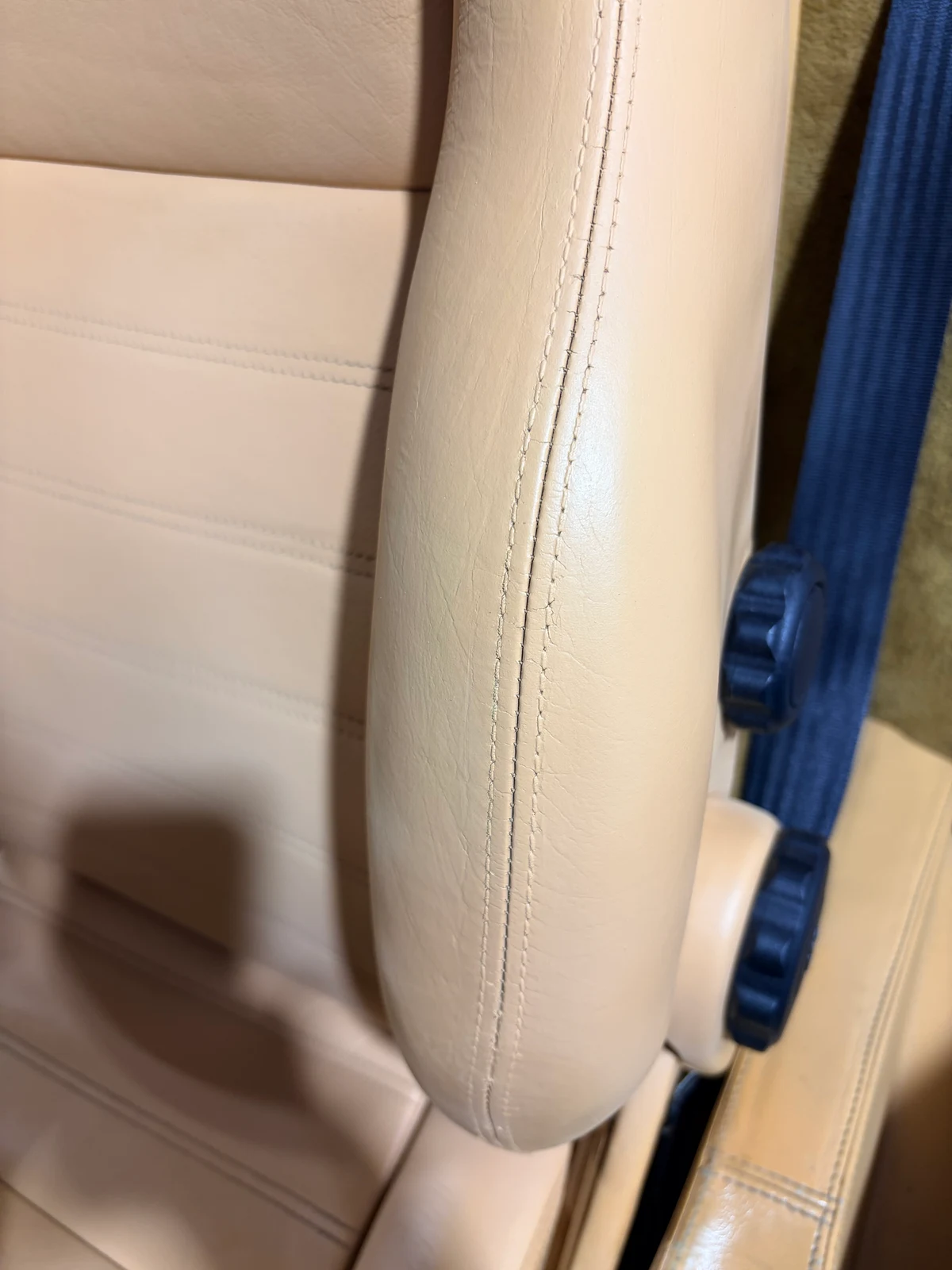
Final Result — Consistent, Not Over-Restored
The driver's bolster is corrected and color matched. Both door cards are free of the scratches and scuffing that had accumulated around the handle and switch surrounds. The small cracks that were present have been stabilized. None of this was done by pushing individual areas past the condition of the leather around them — the objective throughout was consistency with the rest of the cabin, not a standalone showpiece panel.
What has not changed is the leather itself. It is still the F355's original tan hide, with the grain and gentle creasing that decades of use naturally produce. The result is a cabin that presents cleanly for exhibition while still looking like what it is — a well-preserved, honestly aged Ferrari interior, not a reupholstered one.
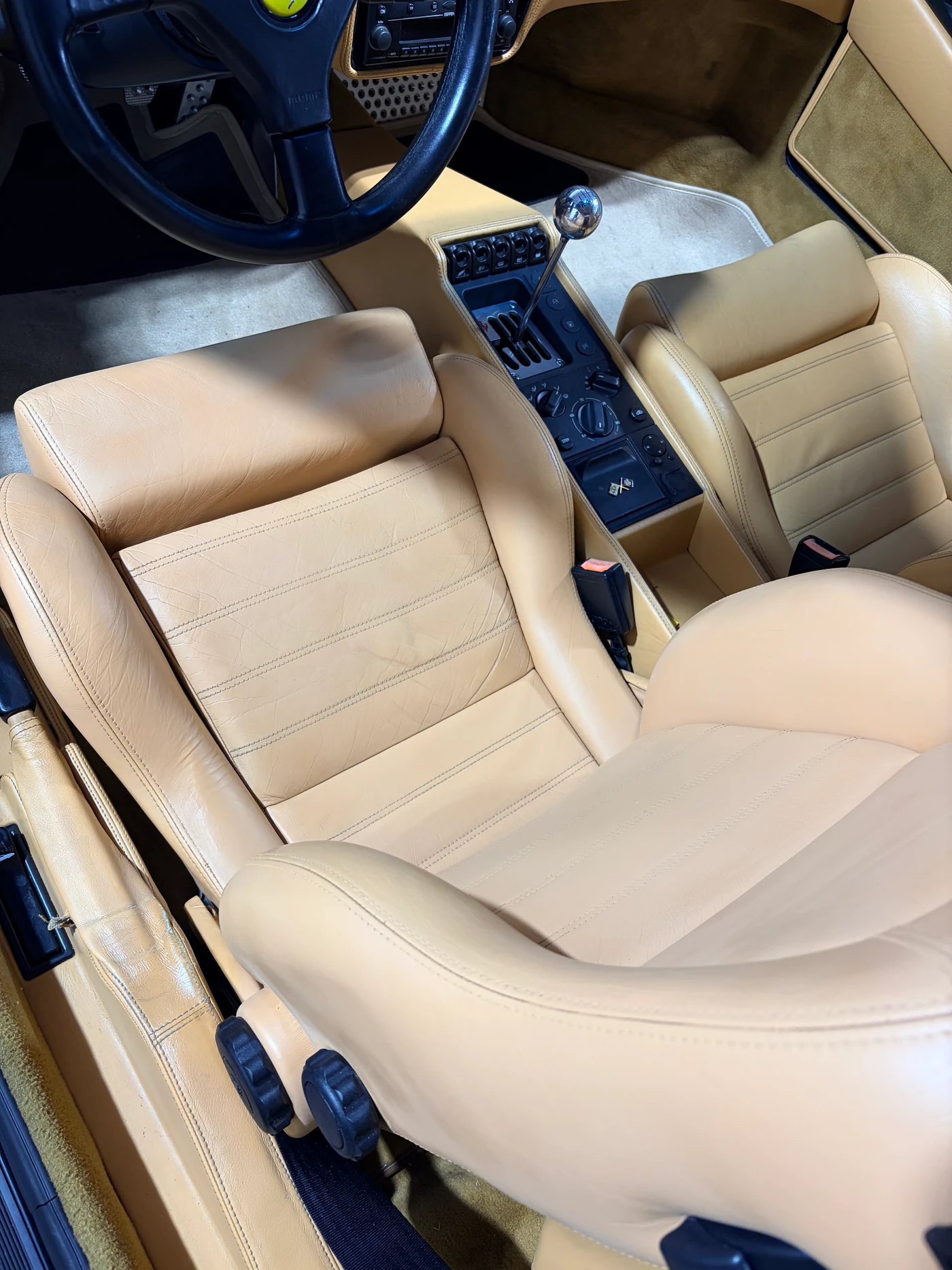
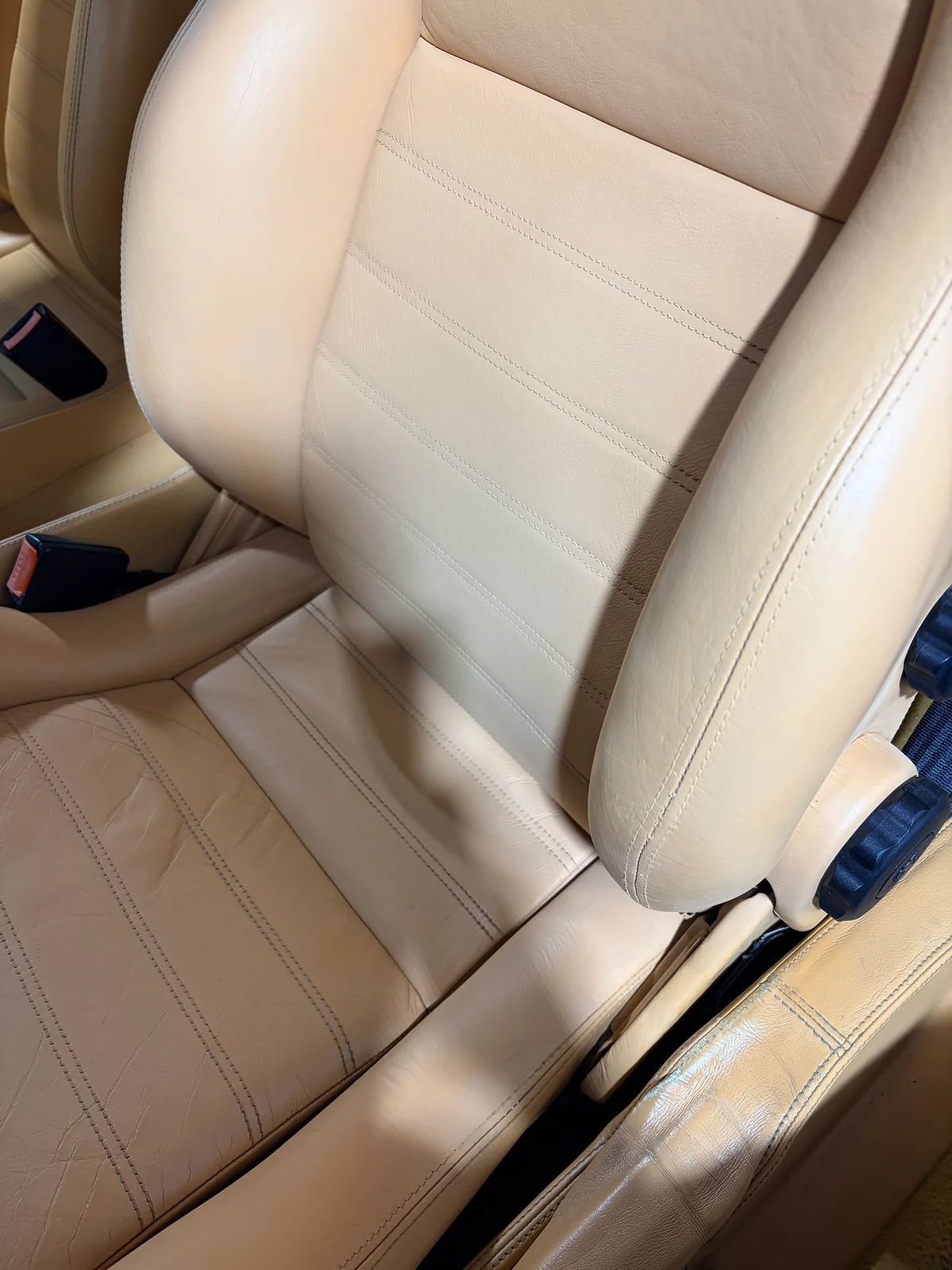
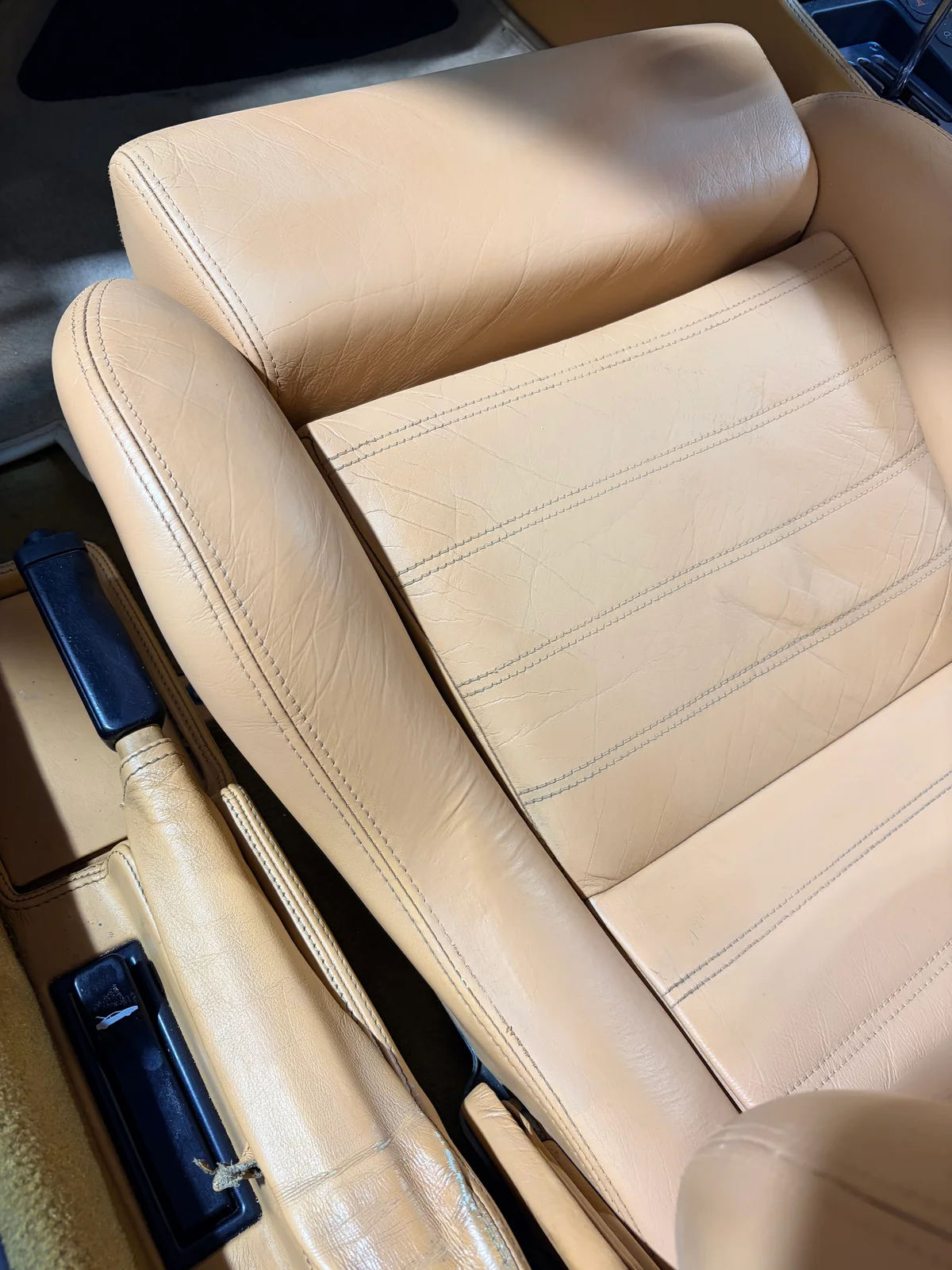
- Driver's seat bolster — surface cracking and denim discoloration corrected, color matched
- Seat surface — creasing and finish wear addressed while retaining natural texture
- Door card, handle surround — scratches repaired and blended into surrounding leather
- Door card, switch panel — scuffing corrected and refinished
- Small age-related cracks — stabilized to help slow further deterioration
- Original leather preserved throughout — no panels replaced
- Cabin brought into visual balance ahead of the owner's scheduled car show
Ferrari Leather Restoration in New Jersey and NYC
Leather & Vinyl Care provides mobile, on-site leather restoration for Ferrari and other collector and luxury vehicles in New Jersey, as well as throughout New York City and Long Island. All work is performed at the vehicle's location — private garages, storage facilities, and residential driveways — with no transport required.
We work on Ferrari, Porsche, BMW, Mercedes-Benz, and other vehicles where the original interior leather is worth preserving rather than replacing. For luxury and exotic car interiors, our approach prioritizes the original leather wherever it remains structurally sound.
Related Services
- Luxury & Exotic Car Interiors → on-site leather restoration for Ferrari, Porsche, BMW and other premium vehicles
- Auto Interior Restoration → car seat repair, color matching, and surface restoration for all makes
- Leather Re-dyeing & Color Restoration → custom pigment matching for faded or discolored leather interiors
- Leather Cleaning & Conditioning → professional deep cleaning and conditioning to maintain leather longevity
Ferrari Leather Restoration — NJ and NYC
If you have a Ferrari or other collector vehicle with leather that needs professional attention before a show or simply for everyday presentation, text us photos for a free estimate. We serve New Jersey, New York City, and Long Island — all work performed on-site at your location.
Related Automotive Projects
Other Ferrari and collector vehicle leather work completed by Leather & Vinyl Care.
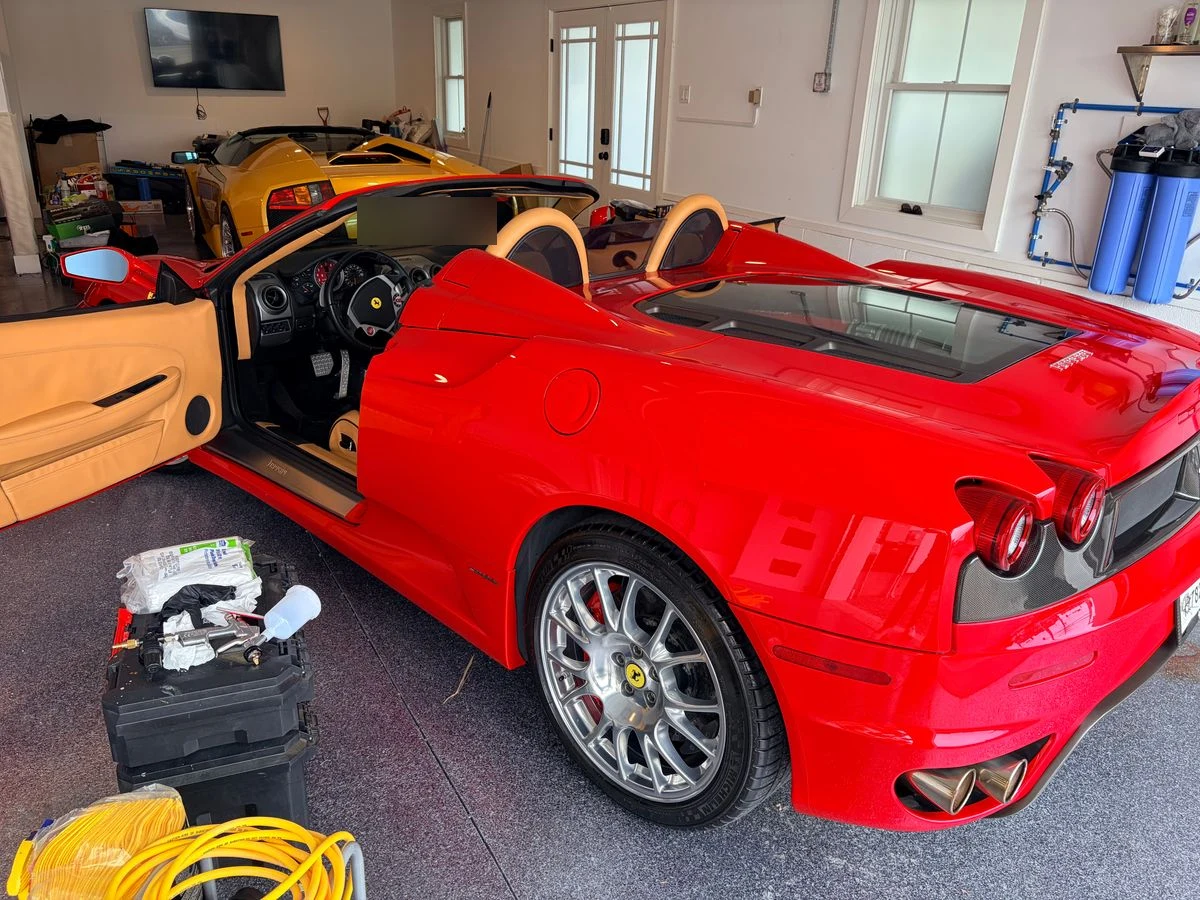
Ferrari F430 Spider Daytona Seat Restoration — New Jersey
Daytona seats refinished by a dealership with an incorrect color match, corrected to OEM Ferrari Cuoio on-site in New Jersey.
View Case Study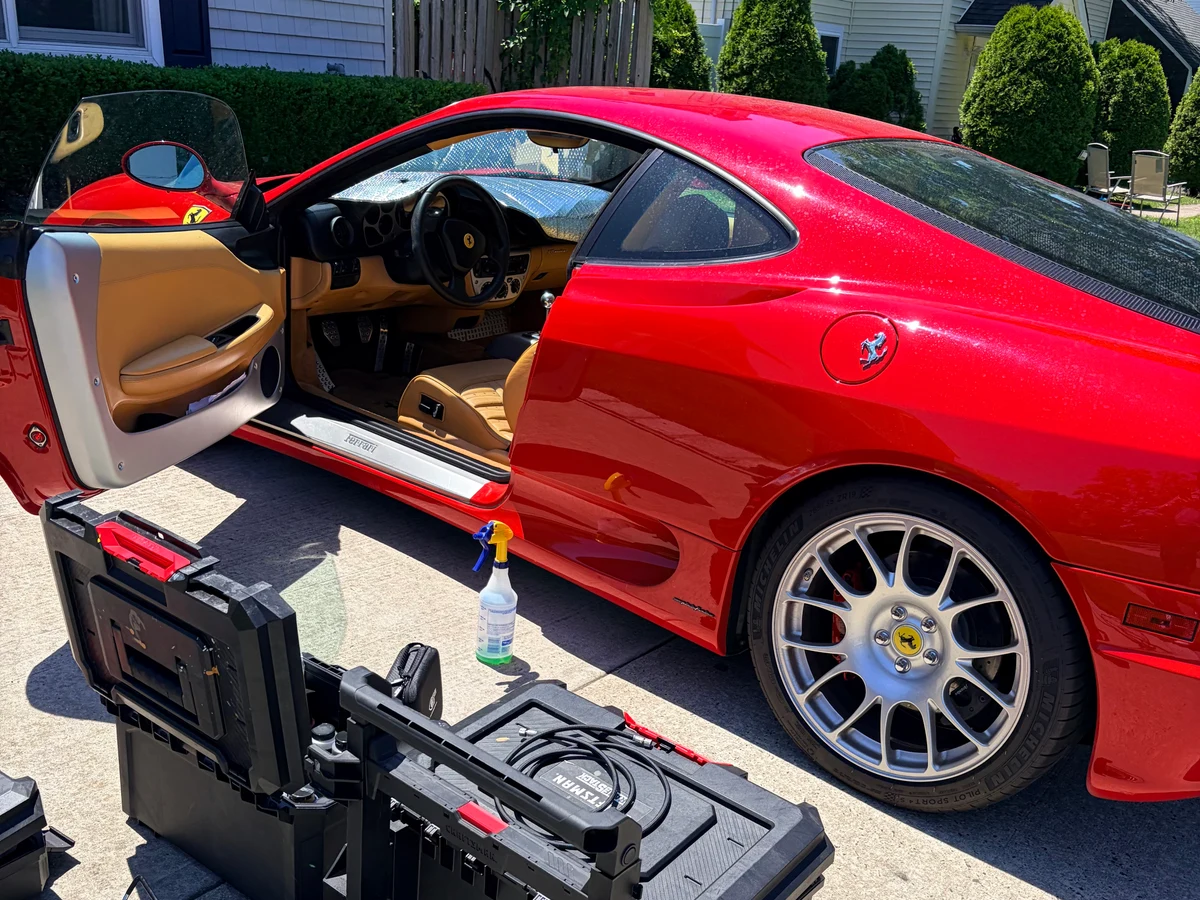
Ferrari 360 Modena Interior Restoration — New Jersey
Cracked seat bolsters, steering wheel, and handbrake gaiter repaired and color-matched to original Cuoio leather.
View Case Study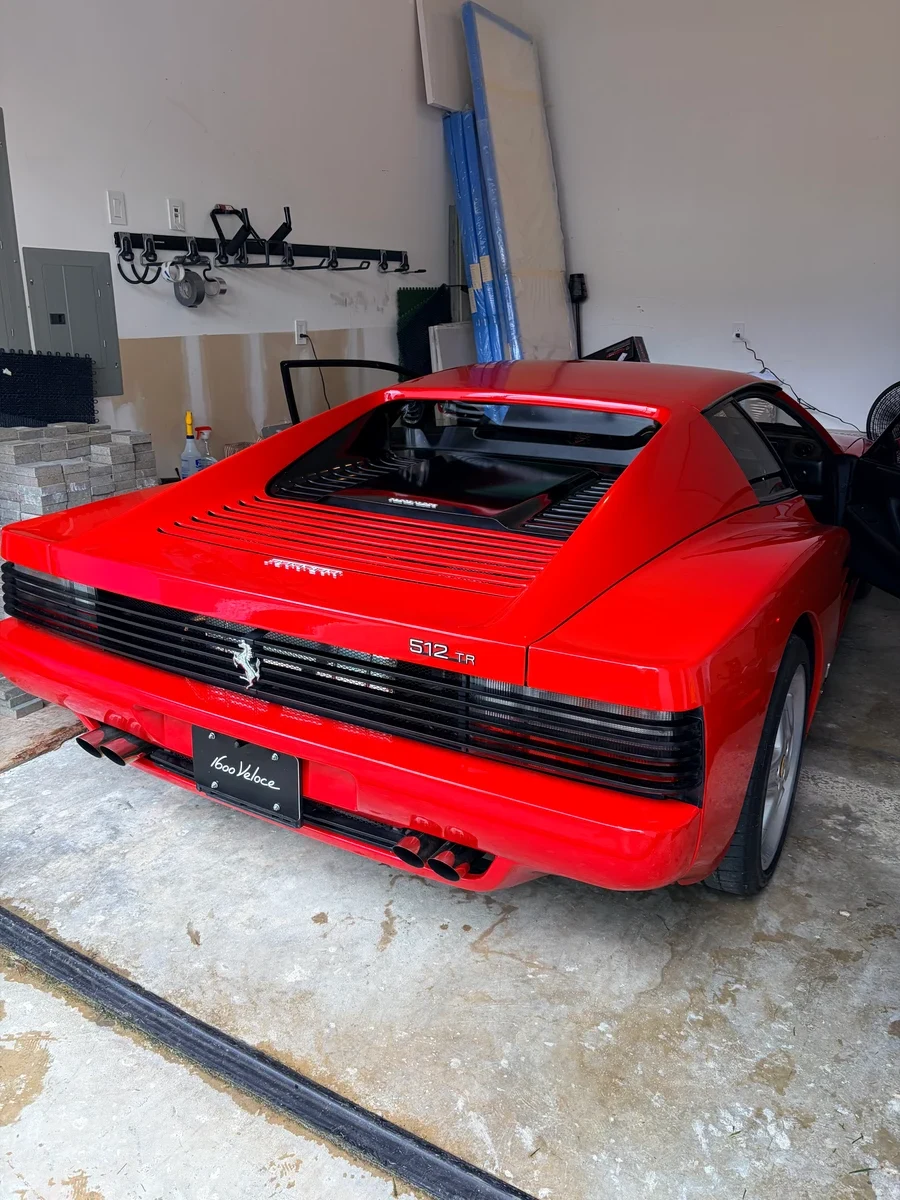
1992 Ferrari 512 TR Interior Restoration — NYC
Door panel, dashboard, and cosmetic correction throughout a classic collector Ferrari, original leather preserved.
View Case Study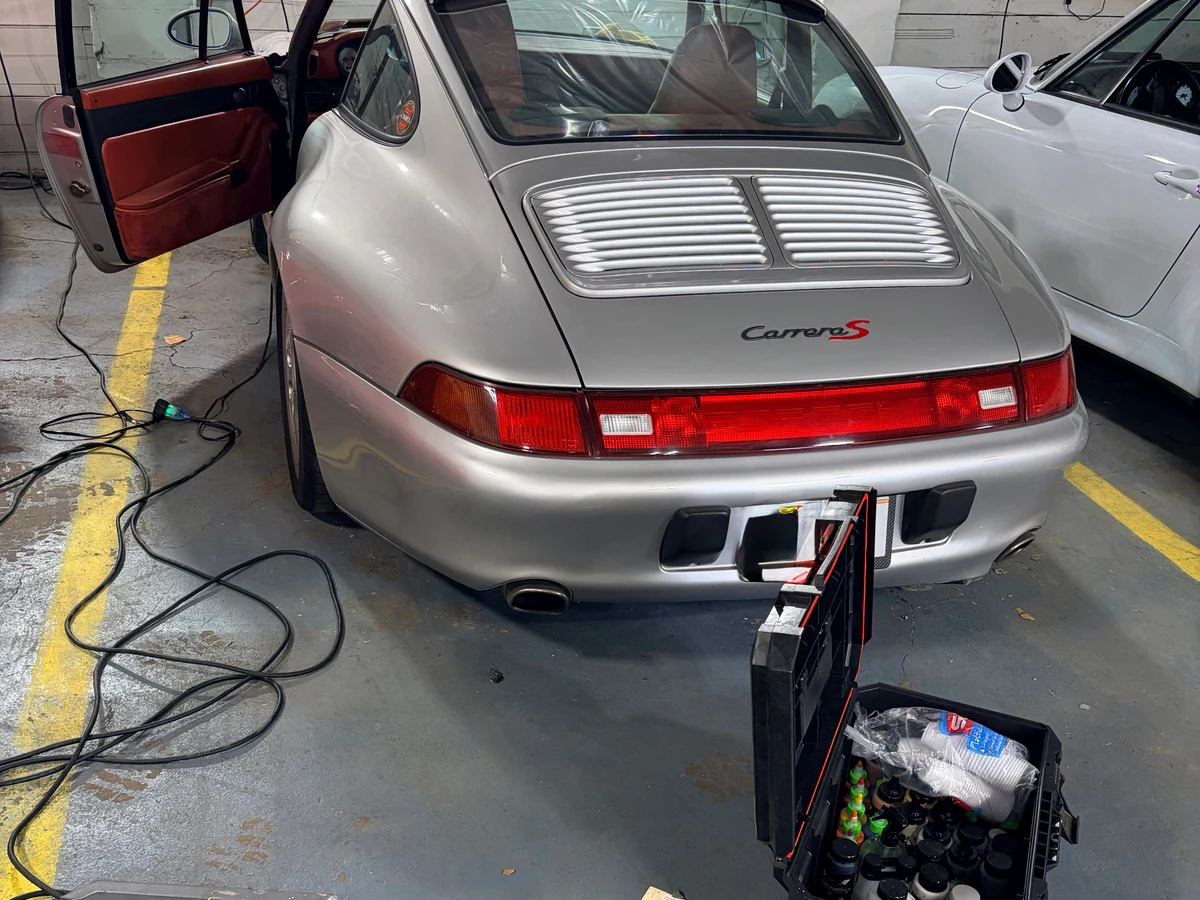
Porsche 993 Carrera S Leather Interior Restoration — New Jersey
Driver's seat bolster wear and door panel seam deterioration repaired and color-matched, original factory leather preserved.
View Case StudyFrequently Asked Questions
Can worn Ferrari leather be restored without replacing it?
In most cases, yes. Bolster wear, small cracks, and surface scratches are typically confined to the top layer of the leather and can be cleaned, stabilized, repaired, and recolored without removing or replacing the original hide. This F355's driver's seat bolster and door cards were corrected this way — the original factory leather stayed in the car throughout.
How do you keep a repaired area from looking newer than the rest of the interior?
The color reference is always the surrounding original leather as it exists today, not a factory code or a swatch. We custom-blend pigment on-site and test it against the adjacent, unaffected leather until the tone, sheen, and texture read as continuous. The objective is a repaired area that blends into the surrounding leather rather than one that draws attention to itself.
Can small cracks in older Ferrari leather be preserved?
Yes. Small, stable cracks in original leather are usually treated with flexible filler and reinforced at the surface rather than cut out or overfilled. The goal is to stabilize the damage so it doesn't progress further, while keeping enough of the leather's natural grain and character intact — a heavily filled, sanded-smooth repair is a common way an over-restored panel gives itself away.
Is localized restoration better than repainting the entire seat?
For leather that is otherwise in good condition, yes. Repainting an entire seat to hide one worn area almost always leaves that seat looking newer and flatter than the seats around it. Localized, controlled refinishing — treating only the areas that actually need it — keeps the repair proportional to the damage and preserves the natural variation that makes original leather look original.
Do you provide mobile Ferrari leather restoration in New Jersey and New York?
Yes. Leather & Vinyl Care provides mobile, on-site leather restoration for Ferrari and other collector and luxury vehicles throughout New Jersey, New York City, and Long Island. Work is performed at the vehicle's location — private garage, storage facility, or driveway — with no transport required.
Related Reading
- Preserving the Original Leather in a 2013 Mercedes-Benz SLS AMG GT Roadster →
- 2018 Lamborghini Huracán Steering Wheel and Leather Interior Refinement →
- Ferrari F430 Spider Interior Leather Restoration in New Jersey →
- Ferrari 360 Modena Interior Leather Restoration — Long Branch, NJ →
- 1992 Ferrari 512 TR Interior Restoration — Dashboard and Door Panel Refresh →
- Porsche 993 Carrera S Leather Interior Restoration — New Jersey →
- How Much Does Leather Repair Cost in NYC? (2026 Price Guide) →