Ferrari 360 Modena Interior Leather Restoration — Long Branch, NJ
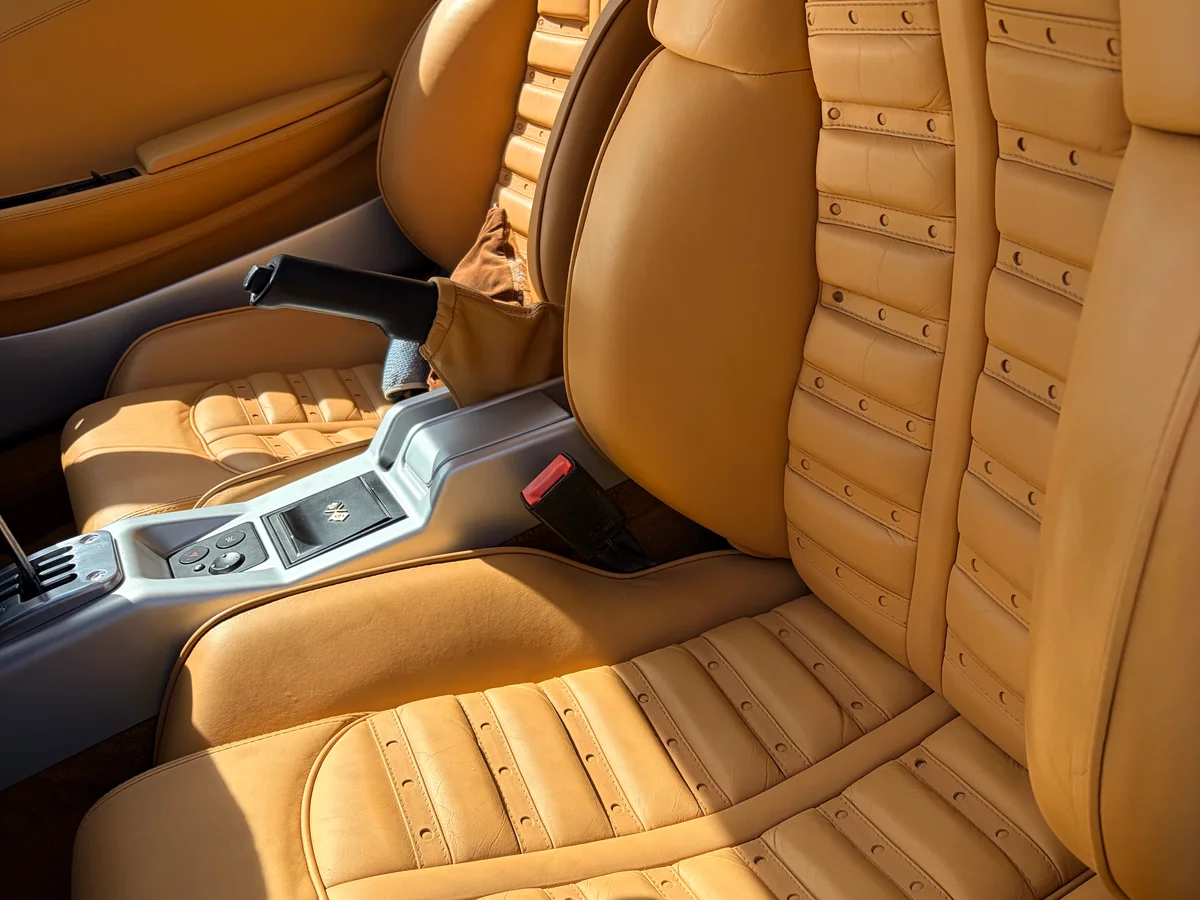
A 1999 Ferrari 360 Modena in Rosso with a full beige leather interior presented with several areas of age-related deterioration: cracked seat bolsters, worn piping seams, a severely dried and discolored steering wheel, headliner surface marks, and a worn handbrake gaiter. All areas were assessed, conditioned, repaired, color-matched to original Cuoio, and finished on-site in Long Branch, New Jersey.
Project Overview
About the Ferrari 360 Modena
The Ferrari 360 Modena was produced from 1999 to 2005 and represented a complete departure from the outgoing 355 — new chassis, new V8, more power, and a significantly more open cabin with improved visibility. It was the first Ferrari to use an all-aluminium space frame chassis, and its design by Pininfarina remains one of the most appreciated of the era.
The 360's interior was offered in a range of leather specifications, with the Cuoio beige tone common on Rosso-exterior cars of this period. The cabin is almost entirely leather-lined — seats, door cards, tunnel, headliner, and handbrake gaiter — which makes interior maintenance both more demanding and more rewarding when done correctly. A 360 Modena with a well-preserved interior is a different experience from one that has been neglected.
Before: Interior Condition
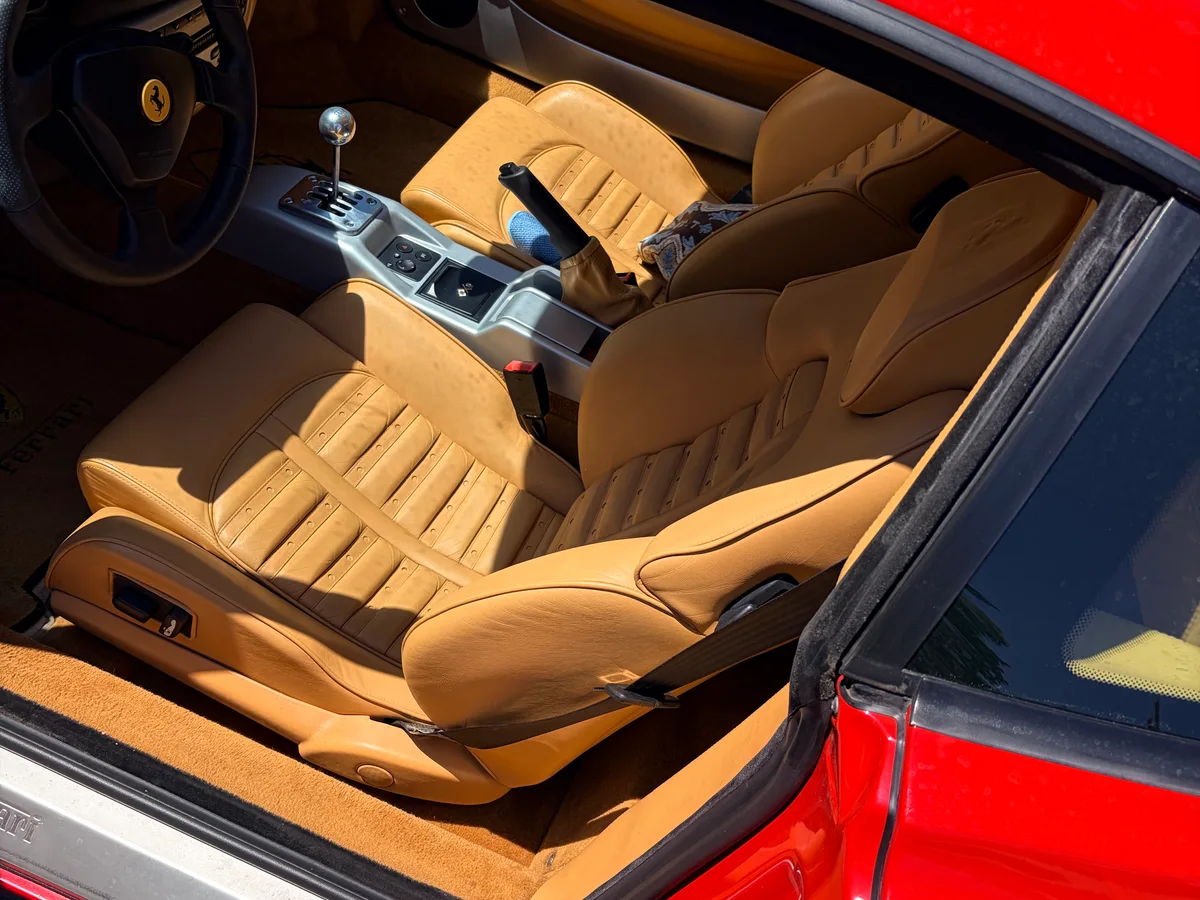
At approximately 25 years old, the interior showed the pattern of deterioration typical of a well-driven 360 that had not received regular leather conditioning. The overall structure of the interior remained sound — the leather had not delaminated or torn — but the surface on several high-contact areas had begun to fail.
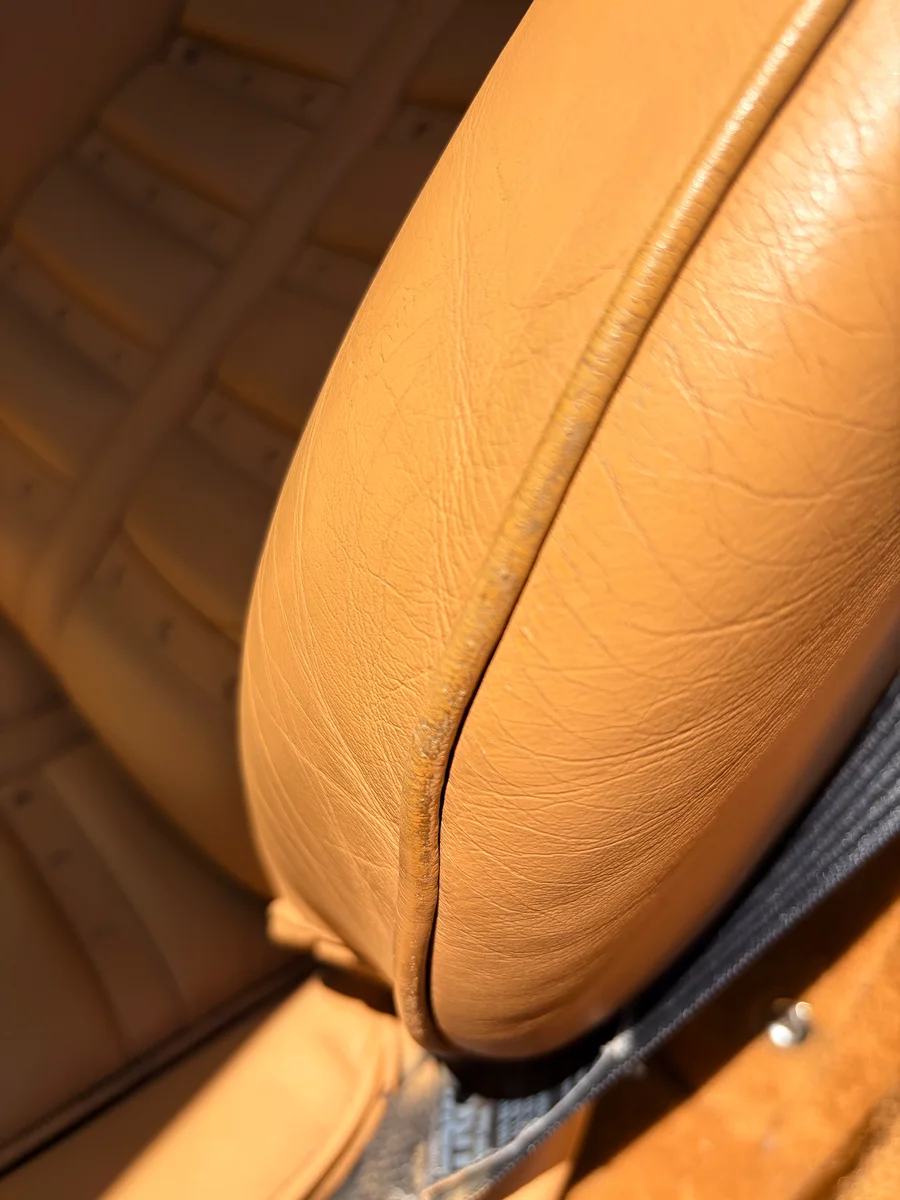
- Seat bolsters: surface cracking along the lateral edges and worn piping at the seam lines — the result of repeated entry and exit friction over decades
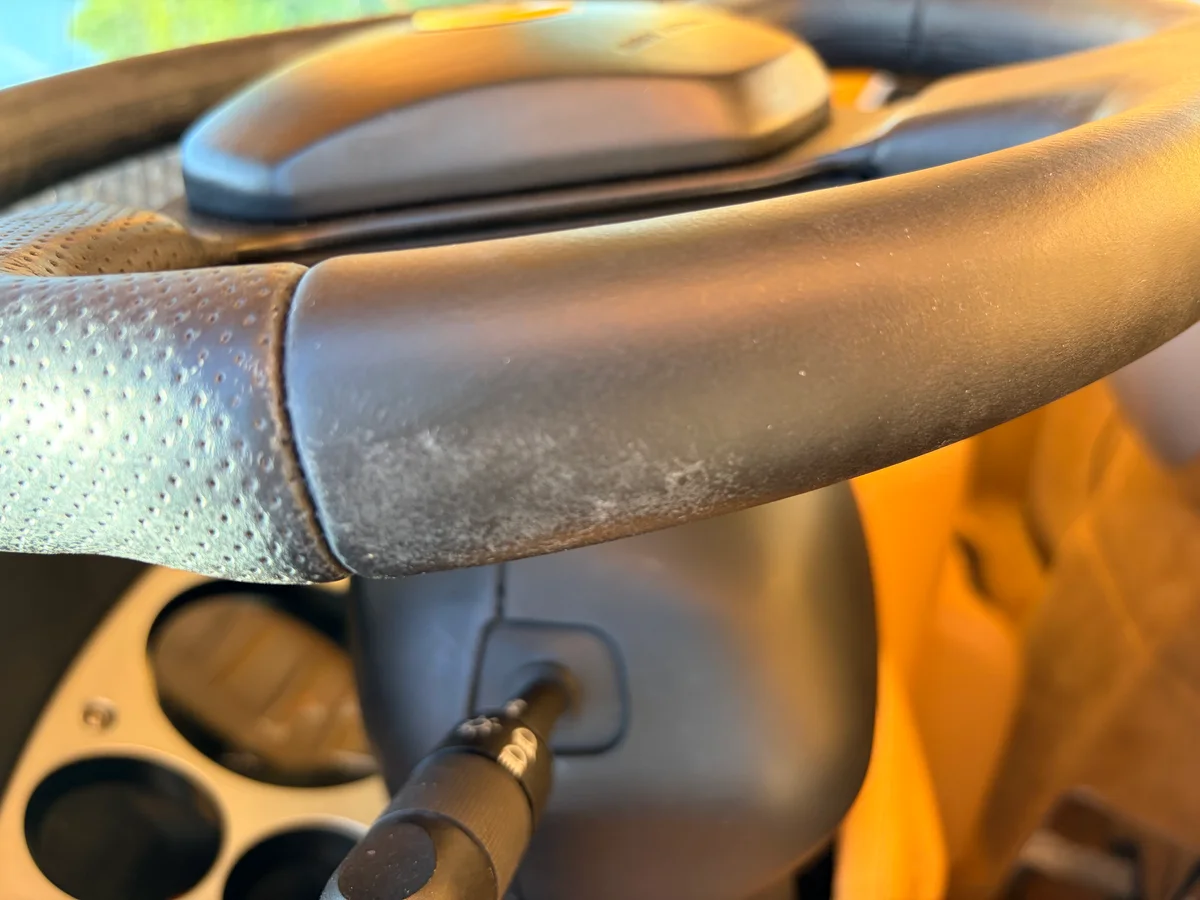
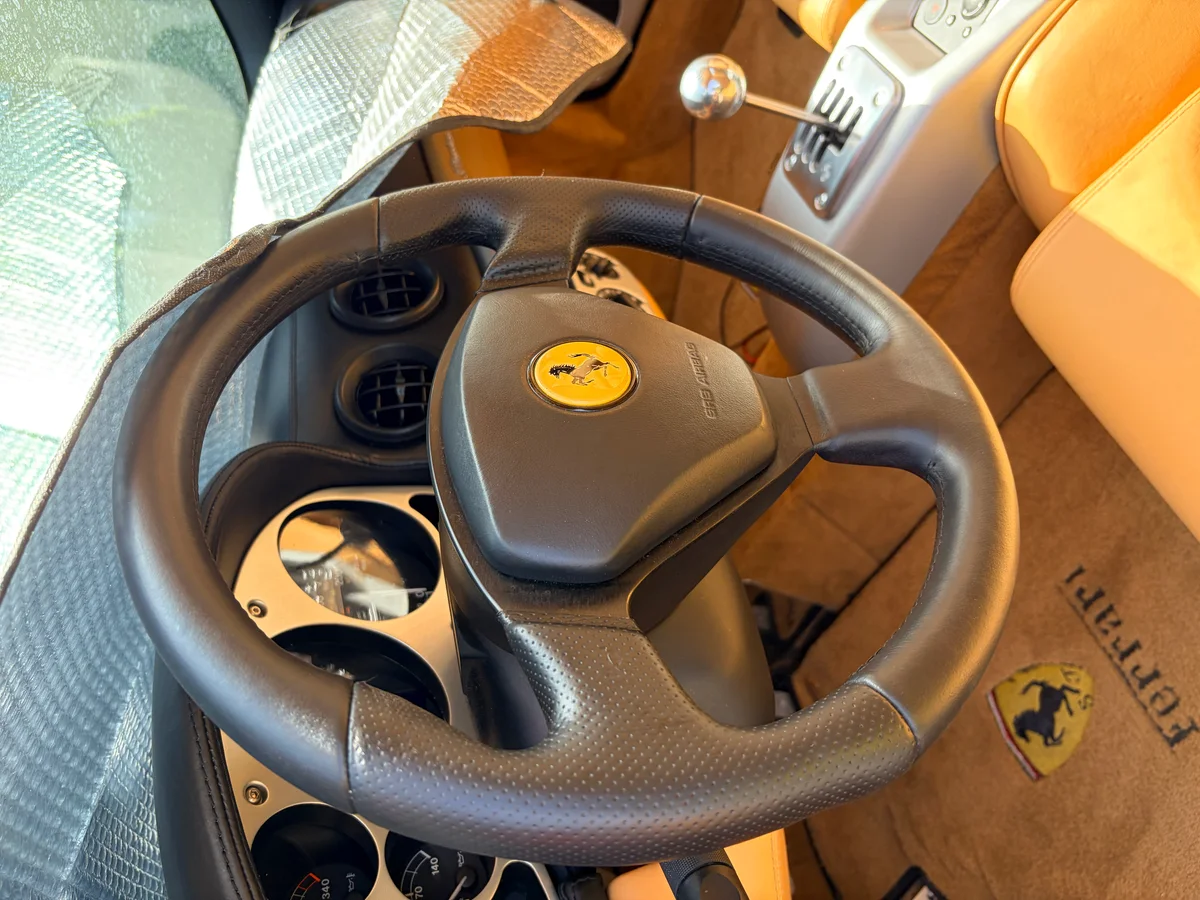
- Steering wheel: severe discoloration and chalky surface breakdown across the grip sections, with pronounced color loss at the highest-contact points between the perforations
- Headliner: localized surface marks and scuffs on the leather ceiling panels
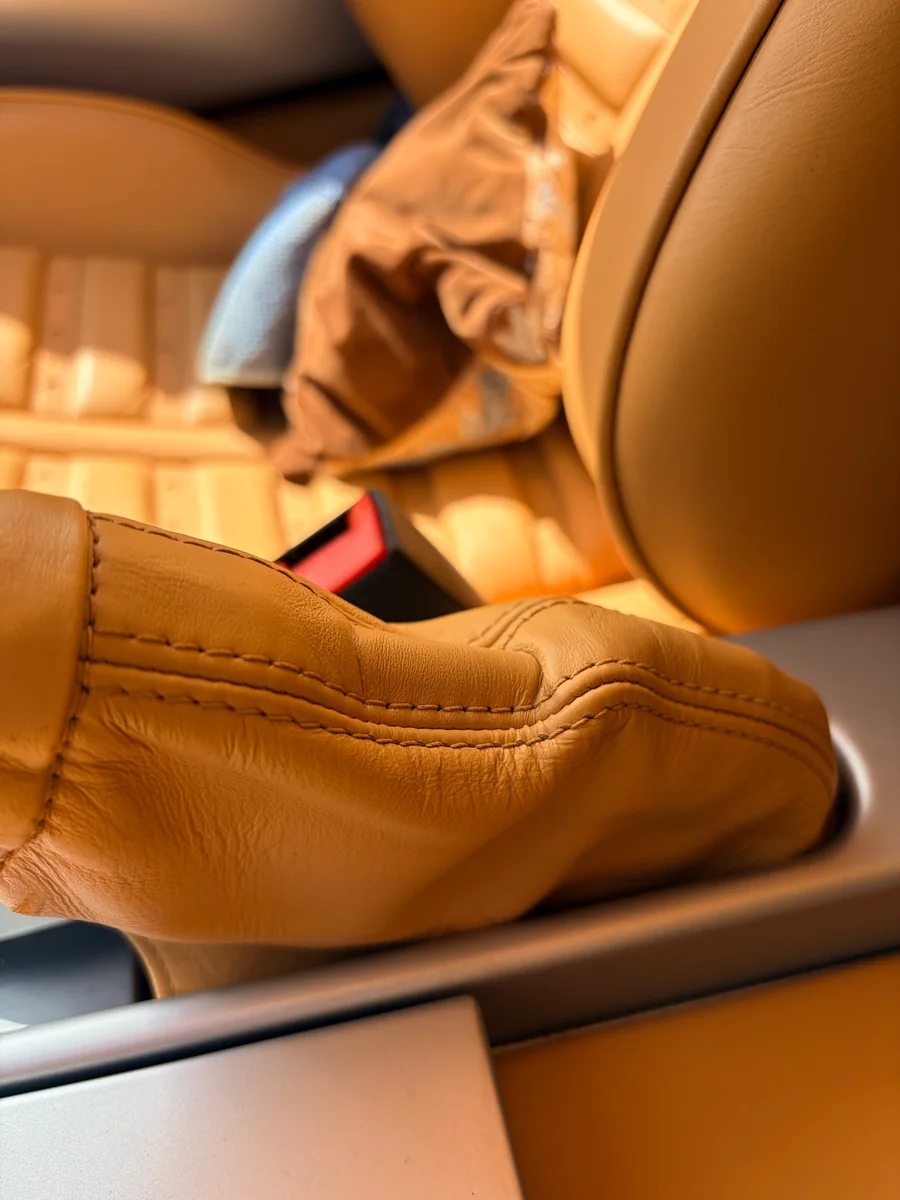
- Handbrake gaiter: surface wear and color inconsistency from regular contact
The Steering Wheel
The steering wheel was the most visually deteriorated surface in this car. The discoloration was not superficial — it extended through the surface finish and into the leather itself, the result of prolonged friction, hand oils, and moisture cycling over 25 years of driving.
Ferrari 360 steering wheels are leather-wrapped with a distinctive perforated section at the grip positions. The perforations, designed to improve grip and ventilation, also make the wheel more susceptible to oil and moisture penetration at the perforation edges — exactly where the discoloration was most pronounced on this car.
Restoration Process
Assessment and Surface Preparation
Each area was assessed individually before any treatment began. The seat bolsters showed surface cracking and worn piping at the seam edges — both conditions that respond well to targeted repair. The steering wheel had the most severe deterioration: the leather was significantly dried, and the darker areas of discoloration indicated accumulated surface oils combined with finish breakdown. All areas were cleaned thoroughly before treatment.
Crack Repair on Seat Bolsters
The cracked areas on the seat bolsters were filled with flexible repair compound, applied in thin layers and worked into the surface to ensure adhesion. Flexible compound is essential on bolsters — these panels flex under lateral pressure every time the driver enters and exits, and a rigid filler would re-crack quickly. After curing, the filled areas were leveled and blended into the surrounding surface profile.
Deep Conditioning
The entire leather interior — seats, bolsters, headliner, door cards, and handbrake gaiter — received a deep conditioning treatment to replenish moisture that decades of use and climate exposure had removed. Properly conditioned leather is more receptive to color work and holds the finish coat more durably. On the steering wheel, additional conditioning penetration was required given the degree of surface drying.
Steering Wheel Restoration
The steering wheel leather required both color restoration and surface treatment. The original dark surface had developed significant discoloration — lighter, chalky patches across the grip areas and between the perforations — consistent with long-term friction wear and oil penetration. Color was restored to match the surrounding sections, and the perforated texture was preserved throughout. A protective finish was applied specifically formulated for high-contact surfaces.
Headliner and Interior Surface Repair
The leather headliner showed localized surface marks and scuffs consistent with normal use over a 25-year-old vehicle. These were addressed with targeted color correction and finishing, restoring the uniformity of the beige leather ceiling without requiring full headliner treatment.
Handbrake Gaiter Restoration
The leather handbrake gaiter was restored with color correction and conditioning. The gaiter on the 360 Modena is positioned centrally between the seats and receives regular contact — surface wear and color inconsistency are common. After treatment, the color reads consistently with the surrounding beige interior.
Color Matching to Original Cuoio
Pigments were blended on-site to match Ferrari's original Cuoio beige, tested against undamaged sections of the interior before application. On a vehicle this age, color matching must account for natural patina and the way the leather has evolved — not simply the factory reference color. The repaired areas blend with the surrounding original leather rather than appearing as corrections.
Protective Finish Application
A topcoat protection was applied to all restored surfaces. The finish seals the color work, provides a level of resistance to UV, friction, and moisture, and restores the appropriate sheen level — consistent with the surrounding original leather. On the steering wheel, a finish with appropriate grip retention was used to maintain driving feel.
After: Restored
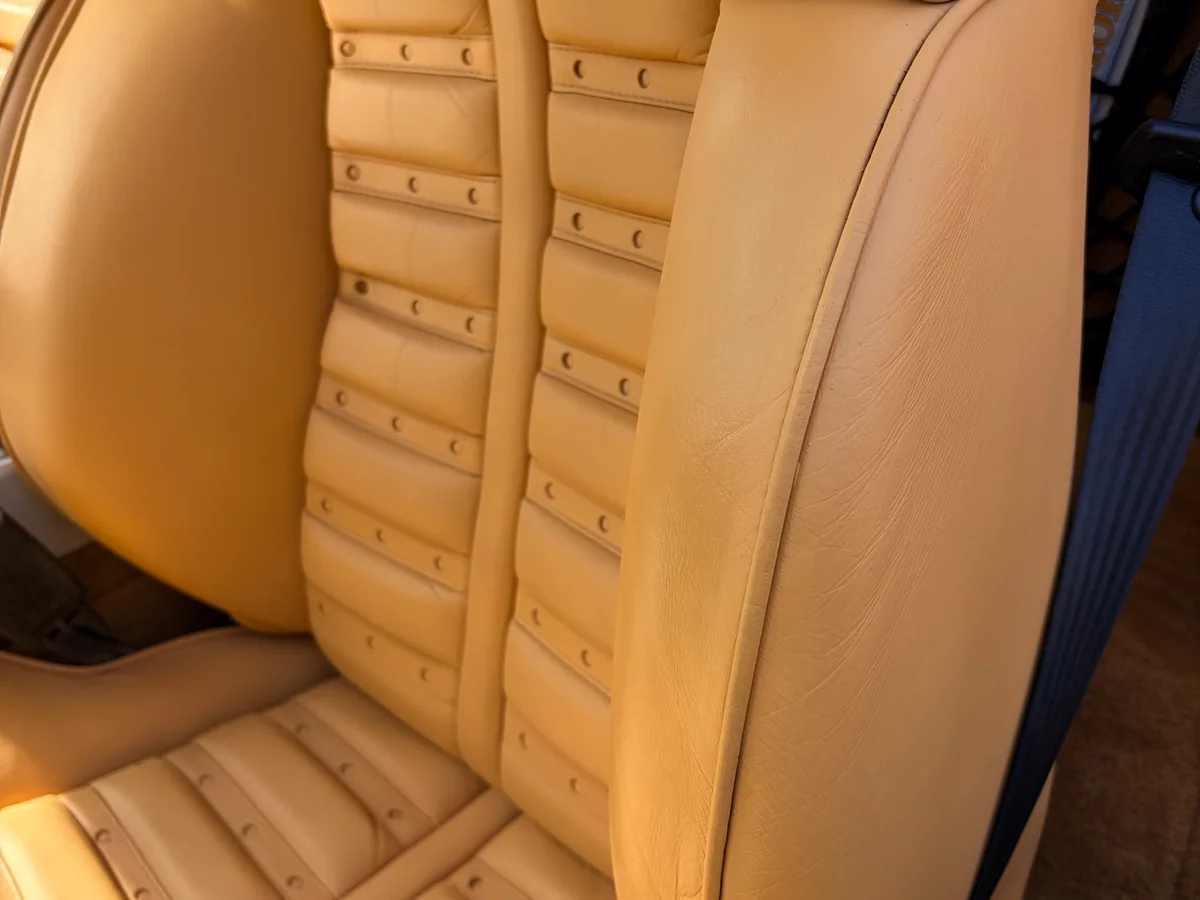
- Seat bolster cracks filled, leveled, and color-matched — piping seam edges restored
- Steering wheel leather restored — discoloration corrected, perforated texture preserved
- Deep conditioning applied to all leather surfaces — suppleness restored throughout
- Headliner surface marks corrected and finished
- Handbrake gaiter restored and color-matched to Cuoio interior
- Protective topcoat applied — all surfaces sealed against further wear and UV
- Original Cuoio color matched on-site against undamaged sections of the interior
Restoration vs. Replacement on a 360 Modena
Replacing the leather interior on a Ferrari 360 Modena is a significant undertaking — the cabin is extensively lined, and sourcing period-correct materials requires either Ferrari-approved suppliers or careful matching of grain and finish. The cost is substantial, and the result replaces original material that was part of the car when it left Maranello.
For a vehicle like this — structurally sound leather that has dried and lost surface color, rather than torn or delaminated — restoration preserves the original interior while correcting the visible deterioration. The outcome is a cabin that looks properly maintained rather than modified. For collectors and enthusiast owners who use their cars, that distinction matters.
Related Services
- Luxury Auto Leather Repair → Ferrari, Porsche, Mercedes, BMW, Bentley, Rolls-Royce and exotic interiors
- Auto Interior Restoration → mobile leather repair for all vehicle makes and models
- Leather Color Restoration → precision pigment matching for original color correction
- Before & After Gallery → automotive and furniture restoration results
Mobile Ferrari Leather Restoration — NYC & New Jersey
Leather & Vinyl Care provides mobile leather restoration for Ferrari and other exotic vehicles throughout Brooklyn, Manhattan, Queens, Long Island, and coastal New Jersey. We come to your garage or home — no transport required.
Frequently Asked Questions
Can Ferrari 360 Modena leather be restored without replacing the interior?
Yes. Ferrari 360 Modena interiors use high-quality Italian leather that typically retains its structural integrity even when the surface has dried, cracked, or lost color. Professional restoration uses flexible repair compounds, conditioning treatments, and precision color-matching to address these issues while preserving the original material. Replacement is rarely necessary for damage of the type typically seen on a well-maintained 360 — cracked bolsters, worn piping, and dried or discolored surfaces are all restorable.
Can a dried and discolored Ferrari steering wheel be repaired?
Yes. The leather steering wheel on the Ferrari 360 Modena is prone to color loss and surface drying over time, particularly on the most-gripped sections. The visible white and grey discoloration is the result of the surface finish breaking down and the leather drying out. The restoration process involves deep conditioning to replenish moisture and flexibility, followed by color restoration matched to the original shade, and a protective finish that seals the surface against further deterioration.
How do you match the original Cuoio beige color on a Ferrari 360?
Ferrari Cuoio is a warm beige that can shift in appearance depending on the specific production year and how the leather has aged. Color matching on a 360 Modena interior is done by blending pigments on-site against undamaged areas of the original leather — not against a factory reference card. This accounts for natural aging and patina. The goal is a repair that reads as the same leather, not a corrected patch.
Does leather conditioning really help cracked Ferrari seat leather?
Conditioning addresses the underlying cause of most cracking on older Ferrari interiors — moisture loss. When leather dries out, it becomes brittle and the surface develops fine cracks that deepen over time. Applied correctly, a professional leather conditioner penetrates the hide, restores suppleness, and slows further cracking. Combined with crack repair compound and a protective finish, conditioning significantly extends the life of the restored leather.
Do you provide mobile Ferrari leather restoration in New Jersey?
Yes. Leather & Vinyl Care provides mobile leather restoration for Ferrari and other luxury vehicles across New Jersey and the greater NYC metro area. We come to your location — private garage, residence, or parking facility — with all equipment and materials. The vehicle never needs to be transported to a shop. This project was completed on-site in Long Branch, NJ.
Related Reading
- 2018 Lamborghini Huracán Steering Wheel and Leather Interior Refinement →
- Ferrari F355 Berlinetta Leather Interior Preservation for Show Preparation →
- Ferrari F430 Spider Interior Leather Restoration in New Jersey →
- Ferrari 599 GTB Fiorano Interior Leather Restoration in NYC →
- 1992 Ferrari 512 TR Interior Restoration — Dashboard and Door Panel Refresh →
- 2025 Porsche 911 Leather Interior Repair in Manhattan — Cognac Scratch Restoration →
- How Much Does Leather Repair Cost in NYC? (2026 Price Guide) →