Porsche 993 Carrera S Leather Interior Restoration in New Jersey
The Porsche 993 is the last air-cooled 911 — and owners who understand that tend to care about how it is maintained. This New Jersey customer brought us their Carrera S with a clear brief: restore the leather without replacing it. The driver's seat bolster had accumulated years of entry and exit wear, the door panel armrest showed surface deterioration along the seam, and several lower interior surfaces carried surface scratches and finish loss. All leather restoration, repair, and color work was completed on-site by Leather & Vinyl Care.
Project Overview
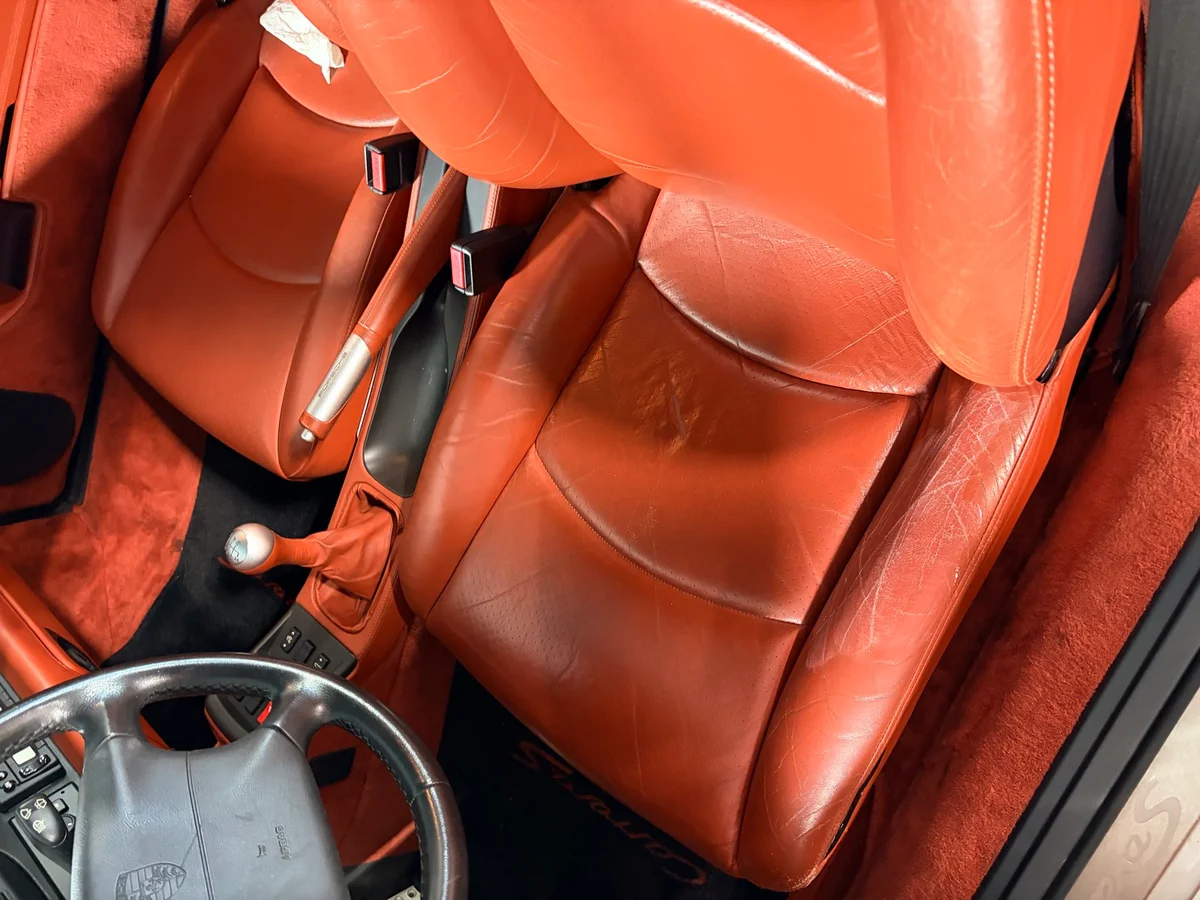
The Porsche 993 — The Final Air-Cooled 911
The 993 generation of the Porsche 911 was produced from 1993 to 1998. It is the last iteration of the 911 to use Porsche's traditional air-cooled flat-six engine — a configuration that had defined the car since 1963. When the 996 arrived in 1998 with a water-cooled engine and a substantially different interior design, the 993 became something distinct: not simply the previous generation, but the end of a continuous lineage that stretched across thirty-five years of production.
This matters for how 993 owners think about their cars. The 993 is not an old Porsche in the way that any aging vehicle is old — it is the conclusion of a specific engineering philosophy, and many owners regard it accordingly. Decisions about maintenance and restoration are approached with that context in mind. Replacing the original interior leather with new material is not always the right answer on a car like this. The original is part of what the car is.
This Carrera S carried a warm orange-red leather interior — a vibrant tone that extends to the carpet and trim throughout. It is a distinctive period-correct combination, and original factory leather in this tone is part of what makes this interior authentic.
Interior Condition on Arrival
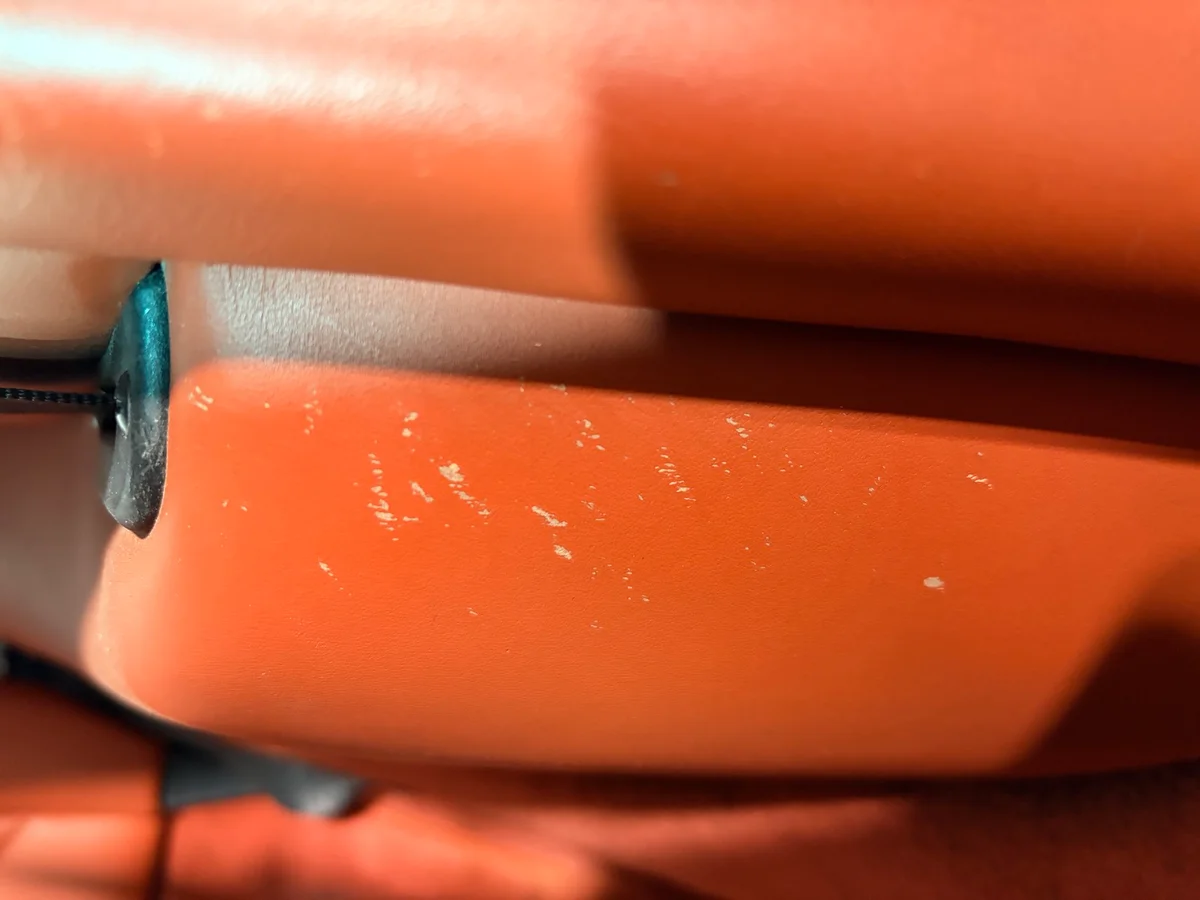
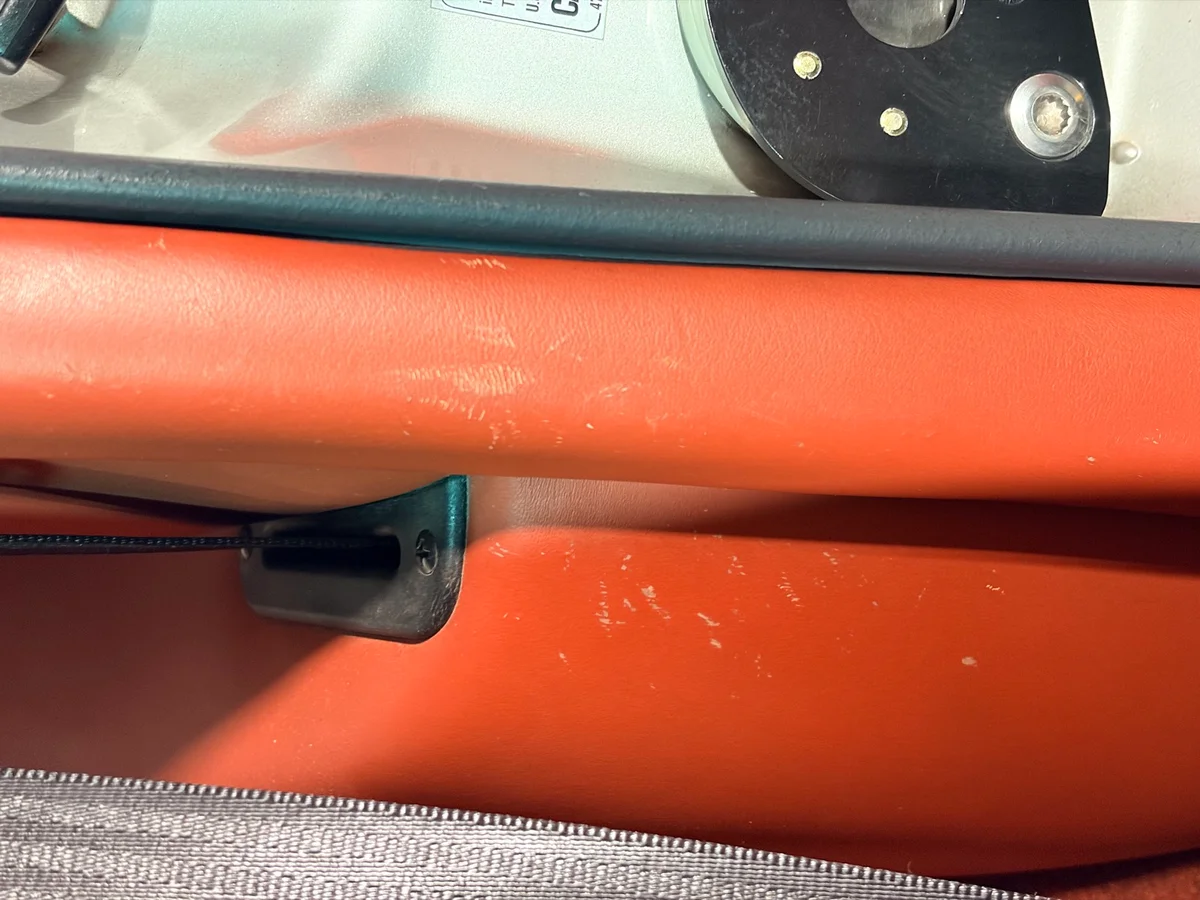
The damage was consistent with what a well-used 993 accumulates over decades of regular driving. Nothing catastrophic — but a collection of surface issues that, left unaddressed, would have continued to worsen. Each problem area was documented before work began.
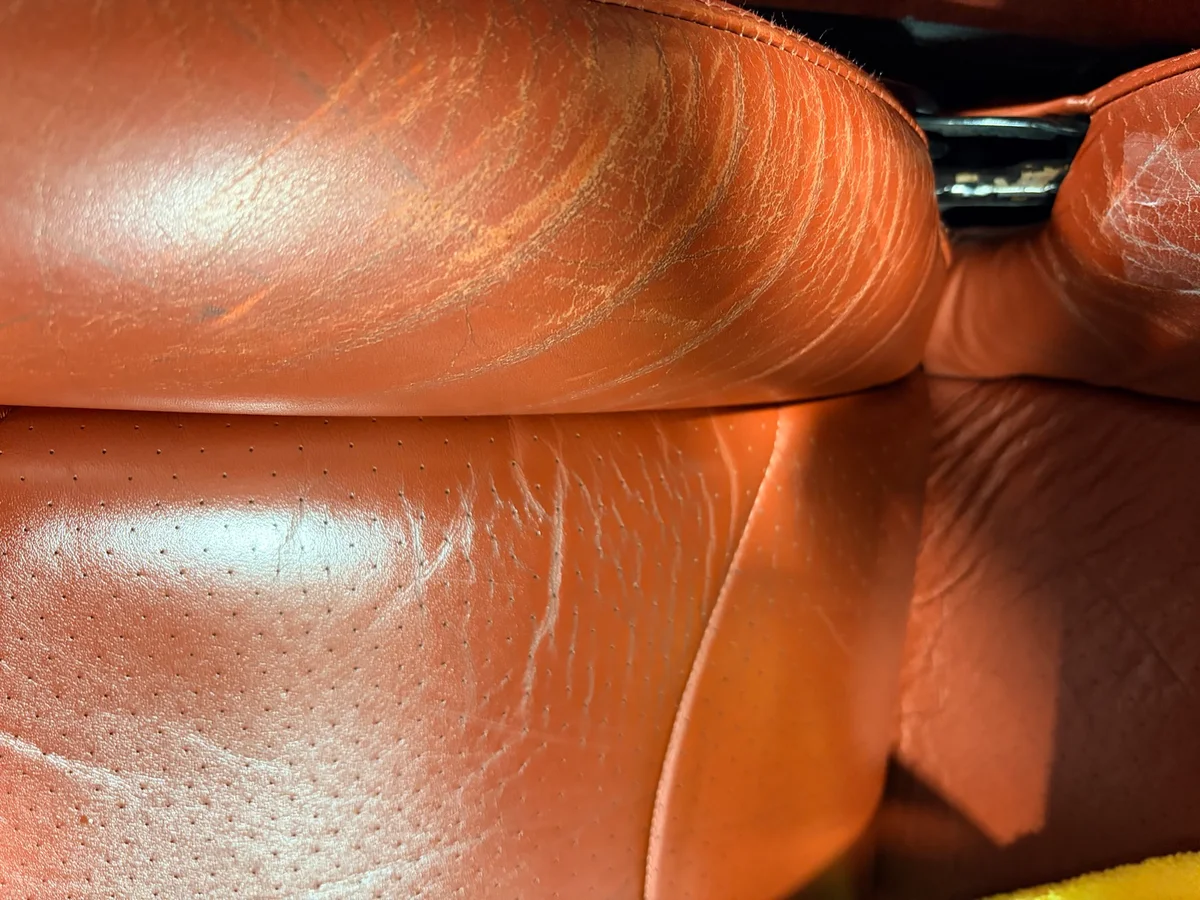
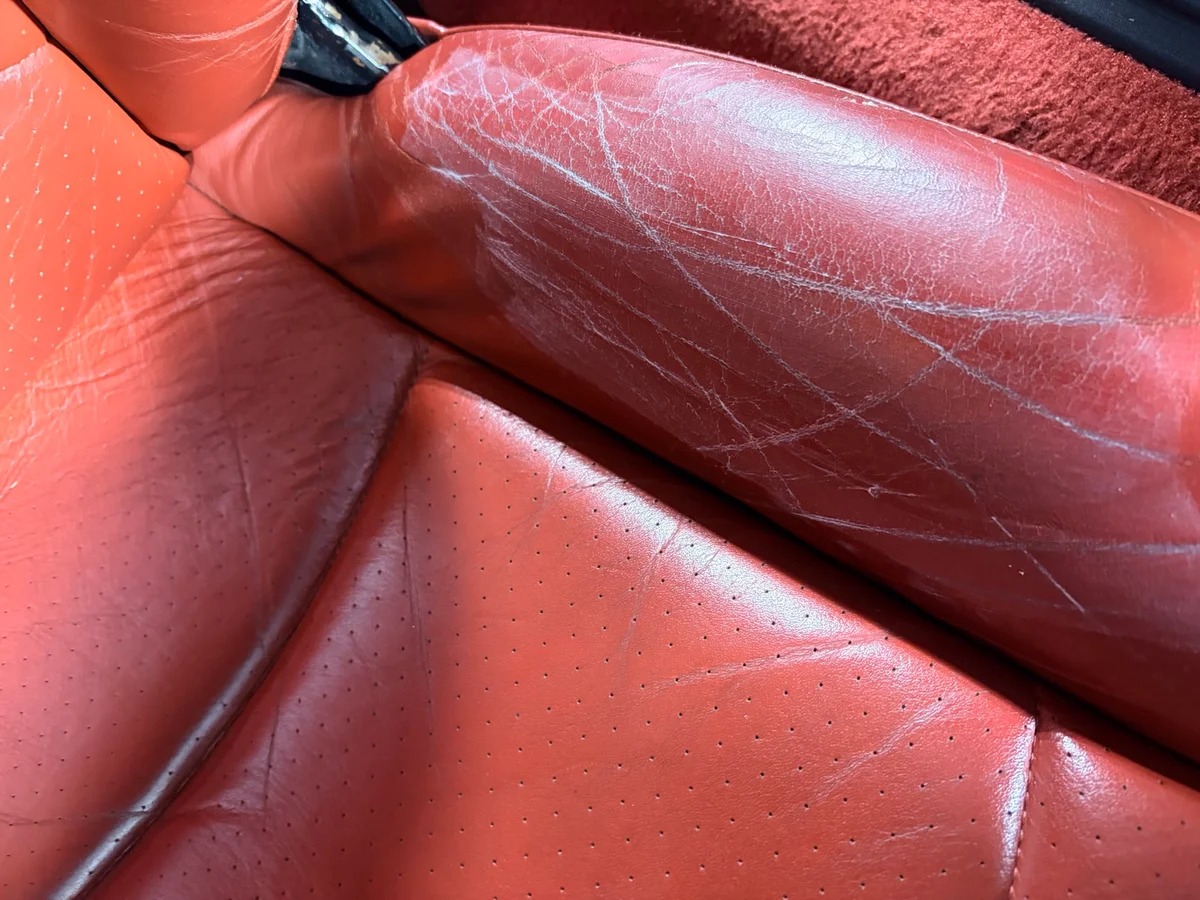
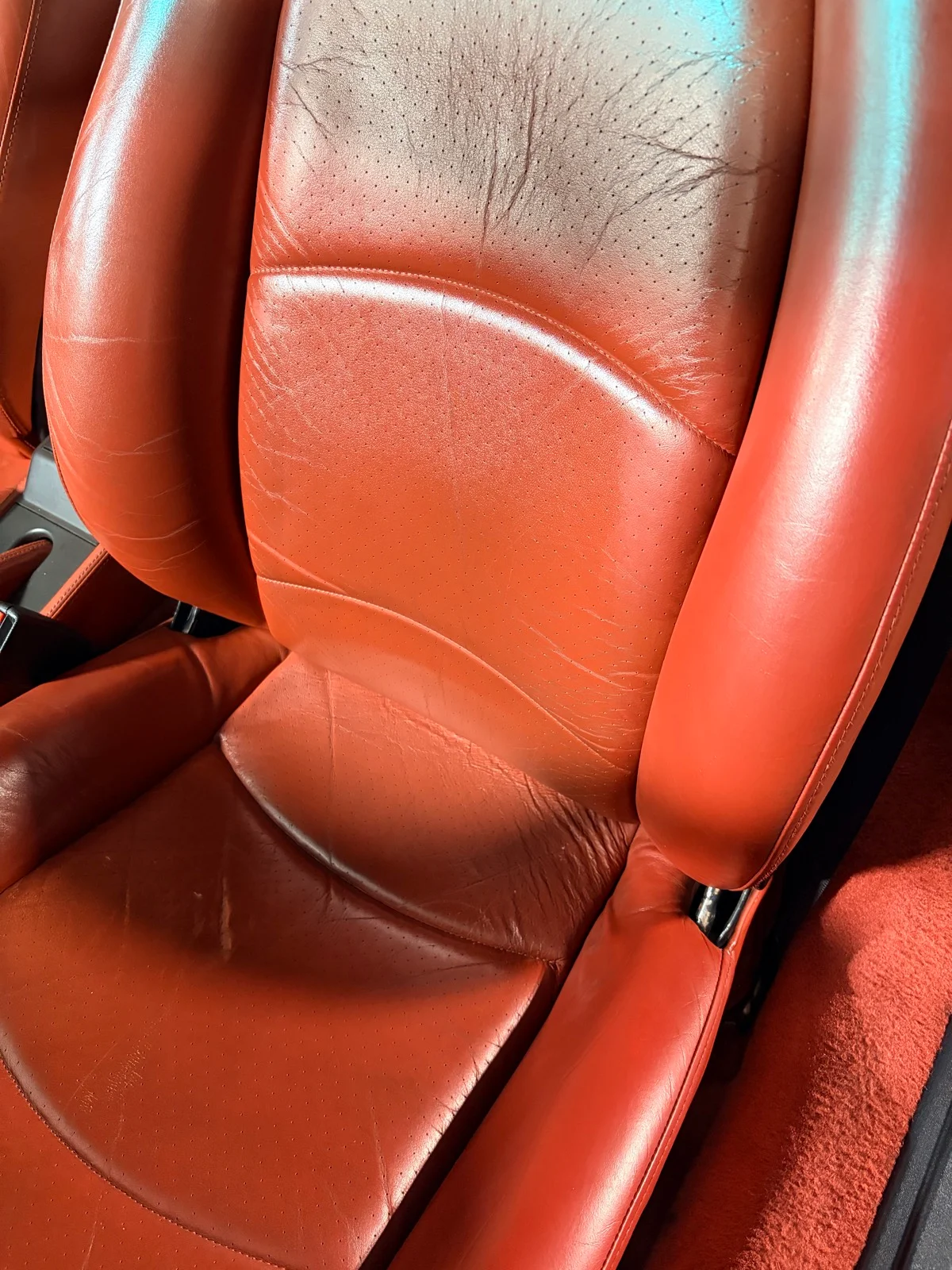
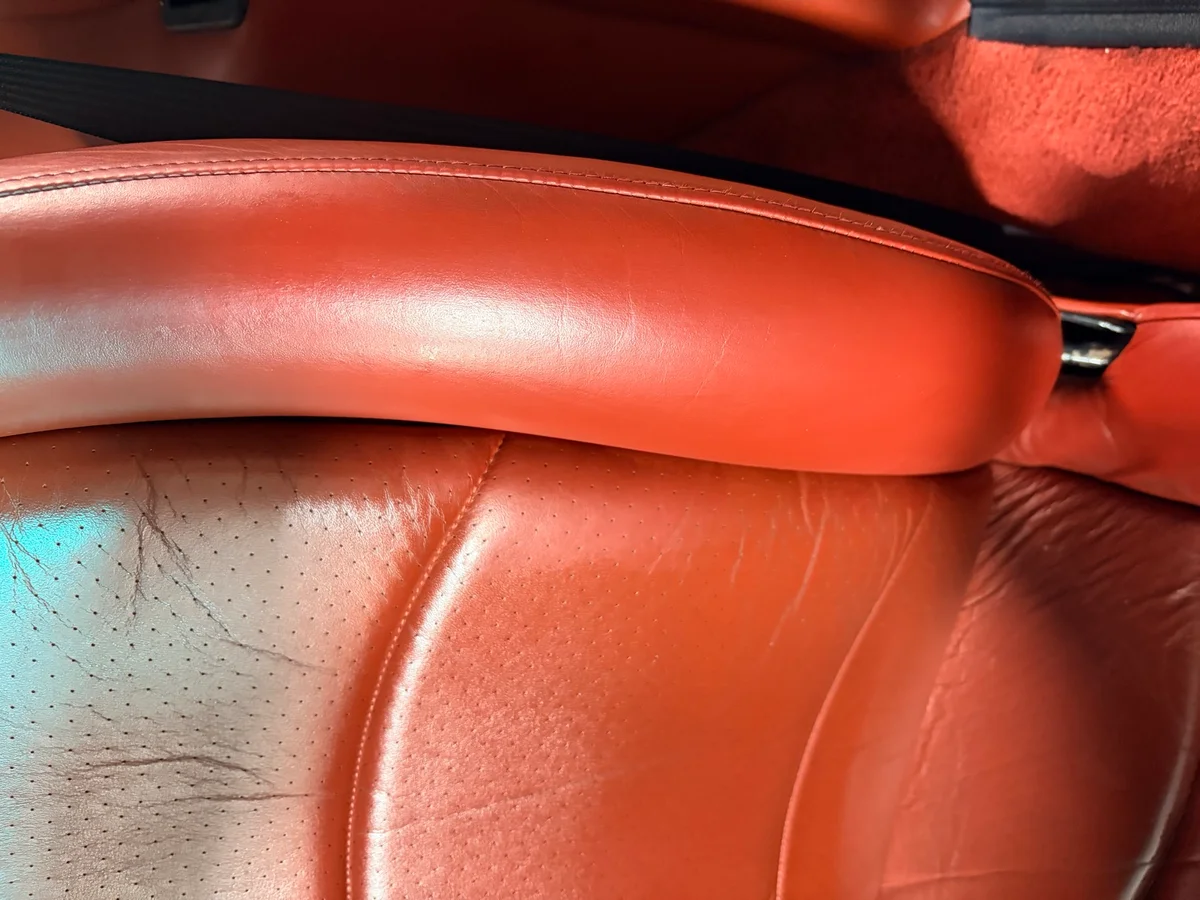
- Driver's seat bolster — finish wear and surface scratching: The lateral bolster on the driver's seat showed the most pronounced damage — a pattern typical of how the 993's low, tight cockpit is entered and exited. Getting into the seat requires sliding past the bolster, and over years this creates concentrated surface scratching and finish loss. The damage was surface-level — the underlying leather remained structurally intact — but visually significant.
- Seat cushion — surface finish loss: The driver's seat cushion showed areas of uneven surface finish and color inconsistency in the regions of highest contact. No tearing or cracking, but the finish had worn unevenly, creating a patchy appearance that contrasted with the deeper orange-red tone in the less-affected areas.
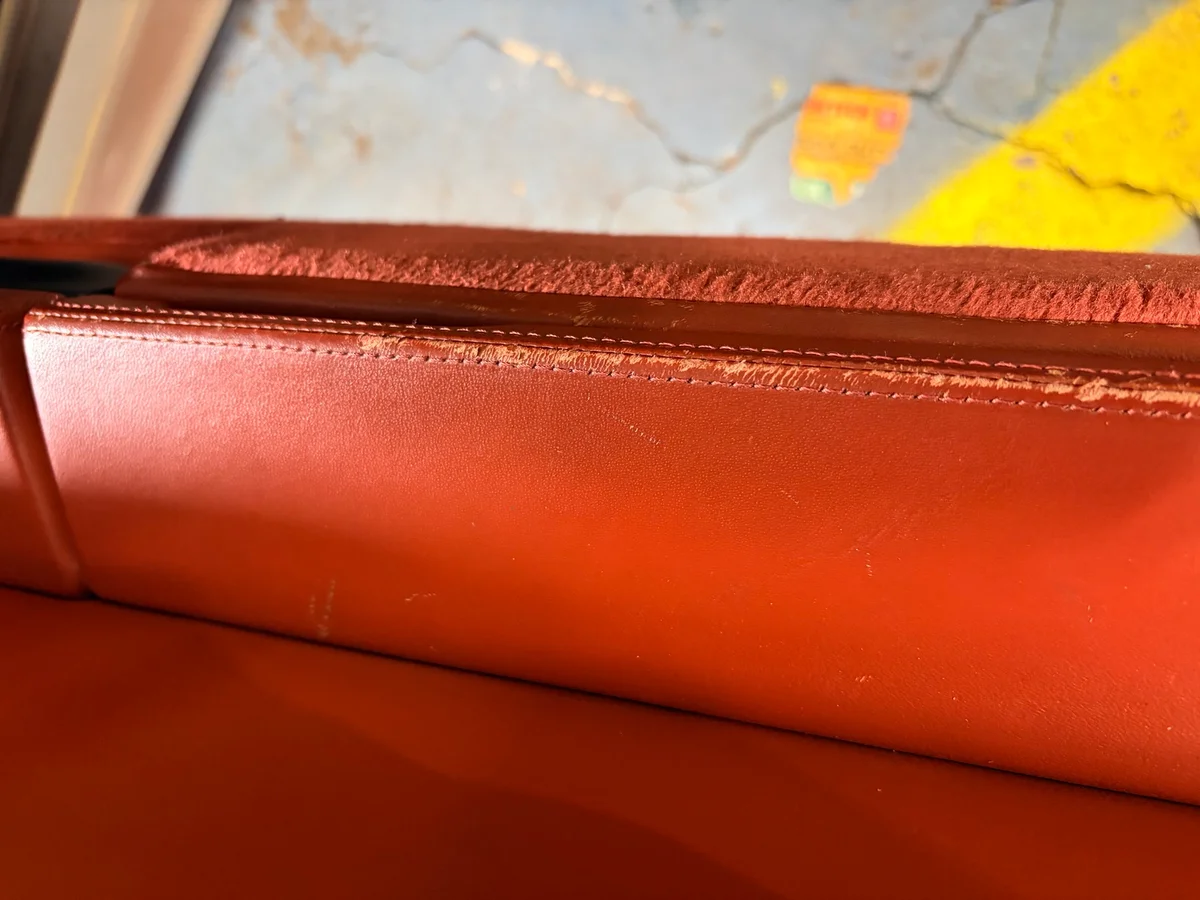
- Door panel armrest — seam deterioration: The door panel armrest was the second most significant damage area. Along the upper seam of the armrest, the leather had deteriorated — the finish had broken down at the edge, exposing the underlying material along the stitching line. This type of seam wear is a known weak point on this era of Porsche interiors.
- Lower seat area and rail surround — surface scratches: Several surfaces in the lower seat area near the seat adjustment rail showed scattered surface scratches and finish wear — a result of normal use and incidental contact over the car's life.
- Door panel additional detail — surface marks: A secondary area of the door panel near the door pull showed additional light surface scratching and scuffs. The damage here was less severe than the armrest seam but contributed to the general surface inconsistency across the door interior.
Why the Original Leather Was Preserved
The customer's instruction was explicit from the outset: restore, do not replace. This is a position we encounter more often with 993 owners than almost any other vehicle — and it is a technically well-founded position.
The 993 is the last air-cooled 911. Original interiors are part of what the car is. Replacement leather introduces a material that looks, feels, and ages differently from the surrounding interior. No aftermarket leather will match the exact tone and texture of the factory original, and the discrepancy between new and original material is immediately apparent inside a car where every surface is visible simultaneously.
Professional restoration, done correctly, achieves what replacement cannot: improved appearance, restored durability, and consistent color — while the leather remains original. The objectives for this project were:
- Repair active surface damage before it progresses further
- Restore color consistency across worn and unworn surfaces
- Re-establish finish durability on all treated areas
- Preserve the original leather and its authentic character
- Maintain a result that reads as well-maintained original — not restored
For owners of any classic or collectible Porsche — 993, 964, 356, or early 911 — this approach delivers a result that is both better-looking and more authentic than replacement.
Restoration Process
Condition Assessment
Before any work began, all leather surfaces were examined — driver's seat bolster, seat cushion, door panel armrest and surround, lower seat area, and ancillary interior trim. Each surface was assessed for depth of damage, finish condition, color loss, and structural integrity. This step established which areas required localized repair versus cleaning and conditioning alone, and defined the color reference points for the matching process.
Leather Cleaning
All leather surfaces were thoroughly cleaned using pH-balanced professional leather cleaners. The 993's sport seat bolsters had accumulated body oils and contamination within the surface scratches, and the door panel armrest showed embedded grime along the worn seam edge. Proper cleaning was essential before any repair work — residual contamination interferes with repair compound adhesion and color fidelity.
Surface Preparation
Cleaned surfaces were prepared to accept repair compounds and colorant. This involved light mechanical preparation of the damaged bolster areas and the deteriorated door panel seam edge to create a sound base for repair. Preparation ensures that repair materials bond correctly and that colorant adhesion is consistent across both repaired and adjacent unrepaired surfaces.
Localized Leather Repairs
The driver's seat lateral bolster — the area showing concentrated entry and exit scratching — was treated with flexible leather repair compound, applied in thin layers to fill the surface damage and consolidate the affected area. The door panel armrest seam, where the leather had deteriorated and lost its finish along the upper edge, received targeted repair treatment to stabilise the surface and restore a consistent profile. Repairs were kept localized and conservative — the objective was to correct active damage, not to over-fill and obscure the natural leather grain.
Custom Color Matching
The 993's warm terracotta interior leather — rich, orange-toned, and distinctly period-correct — required precise on-site color formulation. The reference points were the least-affected areas of the interior: sections protected from direct UV exposure and contact wear. A custom pigment blend was developed on-site and refined through test applications until it matched closely across the range of the existing leather's tone variation. On a car this age, no single formula covers every area uniformly — the blend must integrate with the natural variation that 30 years of aging has introduced.
Leather Recoloring
The matched color was applied to all repaired areas and extended to blend seamlessly into the surrounding original leather. The bolster, door panel, and lower seat area received targeted recoloring to restore visual consistency. Application was done in thin, controlled passes — building coverage gradually rather than applying a heavy single coat that would obscure texture and look unlike original factory leather.
Protective Top Coat and Final Detailing
A flexible protective topcoat compatible with the original leather's sheen level was applied across all treated surfaces. The finish restores UV resistance and surface durability without altering the matte-satin character appropriate to factory Porsche interior leather. All surfaces were buffed and detailed on completion.
Color Matching the Orange-Red Interior
Matching a 30-year-old Porsche interior color is not a matter of looking up a code and ordering a pre-mixed formula. Factory leather colors change as they age — UV exposure shifts the surface tone, different areas of the interior age at different rates, and this orange-red tone has a complex warm character that shifts noticeably across shade angles and lighting conditions.
The color reference was established from the protected, less-affected areas of the interior — surfaces that had seen minimal UV and contact — where the original orange-red tone was closest to its full depth and warmth. A custom pigment blend was developed and refined on-site through test applications until the formulation integrated convincingly with the existing leather color variation across the interior.
The goal was consistency, not saturation. A restored area should read as the same leather as the areas around it — not as a patch that is slightly too bright, too flat, or too uniform. Getting this right requires careful visual calibration rather than formula application.
Final Result — Restored, Not Replaced
The completed interior is significantly improved in appearance and durability across all areas that received work. The driver's seat bolster is repaired and recolored — the surface damage that had accumulated over years of entry and exit is addressed, and the color reads consistently with the surrounding leather. The door panel armrest seam has been stabilised and restored. The lower seat and door panel surfaces are clean, repaired, and protected. The color is consistent across the interior.
What has not changed: the leather is original. The grain, texture, and natural aging character of factory Porsche leather are retained. The interior does not look freshly re-trimmed. It looks like a well-maintained 993 interior that has been properly cared for.
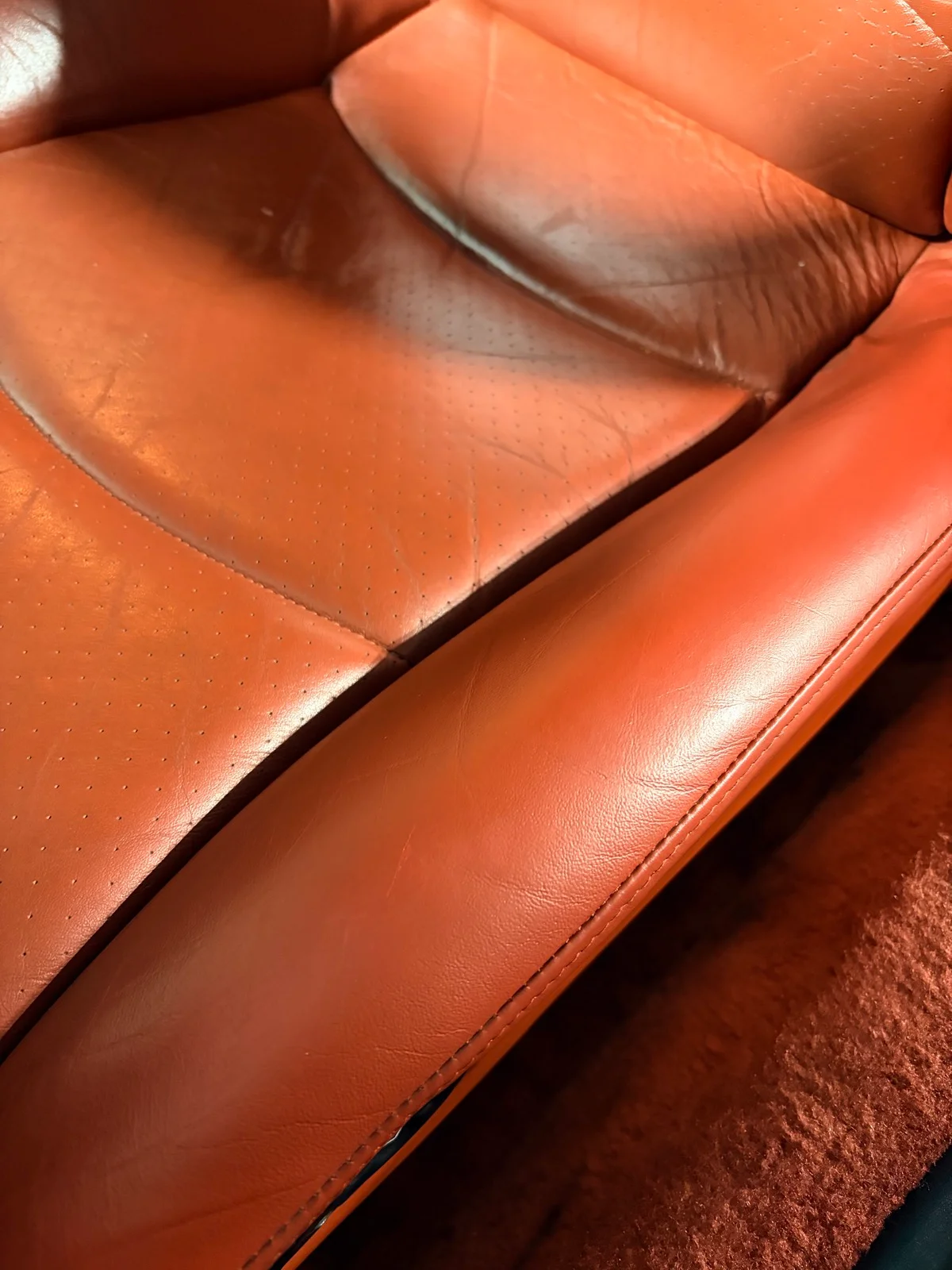
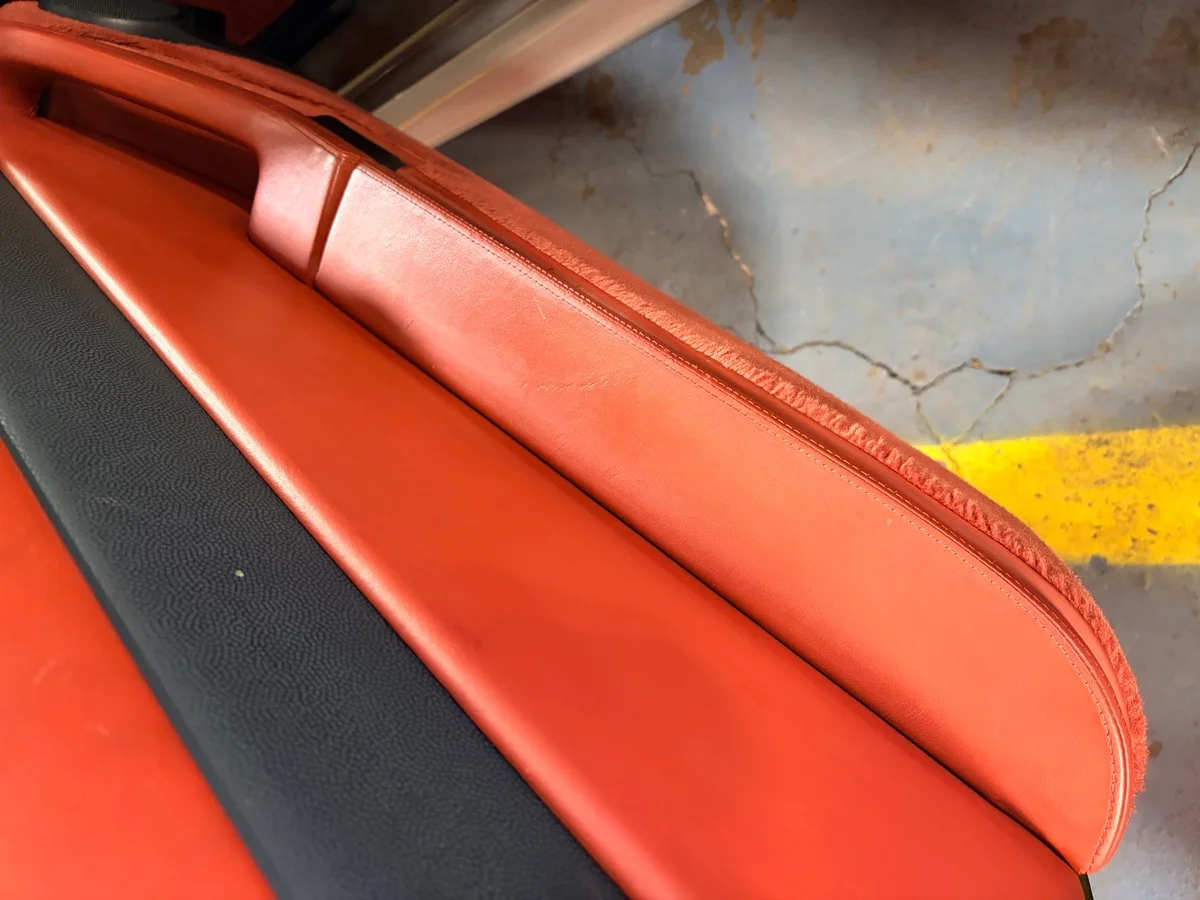
- Driver's seat bolster — surface scratching repaired, color matched and restored
- Seat cushion finish — color inconsistency corrected, surface protected
- Door panel armrest seam — deterioration stabilised, surface restored and recolored
- Lower seat area — surface wear repaired and color integrated
- Door panel secondary area — surface scratches addressed, finish restored
- All treated surfaces protected with flexible topcoat
- Original leather preserved throughout — no replacement panels
Porsche Leather Restoration in NJ and NYC
Leather & Vinyl Care provides mobile on-site leather restoration for Porsche and other vehicles in New Jersey, as well as throughout New York City and Long Island. All work is performed at the vehicle's location — private garages, storage facilities, and residential driveways — with no transport required.
We work on Porsche 993, 964, 911, Cayenne, Panamera, and other Porsche models, as well as Ferrari, BMW, Mercedes-Benz, and other European vehicles where original interior leather is worth preserving. For luxury and exotic car interiors, our approach prioritises the original material wherever the leather remains structurally sound.
Related Services
- Luxury & Exotic Car Interiors → on-site leather restoration for Porsche, Ferrari, BMW and other premium vehicles
- Auto Interior Restoration → car seat repair, color matching, and surface restoration for all makes
- Leather Re-dyeing & Color Restoration → custom pigment matching for faded or discolored leather interiors
- Leather Cleaning & Conditioning → professional deep cleaning and conditioning to maintain leather longevity
Porsche Leather Restoration — NJ and NYC
If you have a Porsche 993 or other classic Porsche with leather that needs professional attention, text us photos for a free estimate. We serve New Jersey, New York City, and Long Island — all work performed on-site at your location.
Related Automotive Projects
Other Porsche and collector vehicle leather work completed by Leather & Vinyl Care.
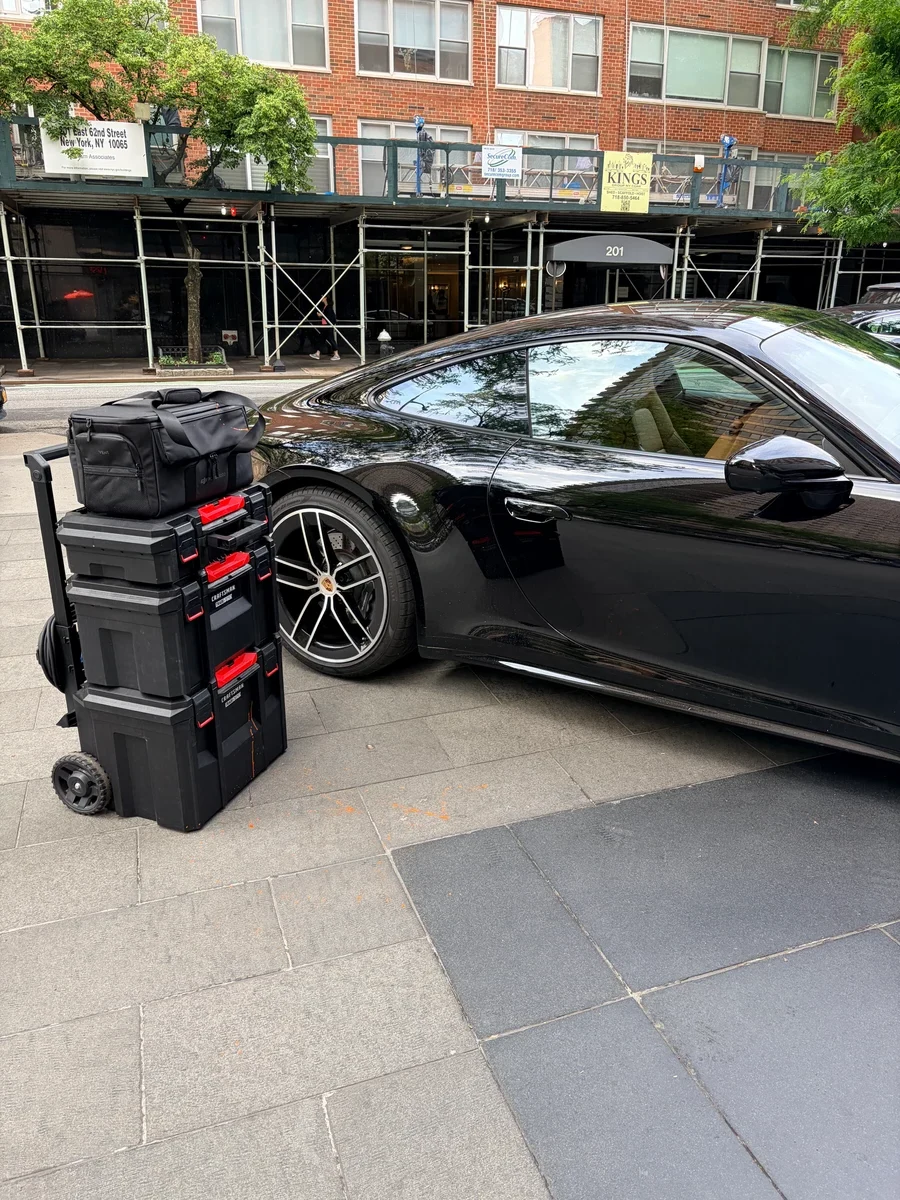
2025 Porsche 911 — Cognac Leather Repair in Manhattan
Rear side panel scratch on a 2025 Porsche 911 repaired and custom Cognac color matched on-site in Manhattan in approximately 90 minutes.
View Case Study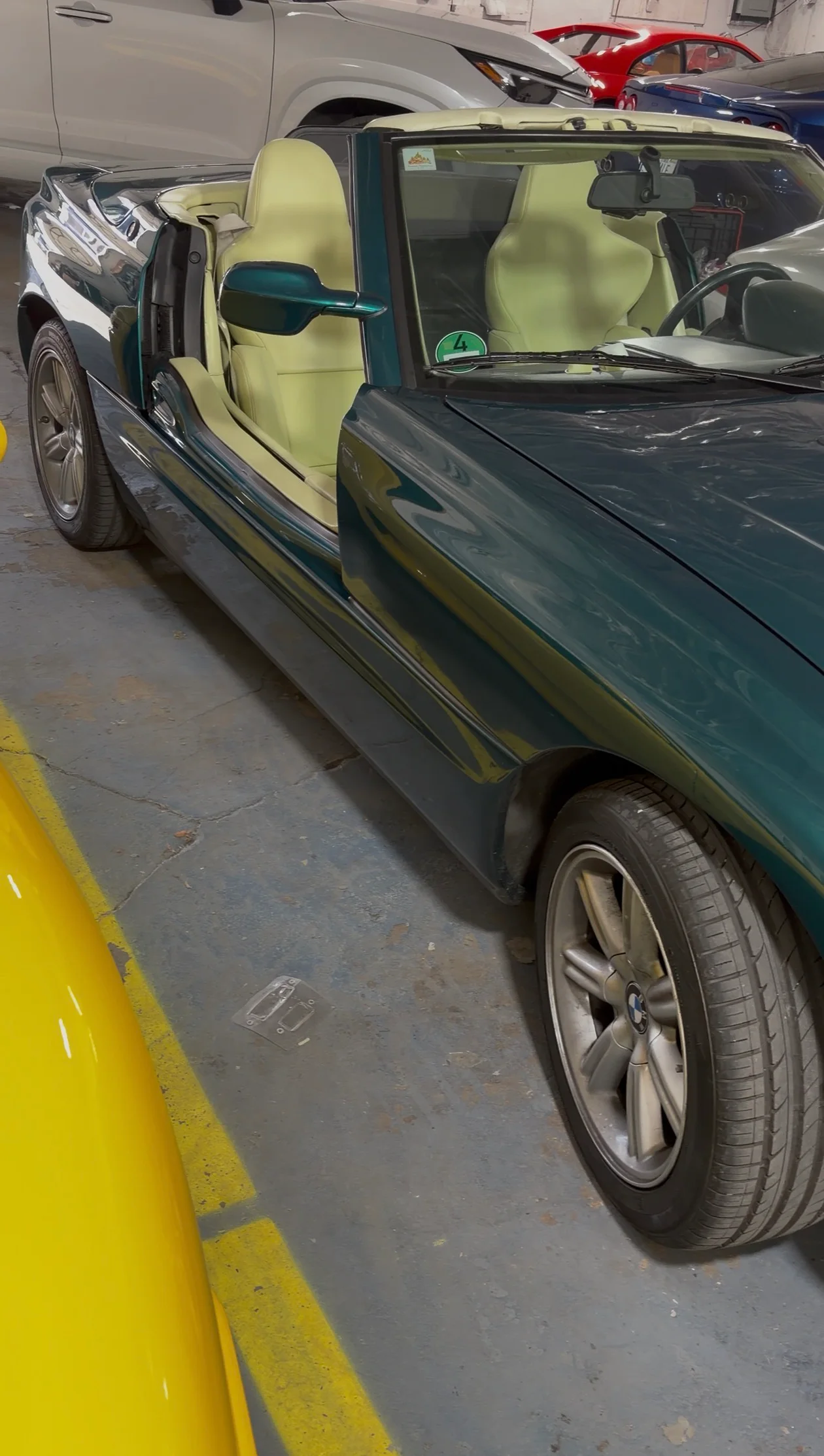
BMW Z1 Interior Leather Preservation in NYC
Preservation-focused leather conservation on a rare BMW Z1 in NYC — Lemon leather seats, sill panels, and trim deep-cleaned, conditioned, and color-refreshed while retaining original character.
View Case Study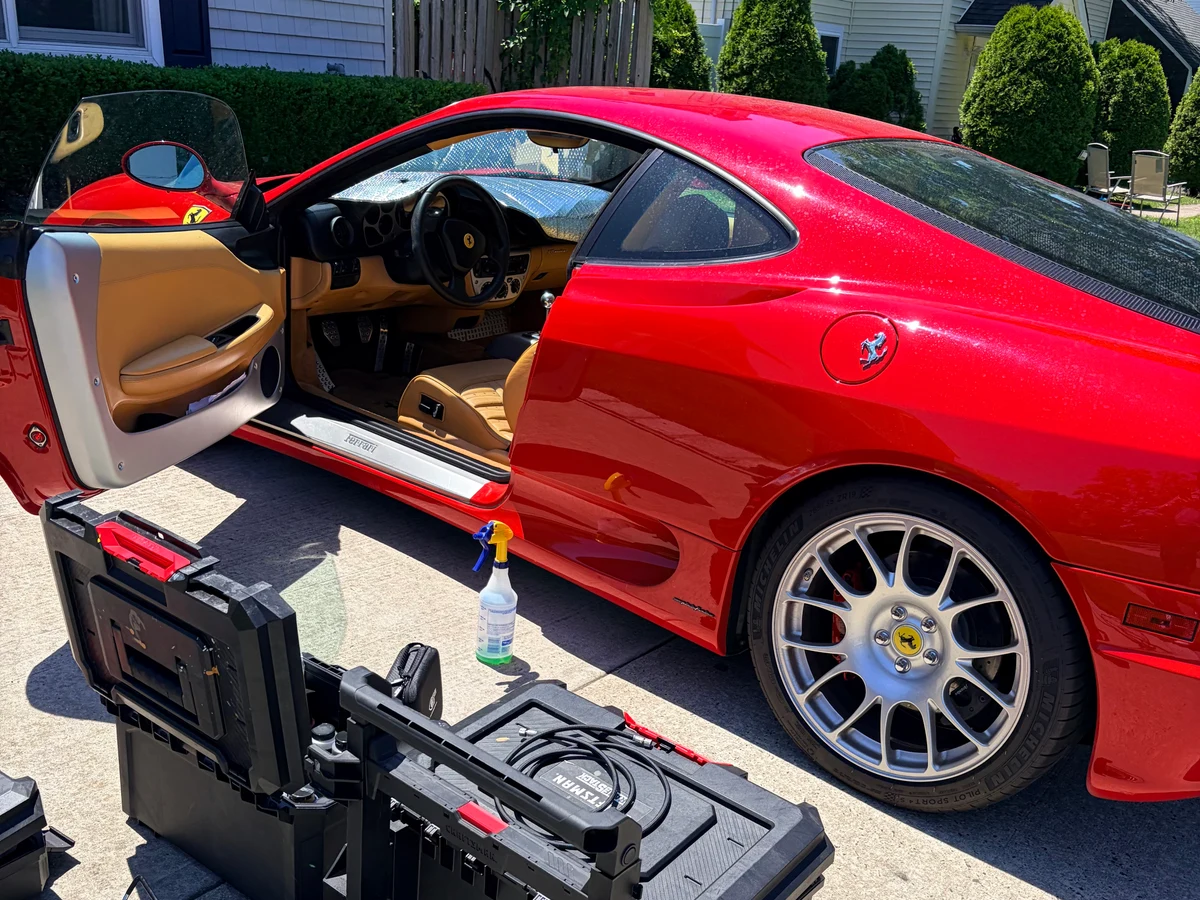
Ferrari 360 Modena Interior Restoration — New Jersey
Full interior leather restoration on a 1999 Ferrari 360 Modena in NJ — cracked seat bolsters, steering wheel, and handbrake gaiter repaired and color-matched to original Cuoio.
View Case Study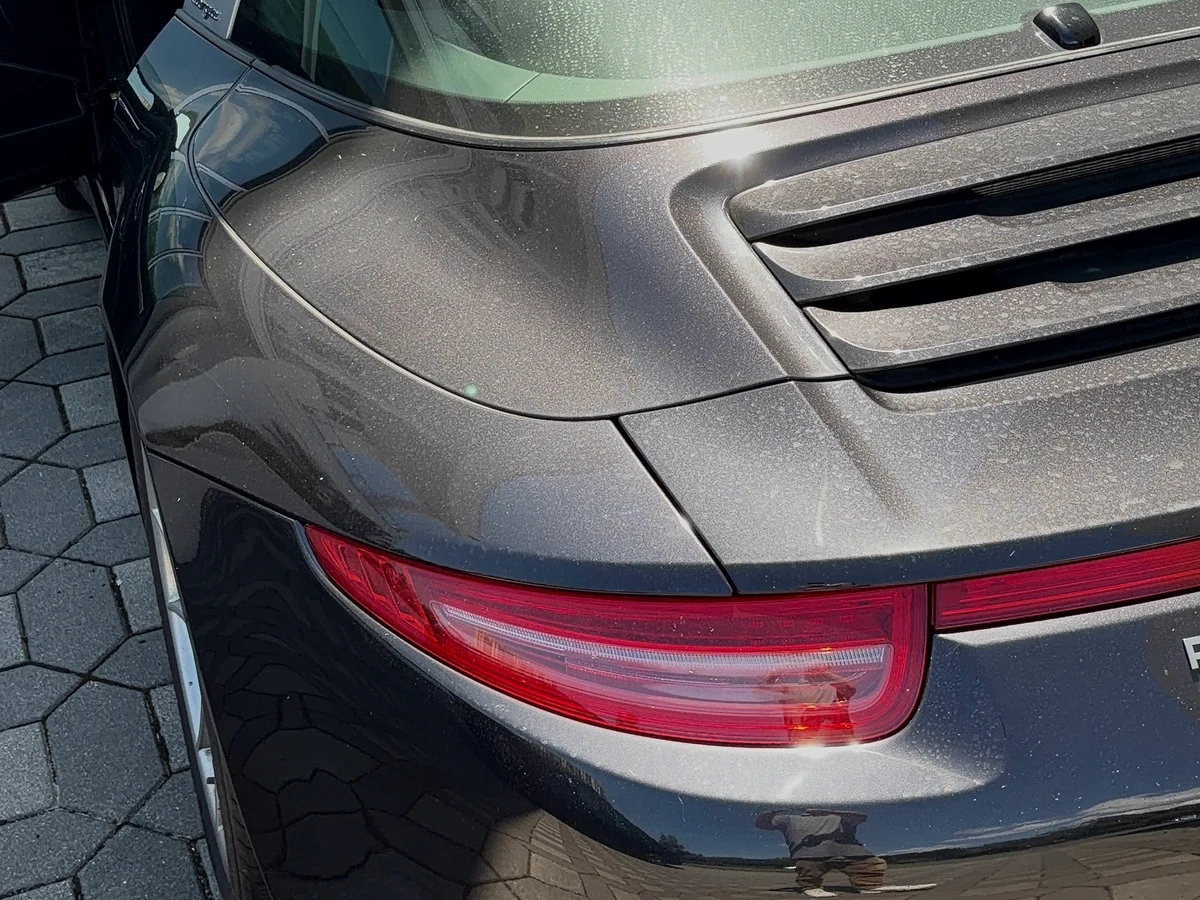
2014 Porsche 911 Targa 4 — Both Front Seats Restored
Complete restoration of both front leather seats on a 2014 Porsche 911 Targa 4 in New Jersey. Factory black leather color restored, bolster cracks repaired, conditioned and protected on-site.
View Case StudyFrequently Asked Questions
Can the original leather in a Porsche 993 be restored rather than replaced?
Yes — and for a 993, preserving the original factory leather is almost always the right approach. The 993's interior leather was made to a high standard and remains structurally sound in most examples even after 25 to 30 years. Professional cleaning, conditioning, localized surface repairs, and precise color matching can significantly improve the appearance and feel of the interior without replacing any original material. Replacement leather always looks newer than the surrounding trim, which is particularly noticeable in a well-maintained classic Porsche.
Why do Porsche 993 owners prefer restoration over reupholstery?
The 993 is the final air-cooled 911 generation, which makes originality a meaningful consideration for many owners. A factory interior in period-correct condition — even one that shows honest wear — carries more authenticity than a freshly reupholstered replacement. Restoration extends the life of original materials, corrects the damage that has accumulated over decades, and protects against further deterioration, all while maintaining the interior character that belongs to the car. For owners who value the 993 as it was built, preservation is a more sympathetic approach than replacement.
How is driver's seat bolster wear repaired on a Porsche 993?
Seat bolster wear on the 993 — typically surface scratching and finish loss along the lateral bolster where drivers enter and exit the low-slung cockpit — is treated through a combination of leather cleaning, surface preparation, localized repair compound application, and precision color matching. The damaged surface is prepared, repaired, and recolored to match the surrounding leather. A protective topcoat is applied to restore durability. The result is a bolster that is significantly improved in appearance and protected from further deterioration, while retaining the texture and character of original factory leather.
What is the Porsche 993 and why is preserving its interior significant?
The Porsche 993 is the last generation of the 911 to use an air-cooled flat-six engine, produced from 1993 to 1998. It is widely regarded as one of the most driver-focused 911s Porsche ever built and occupies an important place in the marque's history. Because the 993 marks the end of an era, many owners care deeply about maintaining the car in an authentic, original state. Original factory leather — cleaned, repaired, and properly protected — is part of what makes a 993 feel correct. Professional restoration extends the life of these materials without compromising the car's original character.
Can you match Porsche factory leather colors for restoration work?
Yes. We blend custom color formulations on-site, working from the least-affected areas of the interior as the reference. Porsche's factory leather colors — including the warm terracotta tones used in 993-era interiors — can be closely matched through careful pigment blending. The objective is color consistency across all treated surfaces, so that restored areas read as continuous with the original unaffected leather rather than as patches.
Do you restore Porsche interiors in New Jersey?
Yes. Leather & Vinyl Care provides mobile on-site leather restoration for Porsche and other vehicles in New Jersey, as well as throughout New York City and Long Island. All work is performed at the vehicle's location — private garages, storage facilities, and collector car environments. No transport required.
How long does a Porsche 993 leather interior restoration take?
A typical leather restoration session on a Porsche 993 — covering the driver's seat, door panel, and related interior surfaces — takes approximately three to five hours on-site. More extensive work across the full interior may require a second visit. All work is performed at the vehicle's location with no teardown or transport needed.
Related Case Studies
- Preserving the Original Leather in a 2013 Mercedes-Benz SLS AMG GT Roadster →
- 2015 Buick LaCrosse Driver Seat Leather and Vinyl Restoration →
- 2018 Lamborghini Huracán Steering Wheel and Leather Interior Refinement →
- Ferrari F355 Berlinetta Leather Interior Preservation for Show Preparation →
- 2008 Porsche 911 Carrera 4 Interior Restoration →
- 2025 Porsche 911 Leather Interior Repair in Manhattan →
- BMW Z1 Interior Leather Preservation in NYC →
- Ferrari 360 Modena Interior Leather Restoration — New Jersey →
- Porsche 911 Targa 4 Leather Seat Restoration in New Jersey →