Porsche 911 Targa 4 Leather Seat Restoration in New Jersey
Both front seats on this 2014 Porsche 911 Targa 4 showed years of accumulated bolster wear — finish loss, surface cracking, and color deterioration concentrated on the outer bolsters where entry and exit contact is heaviest. The leather itself remained structurally sound throughout. The owner's goal was straightforward: restore the factory appearance without replacing anything. All work was completed on-site in New Jersey by Leather & Vinyl Care.
Project Overview
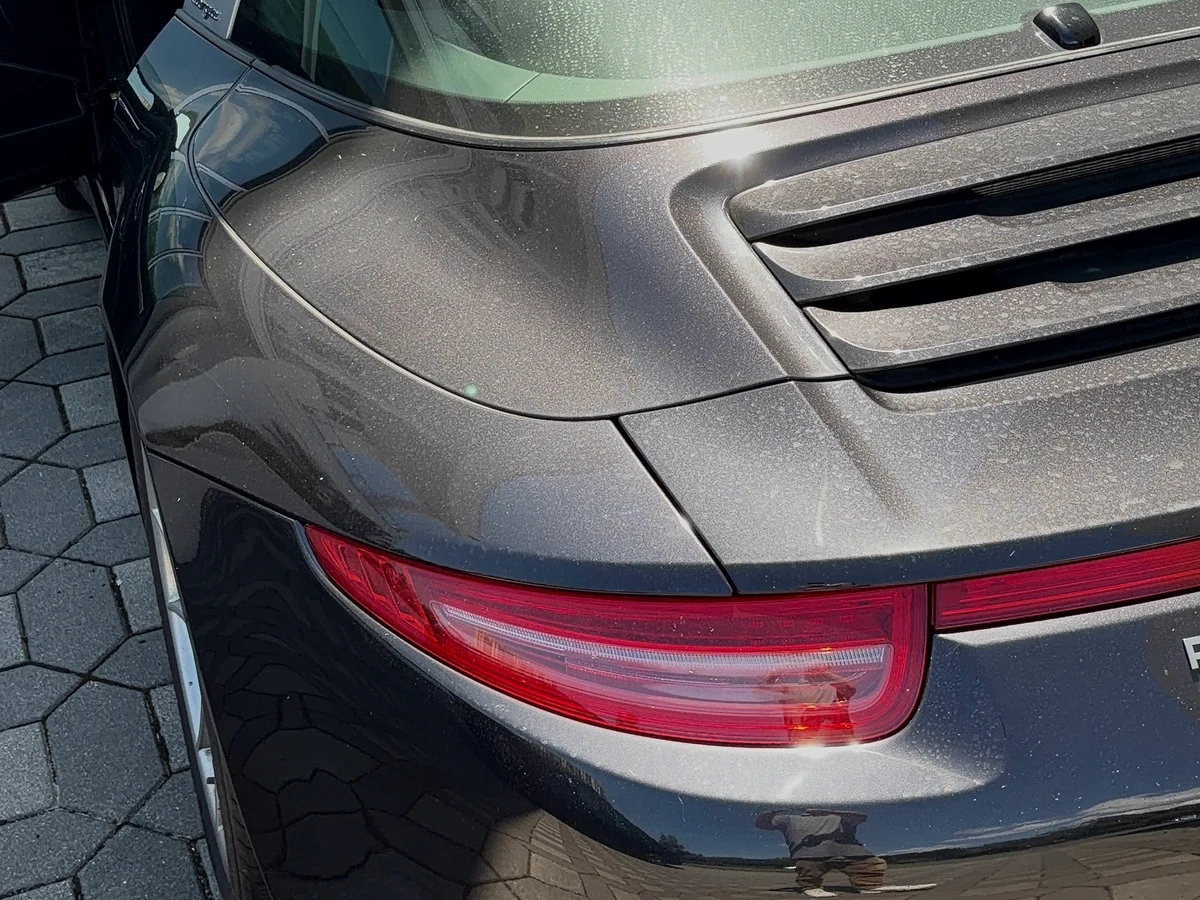
The Porsche 911 Targa 4
The Targa name in the Porsche 911 family carries specific meaning. The original 911 Targa of 1967 introduced a distinctive fixed stainless-steel rollbar behind the passenger compartment — a structural feature that gave the car its silhouette and defined the body style for decades. The 991-generation Targa, reintroduced in 2014, revived this format with a different mechanism: a large glass roof panel that retracts electrically beneath the rear glass screen, operated by a sophisticated electro-hydraulic system. The rollbar remains the defining visual element.
The Targa 4 designation indicates all-wheel drive — the rear-wheel-drive variant is the Targa 2. Both share the same interior architecture: Porsche sports seats in perforated leather, a flat-bottomed steering wheel, and the clean, driver-focused cockpit layout that has characterized the 991 series. The perforated leather on the seat faces and bolsters is a deliberate choice — it breathes, it textures well, and it is durable when properly maintained.
The 911 Targa is not a compromised 911 for owners who cannot decide between a coupe and a cabriolet. It is a distinct variant with its own character, and for enthusiasts who chose it specifically, maintaining it correctly matters. The factory interior leather is part of that.
Interior Condition on Arrival
The damage was limited and well-defined. Both front seats showed the same pattern of wear — concentrated on the outer bolsters, with the driver's seat more affected than the passenger. The leather structure underneath the surface damage was intact on every area of both seats.
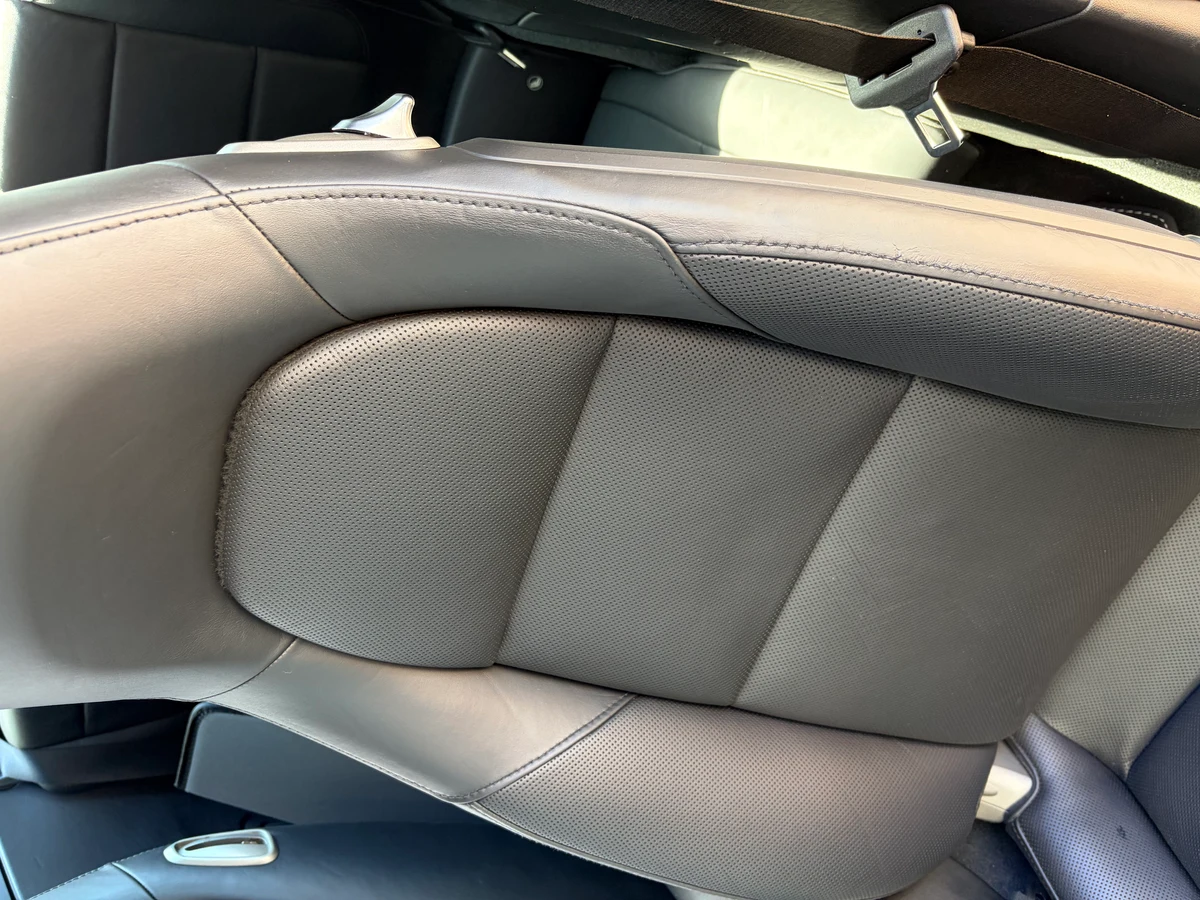
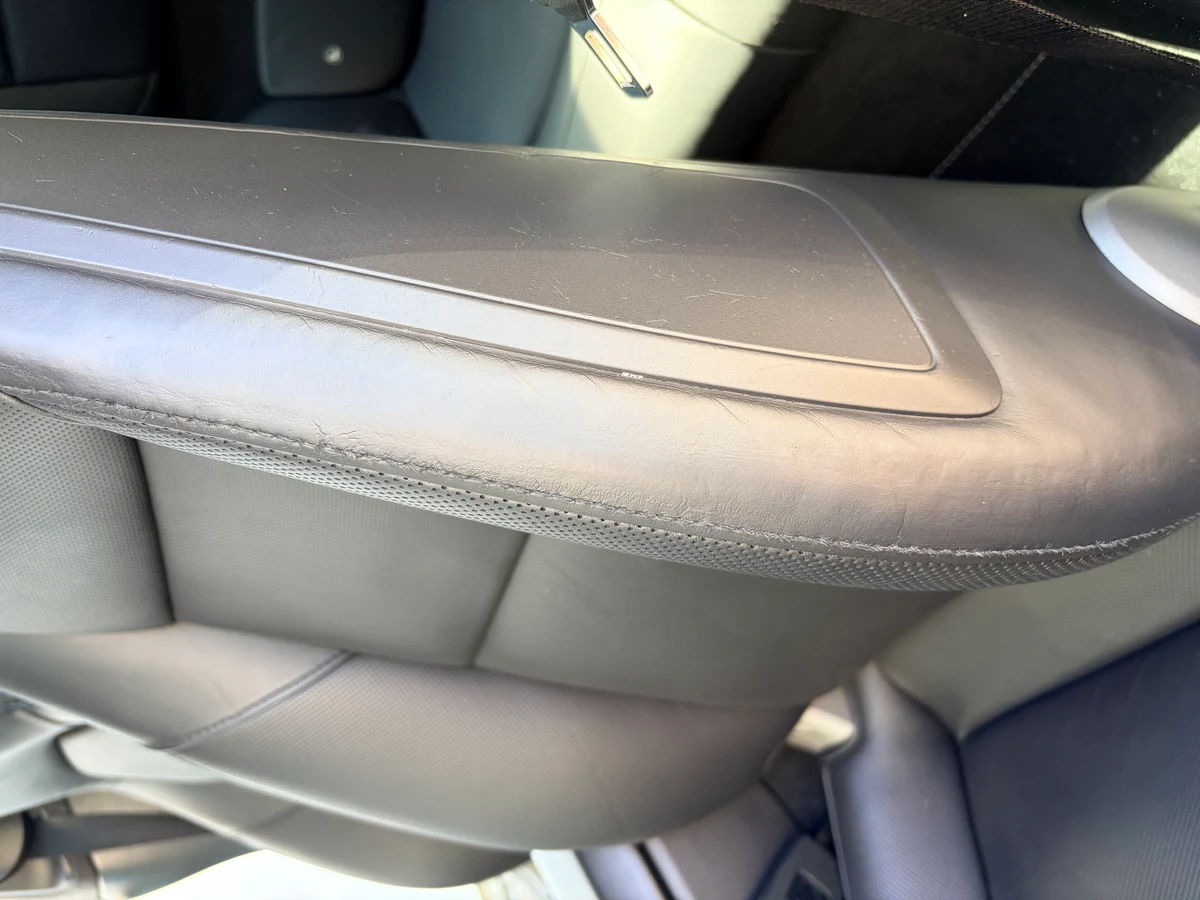
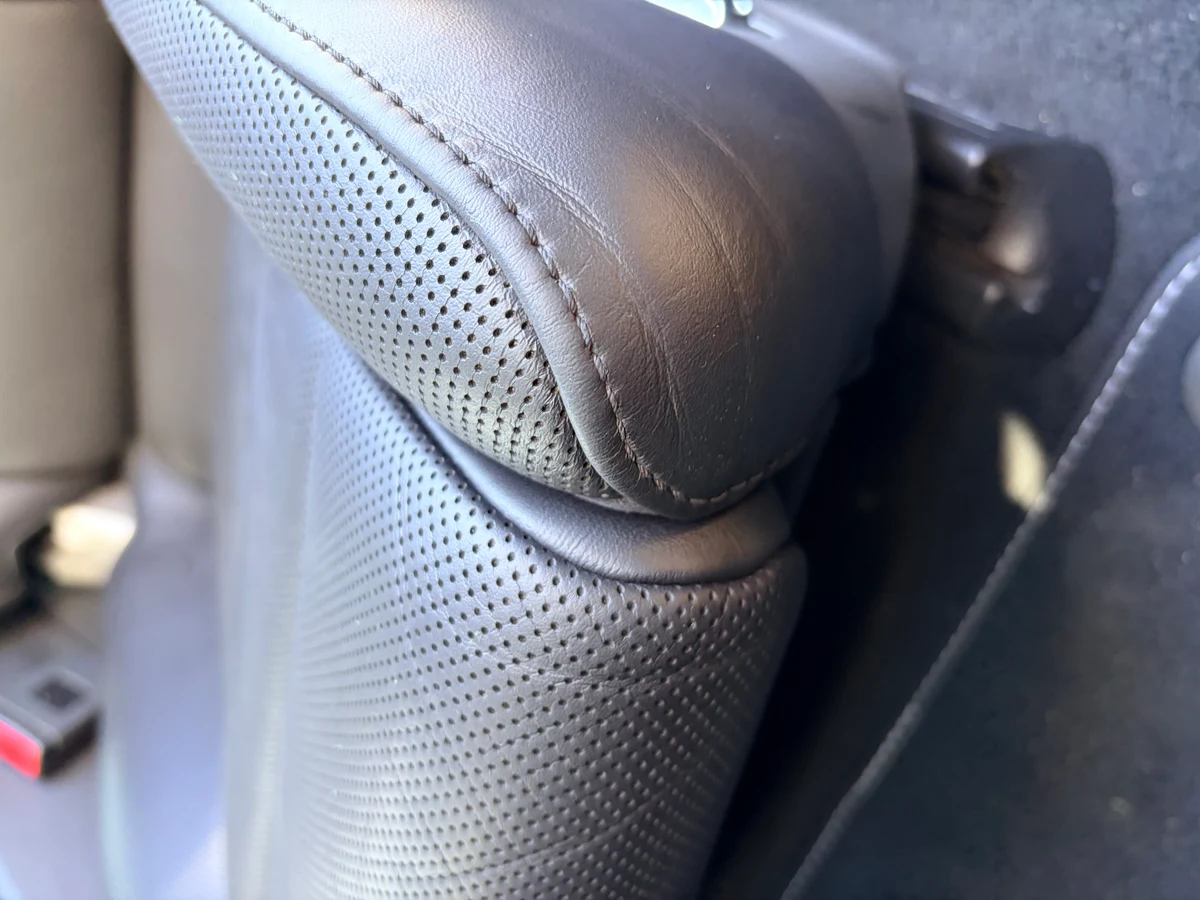
- Outer seat bolsters — color loss and finish deterioration: The lateral bolsters on both front seats showed concentrated finish wear — the most common damage pattern on a car used regularly. The 911's low, snug cockpit means the driver slides past the bolster on every entry and exit, and even careful use accumulates visible surface damage over time. On this car, the damage had progressed from surface wear to fine cracking in the finish layer. The underlying leather was firm and structurally intact.
- Bolster-to-cushion junction — surface cracking: The junction between the lower seatback bolster and the seat cushion showed surface cracking consistent with the flex stress this area experiences when the seat adjusts and when a driver sits down. This is a predictable location for early surface breakdown — the material in this area is under repeated bending stress, and once the protective finish layer cracks, the deterioration accelerates.
- Seat face — uneven surface finish: The seat face leather on the driver's seat showed areas of uneven surface finish and color inconsistency from contact wear across the most-used sections. No cracking or structural damage — but the inconsistency in surface quality was visible and appropriate to address as part of the full restoration.
Why Porsche Leather Should Be Preserved
The owner's brief was specific: preserve and restore the original seats. This is not sentiment — it is the correct technical approach when the leather structure is healthy, and it is the approach that produces the best long-term result.
Original Porsche factory leather is produced to a specification that aftermarket upholstery materials do not replicate. It has a specific grain, texture, and weight that is part of how the interior feels and ages. When you replace seats in a Porsche 911, you introduce material that looks newer than everything else in the car — the dash, the door cards, the headliner, the remaining original leather that surrounds the replacement panels. That contrast does not disappear over time; it persists as a visible discontinuity.
Professional restoration, when the leather structure is sound, achieves what replacement cannot:
- Active surface damage repaired before it progresses to structural failure
- Color consistency restored across worn and unworn surfaces
- Protective finish re-established to resist further wear and UV damage
- Original leather preserved — grain, texture, and natural character retained
- Result reads as well-maintained factory original, not as a replaced panel
For this Targa 4 — a car in good overall condition with structurally intact leather and damage limited to the surface finish — restoration was the clear choice. Replacement would have been unnecessary, more expensive, and visually inferior to a properly executed restoration.
Complete Restoration Process
Condition Assessment
Both front seats were examined in full before any work began. Each surface — seat face, lateral bolsters, seat base cushion, and lower side panels — was assessed for damage type, depth, finish condition, color loss, and structural integrity. The leather on both seats remained structurally sound; damage was confined to the outer bolsters and seat surface finish. This established the repair approach for each area and identified the color reference points for the matching process.
Deep Leather Cleaning
All leather surfaces on both seats were cleaned thoroughly using pH-balanced professional leather cleaners. The bolster surface cracks had accumulated body oils and particulate contamination within the damaged areas — material that would interfere with repair compound adhesion if left in place. The perforated leather panels required careful cleaning to remove contamination from the perforations without affecting the surrounding surface. Cleaning is not optional preparation — it is a precondition for everything that follows.
Surface Preparation
Cleaned surfaces were prepared to accept repair materials and colorant. The damaged bolster areas received light mechanical preparation to remove any residual failed finish and create a stable, consistent base for the repair compound. Preparation is what determines whether colorant adhesion is even across both repaired and adjacent unrepaired leather — inconsistency here shows up in the final result.
Crack Repair and Flexible Filling
The outer bolsters on both seats — the primary damage area — were treated with professional flexible leather repair compound applied in controlled, thin layers. The compound was worked into the cracks to fill them flush and consolidate the fractured surface without overfilling. Flexibility matters here: a rigid filler applied to a surface that flexes under load will crack again. The filler used is formulated to move with the leather through normal seat use.
Texture Refinement
Once crack repair compound had cured, the repaired areas were refined to integrate with the surrounding leather's surface texture. Porsche's perforated sports seat leather has a specific grain character, and the repair areas needed to read consistently with that texture before color application. A repair that is visually and texturally continuous with the surrounding leather blends under normal viewing conditions.
Custom Color Matching
The factory black leather color was developed on-site using the least-affected areas of the interior as the reference — surfaces with minimal UV exposure and contact wear where the original color was closest to its full depth. Black leather is deceptively variable: worn areas appear grey or brown-tinged, UV-affected areas shift cooler or warmer, and each area of the seat reads slightly differently depending on angle and light. A custom pigment blend was developed and refined through test applications until it integrated convincingly with the existing color across both seats.
Full Seat Recoloring, Top Coat, and Conditioning
The matched color was applied to all repaired areas on both seats and extended to blend seamlessly into the surrounding leather. Application was built up in thin, controlled passes — the objective was consistent color depth without obscuring the leather's natural texture or creating a painted appearance. A flexible protective topcoat was applied across all treated surfaces to restore UV resistance and surface durability. After curing, all leather surfaces were conditioned to restore suppleness and protect the material going forward.
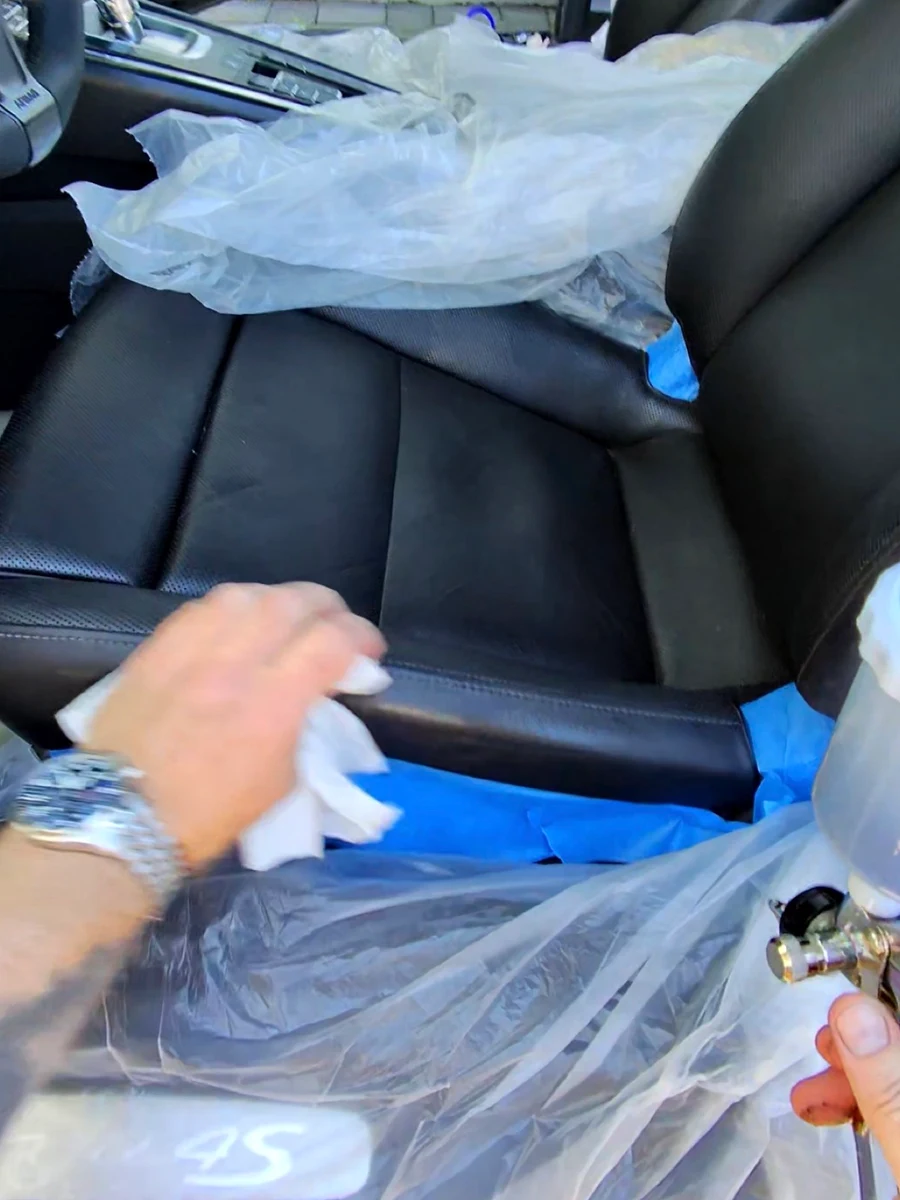
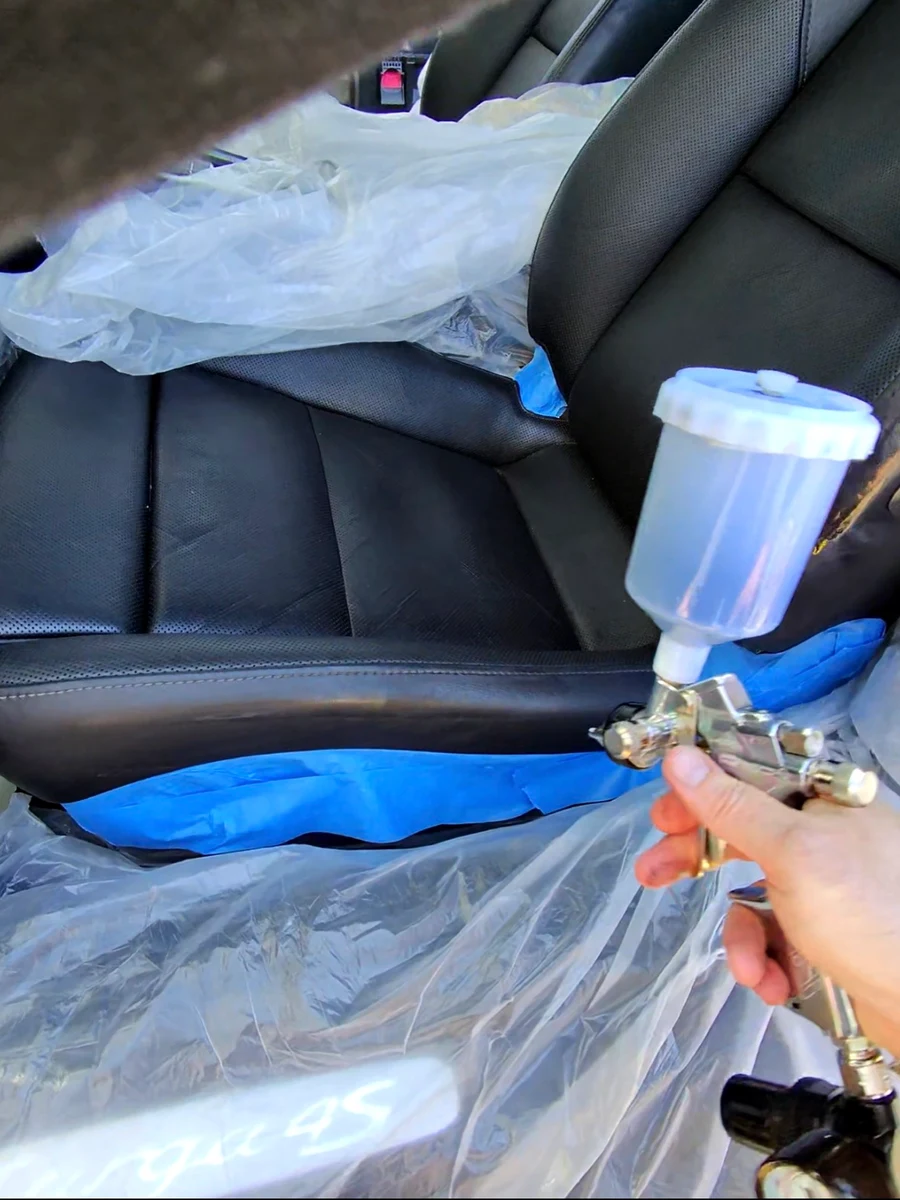
Factory Color Matching
Black leather is not simply black. On a Porsche 911 interior that has seen several years of use, the factory black leather has developed a range of tones: deeper and richer in areas protected from UV, slightly warmer or greyer where sun exposure has been highest, and faded to near-grey in the most worn sections. A formula that matches one area of the interior will look wrong on another.
Color matching on this project required establishing a reference from the least-affected leather — the areas that had seen minimal UV exposure and almost no direct contact wear — and developing a custom pigment blend on-site that read consistently across the range of existing tones. The perforated leather surface adds another variable: pigment behaves differently across perforations than on solid smooth leather, and coverage needs to be controlled precisely to avoid filling the perforations or creating a surface that looks painted rather than dyed.
The blend was refined through test applications until the repaired bolster areas were visually continuous with the surrounding original leather. No single test application on a leather scrap or swatch achieves this — the reference has to be the actual interior, under the actual lighting conditions, against the actual surrounding surfaces.
The Final Result
Both front seats are restored. The outer bolsters — the primary damage area on both seats — are repaired, recolored, and protected. The surface cracking that had developed at the bolster-to-cushion junction is addressed. The seat face leather is consistent in color and finish across both seats. The perforations are clear and the surface texture reads correctly as leather, not as a coated surface.
The leather is original. The grain, the texture, the natural aging character of Porsche factory leather — none of that has changed. What has changed is the surface condition: the damage that had been accumulating is corrected, and the protective finish is restored across all treated areas.
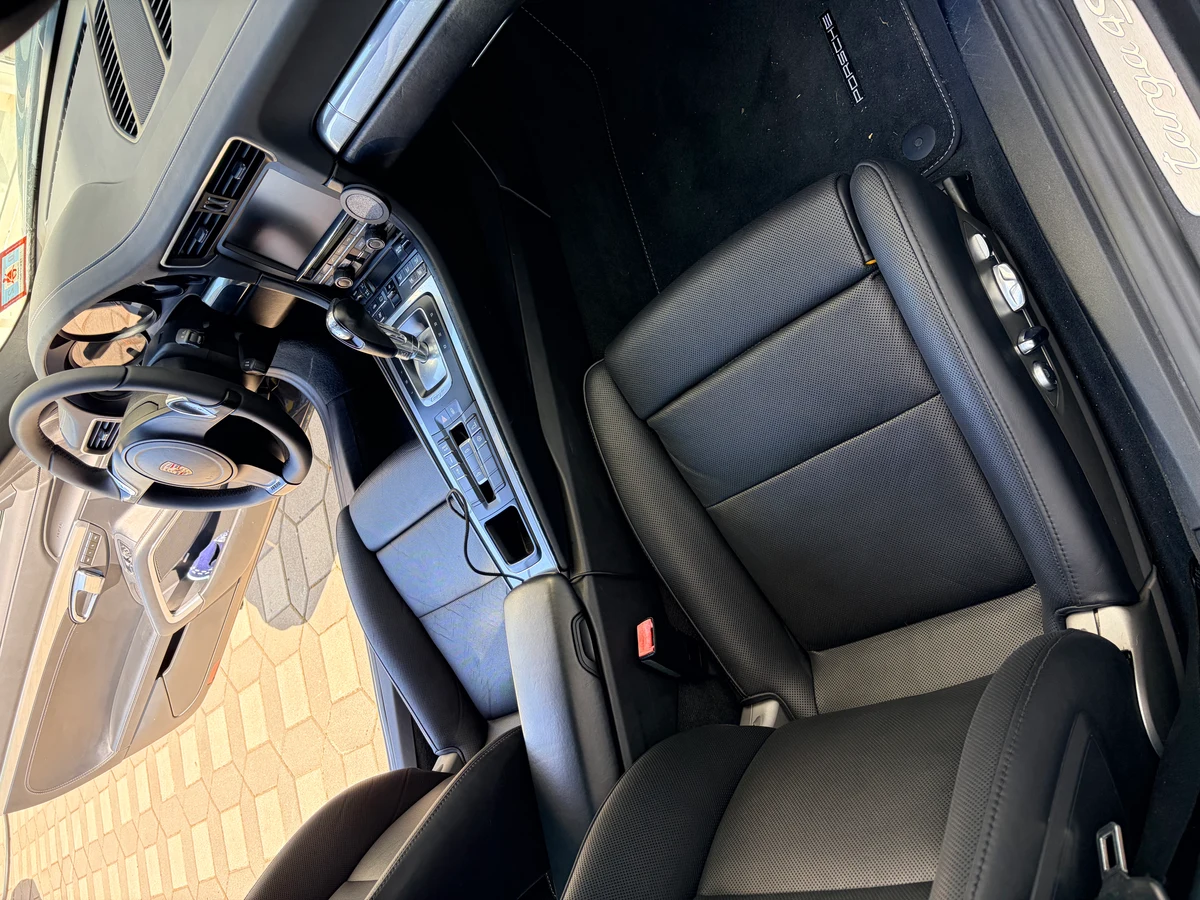
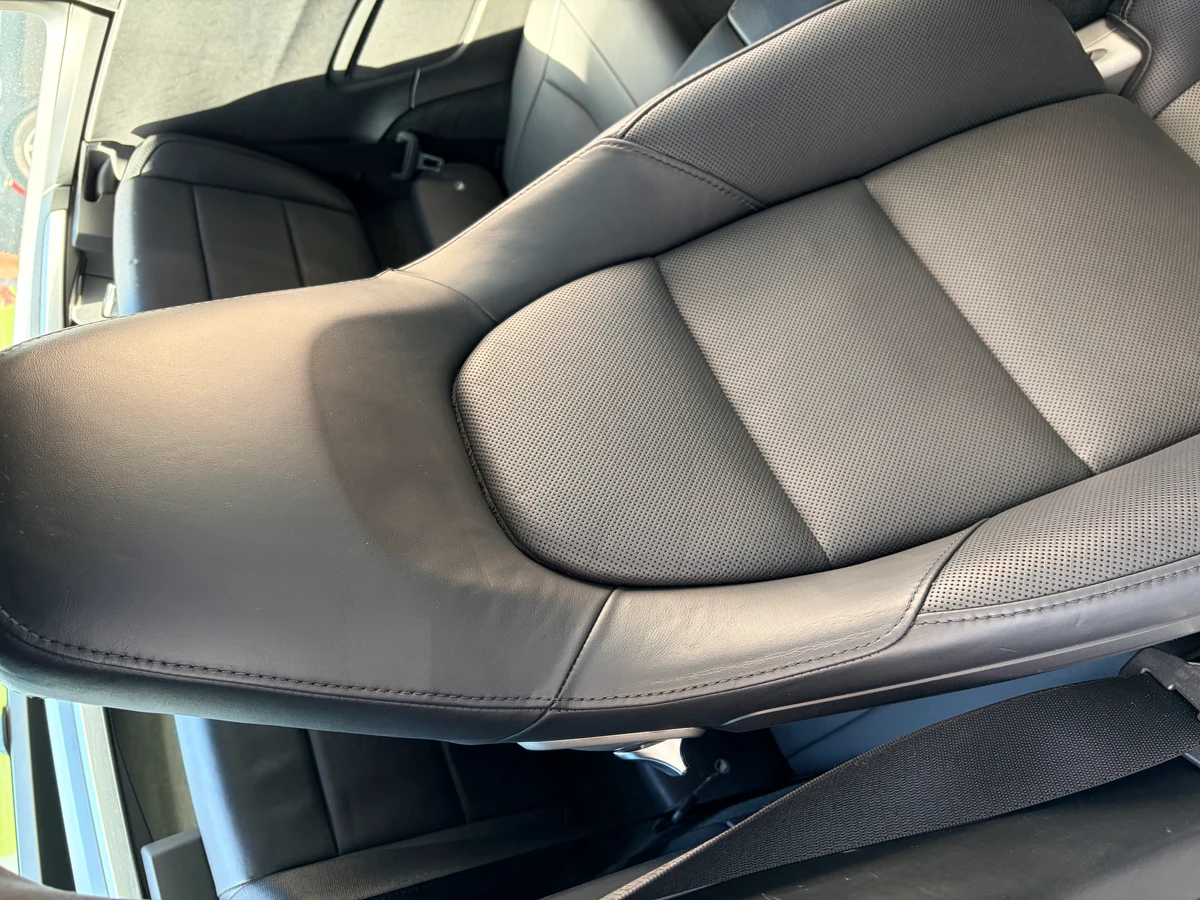
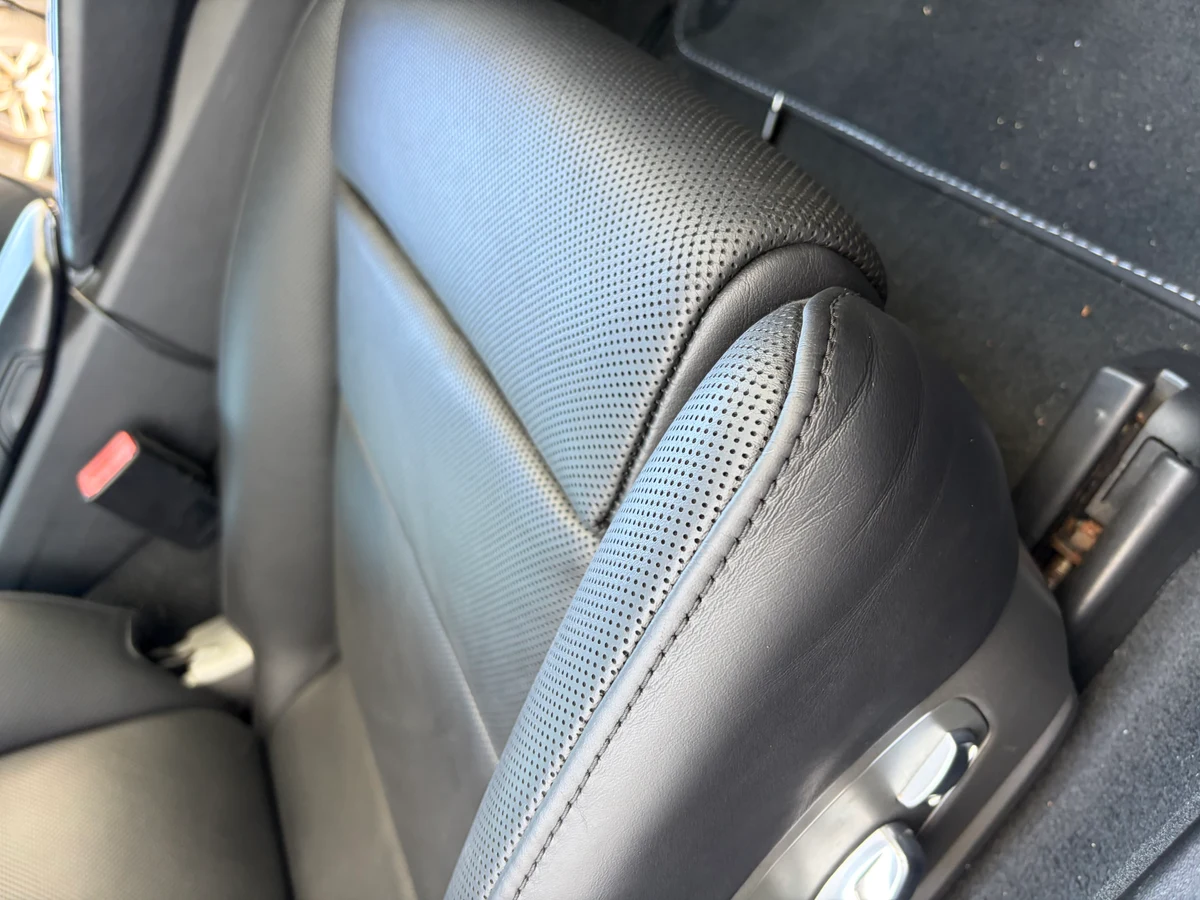
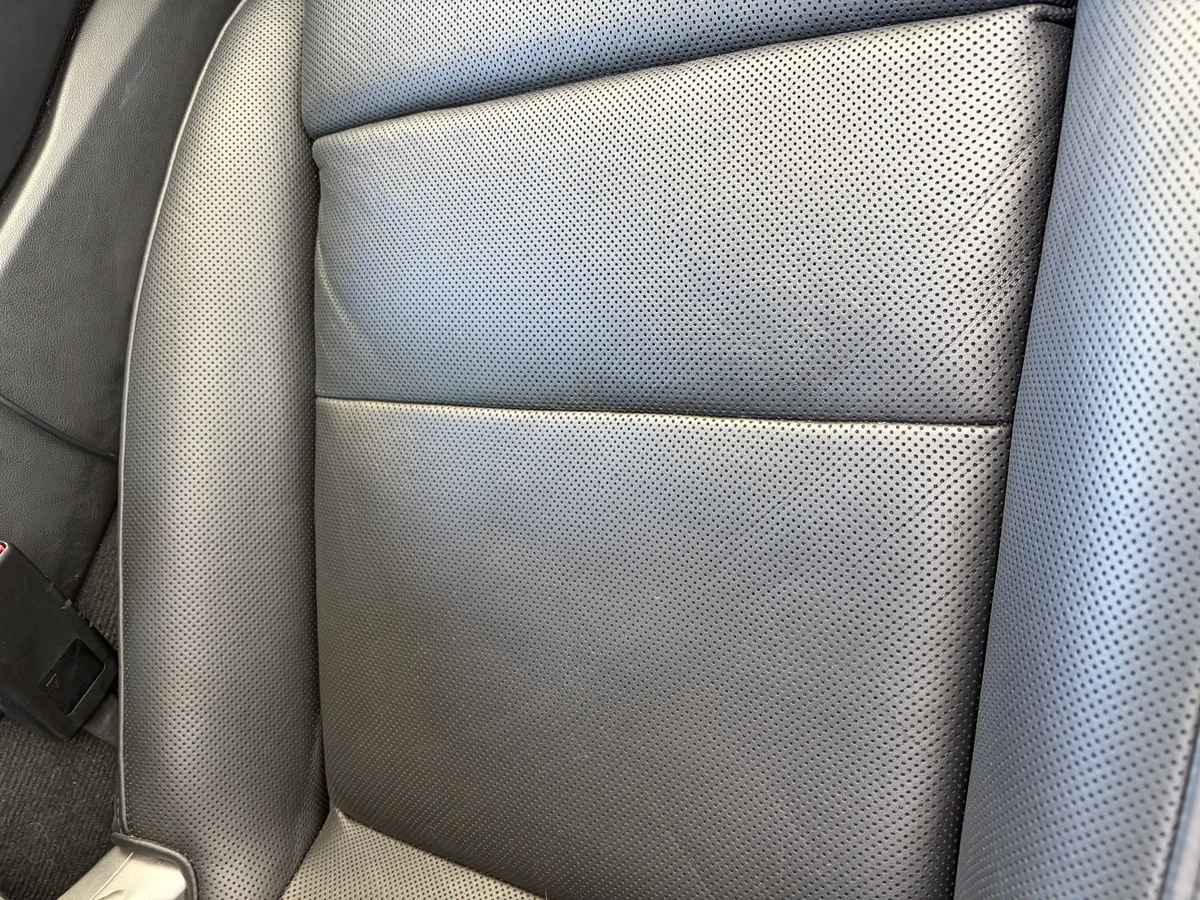
- Driver seat outer bolster — cracking repaired, color matched and restored
- Passenger seat outer bolster — finish deterioration corrected, color consistent
- Lower bolster-to-cushion junction — surface cracking addressed and stabilised
- Seat face leather — color inconsistency corrected, finish restored
- Both front seats protected with flexible UV-resistant topcoat
- All leather conditioned after curing for long-term suppleness
- Original perforated leather preserved throughout — no replacement panels
Porsche Leather Restoration in New Jersey and NYC
Leather & Vinyl Care provides mobile on-site leather restoration for Porsche and other vehicles in New Jersey, as well as throughout New York City and Long Island. All work is performed at the vehicle's location — private garages, driveways, and storage facilities — with no transport required. We bring the same equipment and materials used in professional automotive finishing shops directly to the car.
We work on all Porsche models — 911, Targa, Boxster, Cayman, Cayenne, Panamera — as well as Ferrari, BMW, Mercedes-Benz, and other vehicles where the original interior leather is worth preserving rather than replacing. For a full overview of our approach to luxury and exotic car interior restoration, or for general automotive interior leather repair, see our service pages.
Related Services
- Luxury & Exotic Car Interiors → on-site leather restoration for Porsche, Ferrari, BMW and other premium vehicles
- Auto Interior Restoration → car seat repair, color matching, and surface restoration for all makes
- Leather Re-dyeing & Color Restoration → custom pigment matching for faded or discolored leather interiors
- Leather Cleaning & Conditioning → professional deep cleaning and conditioning to maintain leather longevity
Porsche Leather Restoration — NJ and NYC
If you have a Porsche 911, Targa, Boxster, or other Porsche with leather seats that need professional attention, text us photos for a free estimate. We serve New Jersey, New York City, and Long Island — all work performed on-site at your location.
Related Automotive Projects
Other Porsche and collector vehicle leather work completed by Leather & Vinyl Care.
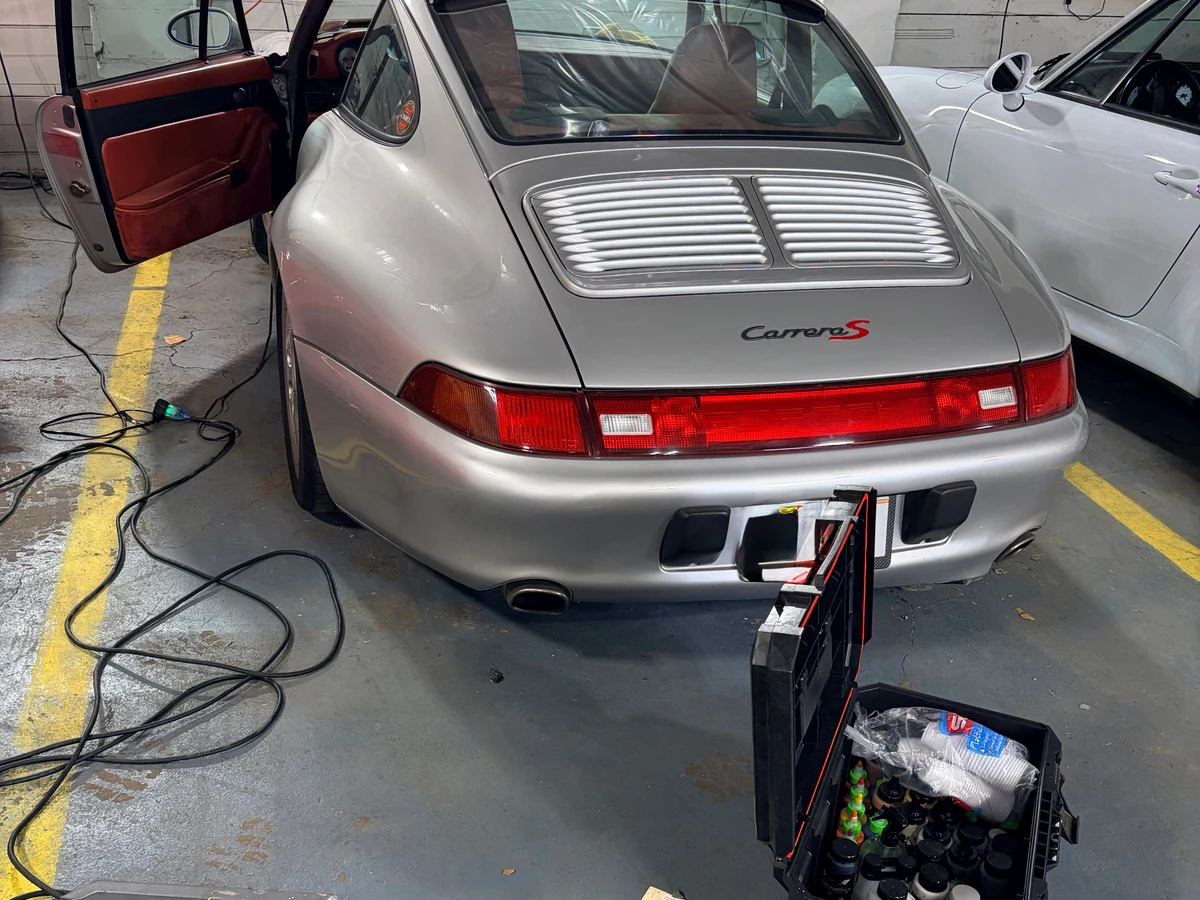
Porsche 993 Carrera S Leather Interior Restoration — New Jersey
Driver's seat bolster wear, door panel seam deterioration, and surface damage repaired and color-matched on-site in New Jersey. Original factory leather preserved throughout.
View Case Study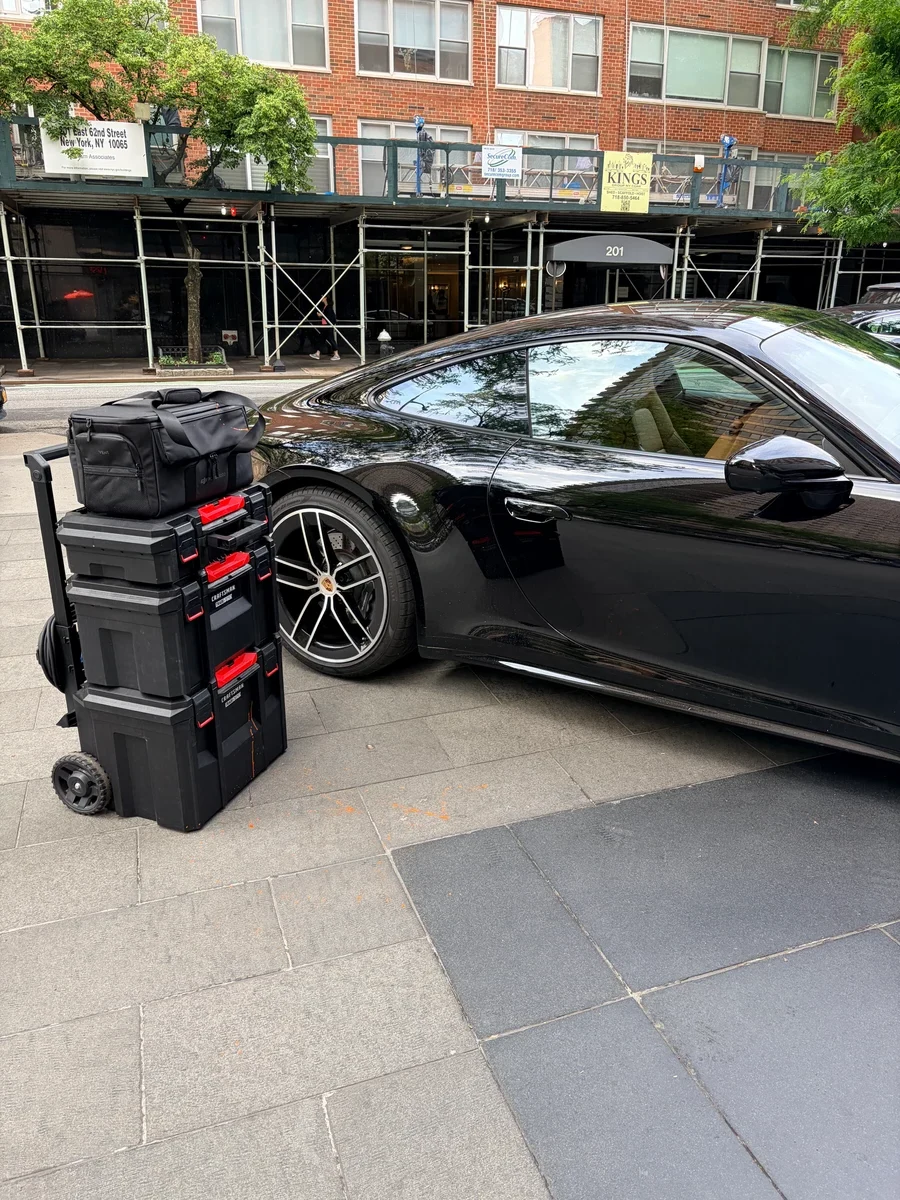
2025 Porsche 911 — Cognac Leather Interior Repair in Manhattan
Rear side panel scratch on a 2025 Porsche 911 repaired and Cognac color matched on-site in Manhattan in approximately 90 minutes.
View Case Study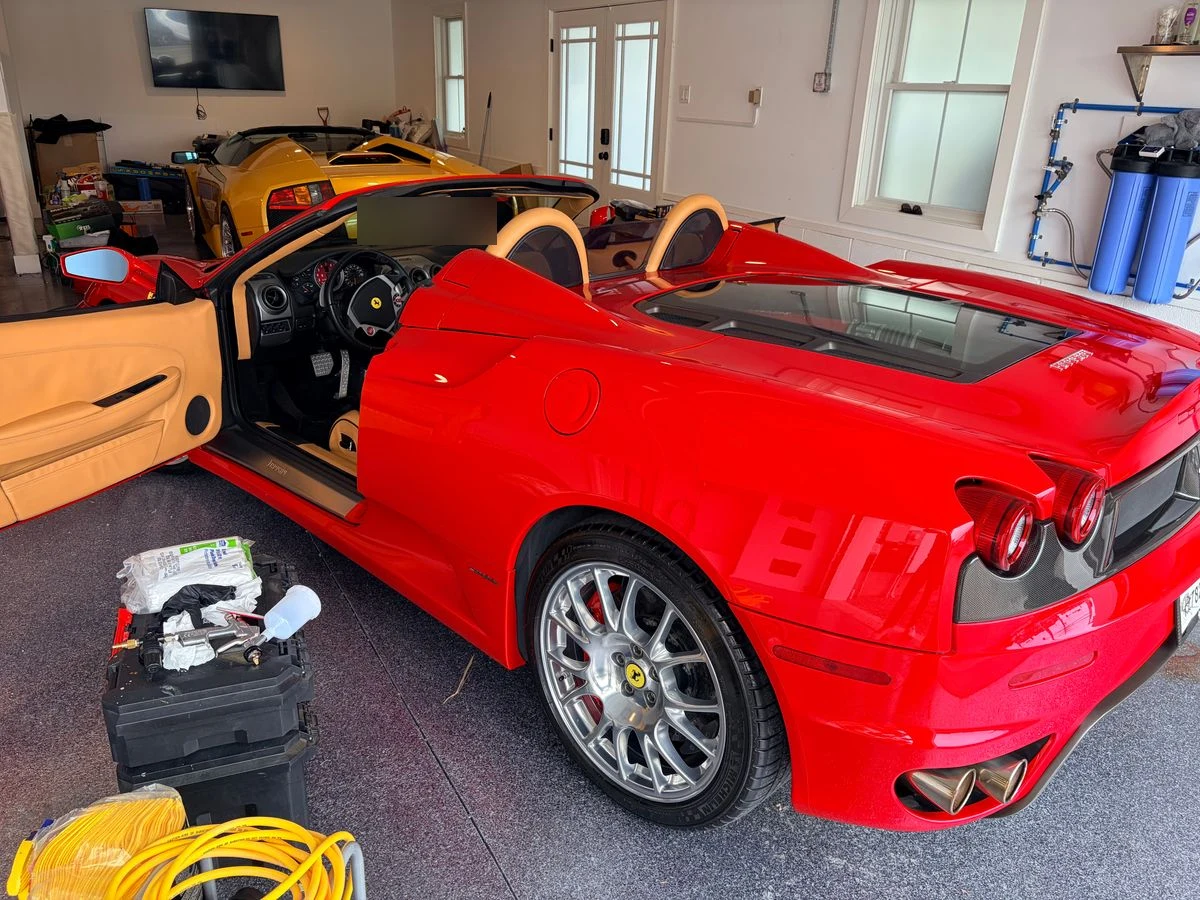
2007 Ferrari F430 Spider Interior Leather Restoration — New Jersey
Both Daytona seats incorrectly recolored before delivery. Corrected to OEM Ferrari Cuoio with precision masking, on-site color development, and airbrush refinishing.
View Case Study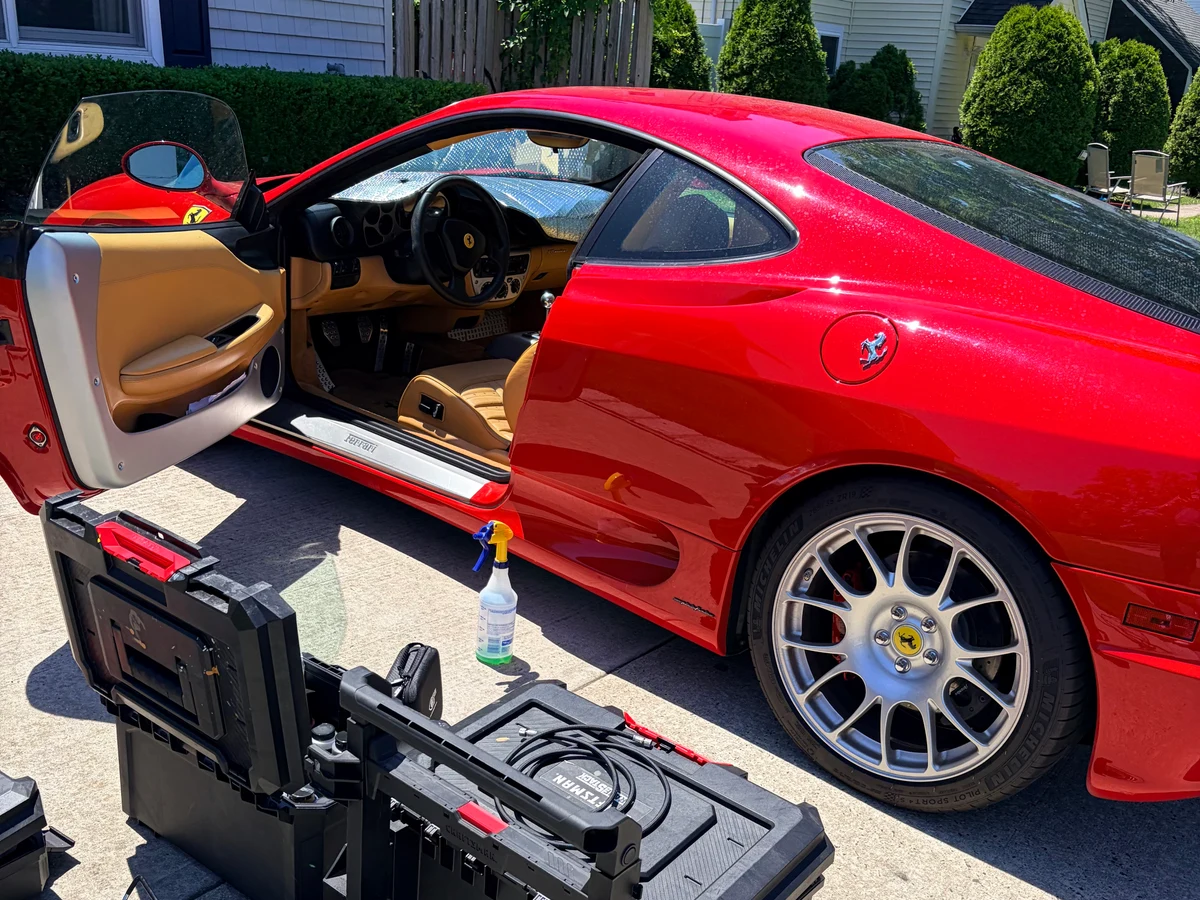
Ferrari 360 Modena Interior Leather Restoration — New Jersey
Full interior restoration on a 1999 Ferrari 360 Modena — seat bolsters, steering wheel, headliner, and handbrake gaiter. Original Cuoio color matched and finished on-site.
View Case StudyFrequently Asked Questions
Can the original leather seats in a Porsche 911 be restored rather than replaced?
Yes — and in most cases, restoration is the right approach when the leather structure is still intact. Porsche's factory leather is produced to a high standard and remains durable for many years with proper care. When surface damage is limited to finish wear, color loss, and superficial cracking — rather than structural tears or material failure — professional restoration can return the seats to near-factory appearance while preserving the original leather. Replacement upholstery always looks and feels different from the surrounding interior, which is immediately noticeable in a car where every surface is visible simultaneously.
What is the Porsche 911 Targa 4 and what makes its interior worth preserving?
The Porsche 911 Targa 4 is the all-wheel-drive version of the 911 Targa — a body variant distinguished by its fixed stainless-steel rollbar behind the passenger compartment and a glass roof panel that retracts electrically. The 991-generation Targa, reintroduced in 2014, revived the classic Targa format with a sophisticated electro-hydraulic roof mechanism. The interior is fitted with Porsche's sports seats in perforated leather — material chosen to last the life of the car when properly maintained. Because Porsche seats are expensive to reupholster and original leather has a character that aftermarket replacements cannot replicate, restoration is both more cost-effective and more authentic when the leather structure remains sound.
How are cracked leather bolsters on a Porsche 911 repaired?
Bolster cracks on a Porsche 911 are addressed through a multi-stage process. The area is cleaned thoroughly to remove body oils and contamination — both interfere with repair compound adhesion. The surface is then prepared mechanically to create a sound base. Flexible leather repair compound is applied in thin, successive layers to fill the cracks and consolidate the damaged surface, building up flush with the surrounding area. The repaired surface is refined to integrate with the surrounding leather texture before color is applied. A compatible flexible topcoat is applied last to restore durability and UV resistance. The result is a bolster that is structurally stable, visually consistent, and protected against further deterioration.
How is Porsche factory black leather color matched during restoration?
Black leather in a Porsche 911 is not a single uniform color — it varies subtly across surfaces, ages differently depending on UV exposure and contact wear, and often develops a slight warmth or coolness in tone over time. Matching it accurately requires working from the least-affected areas of the interior as the color reference, then developing a custom pigment blend on-site that integrates convincingly with the existing leather rather than simply looking uniformly black. Test applications are refined until the blend reads consistently across the range of tones present in the car. The goal is color continuity across treated and untreated surfaces — not a visible patch that is slightly too dark, too flat, or too saturated.
Is leather restoration better value than Porsche seat reupholstery?
In most cases, yes — significantly so. Professional Porsche seat reupholstery can cost several thousand dollars per seat, requires seat removal, and results in replacement leather that will look newer than the surrounding interior and age differently from the original material. Leather restoration, done correctly, addresses the specific damage present while preserving the original leather and its authentic character. When the leather structure is intact — which is the case for most bolster and surface wear — restoration delivers improved appearance and protection at a fraction of the cost of replacement, without removing or modifying the original material.
Do you restore Porsche leather seats on-site in New Jersey?
Yes. Leather & Vinyl Care provides mobile on-site leather restoration for Porsche and other vehicles throughout New Jersey, as well as New York City and Long Island. All work is performed at the vehicle's location — private garages, driveways, and storage facilities. No transport required. We work on all Porsche models including the 911, Targa, Carrera, Boxster, Cayman, Cayenne, and Panamera.
How long does a full front seat restoration take on a Porsche 911?
A complete restoration of both front seats — covering deep cleaning, surface preparation, crack repair, custom color matching, recoloring, and protective topcoat — typically takes four to six hours on-site. The exact time depends on the extent and distribution of damage across the seats. All work is completed in a single visit at the vehicle's location, with no panel removal or transport required.
Related Case Studies
- 2015 Buick LaCrosse Driver Seat Leather and Vinyl Restoration →
- Porsche 993 Carrera S Leather Interior Restoration in New Jersey →
- 2025 Porsche 911 Leather Interior Repair in Manhattan →
- Ferrari F430 Spider Interior Leather Restoration — New Jersey →
- Ferrari 360 Modena Interior Leather Restoration — New Jersey →
- 1992 Ferrari 512 TR Interior Restoration in NYC →