BMW Z1 Interior Leather Preservation in NYC
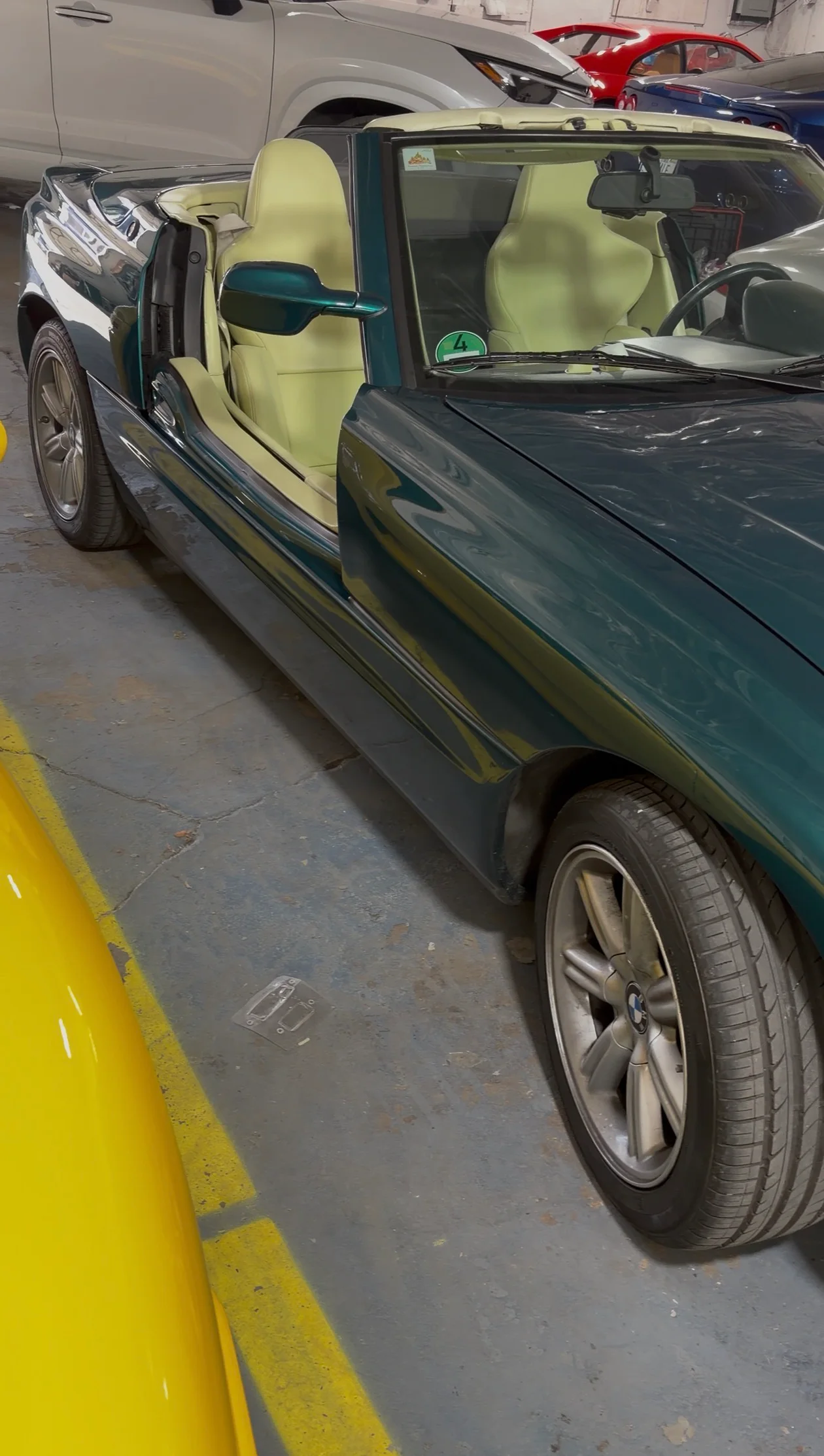
The BMW Z1 is among the rarest and most architecturally distinctive roadsters BMW has produced. This example — finished in dark green with the factory Lemon leather interior — came to us for preservation work, not transformation. The owner wanted the interior improved in durability, appearance, and tactile feel, while retaining the authentic character of a 30-year-old original interior. No refinishing to new condition. No replacing what could be preserved. All leather preservation and color refresh work was completed on-site at the client's location by Leather & Vinyl Care.
Project Overview
The BMW Z1 — A Rare Collector Roadster
BMW produced the Z1 from 1989 to 1991, with all examples assembled by hand in Munich. Total production was limited, and the vast majority of Z1s remained in Europe — making the Z1 an exceptionally rare sight in the United States and one of the most distinctive collector vehicles in the BMW lineage. Unlike the more familiar Z3 and Z4 roadsters that followed, the Z1 was never intended as a volume product. It was an engineering exercise in advanced plastics bodywork, composite construction, and experimental design — more a platform for BMW research than a traditional sports car.
The detail that defines the Z1 for anyone who has seen one in person is its doors. Rather than hinging outward, the Z1's doors retract downward into the body sills — disappearing entirely below the sill line when open. Occupants step over the sill and drop into the cockpit, which wraps tightly around both seats in a way that feels more like a racing environment than a road car interior. The Z1 can be driven legally with the doors fully lowered, which transforms the driving experience entirely.
Among the Z1's factory interior options, the Lemon leather stands out. It is a warm, slightly yellow-green cream that was unusual even by 1989 standards — a color choice that reads as bold on a period BMW and contributes significantly to the Z1's visual character. An original Lemon interior in authentic, well-preserved condition is part of what makes a Z1 significant to collectors and enthusiasts who understand what they are looking at.
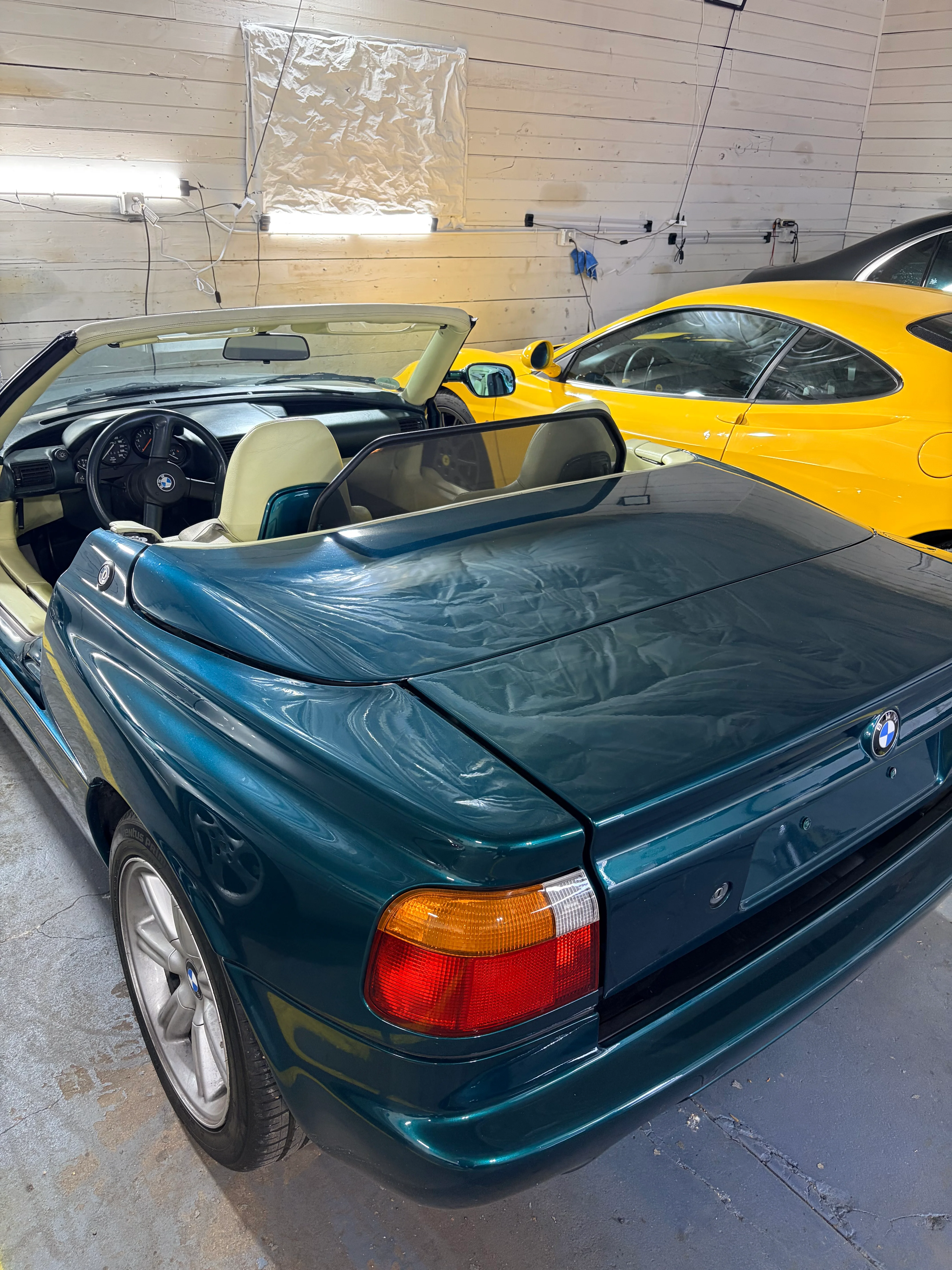
The Z1 Cockpit — Leather Surfaces and Entry Sills
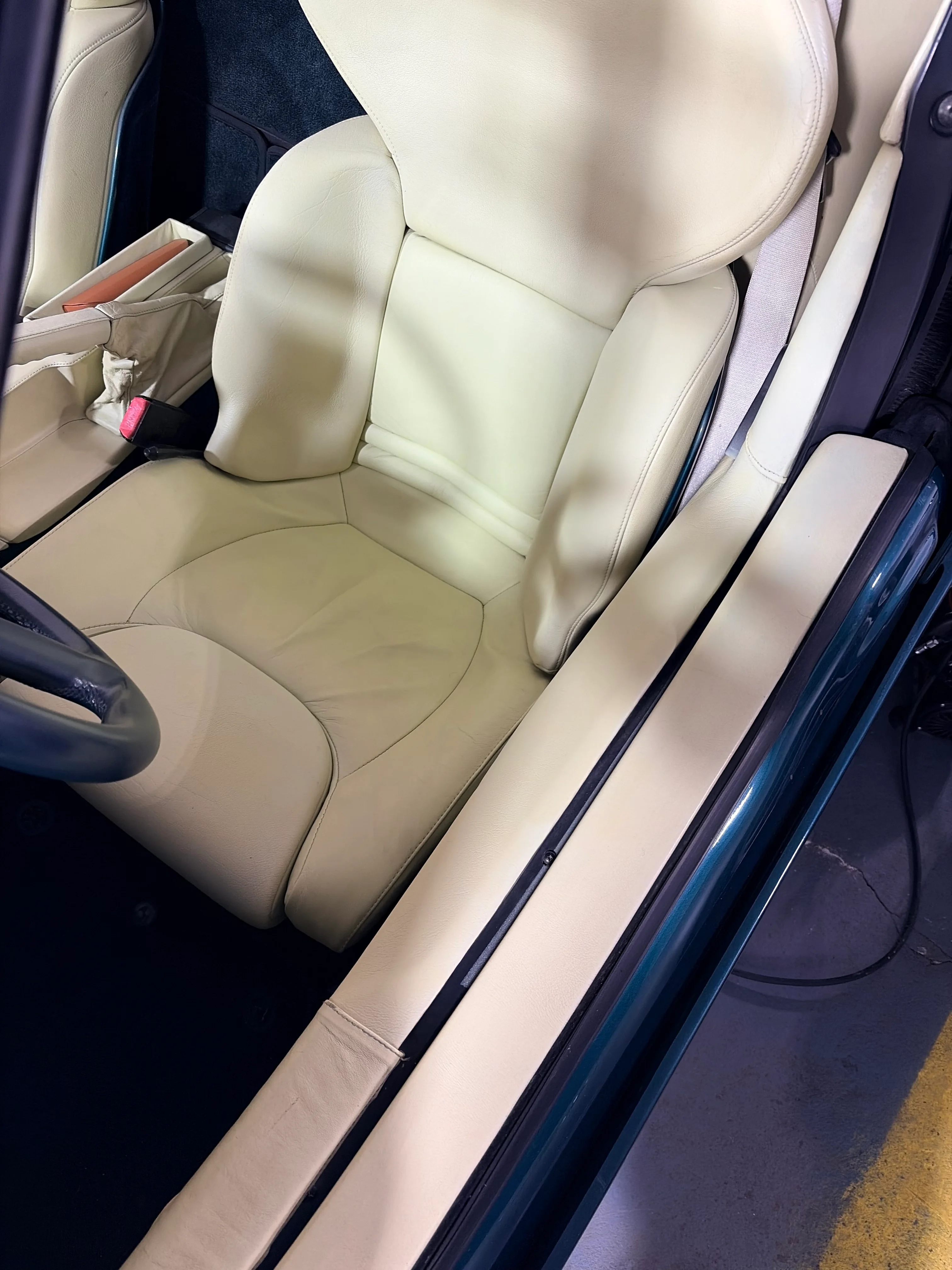
Because the Z1's doors retract into the sills rather than opening outward, the leather-covered sill panels become the primary surface occupants contact during entry and exit. On a conventional car, door panel leather is largely protected in use — touched only when the door is operated, and typically shielded from direct contact during ingress and egress. On the Z1, the sill panels bear the full load of that contact every time the vehicle is used with the doors in the lowered position.
The result, over 30 years, is predictable: the sill panels show a distinctly different wear pattern than the seat surfaces, with contamination, surface transfer, and friction-related damage concentrated along the entry edge. Addressing this correctly requires understanding the cause — and treating it differently from the surface wear on a seat bolster or headrest.
Condition Assessment — What Thirty Years Looks Like
The condition of this Z1's Lemon interior was consistent with a vehicle that had been driven and enjoyed over its life, rather than stored away from use. The deterioration was age-related and genuine — not the result of neglect or mishandling, but simply of time passing without a comprehensive leather care programme. Each surface told a slightly different story.
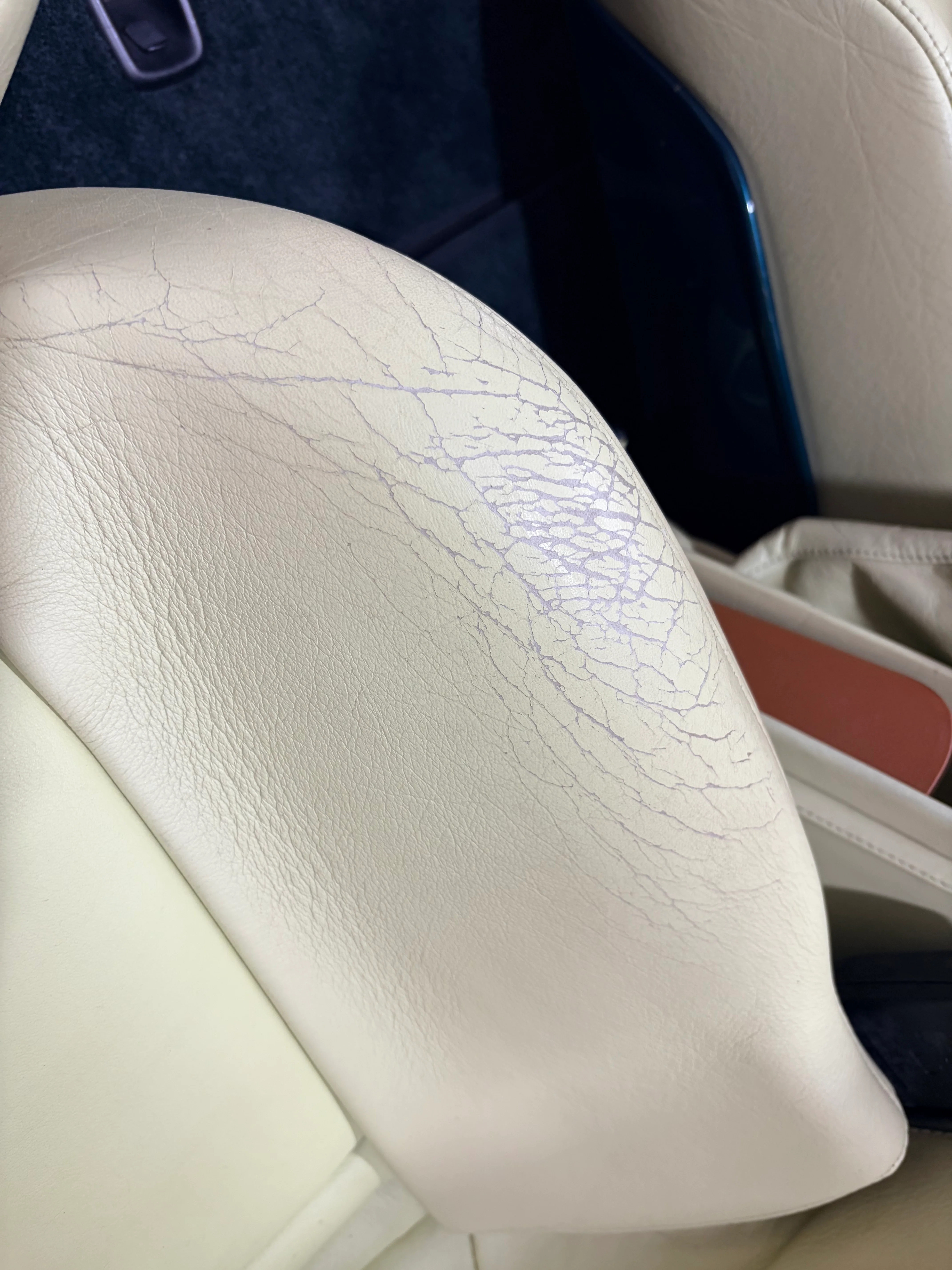
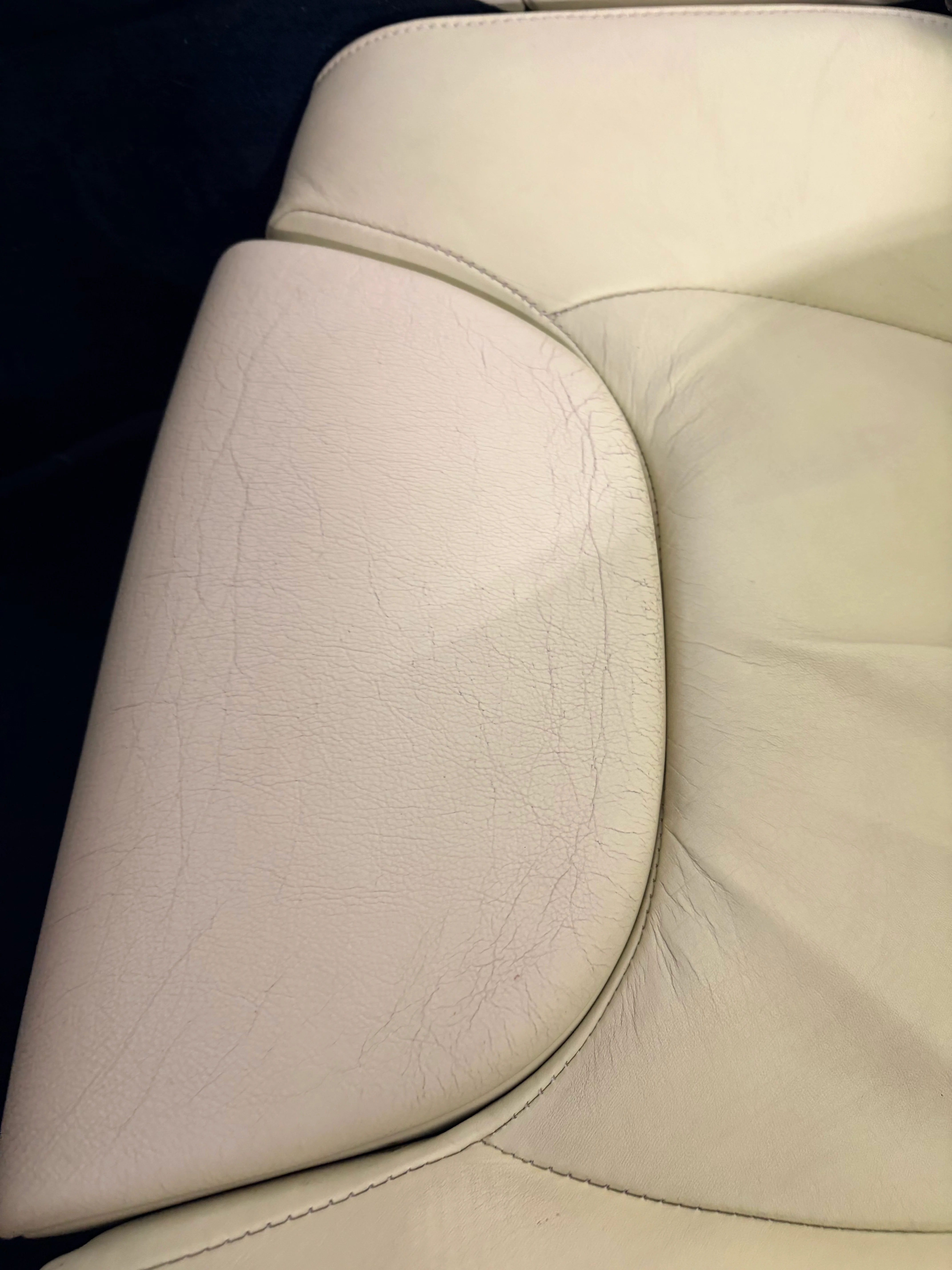
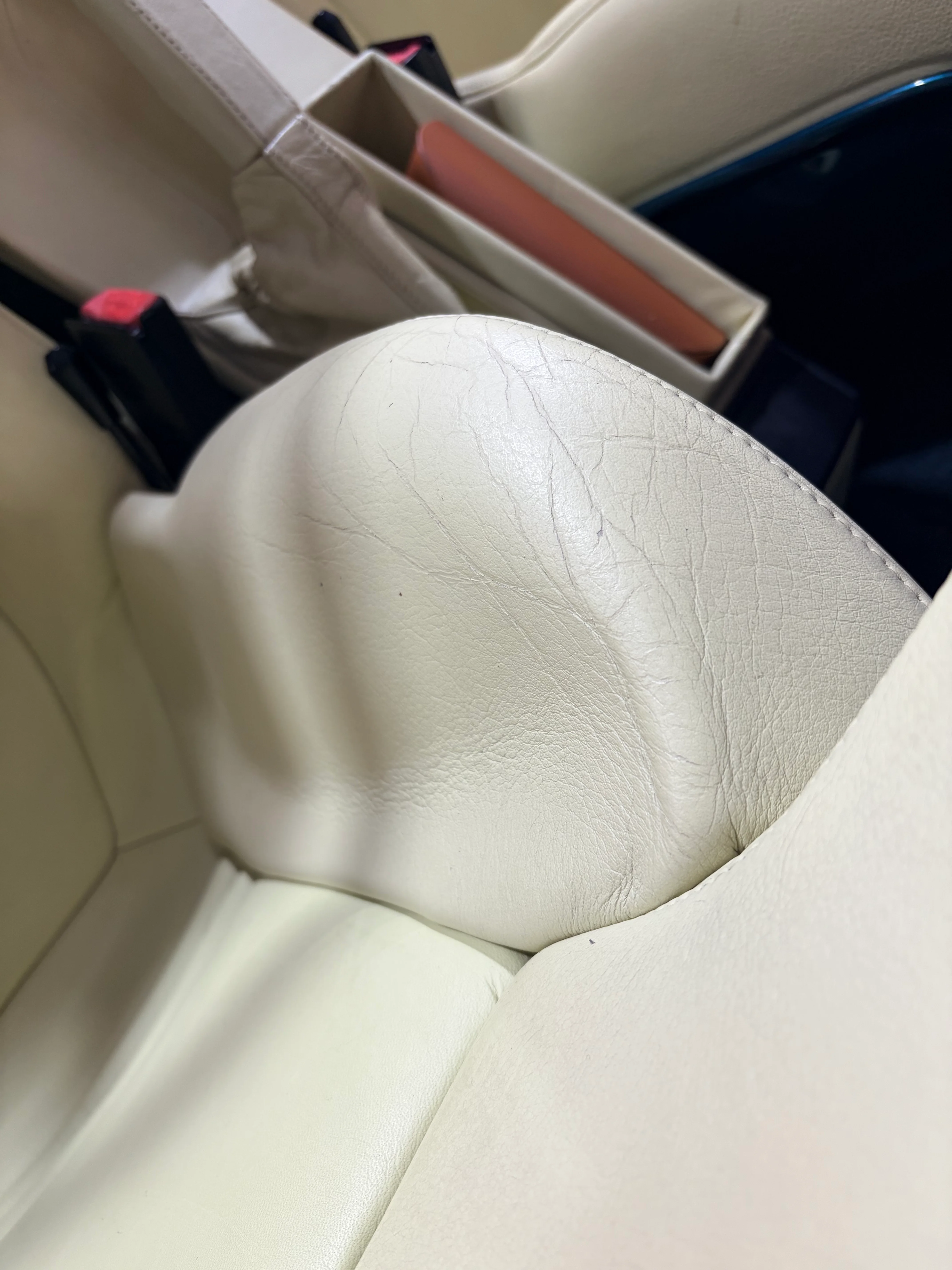
- Seat back surfaces — surface crazing: The most visually prominent damage was on the seat backs, where a pronounced network of surface cracks had developed. The crazing showed a distinct blue-grey tone against the cream Lemon leather — a characteristic of oxidised finish breakdown in aged pale leather. The leather beneath the surface cracking remained structurally sound; this was surface finish failure, not hide failure.
- Seat bolsters — entry and exit wear: The lower bolsters on both seats showed cracking concentrated at the high-contact entry areas. This is the most common wear pattern on any two-seat roadster with regular use — the bolster absorbs lateral load during ingress and egress, and without conditioning, the surface finish fractures over time. The cracking had not reached a structural depth but was visually significant.
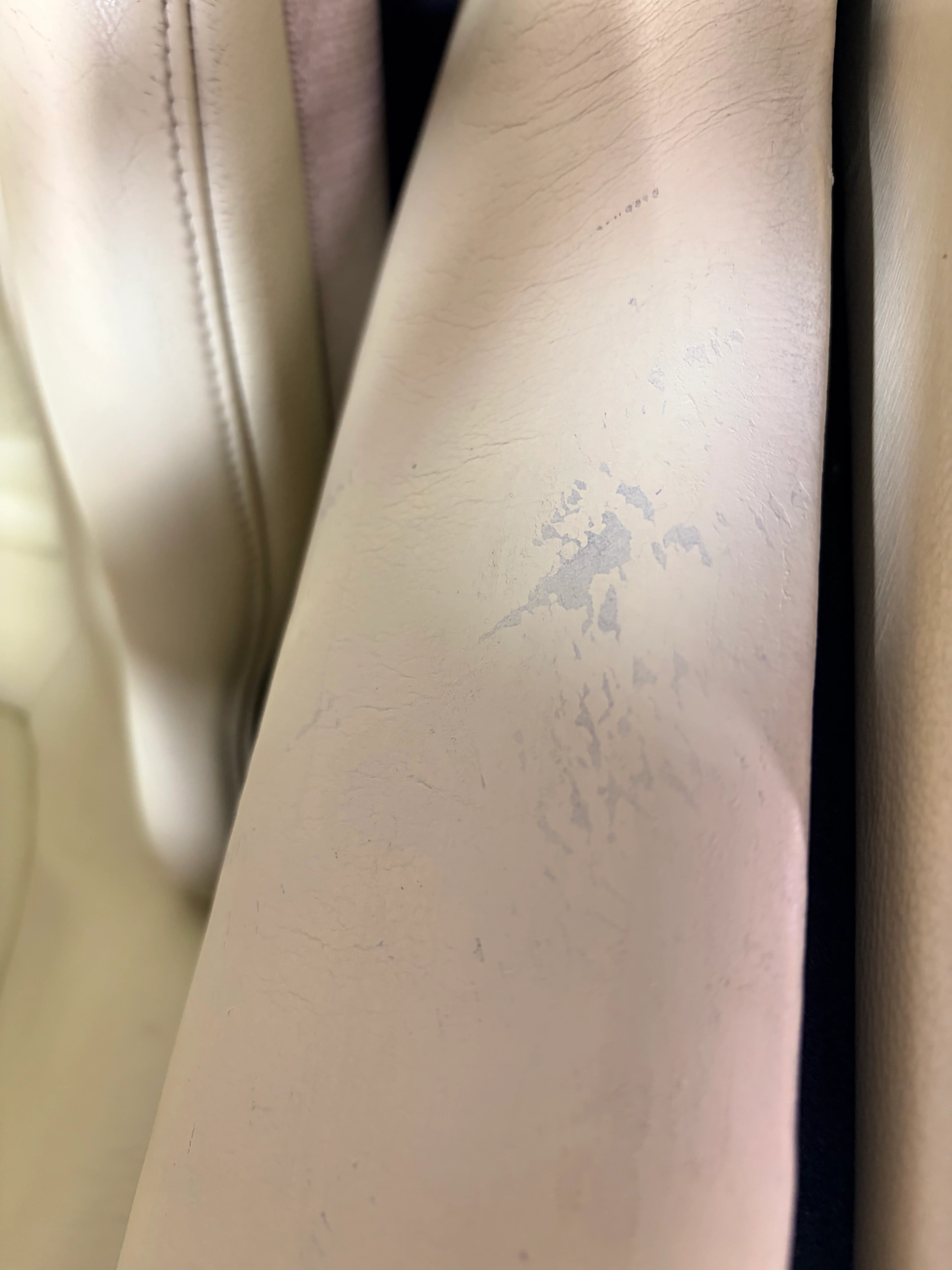
- Cockpit sill panels — contamination and surface wear: The leather-covered sill panels showed surface contamination, discoloration patches, and friction-related surface damage consistent with the Z1's unique entry pattern. Light blue-grey transfer marks were visible — material transferred from contact during entry, embedded into the surface over years of use. The sill leather had also dried significantly, making it more susceptible to further damage.
- Headrests — surface cracking at the curved edge: The curved upper edges of the headrests showed fine surface cracking. This area flexes as the leather wraps around the form, and as the material dries, that flex becomes a cracking point. The cracking here was less severe than the seat backs but contributed to the overall uneven surface appearance.
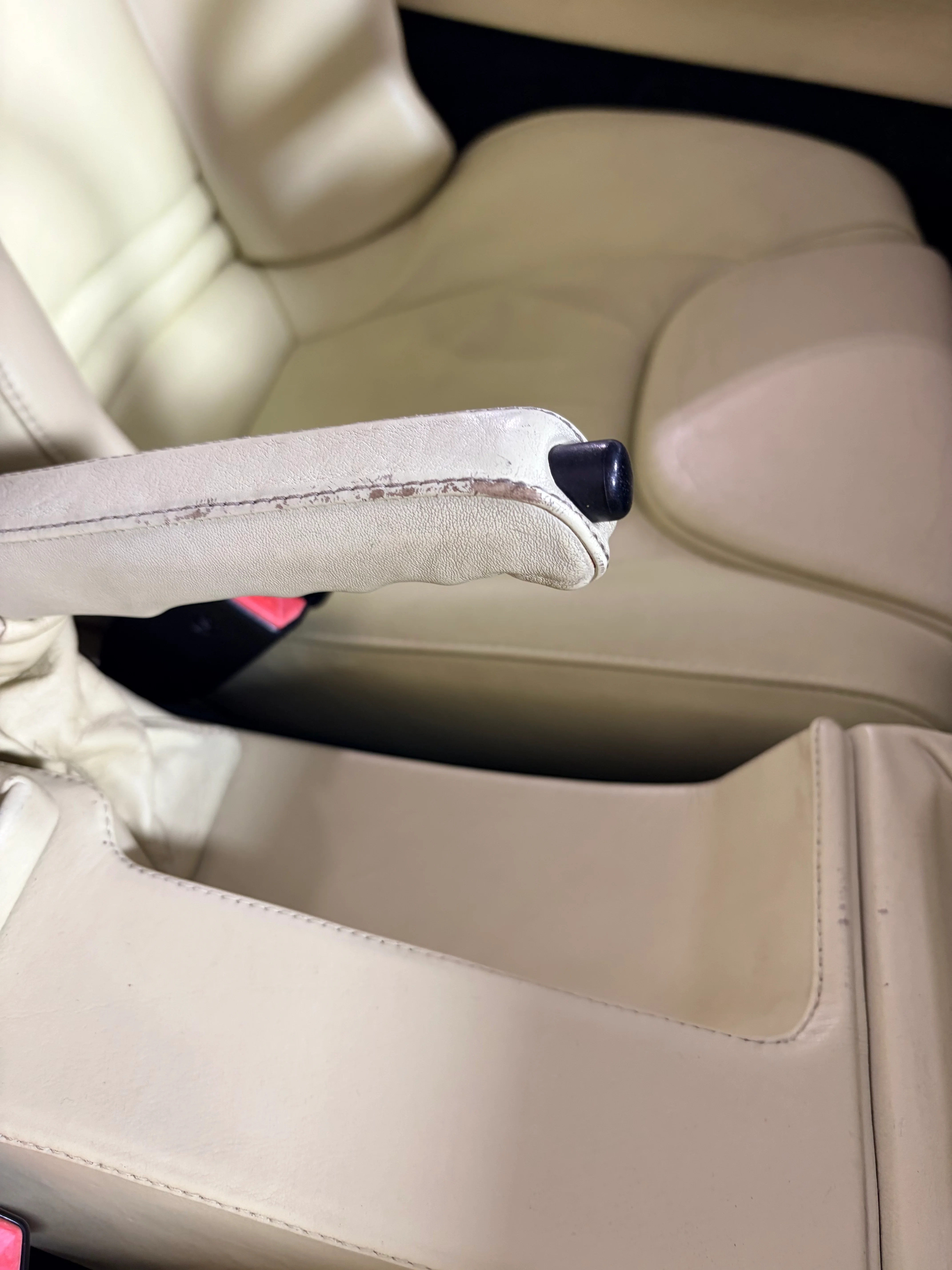
- Handbrake leather — seam wear and surface dryness: The leather-wrapped handbrake lever showed wear concentrated along the seam — the area of highest contact and friction during use. The surrounding surface leather had dried and was beginning to crack. The gaiter at the base was intact but dry.
Preservation vs. Over-Restoration
This is a distinction that matters enormously on a vehicle like the BMW Z1, and it is one that is frequently misunderstood — sometimes even by people in the leather repair trade.
Over-restoration on a collector vehicle interior means applying techniques designed to make leather look new again — heavy color fills that obscure the original grain texture, topcoats that change the sheen level, or color applications so opaque that the leather's natural variation disappears entirely. On a driver-quality Z1 or a concours-bound example, this approach produces an interior that looks wrong. The leather appears too fresh, too uniform, too thick in finish — like a re-trim rather than preserved original material. Experienced collectors and judges notice immediately.
Preservation, by contrast, means working with what exists. The objectives are:
- Stabilise active deterioration — address the surface cracking before it progresses to structural damage
- Restore moisture and flexibility — deep conditioning that replenishes what time has removed
- Improve color consistency — refresh faded areas to match the less-affected surfaces, not to look new
- Protect against further damage — a finish compatible with the original surface character
- Retain the patina appropriate to the vehicle's age — not every flex crease should disappear
For this BMW Z1, the owner's brief was explicit: the interior should look and feel significantly better than before, be protected against further deterioration, and still read as original Lemon leather from a 35-year-old vehicle in well-preserved condition — not as a fresh re-trim. That brief shaped every decision made during the work.
Work Performed
Condition Assessment and Documentation
Before any work began, the complete interior was assessed and documented. Each leather surface — both seat faces and bolsters, the cockpit sill panels, the handbrake leather, the gear surround, and the headrests — was examined for cracking depth, color loss, contamination, and structural condition. This step determines what can be preserved and what approach each surface requires, and it serves as the baseline against which the final results are measured.
Deep Cleaning — Surface and Embedded Contamination
After 30-plus years, leather accumulates more than surface dust. Body oils penetrate the surface and oxidize, contamination embeds into surface cracks, and general atmospheric grime settles into the grain. The entire interior was cleaned thoroughly using pH-balanced professional leather cleaners applied in controlled stages. The sill panels — which receive direct contact during entry and exit across the Z1's retractable door threshold — showed visible contamination and surface transfer marks that required specific attention.
Deep Conditioning Treatment
Leather that has dried significantly — as leather does over three decades without regular maintenance — loses the moisture and flexibility that keep its surface intact. Conditioning was applied in multiple stages, allowing the leather to absorb each application before assessing whether further treatment was needed. On surfaces where fine surface crazing was present, conditioning alone visibly reduced the severity by partially closing the finest cracks and restoring flexibility to the surrounding leather.
Surface Preparation and Crack Treatment
The seat back surfaces showed the most pronounced cracking — a network of crazing with blue-grey tones visible against the pale Lemon leather. The seat bolsters also showed surface cracking at the high-contact entry areas. These surfaces were treated with flexible repair compounds applied conservatively — the objective was to consolidate the damaged surface and improve its stability, not to eliminate every trace of age. The sill panels and handbrake leather received targeted surface preparation appropriate to their specific wear pattern.
Color Refresh — Matching and Integrating the Lemon Tone
The BMW Z1's Lemon interior is not a simple cream or beige — it has a distinctive warm character that separates it immediately from more neutral leather colors. UV exposure had caused the most-exposed surfaces to shift toward a cooler, more bleached appearance, creating visible inconsistency across the interior. A custom color formulation was developed on-site, blended to match the most representative Lemon tone visible in the shaded areas of the interior. The refresh was applied to integrate the faded areas and restore visual consistency — the goal being that the color reads as one coherent, original interior rather than a patchwork of aged and less-aged surfaces.
Protective Finish Application
A protective finish was applied across all treated leather surfaces. The finish was selected to be compatible with the original leather character — providing UV resistance and surface durability without altering the sheen level or texture that is part of what makes the Z1 interior period-correct. On a vehicle of this age and rarity, the wrong protective product can leave leather looking artificially glossy or plasticky, which is as damaging to the vehicle's presentation as the original wear.
The Result — Preserved, Not Replaced
The completed interior reads as intended: a well-preserved example of an original Lemon leather interior that has been properly cared for. The surface cracking that was most visible on the seat backs has been significantly reduced. The color is consistent across all leather surfaces — the faded areas now read as Lemon rather than bleached cream. The sill panels are clean and free of contamination. The handbrake and gear surrounds are supple and even in color. The leather moves and feels as aged leather should — with character, not brittleness.
What has not changed: the leather is still original. The grain texture is still present. The surface still has the variation that 35-year-old leather carries. The interior does not look like it was re-trimmed last week — it looks like an original Z1 interior that has been properly stewarded.
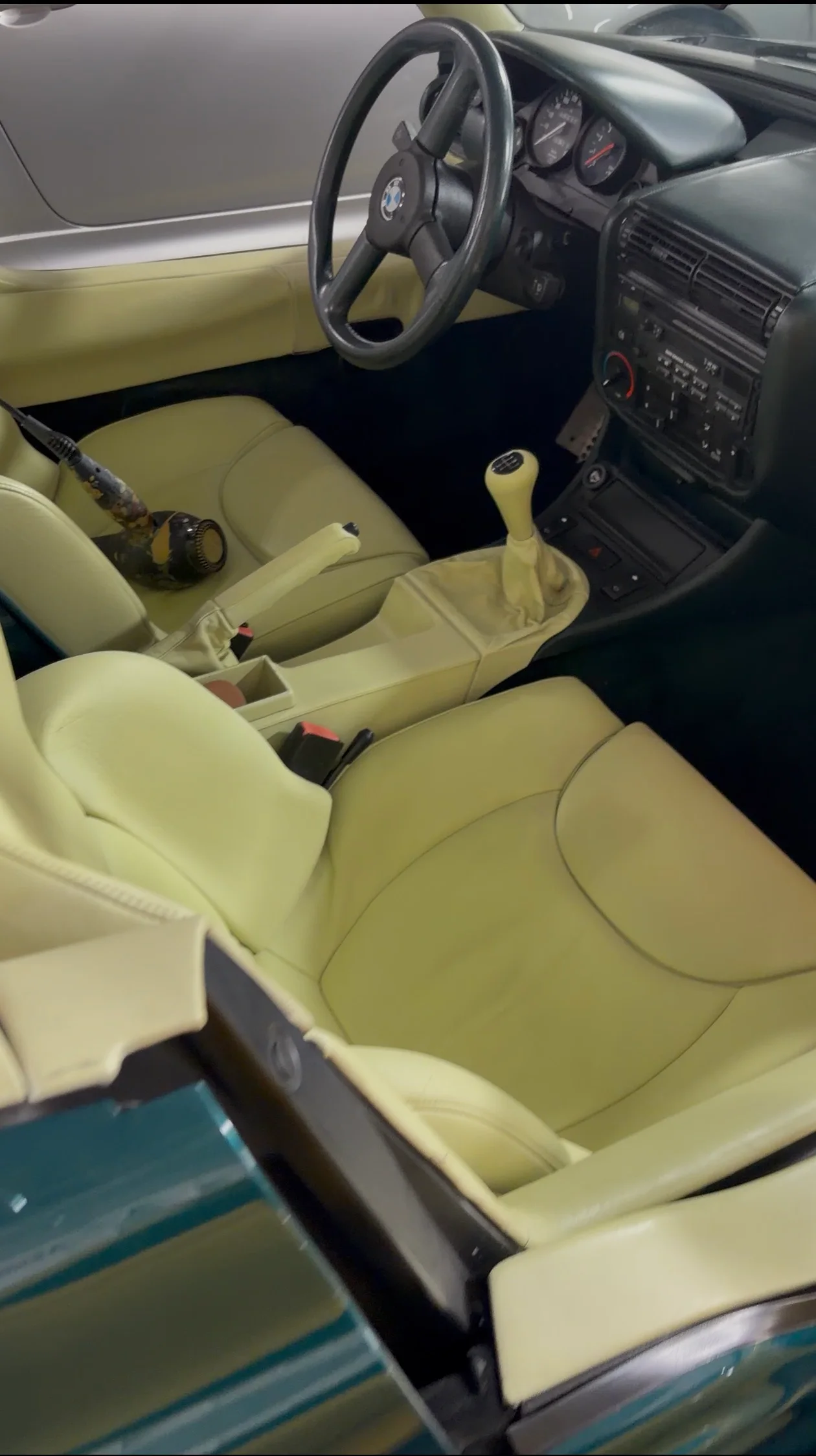
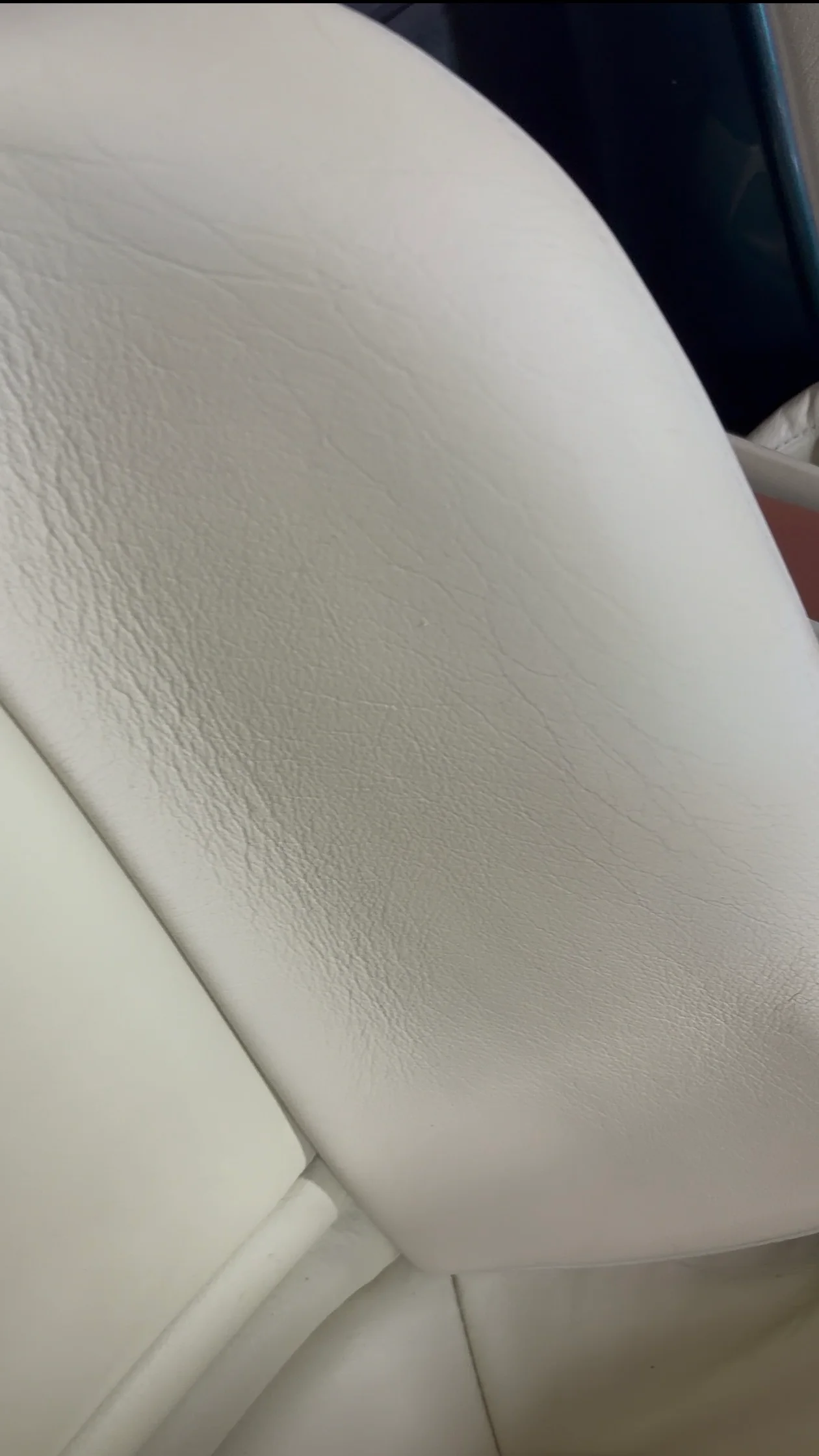
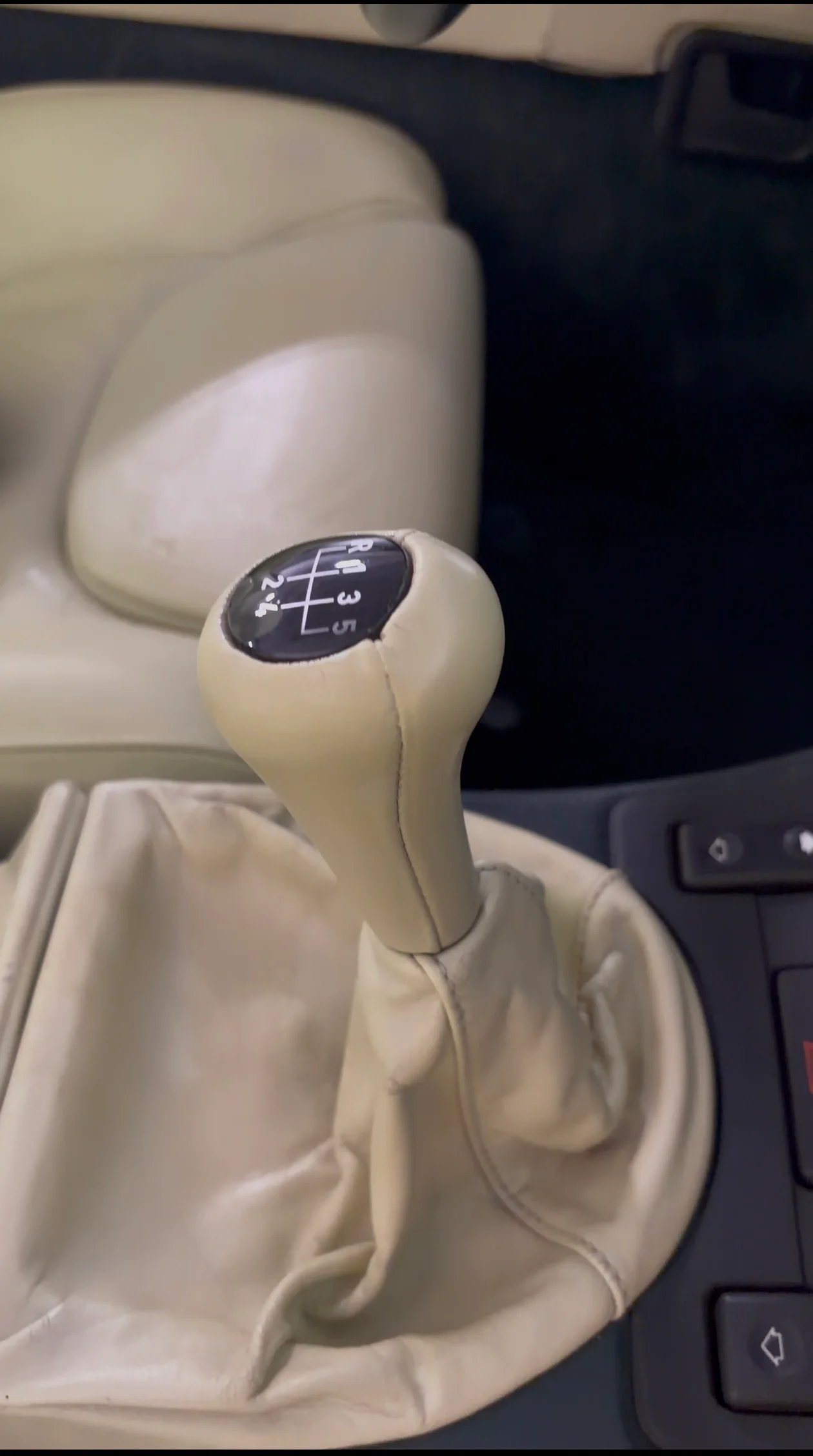
- Seat back crazing significantly reduced — surface consolidated and color integrated
- Seat bolster cracking improved — treated and protected without heavy filling
- Cockpit sill panels cleaned — contamination and transfer marks removed, leather reconditioned
- Headrest surface cracking improved — edges treated and protected
- Handbrake leather — seam wear addressed, surface supple and even in color
- Gear knob and gaiter — uniform color and supple surface
- All surfaces protected with finish compatible with original leather character
- Original leather material preserved throughout — no replacement panels
Collector Vehicle Stewardship
Owners of rare vehicles — the BMW Z1, the Porsche 993, the Ferrari 355, classic E-series BMWs, and similar collector machines — face a preservation challenge that owners of more common cars rarely encounter. Replacement parts are scarce or unavailable. Correct original materials cannot be sourced. The interior character is part of the vehicle's historical record. Every decision made during maintenance or repair has the potential to either preserve or diminish the vehicle's authenticity.
This is why the approach to leather work on a collector vehicle is fundamentally different from the approach on a daily-driver with damaged seat bolsters. The question is not simply "how do we make this look better?" — it is "how do we improve this without compromising what makes it correct?"
Leather & Vinyl Care takes a conservative approach to collector interiors. Original leather is preserved wherever structurally possible. Color refreshing targets consistency rather than saturation. Protective finishes are chosen for compatibility with the original surface rather than for maximum sheen. The work is complete when the interior looks properly maintained and genuinely improved — not when it looks new.
Collector Vehicle Leather Care Across NYC
Leather & Vinyl Care provides mobile on-site leather preservation and restoration for collector, classic, and exotic vehicles throughout New York City and Long Island. All work is performed at the vehicle's location — private garages, storage facilities, and collector car environments throughout Manhattan, Brooklyn, Queens, Nassau County, and Suffolk County.
We work on BMW collector vehicles — including early Z-series, E30, E28, and E24 models — as well as Porsche, Ferrari, and other European collector machinery. For rare vehicles where original materials must be preserved, our approach prioritises stewardship over cosmetic transformation.
Related Services
- Luxury & Exotic Car Interiors → on-site leather preservation and restoration for premium and collector vehicles
- Auto Interior Restoration → car seat repair, color matching, and surface restoration for all makes
- Leather Re-dyeing & Color Restoration → custom pigment matching for faded or discolored leather
- Leather Cleaning & Conditioning → professional deep cleaning and conditioning to maintain leather longevity
Collector Vehicle Leather Preservation in NYC
If you own a rare or collectible vehicle and need leather work approached with the care that originality deserves, we welcome the enquiry. Send photos of the interior and a brief description of the vehicle and what you are looking to achieve — we will give you an honest assessment of what is possible and a clear estimate. Leather & Vinyl Care serves the full New York City area and Long Island.
Ongoing Care for a Preserved Interior
- Condition twice a year: The single most effective long-term maintenance step. A quality leather conditioner applied in spring and autumn replenishes moisture, maintains flexibility, and prevents the drying cycle that leads to surface cracking.
- Store away from direct UV exposure: UV is the primary cause of Lemon leather color shift. When garaged, a quality interior cover prevents both UV and dust accumulation. When in use, the retractable roof helps limit UV exposure to the cockpit.
- Clean with leather-safe products only: Avoid household cleaners, alcohol-based products, or anything not formulated specifically for leather. A pH-balanced leather cleaner applied with a soft cloth is sufficient for regular cleaning.
- Address new contamination promptly: On the sill panels especially, fresh contamination is far easier to remove than embedded grime. A quick wipe with a damp cloth after drives prevents the kind of buildup that required treatment on this vehicle.
Related Automotive Projects
Other collector and luxury vehicle leather work completed by Leather & Vinyl Care across NYC.
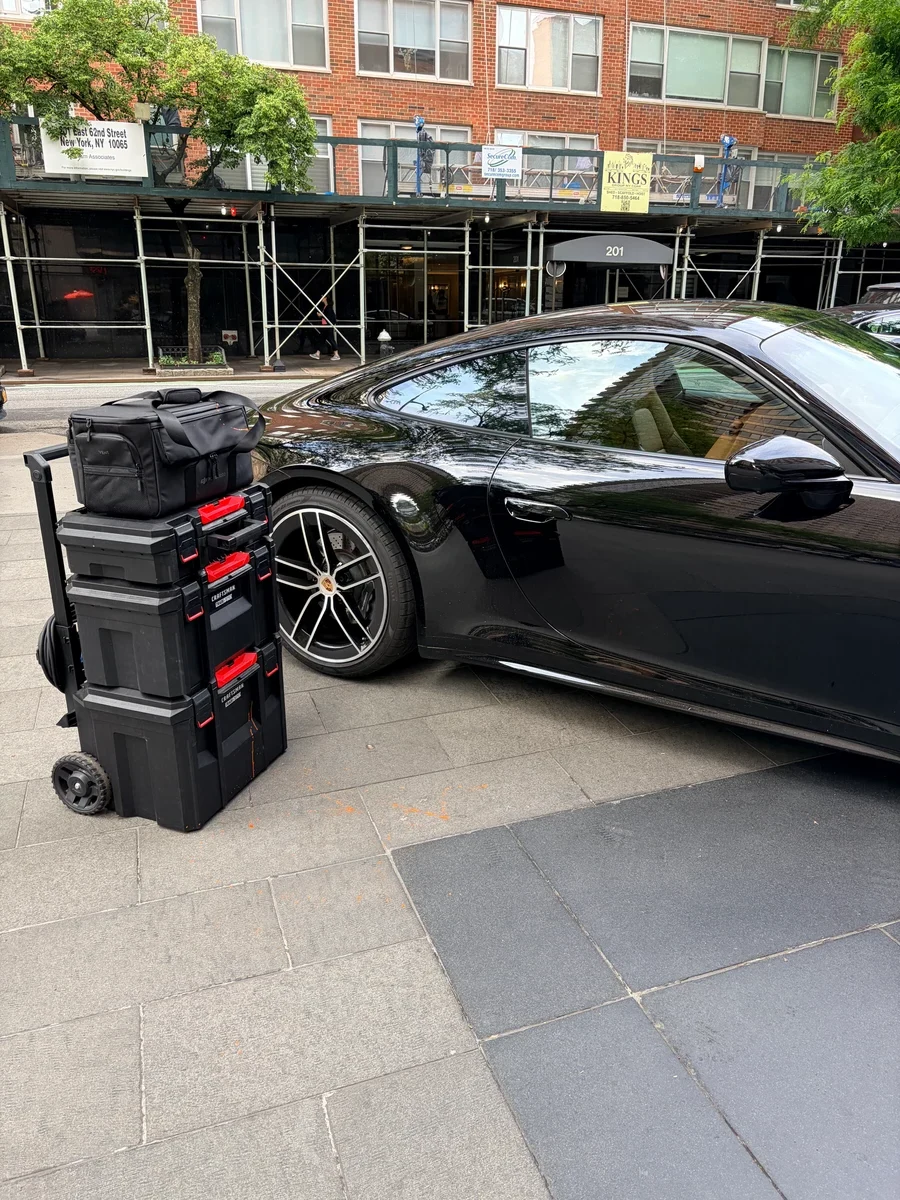
2025 Porsche 911 — Cognac Leather Repair in Manhattan
Rear side panel scratch repaired and custom Cognac color matched on-site at a Manhattan parking location in approximately 90 minutes.
View Case Study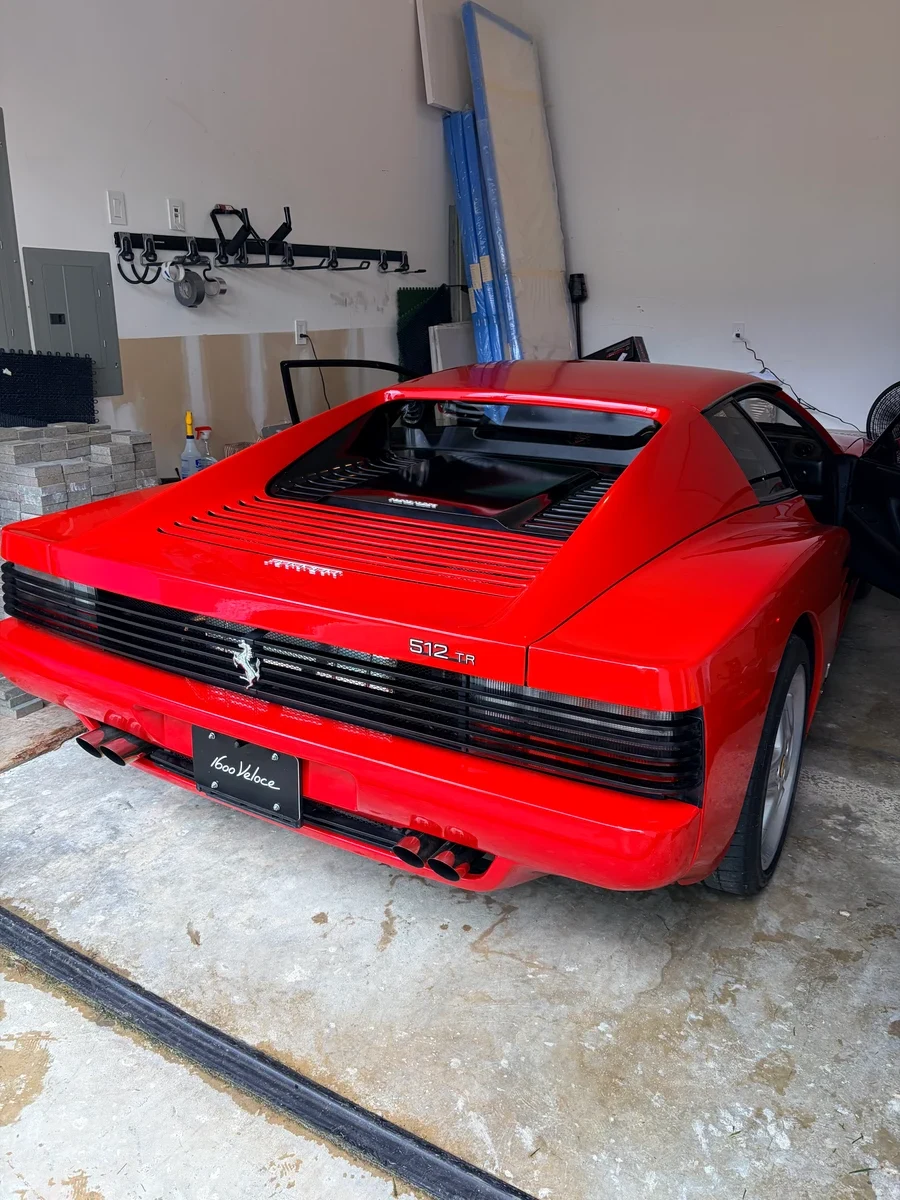
1992 Ferrari 512 TR Interior Restoration in NYC
Interior refresh on a classic collector Ferrari — driver door panel restoration, dashboard touch-ups, and cosmetic correction. Original leather preserved.
View Case StudyFrequently Asked Questions
Can original leather on a 30-year-old collector car be preserved rather than replaced?
Yes — and for a rare collector vehicle, preservation of original materials is almost always preferable to replacement. BMW Z1 interior leather, for example, retains its structural integrity even after 30 years when properly maintained. Deep cleaning, conditioning, targeted surface treatment, and careful color refreshing can significantly improve the appearance, feel, and durability of aged leather without destroying its original character. Replacement leather will always look newer than the rest of the vehicle — and on a concours or driver-quality collector car, that discrepancy is immediately noticeable to knowledgeable owners.
What is the difference between leather restoration and leather preservation?
Restoration typically implies returning something to a new or near-new condition — which on a period-correct collector vehicle can mean over-working the leather to look fresher than the surrounding interior, or using techniques that alter the original surface character. Preservation focuses instead on stabilizing what exists, correcting active deterioration, improving durability and appearance, and protecting the leather against further damage — while retaining the authentic age-appropriate character that collectors and concours judges recognize as appropriate to the vehicle. For a BMW Z1, preservation means the Lemon leather looks significantly better, feels more supple, and is protected from further cracking — but still reads as original, period-correct leather.
How do you treat surface cracking on aged leather without over-restoring it?
The approach depends on the depth and extent of the cracking. Surface crazing — the fine network of cracks visible on leather that has dried and lost moisture — responds well to deep conditioning, which partially closes fine cracks and restores flexibility. Deeper structural cracking can be consolidated with flexible filler compounds applied conservatively, leveling the surface without filling in all natural texture variation. The goal on a collector vehicle is to improve stability and appearance while leaving the leather looking like well-preserved original material, not like a fresh re-trim.
What is the BMW Z1, and why is its interior significant to collectors?
The BMW Z1 was produced from 1989 to 1991, with all examples assembled by hand in Munich. Its most distinctive engineering feature is its retractable door system — the doors slide downward into the body sills rather than opening outward, allowing occupants to drive with the doors fully lowered. The Z1 remains an exceptionally rare sight in the United States and is highly regarded among BMW collectors worldwide. Its interior — particularly in Lemon leather — is a significant part of its period character and collectibility. Preserving the original leather in authentic condition is a priority for serious Z1 owners.
Do you work on BMW Z1 and other rare collector vehicles in NYC?
Yes. Leather & Vinyl Care provides mobile on-site leather preservation and restoration for collector, classic, and exotic vehicles throughout New York City and Long Island — including Manhattan, Brooklyn, Queens, Nassau County, and Suffolk County. We work at private garages, storage facilities, and collector car locations. For rare vehicles like the BMW Z1, our approach prioritizes preserving original materials rather than replacing them.
How do you color-match and refresh a rare interior color like the BMW Z1 Lemon leather?
The BMW Z1's Lemon interior is a distinctive warm cream with a subtle yellow-green character — an unusual color that fades unevenly over time, typically shifting toward a cooler, more neutral cream in the most UV-exposed areas. Matching and refreshing this tone requires custom pigment blending on-site, working from the least-faded areas of the interior as the color reference. The objective is not to apply a heavy topcoat that obscures the original leather grain, but to refresh the surface color so that it reads consistently and authentically across all leather surfaces.
Related Case Studies