Preserving the Original Leather in a 2013 Mercedes-Benz SLS AMG GT Roadster
This 2013 Mercedes-Benz SLS AMG GT Roadster belongs to a repeat client and has covered only around 3,000 original miles in more than thirteen years — a car that spends most of its time at exhibitions and collector shows rather than on the road. The leather was never damaged. It was simply beginning to age, as leather does, and the objective here was conservation: protect the originality before time created a larger problem.
Project Overview
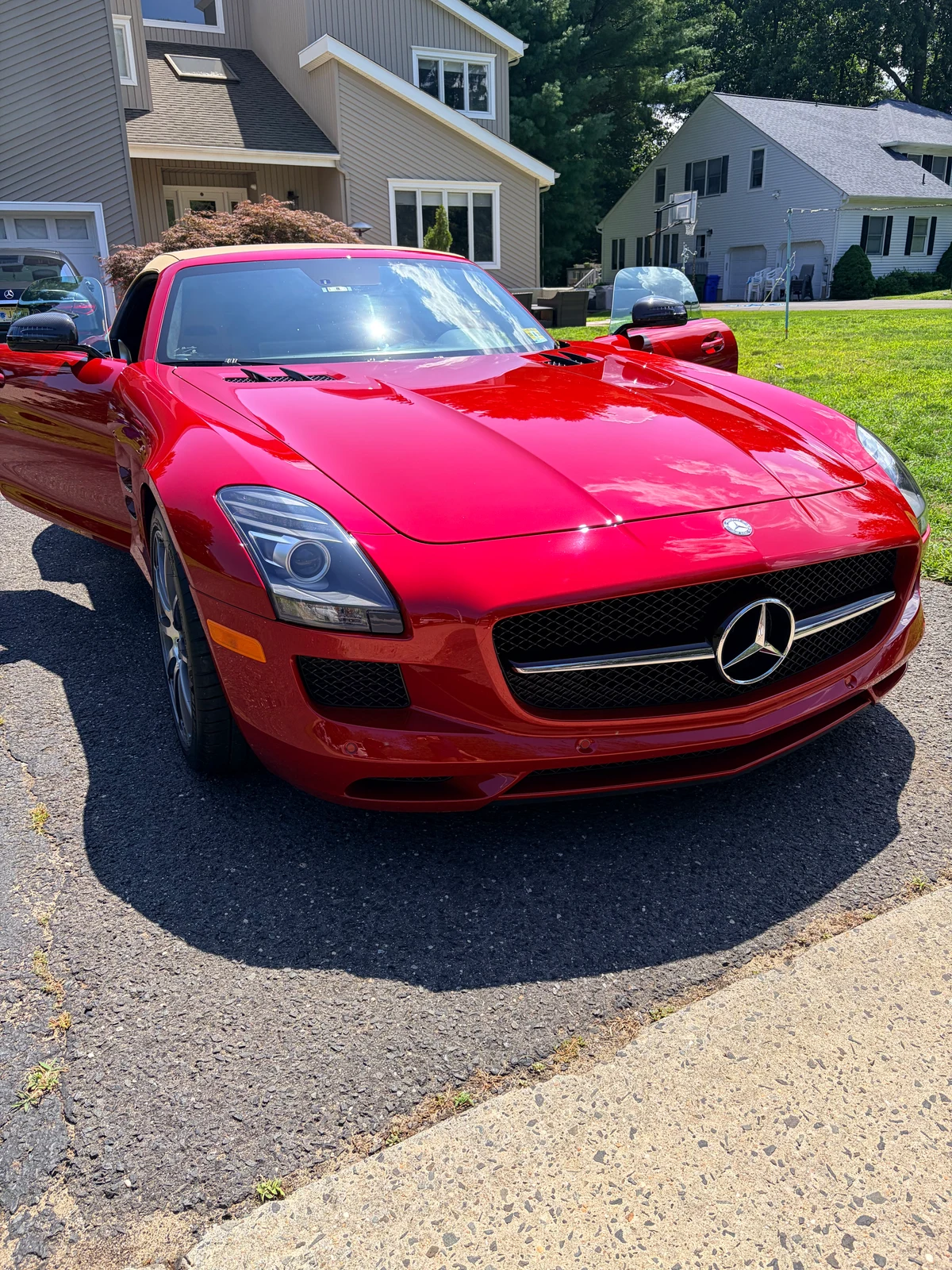
A Collector Car Preserved Rather Than Restored
This SLS AMG GT Roadster was already in outstanding condition when we arrived. It hadn't been damaged, neglected, or heavily used — quite the opposite. Its owner, a returning client, treats it as what it is: a well-preserved collector automobile that spends most of its life at exhibitions and collector shows rather than in daily traffic.
That distinction matters for how this project is understood. The goal was never to fix damage. It was to identify the earliest signs of leather aging — slight drying, a few minor surface marks, extremely light scratches, subtle wear in high-contact areas — and address them before they became the kind of problems that require real correction later.
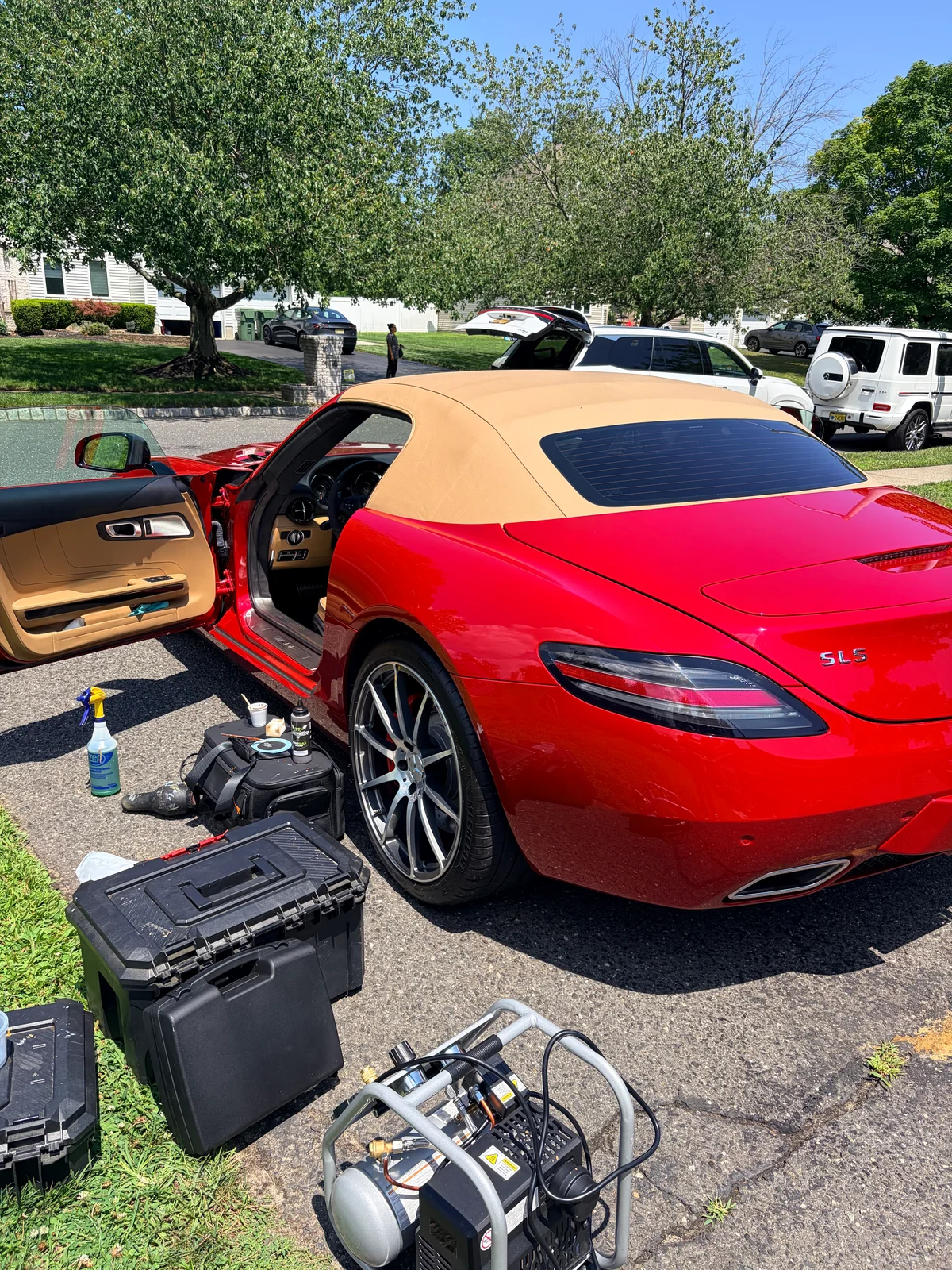
A Rare Mercedes-Benz SLS AMG GT Roadster
The SLS AMG GT represents one of Mercedes-Benz's most significant modern performance cars — built around a naturally aspirated 6.2-liter AMG V8 with the kind of hand-built character that has become increasingly uncommon. It occupies a distinct place among collectors today.
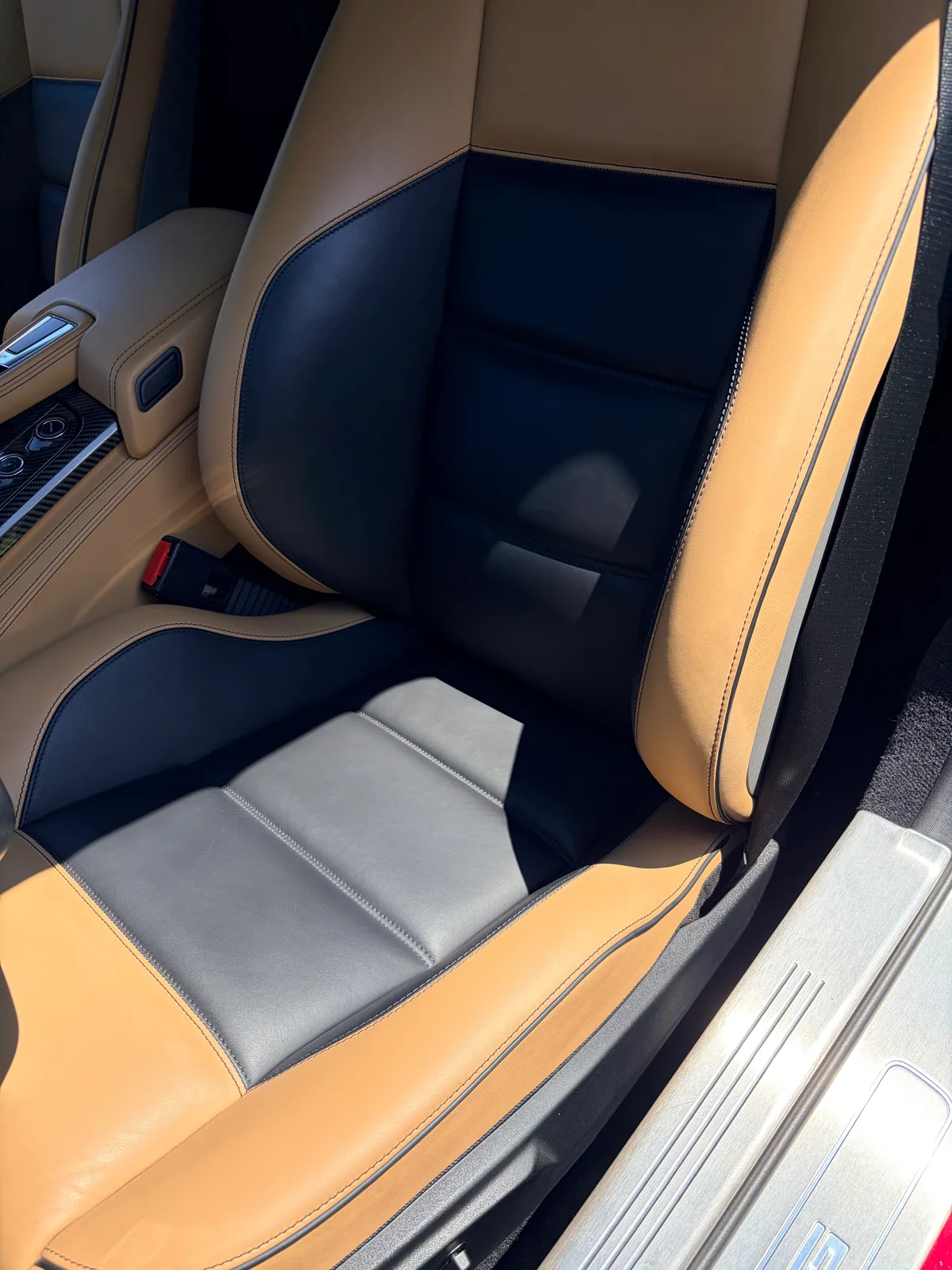
This particular example is an exceptionally uncommon specification: AMG GT trim, Roadster configuration, approximately 3,000 original miles, a two-tone designo sand and black leather interior, and a beige fabric soft top. Taken together, it's a rarely encountered, highly collectible example of the model — the kind of car where preserving the original interior is not a cosmetic preference but part of maintaining its value and character.
Carefully Conserving the Original Leather
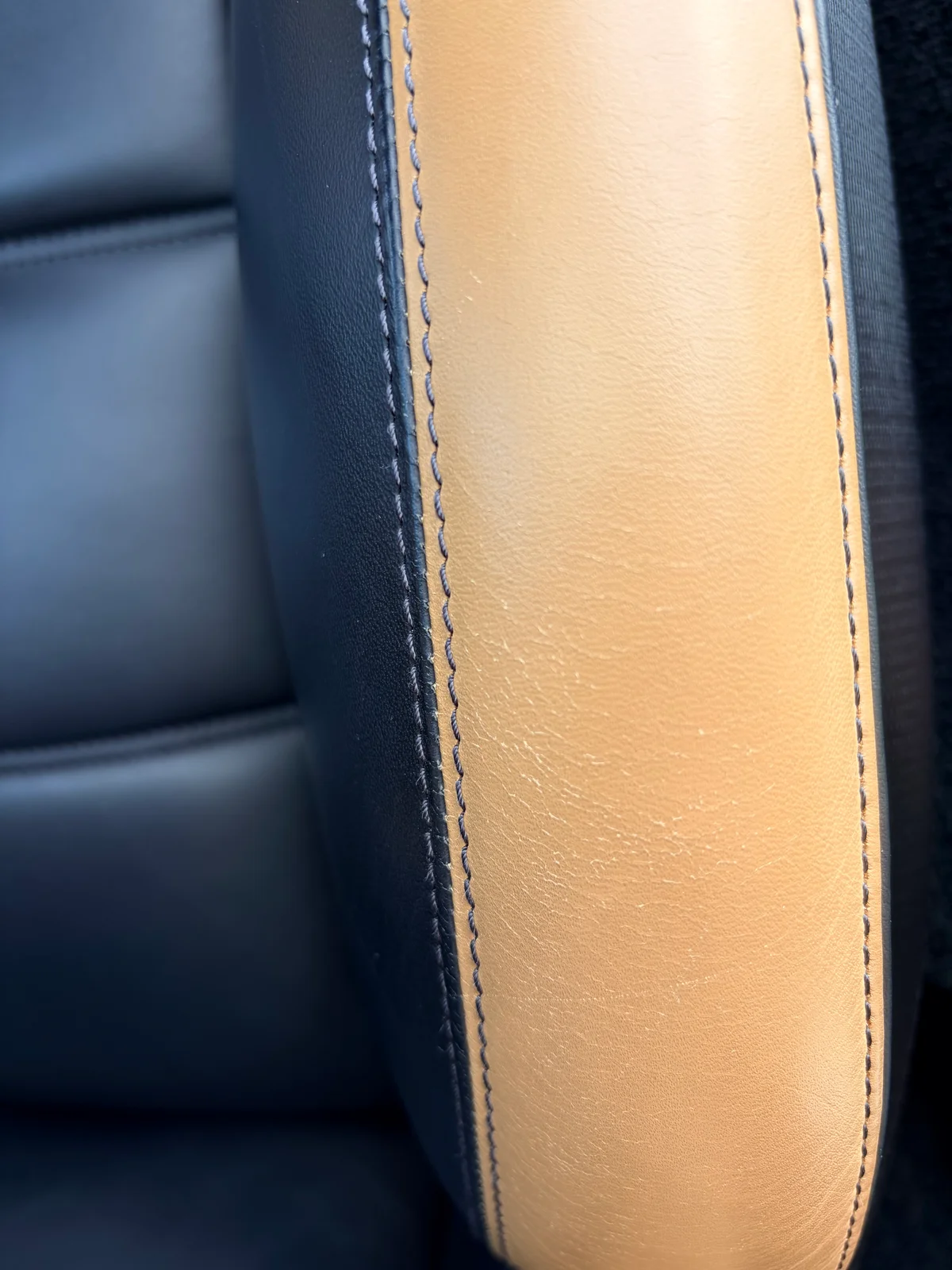
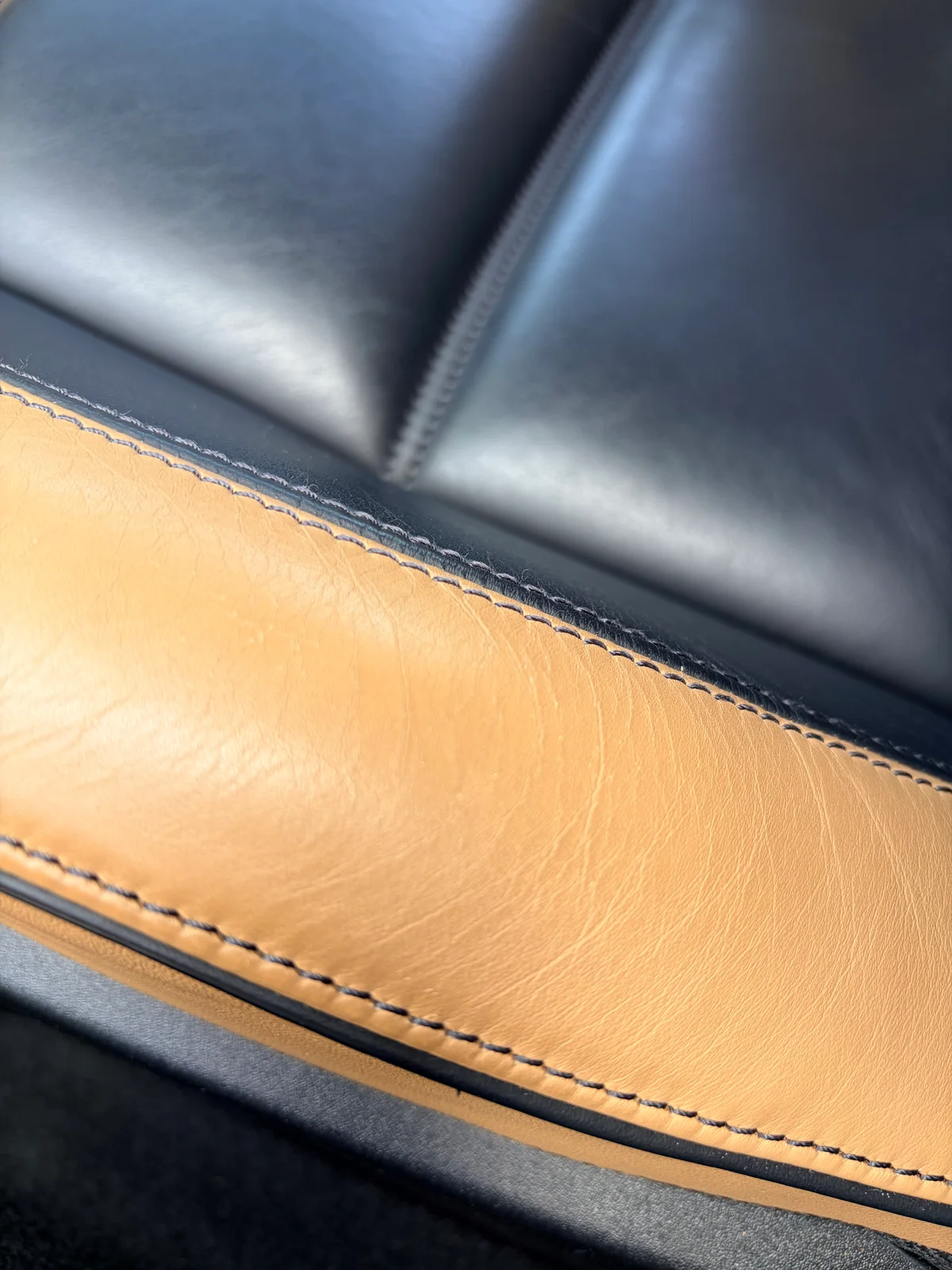
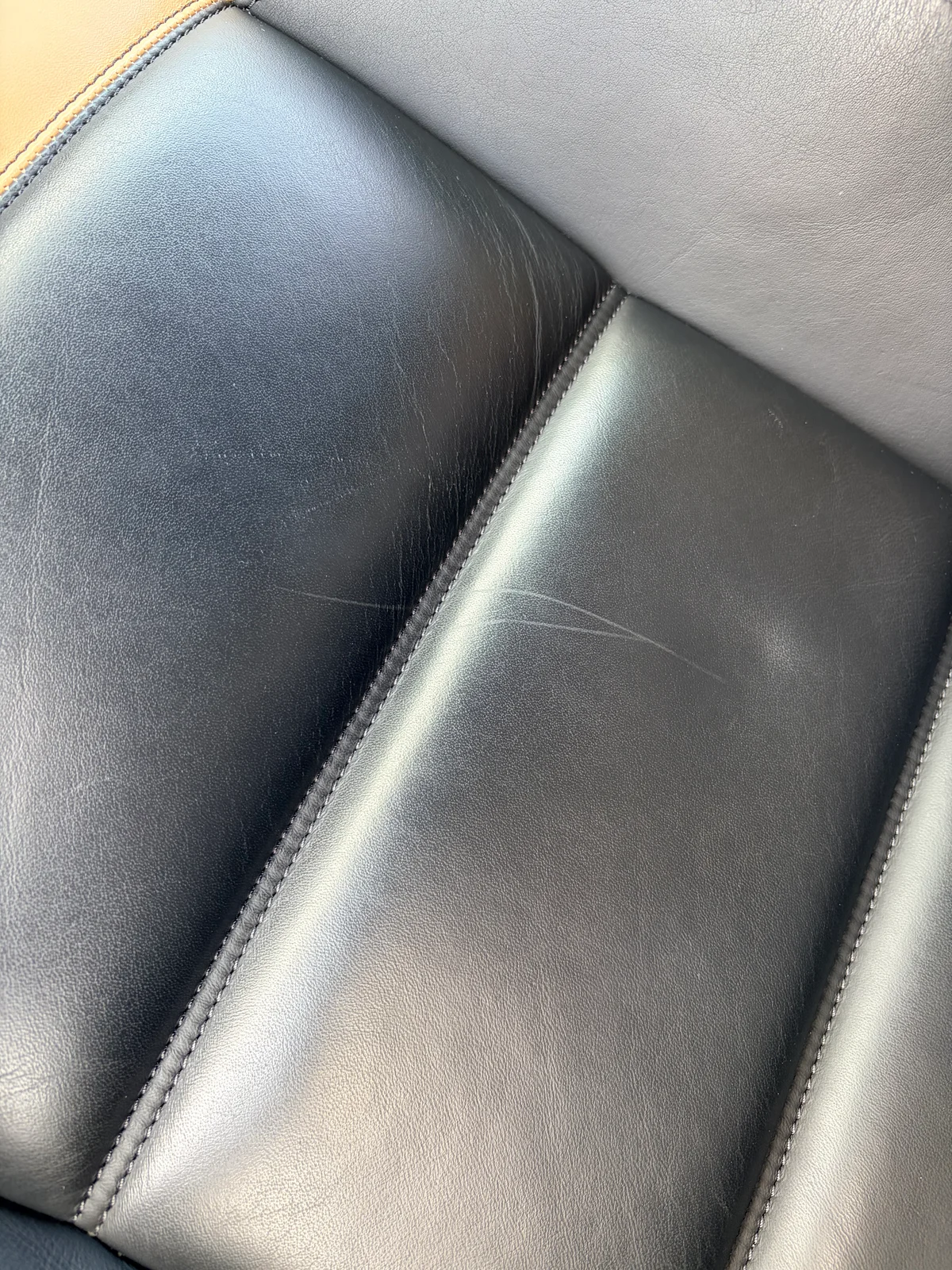
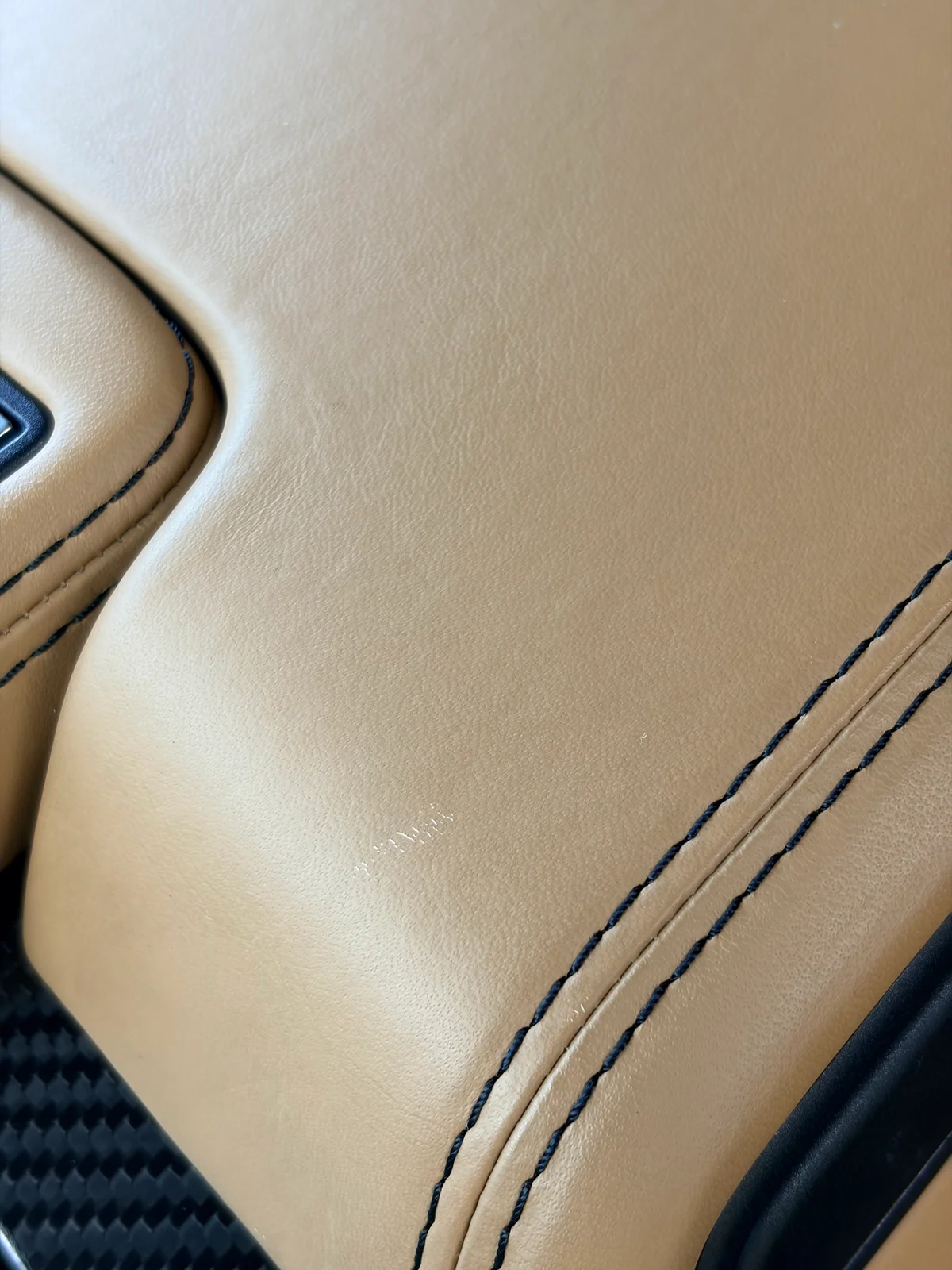
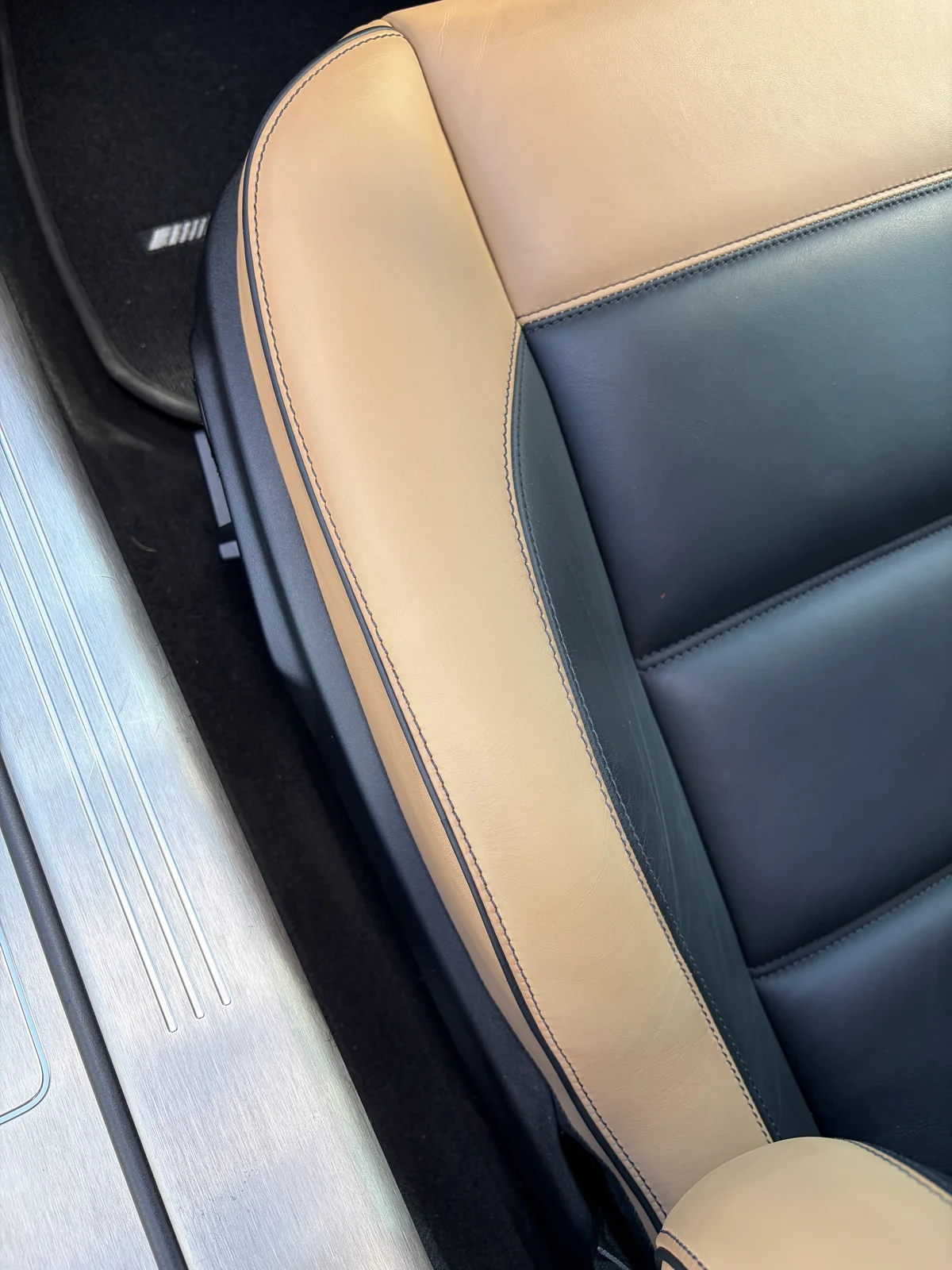
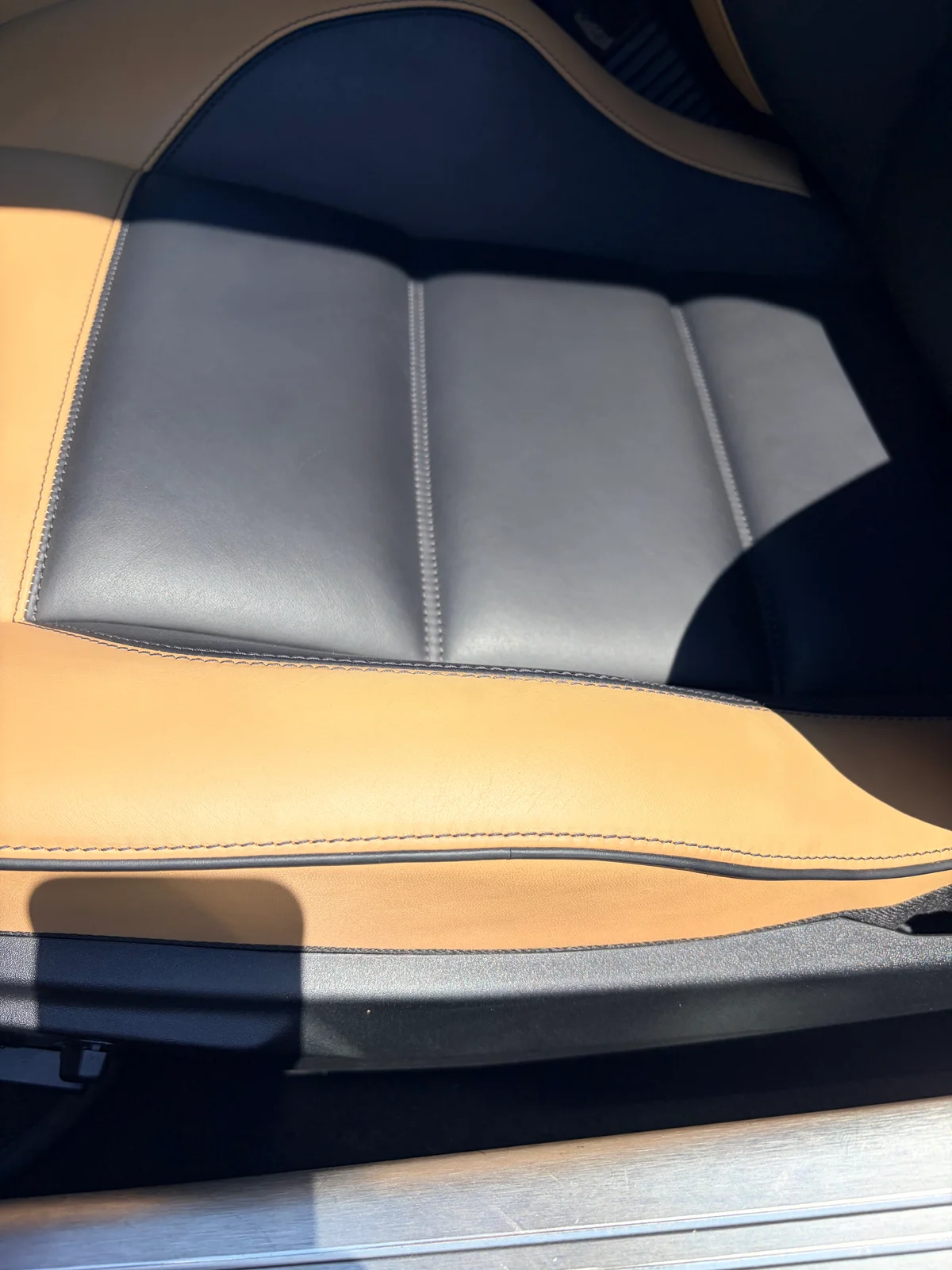
Close inspection of the two-tone interior found exactly what you'd expect from a well-stored, lightly used collector car in its early teens: fine drying texture developing in the sand leather bolsters, denim-related finish wear on the black leather seat cushion, and a handful of very light surface marks. None of it was dramatic. All of it was worth addressing before it progressed.
Correcting Minor Surface Imperfections
A handful of small, specific marks were identified and addressed individually rather than treated with a single blanket pass across the interior — consistent with a conservation approach that corrects only what needs correcting.
Why Collector Cars Need Leather Preservation Even with Low Mileage
It's a common assumption that a car with roughly 3,000 miles on it should have an interior that looks essentially untouched. Low mileage does reduce the kind of friction-related wear that comes from getting in and out of a seat thousands of times — but it has very little bearing on how leather ages as a material. Leather continues to change whether or not a car is being driven.
Time itself is a factor, and so are the conditions a car experiences in storage: seasonal temperature swings, fluctuating or low humidity, heat, and UV exposure during time spent outdoors at shows and exhibitions. Leather gradually loses moisture over the years, which affects its flexibility and surface finish long before any damage becomes visible — early dryness, a loss of suppleness, small scratches that become more noticeable, and the first signs of creasing. The bolsters and seating surfaces that bear repeated, low-level compression, even from occasional use, develop that creasing gradually over time. The protective coating applied to modern automotive leather also ages on its own timeline, and how it should be cared for depends on the specific leather and finish involved rather than a fixed interval. None of this requires heavy use. It requires only time and exposure.
This is why proper collector-car ownership tends to treat interior leather the same way it treats other systems that need attention regardless of mileage. Fluids get serviced on a schedule, not based on distance driven. Batteries are maintained through storage, not use. Tires are inspected for age-related degradation as much as tread wear. Paint is protected from UV and environmental exposure whether or not the car ever leaves the garage, and mechanical components are exercised periodically to keep seals and lubrication in good condition. Leather care doesn't replace correct storage or climate control — it works alongside them, and deserves the same proactive standard for the same reason: it responds to time and environment independent of use.
That standard matters because of what's at stake. Original factory leather is part of a collector car's history — the grain, stitching, sheen, and the way the material has aged are part of what makes an interior authentic. A restrained, early-stage approach requires far less intervention than waiting until drying has progressed into cracking or the coating has genuinely failed. At that point, what began as conditioning and small corrections can become a more extensive refinishing project, and material that's replaced rather than conserved changes the grain, stitching character, sheen, and color in ways that are difficult to fully reverse. Preservation doesn't guarantee a particular outcome for value or condition years from now, but it does help protect originality, supports long-term presentation, and reduces the likelihood of more invasive work being needed later.
This SLS AMG GT Roadster illustrates the principle well. With approximately 3,000 original miles, it was already exceptionally well preserved when we arrived — the issues found were minor: light drying in the sand leather bolsters, a few faint surface marks, extremely light scratches. None of it reflected use. Addressing it now, while the leather remained flexible and every mark was still surface-level, was preventative work rather than corrective — exactly the kind of attention a car like this rewards.
The Conservation Process
Inspection
Every leather surface was inspected individually — seat bolsters, backrests, the center armrest, and the high-contact areas a driver and passenger touch most. The condition was consistent with a well-preserved, low-mileage interior: light drying in a few areas, faint surface marks, and extremely light scratches. Nothing structurally compromised.
Professional Cleaning
The interior was professionally cleaned to remove surface contamination and prepare the leather for conditioning. On a vehicle this well kept, cleaning is a gentler process than on a daily driver, but it remains a necessary first step before any rehydration or color work.
Rehydration and Conditioning
The leather was rehydrated and conditioned to address the early drying that had developed in several areas. This is the core of preventative preservation — restoring moisture and suppleness before drying progresses into cracking.
Correcting Minor Imperfections
Small scratches and surface wear — on the center armrest, along seat bolster edges, and on the black leather seat cushion where denim contact had worn the finish — were refined individually rather than treated as a single blanket surface job. Each mark was addressed on its own terms.
Custom Color Refinement
Where color work was needed to maintain visual consistency, it was custom matched to the surrounding original leather and blended in carefully, rather than applied as a uniform recolor across the surface.
Protective Finish
A protective finish appropriate for automotive leather was applied to help preserve the factory look and feel going forward — supporting the leather's condition rather than altering its character.
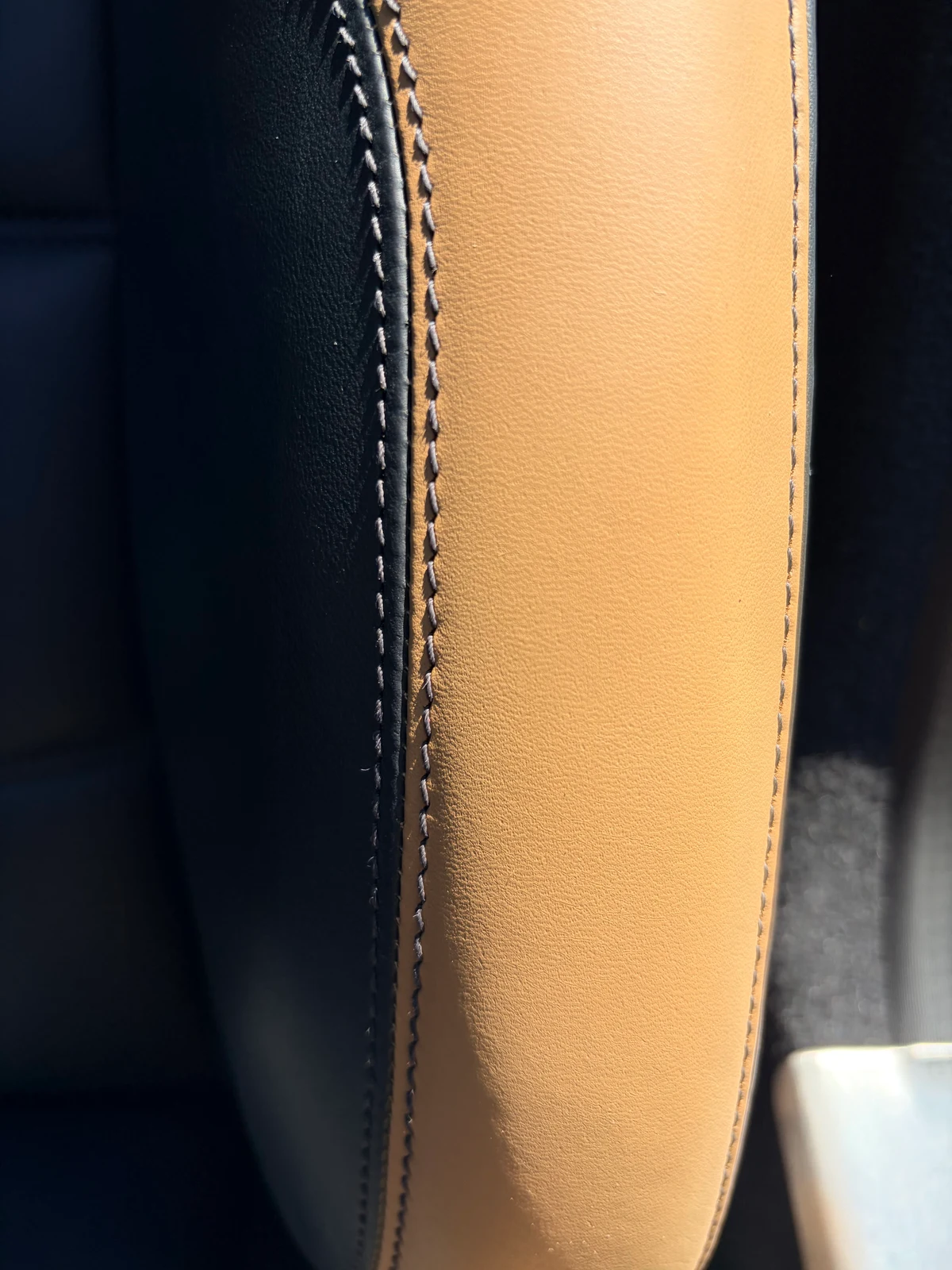
Before and After — Seat Bolster Conditioning
The same sand leather bolster area, rehydrated and conditioned rather than refinished — surface consistency restored without altering the leather's original character.
Custom Color Refinement
Wherever color work was needed to maintain complete visual consistency, it was custom matched to the surrounding original leather rather than pulled from a generic reference. The corrected areas were blended into the surrounding factory finish, not treated as isolated patches — the same principle that governs every preservation project of this kind: a repaired area should read as part of the original interior, not as evidence of work having been done.
Protecting a Collector Interior
A protective finish appropriate for automotive leather was applied across the treated surfaces to help preserve the factory appearance while maintaining the original look and feel. For a car that spends much of its life on display, this finish supports the leather against the same conditions — UV exposure, handling, temperature swings — that led to the early aging in the first place.
Final Result
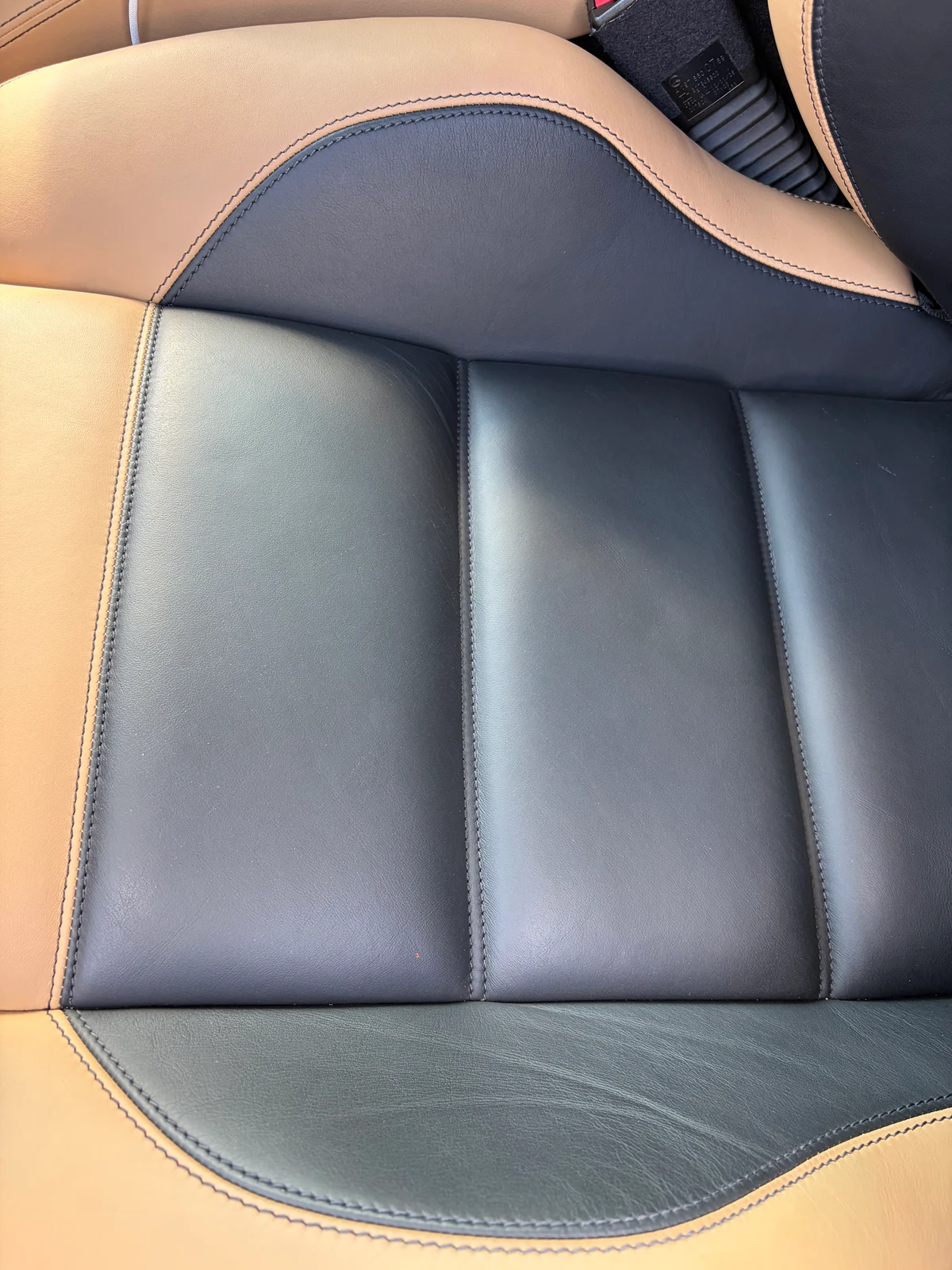
The leather is cleaned, rehydrated, and conditioned throughout. The minor surface marks and light scratches that had developed are corrected and blended into the surrounding original finish. Nothing about the interior has been changed in character — it remains exceptionally original, now with the early signs of aging addressed before they could become something more significant.
- Interior cleaned, rehydrated, and conditioned throughout
- Seat bolster drying corrected and surface consistency restored
- Center armrest and seat-cushion finish wear refined individually
- Custom color matching blended into the surrounding original leather where needed
- Protective finish applied to help preserve the factory appearance going forward
- Original leather preserved throughout — no panels replaced, no reupholstery
Why Preventative Leather Preservation Matters
Collector vehicles are often assumed to need the least attention, precisely because they're driven the least. This SLS AMG GT Roadster shows why that assumption falls short: an exceptionally original, carefully conserved interior, maintained on a schedule that has nothing to do with mileage and everything to do with protecting what makes a collector car worth preserving in the first place.
Related Services
- Luxury & Exotic Car Interiors → on-site leather care for Mercedes-Benz, Ferrari, Porsche, Lamborghini and other collector vehicles
- Auto Interior Restoration → seat, trim, and surface restoration for all makes
- Leather Cleaning & Conditioning → professional cleaning and rehydration to maintain leather longevity
- Leather Re-dyeing & Color Restoration → custom pigment matching for faded, discolored, or worn leather
Collector Vehicle Leather Preservation — NJ and NYC
If you own a collector or exhibition vehicle and want to address early leather aging before it becomes a larger problem, text us photos for a free estimate. We serve New Jersey, New York City, and Long Island — all work performed on-site at your storage location or garage.
Related Automotive Projects
Other collector and exotic vehicle leather work completed by Leather & Vinyl Care.
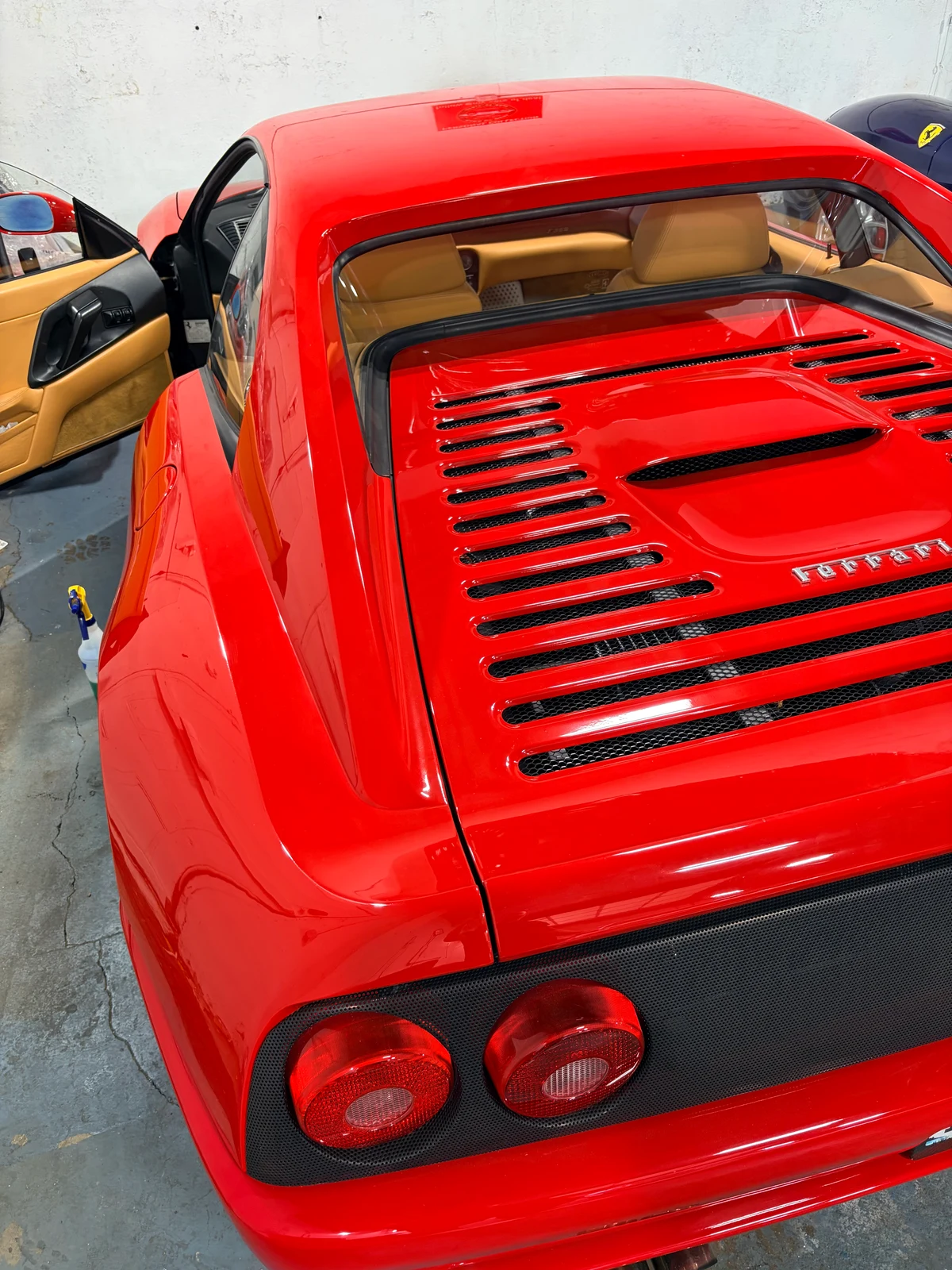
Ferrari F355 Berlinetta Interior Preservation
Driver's seat bolster wear, door card scratches, and small age-related cracks corrected ahead of a car show — preservation-focused, not a full rebuild.
View Case Study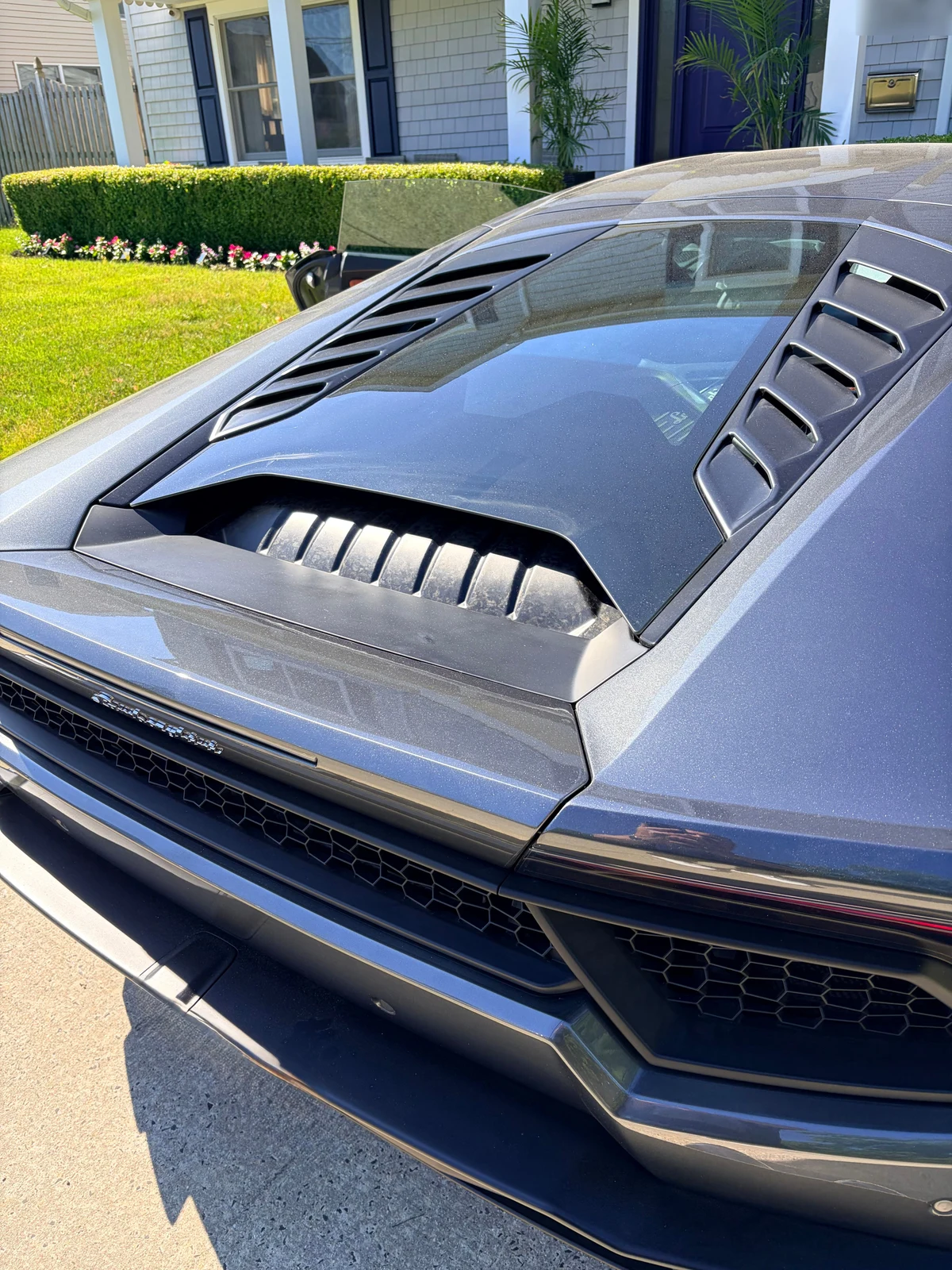
2018 Lamborghini Huracán Steering Wheel Refinement
A previously refinished steering wheel corrected with a complete, uniform refinish, plus scuff correction on the leather entry panel beside the driver's seat.
View Case Study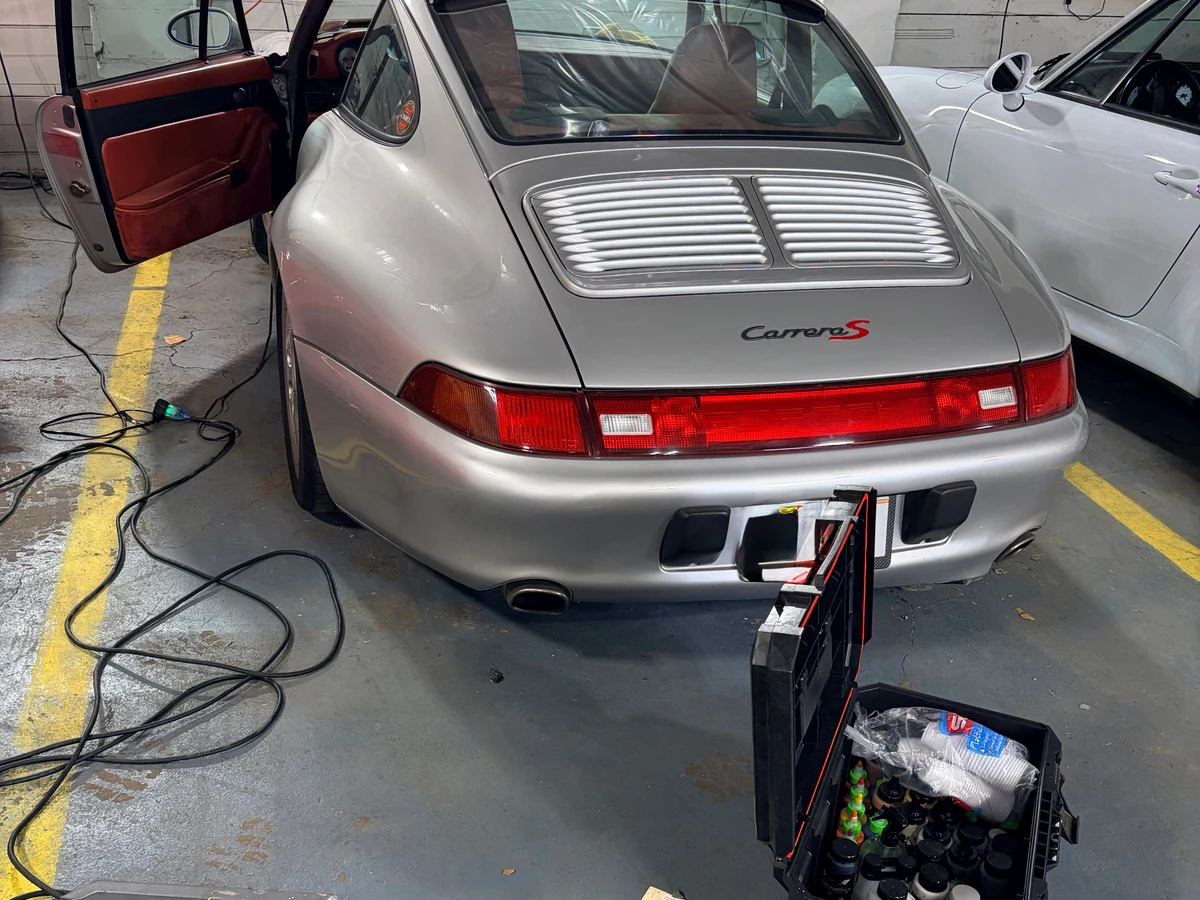
Porsche 993 Carrera S Leather Interior Restoration — New Jersey
Driver's seat bolster wear and door panel seam deterioration repaired and color-matched, original factory leather preserved.
View Case Study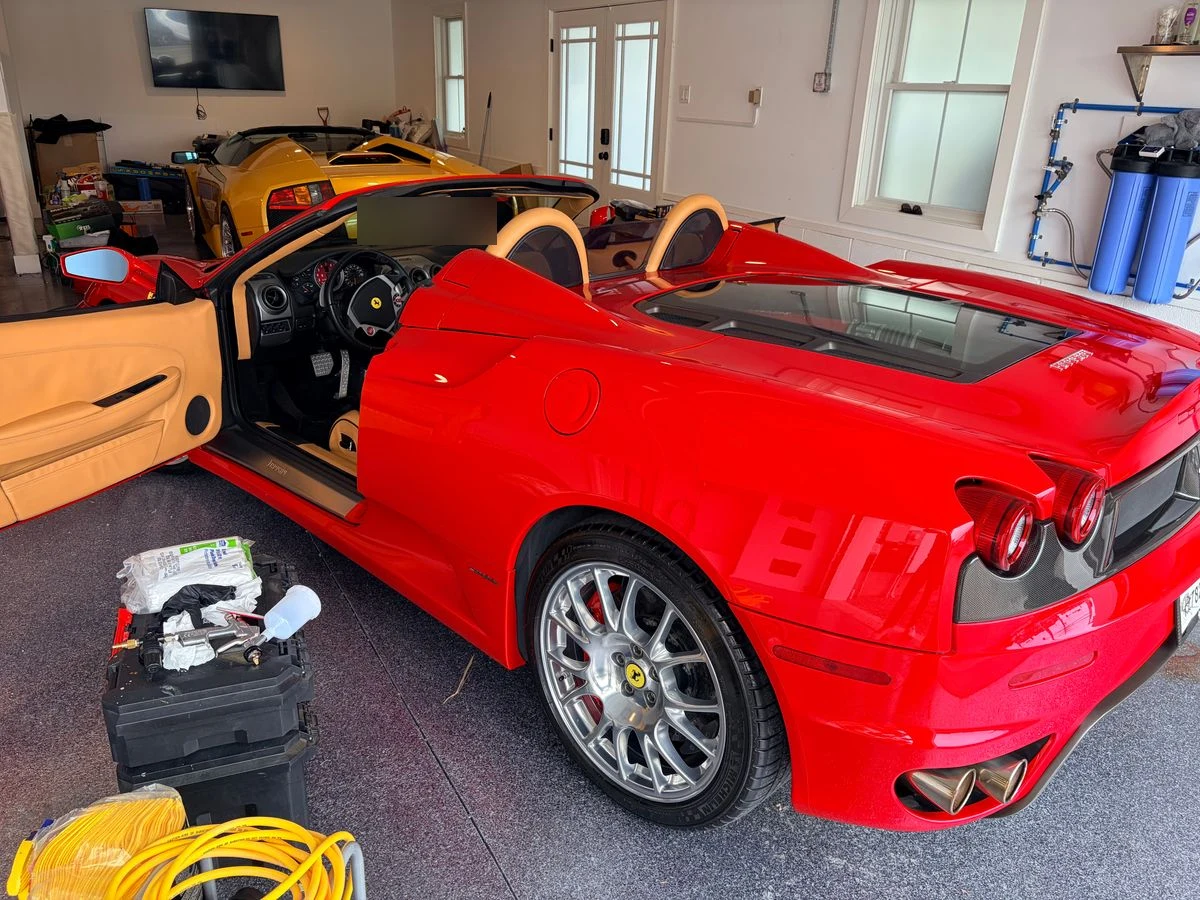
Ferrari F430 Spider Daytona Seat Restoration — New Jersey
Daytona seats refinished by a dealership with an incorrect color match, corrected to OEM Ferrari Cuoio on-site in New Jersey.
View Case StudyFrequently Asked Questions
Does low mileage prevent leather from aging?
No. Mileage affects contact wear, but leather also ages from time, temperature changes, and humidity, regardless of how much the car is driven. A collector car with roughly 3,000 miles over thirteen years can still develop drying, minor surface marks, and subtle wear from sitting in storage and being handled at events.
Why does leather age in a collector car with very low mileage?
Leather loses moisture and flexibility gradually over time, and that process continues regardless of how often a car is driven. Long-term storage conditions, seasonal temperature swings, humidity, and UV exposure during shows and exhibitions all contribute, and the leather's protective surface finish ages on its own timeline as well. Friction-related wear is reduced by low mileage, but time- and environment-driven aging is not.
Is preventative leather preservation different from repairing damaged leather?
Yes. Preservation addresses early-stage drying, minor surface marks, and subtle wear before they progress into cracking or more significant damage. It's a lighter, more conservative process than corrective restoration, focused on maintaining originality rather than fixing something that has already failed.
How do you preserve leather without changing its original character?
We clean, rehydrate, and condition the leather first, then address minor imperfections individually rather than refinishing entire surfaces. Any color work is custom matched to the surrounding original leather and blended in, so the result reads as continuous with the factory finish rather than as a reworked panel.
Do you provide mobile leather preservation for collector cars in New Jersey and NYC?
Yes. Leather & Vinyl Care provides mobile, on-site leather preservation and restoration for collector and exhibition vehicles throughout New Jersey, New York City, and Long Island. Work is performed at the vehicle's storage location or garage, with no transport required.
Related Reading
- Ferrari F355 Berlinetta Leather Interior Preservation for Show Preparation →
- 2018 Lamborghini Huracán Steering Wheel and Leather Interior Refinement →
- Ferrari F430 Spider Interior Leather Restoration in New Jersey →
- Ferrari 599 GTB Fiorano Interior Leather Restoration in NYC →
- 1992 Ferrari 512 TR Interior Restoration — Dashboard and Door Panel Refresh →
- Porsche 993 Carrera S Leather Interior Restoration — New Jersey →