White Leather Chair Restoration in Manhattan
This white leather lounge chair is one of a matching pair in a Manhattan residence. Its companion remained in excellent condition, but this chair had developed dark hair-dye staining on the backrest along with minor surface wear. The objective wasn't simply to make the chair white again — it was to restore it so it once again visually belonged beside its undamaged match.
Project Overview
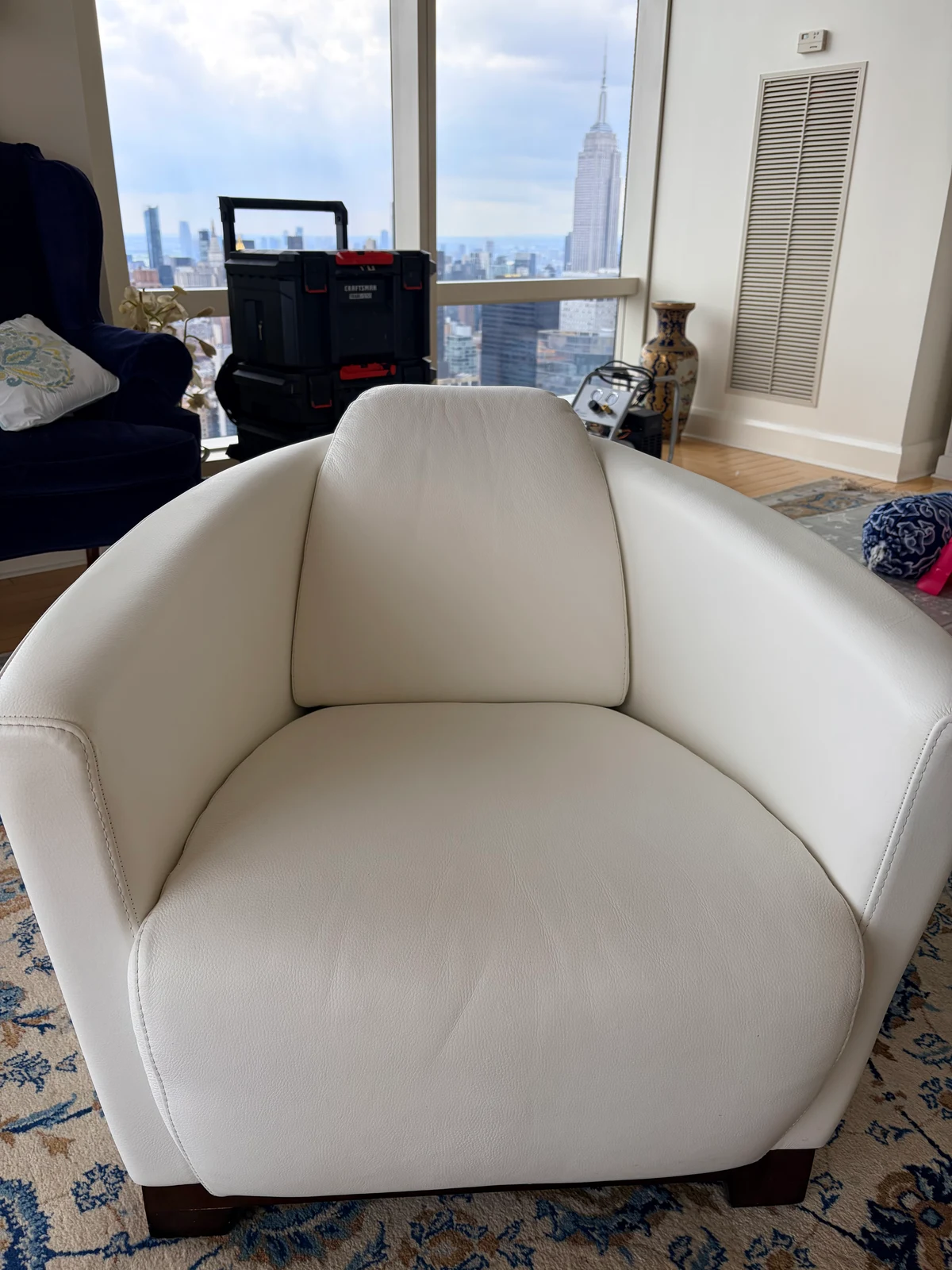
A Damaged Chair From a Matching Pair
This premium white leather lounge chair shares a room with an identical companion chair in a Manhattan high-rise. The companion had aged well and remained in excellent, undamaged condition — but this chair had picked up dark hair-dye staining on the backrest, along with some minor surface wear from regular use.
That combination — one damaged chair sitting beside its undamaged twin — is exactly the scenario restoration is suited for and reupholstery often isn't. Reupholstering the damaged chair alone would have introduced a new leather that could never be guaranteed to match its companion. Restoring the original leather kept both chairs in the same material, with the same age and character, and gave us a direct, physical reference to match against rather than a color chip or a memory of what the leather used to look like.
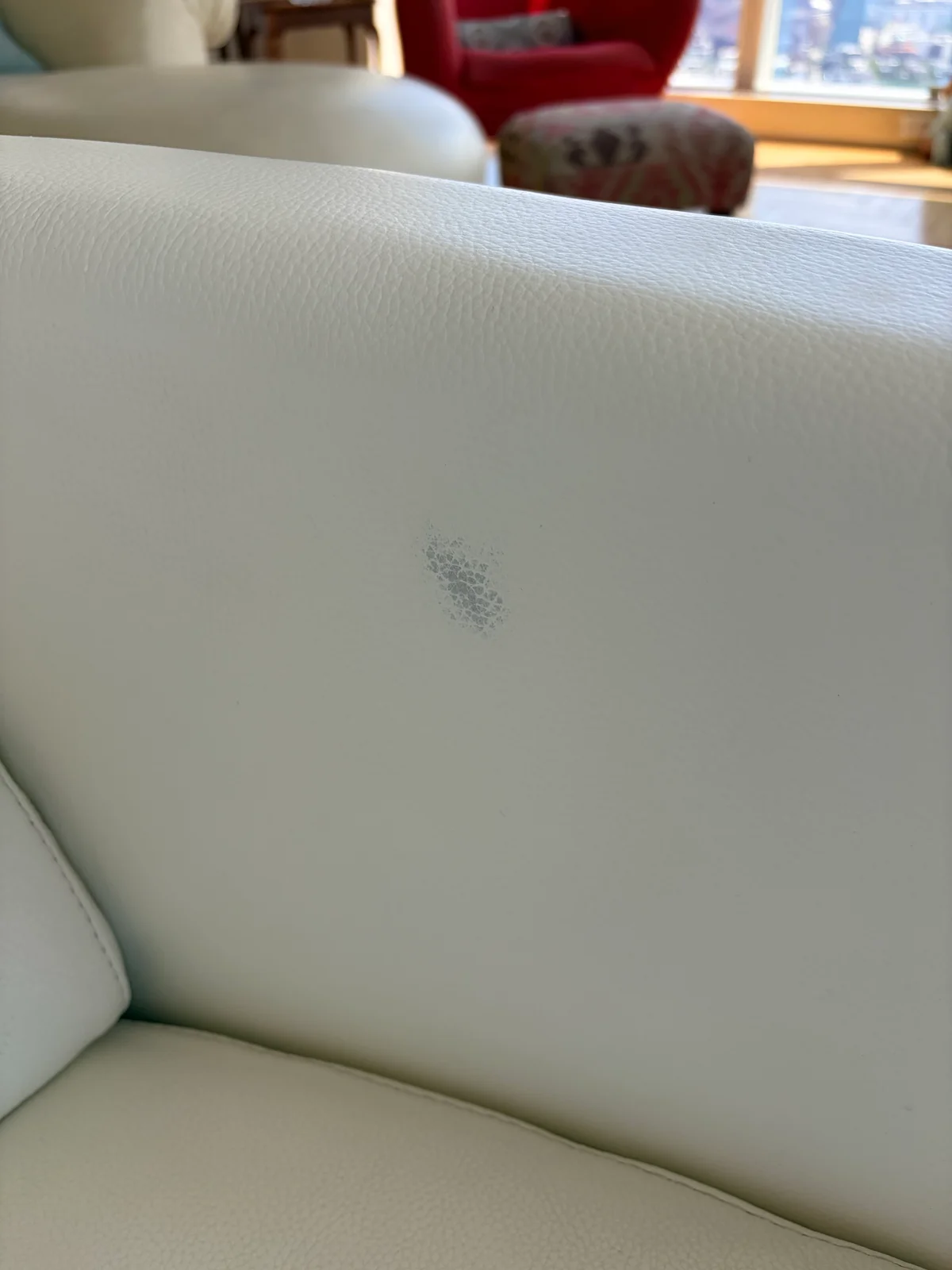
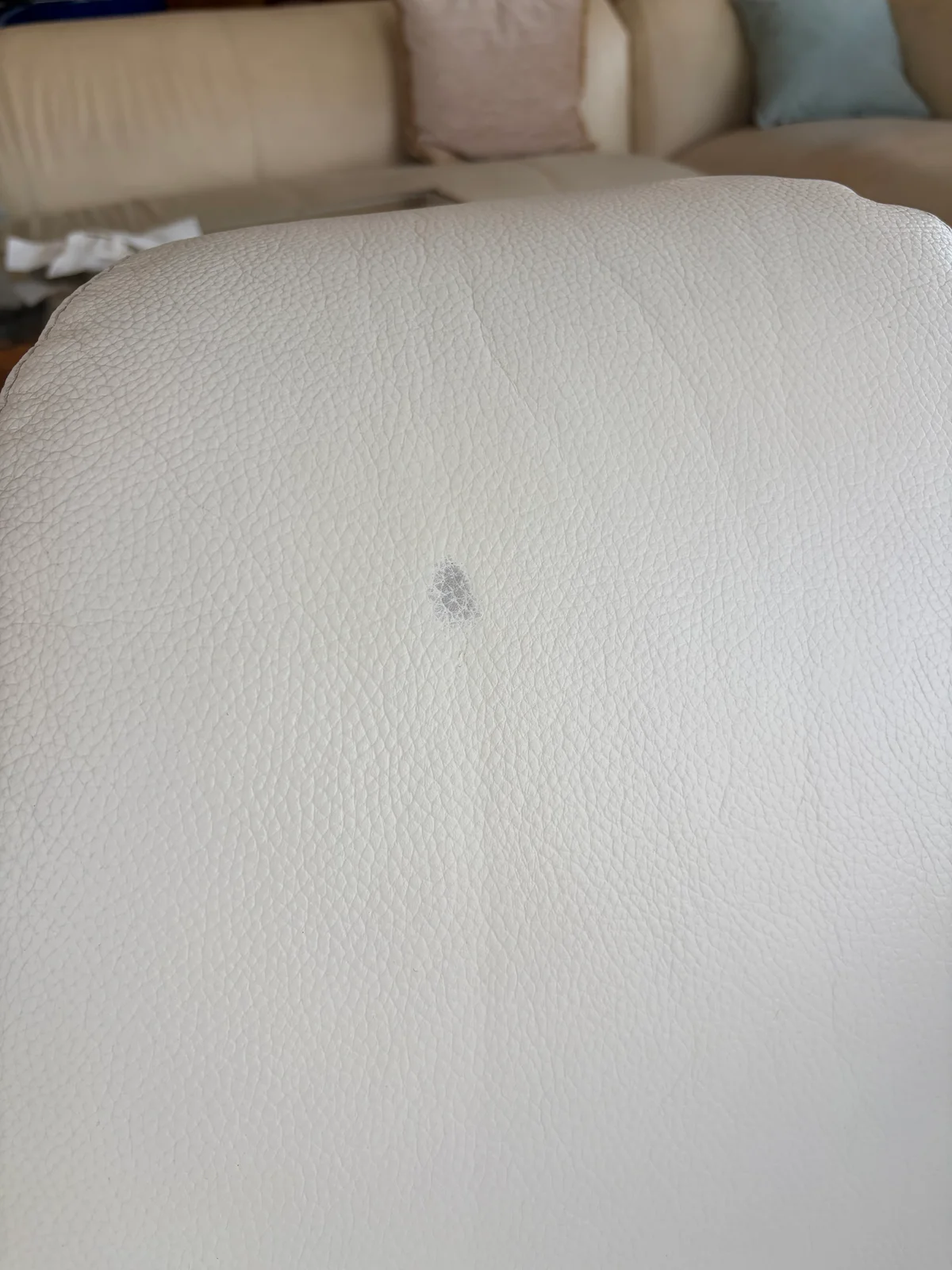
Before: Hair-Dye Staining and Surface Wear
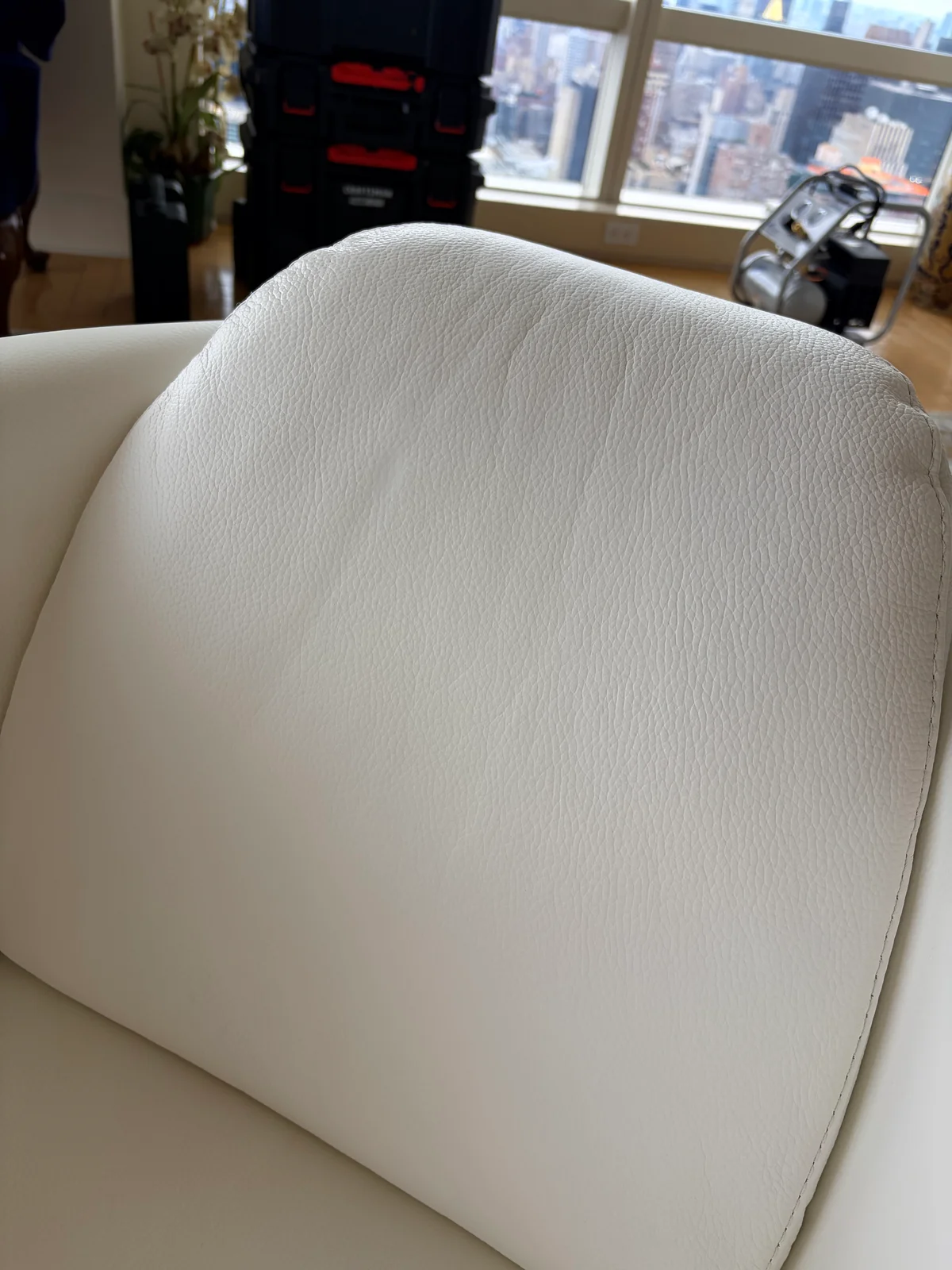
The most visible damage was dark hair-dye staining on the upper backrest — a scattered, mottled discoloration that stood out clearly against the surrounding white leather and was the focal point of the restoration.
Why "White Leather" Isn't Just White
White and off-white leathers carry real variation in warmth, undertone, and brightness — differences that are easy to miss on a single piece but become obvious the moment two pieces sit side by side. A refinish that looks correct on its own can still read as slightly warmer, cooler, brighter, or flatter than a neighboring piece once they're compared directly.
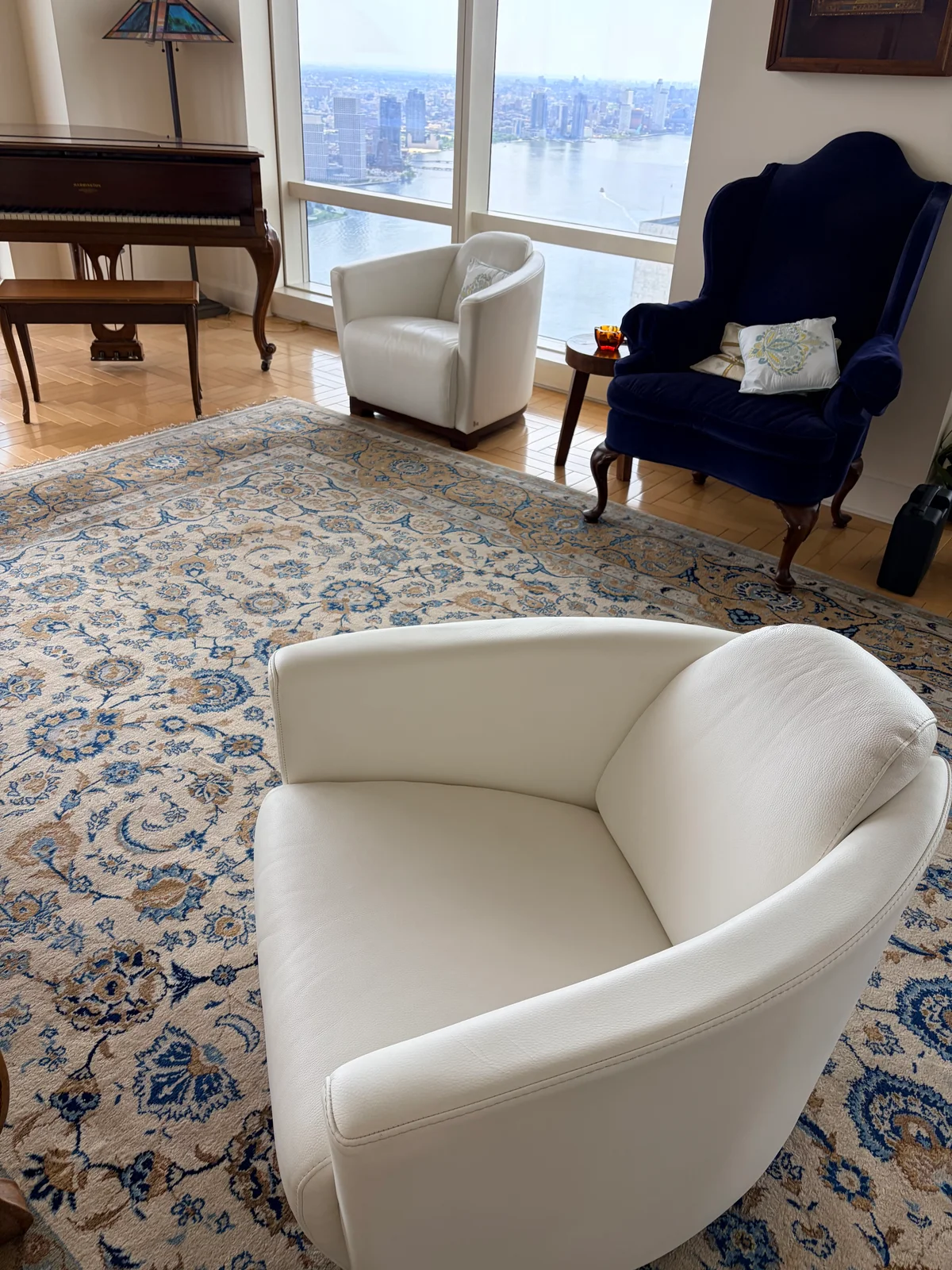
Having the undamaged companion chair in the same room removed the guesswork. Pigment was custom-blended and tested on-site directly against the matching chair — checked in the room's actual light, from multiple angles — until the tone, undertone, and sheen matched as closely as practical. That live, side-by-side reference is what made an accurate match possible, rather than working from an approximation of what "white" should look like.
The Restoration Process
Deep Cleaning
The chair was deep cleaned first, treating the hair-dye contamination as much as safely possible to lift surface residue and reduce the staining before any color work began. Dye that has migrated into the leather itself typically cannot be fully removed through cleaning alone — the remaining discoloration was addressed in the color restoration step that followed.
Surface Preparation
The affected areas were carefully prepared for refinishing, preserving the chair's original grain rather than sanding or stripping it away. Preparation was limited to what the color work actually required.
Custom Color Matching
White leather isn't a single, fixed color — warmth, undertone, and brightness vary from piece to piece and are often visible side by side. With the chair's matching, undamaged companion in the same room, we had a direct, live reference to blend against, testing pigment on-site until tone, undertone, and sheen matched as closely as practical.
Refinishing
Color was built up in thin, controlled applications rather than one heavy coat, avoiding the flat, painted look that comes from overapplication and preserving the leather's natural grain throughout. Minor surface wear elsewhere on the chair was corrected during this same step.
Protective Finish
A protective topcoat was applied across the refinished areas, with sheen matched as closely as practical to the surrounding original leather and to the companion chair, so the finish reads as continuous rather than as a distinct repaired panel.
Before and After — Backrest Restoration
The same backrest area, color matched and refinished so the hair-dye staining is no longer visually distracting.
Final Result
The hair-dye staining is no longer visually distracting, and the minor surface wear noted elsewhere on the chair was corrected in the same visit. The leather retains its natural grain and character throughout — nothing about the refinished areas reads as a painted or plastic surface. Back in place beside its companion chair, the restored piece once again reads as part of a matching set.
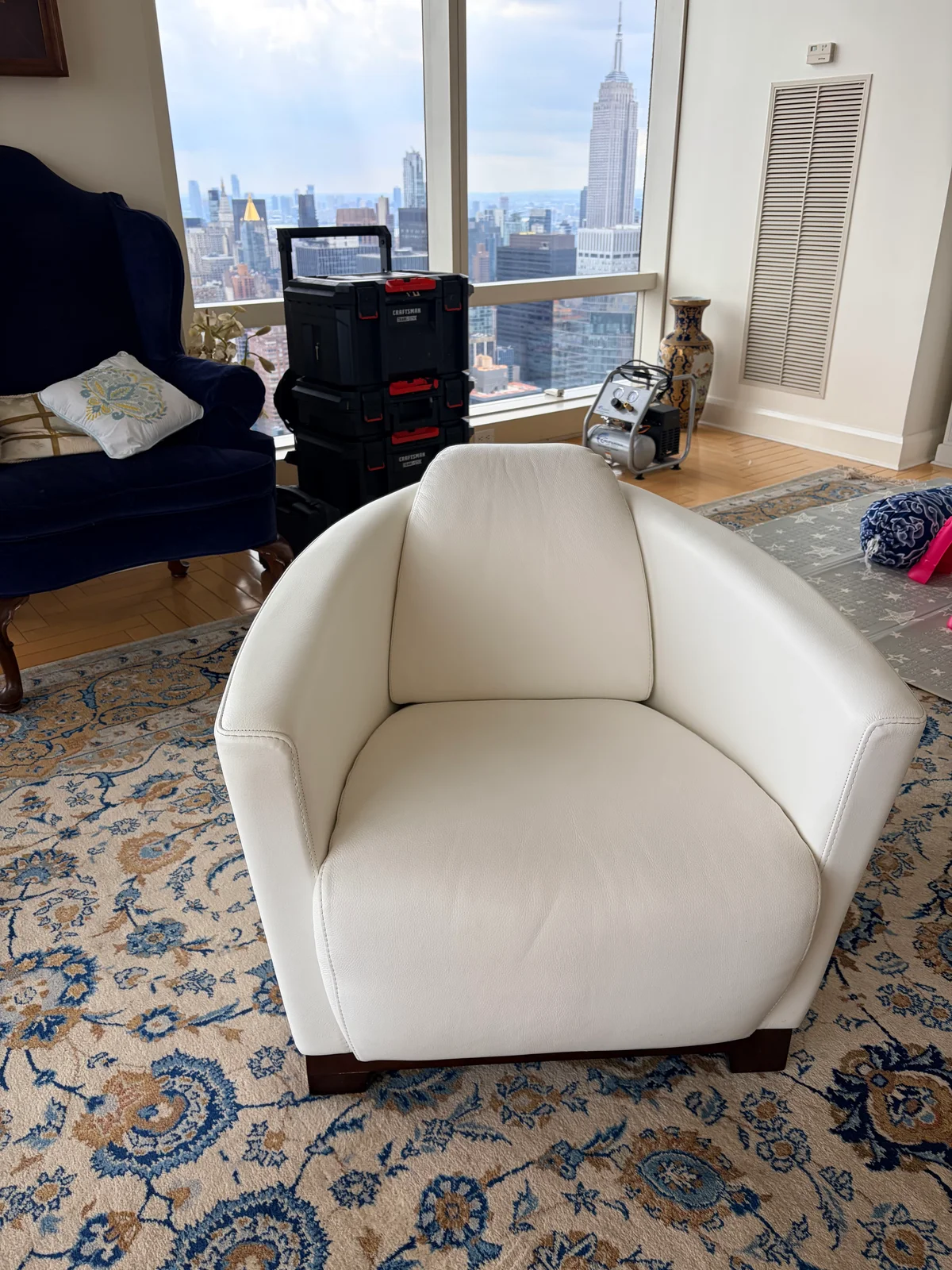
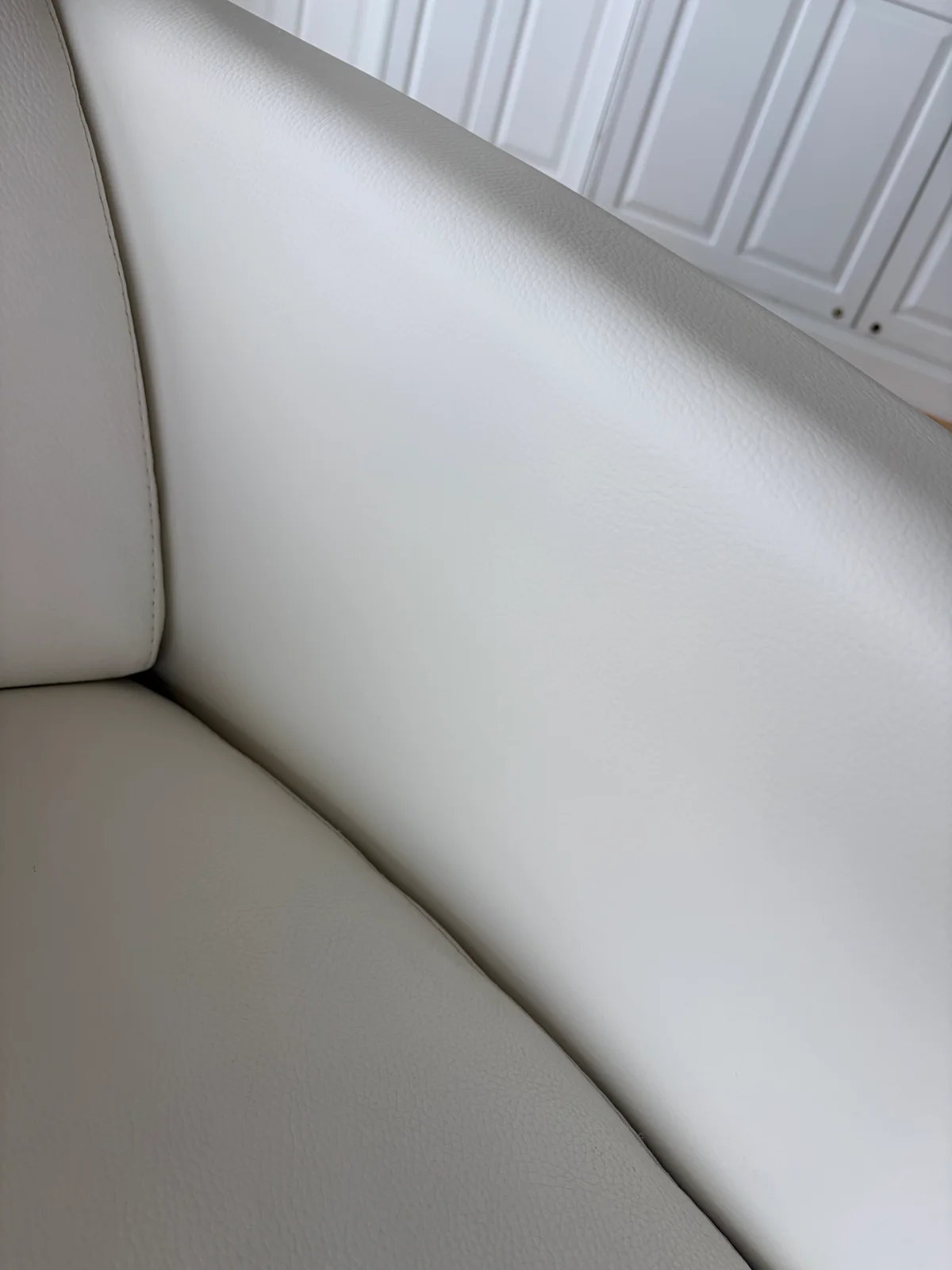
- Hair-dye staining on the backrest no longer visually distracting
- Minor surface wear elsewhere on the chair corrected in the same visit
- Custom color matched on-site against the undamaged companion chair
- Natural leather grain and character preserved throughout
- Protective finish applied, sheen matched as closely as practical to the companion chair
- Original leather restored — no reupholstery, no furniture removal
Why Restoration, Not Replacement
Stains, discoloration, and surface wear on leather furniture don't always mean the piece needs to be reupholstered or replaced — and for a chair with a matching companion, replacement carries a real risk that a new leather could never be guaranteed to match. Restoring the original leather kept both chairs in the same material, preserved the grain and character built up over years of use, and returned the pair to a consistent, coordinated appearance without the cost or disruption of reupholstery.
Related Services
- Re-dyeing & Color Restoration → custom pigment matching for faded, discolored, or stained leather
- Leather Chair Repair → on-site leather chair repair and color matching across NYC
- Leather Cleaning & Conditioning → deep cleaning to treat stains and contamination before color work
- Leather Repair in Manhattan → mobile on-site service across all Manhattan neighborhoods
Have a Similar Leather Furniture Problem?
Stains, discoloration, and surface wear don't always mean your leather furniture needs to be reupholstered or replaced. Text us photos for a free estimate — we serve all of Manhattan and the rest of NYC with mobile, on-site leather restoration.
Related Furniture Restoration Projects
Other leather furniture color restoration work completed by Leather & Vinyl Care.
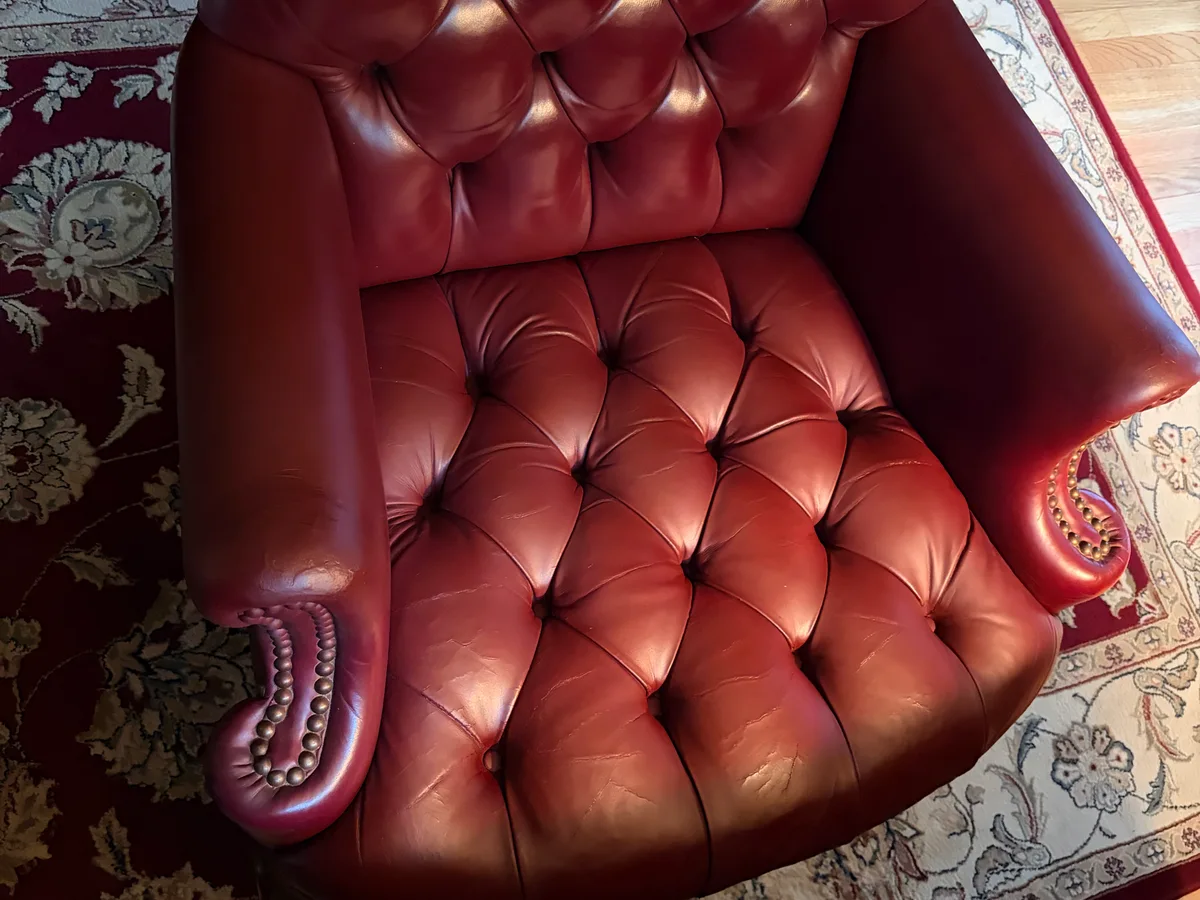
Vintage Chesterfield Chair Leather Restoration
Both armrests worn through — leather inserts installed, cracks repaired, and full color restoration performed on-site.
View Case Study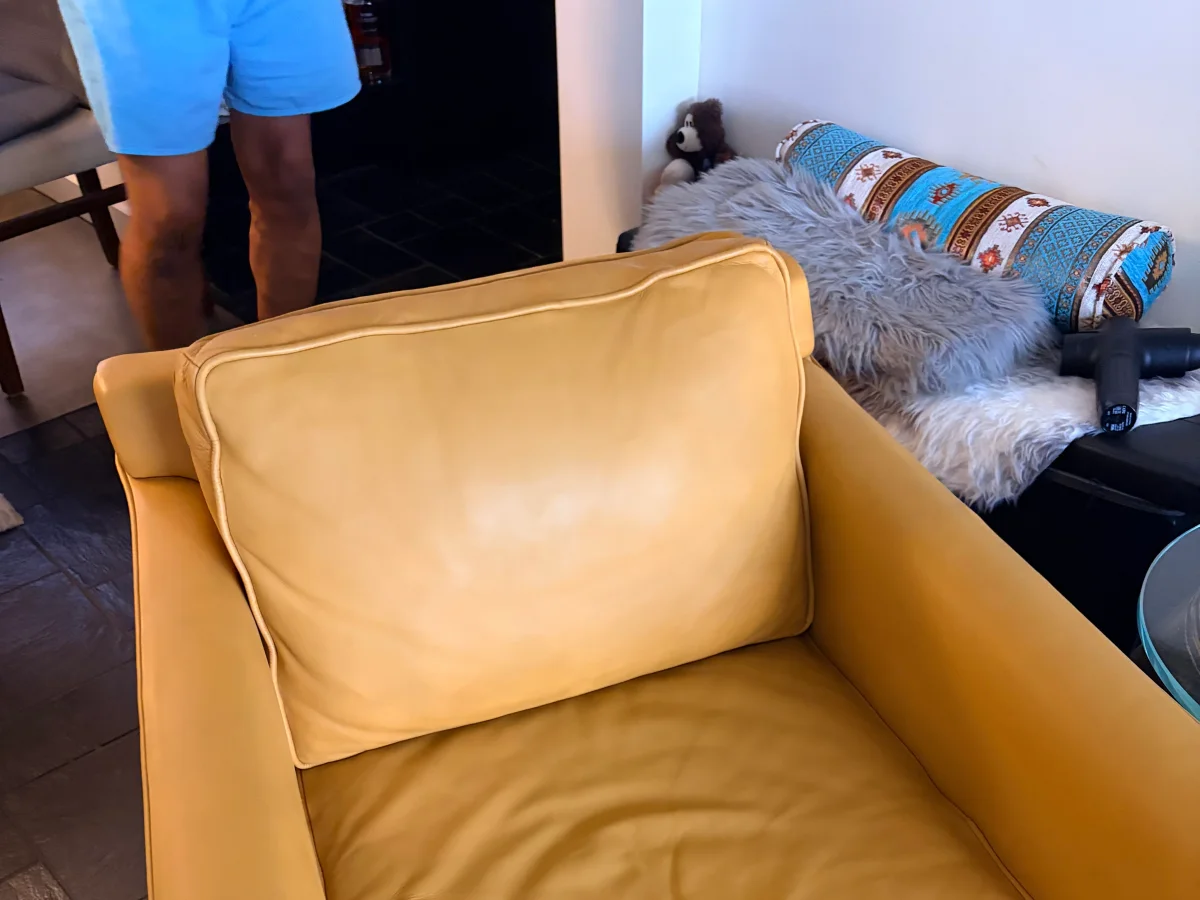
Designer Leather Lounge Chair Color Restoration
Severe UV fading and armrest cracking restored with a custom-matched pigment applied across all leather surfaces.
View Case Study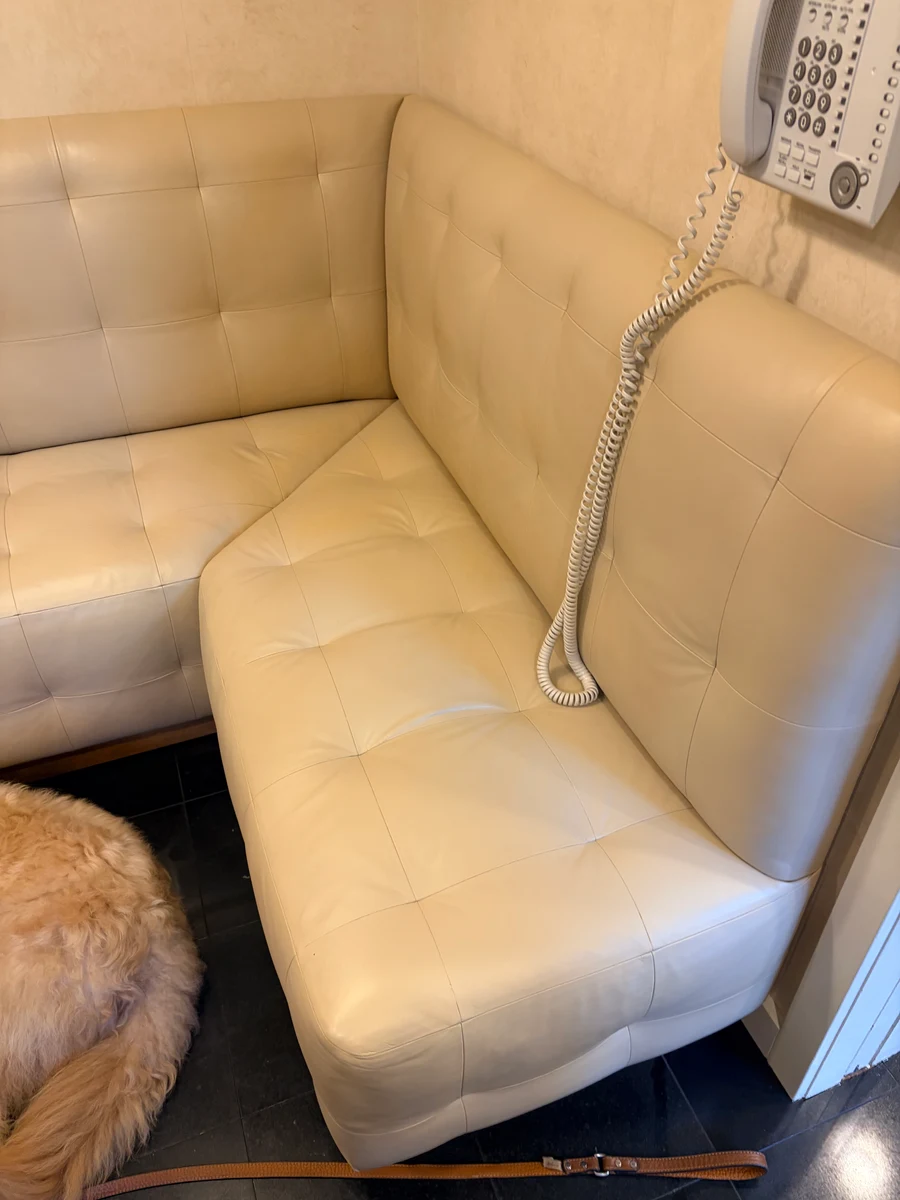
Leather Kitchen Banquette Restoration
Built-in cream leather banquette with cracking and yellowing restored with custom color matching and full recoloring.
View Case Study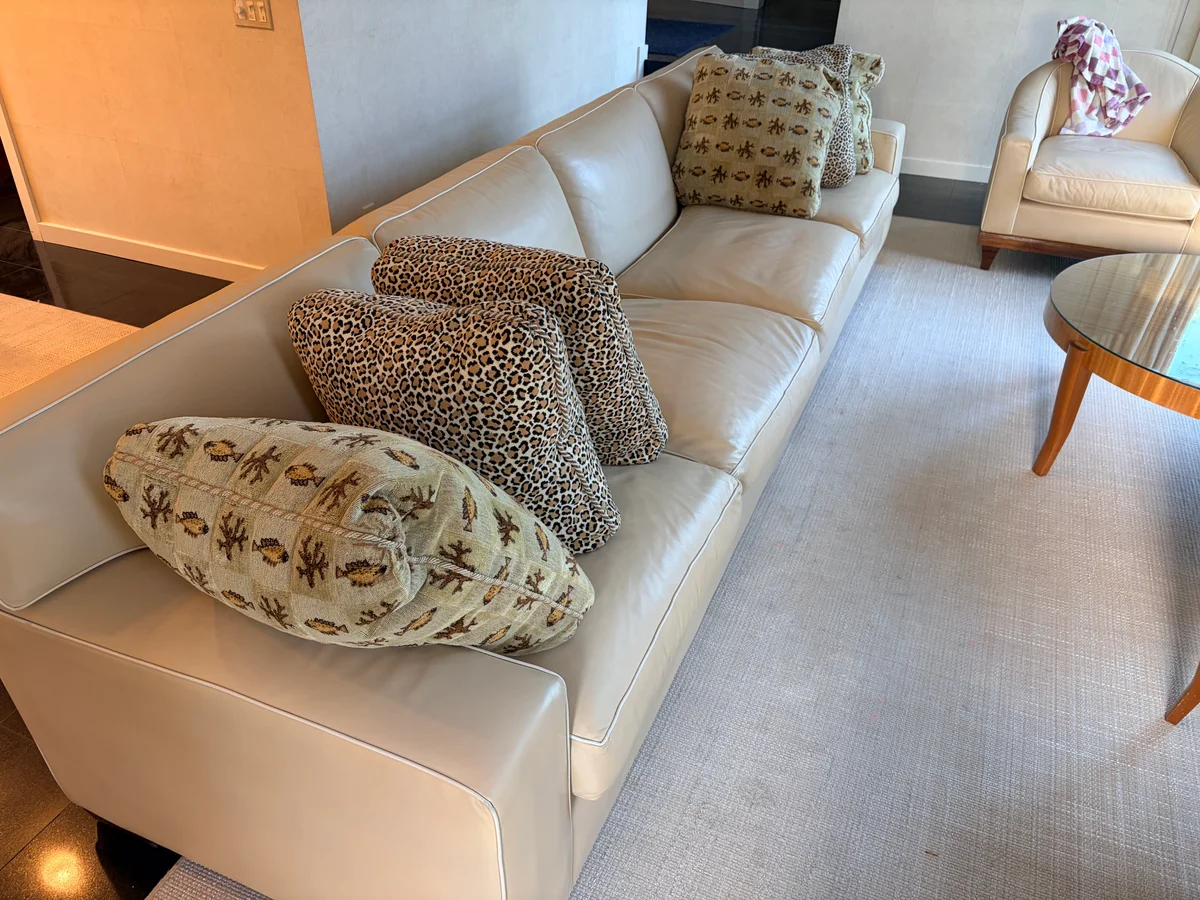
Luxury Leather Furniture Color Matching
A sofa and two club chairs restored with a custom-developed color blend coordinated across all three pieces.
View Case StudyFrequently Asked Questions
Can hair dye stains be fully removed from white leather?
Dye contamination can be treated and reduced as much as safely possible through deep cleaning, but hair dye that has penetrated the leather's surface often leaves some residual discoloration that cleaning alone cannot fully lift. In those cases, color restoration and refinishing are used to correct the remaining discoloration and return the leather to a clean, consistent appearance.
Is white leather actually one single color?
No. White leather varies in warmth, undertone, and brightness between pieces, and even between cushions on the same piece, depending on the leather batch and how it has aged. Matching it accurately requires custom pigment blending against a live reference rather than applying a generic "white" from a standard mixing chart.
How do you match leather color when only one piece of a pair is damaged?
When a matching, undamaged piece is available, it becomes the most reliable color reference we can use. We custom-blend pigment on-site and test it directly against the undamaged companion piece — checking tone, undertone, brightness, and sheen side by side — until the two read as a consistent set.
Will a refinished area look painted or uneven?
Not when it's done correctly. Color is built up in thin, controlled applications rather than one heavy coat, which preserves the leather's natural grain and avoids the flat, plastic look that comes from overapplication. The goal is a refinished surface that reads as leather, not as a painted coating.
Do you provide on-site leather furniture restoration in Manhattan?
Yes. Leather & Vinyl Care provides mobile, on-site leather furniture restoration throughout Manhattan and the rest of NYC. Work is completed at your home, with no furniture removal or reupholstery required.