Mitchell Gold + Bob Williams Hunter Leather Chair Restoration and Color Repair in NYC
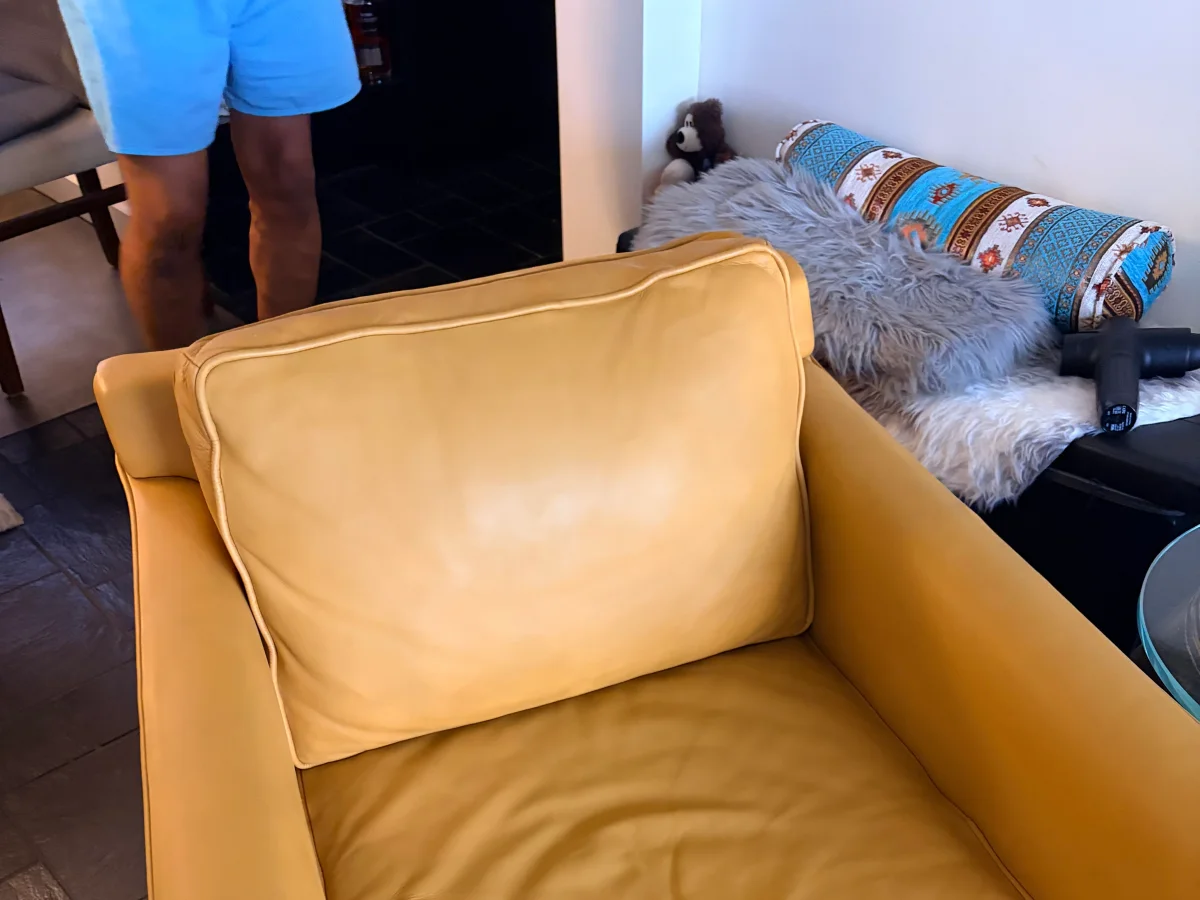
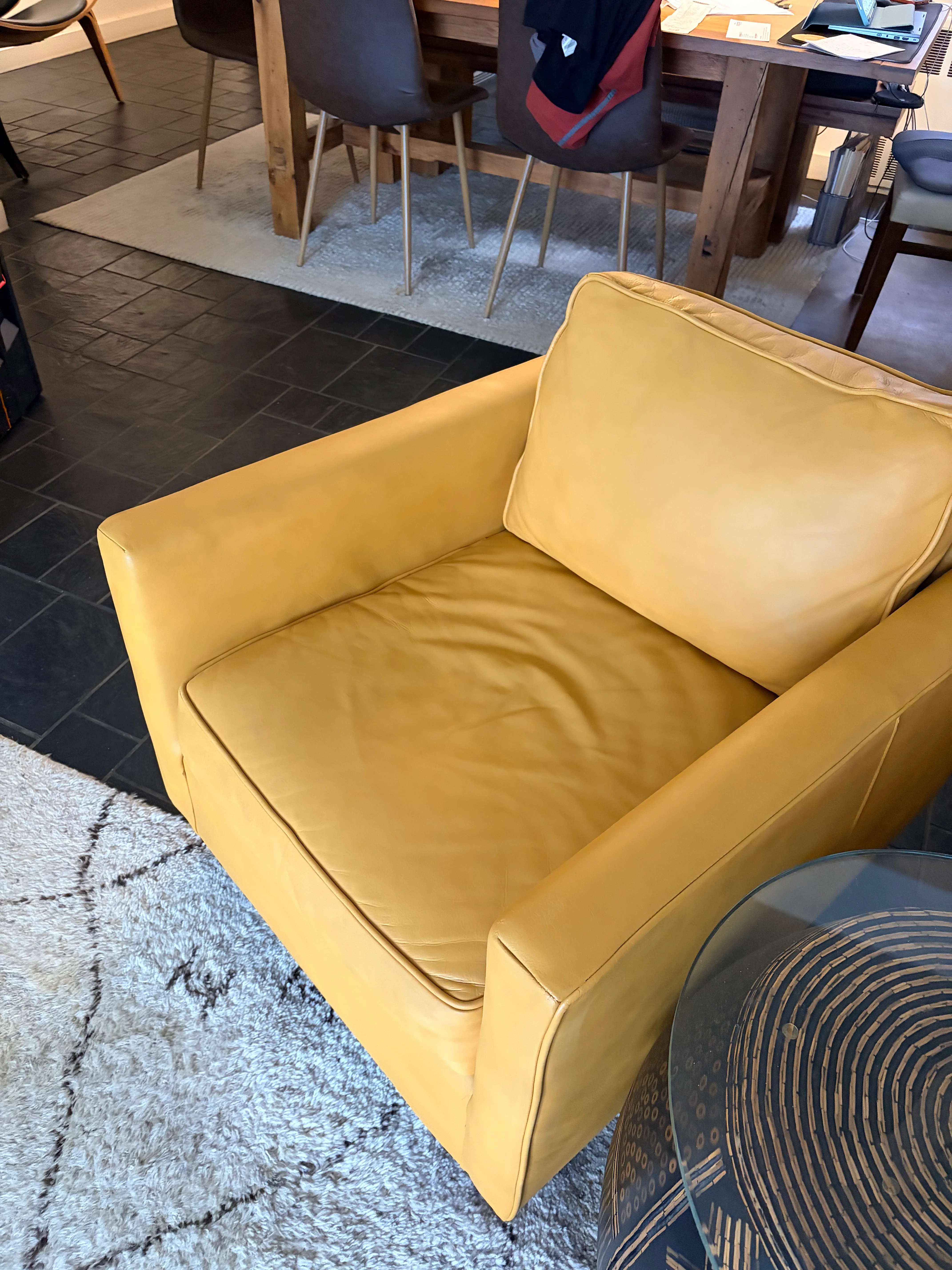
A Mitchell Gold + Bob Williams Hunter chair in Saffron leather had reached a condition where the owner was seriously considering replacement. The armrests had suffered severe surface failure — the leather finish had completely broken down, leaving visible cracking and areas where the original color was gone entirely. UV exposure had bleached the seat cushion surfaces from rich saffron to near-white. The chair was structurally sound. We cleaned it, filled the cracked surfaces, custom-matched the saffron color, and recolored it on-site. The result was a chair the customer was happy to keep — all color matching and restoration work performed on-site at the client's home by Leather & Vinyl Care.
Project Overview
The Challenge
The Mitchell Gold + Bob Williams Hunter chair is a well-made piece — solid hardwood frame, generously proportioned, and upholstered in full leather. In Saffron, it's a statement piece: a warm, saturated golden-yellow that works as a focal point in a room. When it was new, it was the kind of chair that gets noticed.
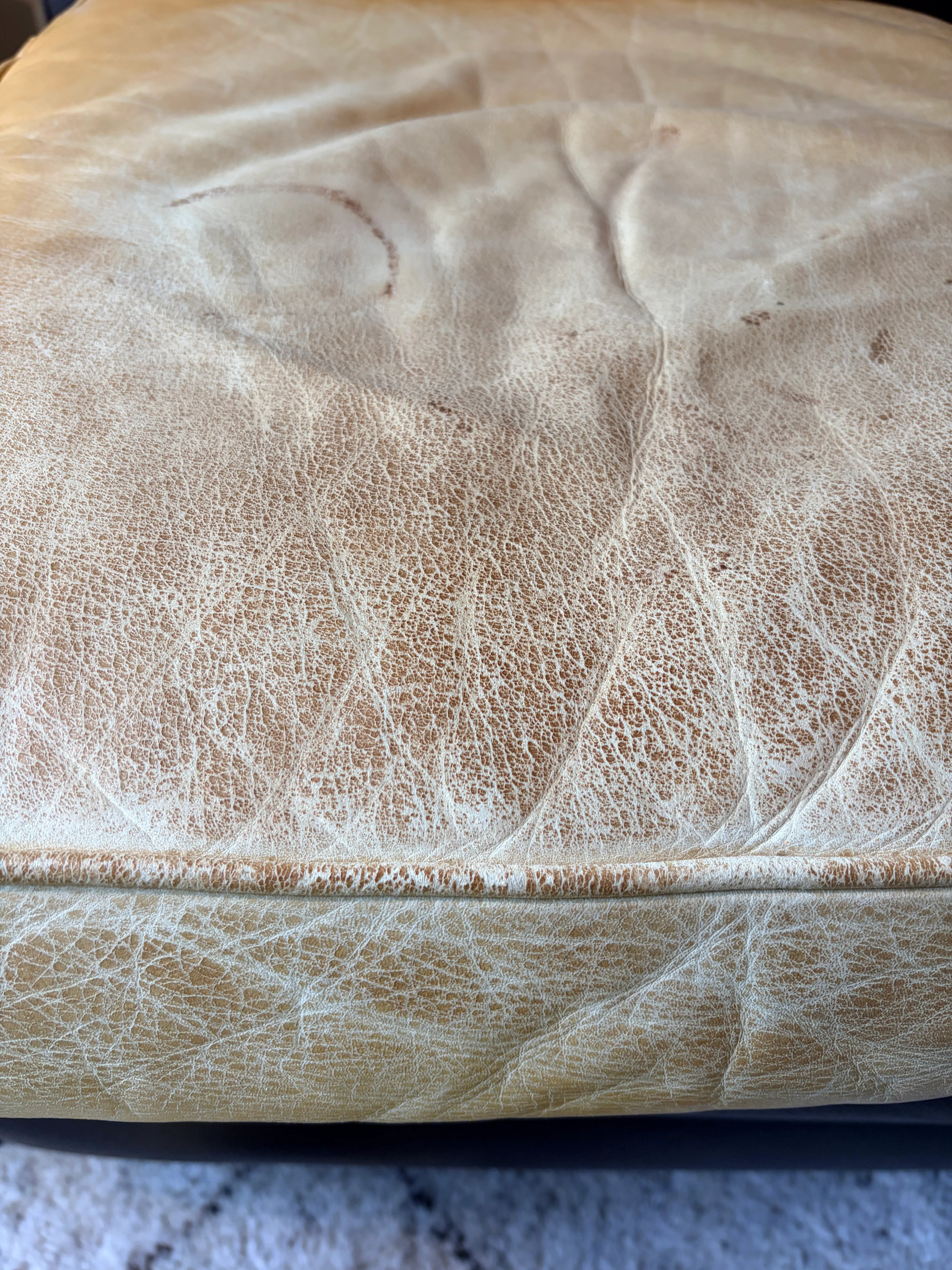
After years of regular use without leather maintenance, it had reached a point where the visible condition was impossible to ignore. The armrests — the highest-contact surfaces on any lounge chair — had experienced what can only be described as surface failure. The leather finish had broken down completely, with severe cracking across the entire face and corner areas where the original color was gone. Beneath the failed surface, the dark substrate of the leather was exposed.
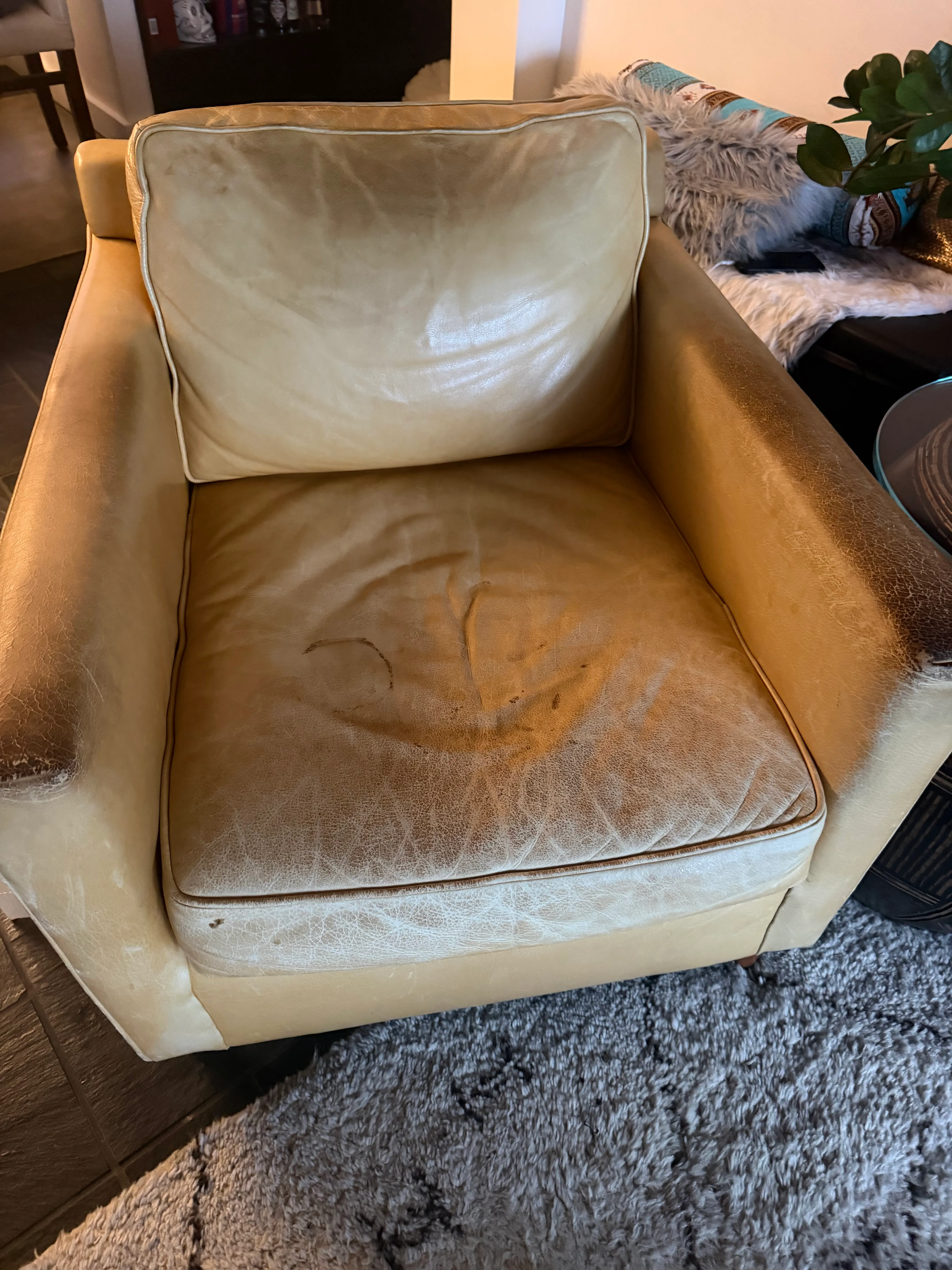
The seat cushion told a different story: UV exposure through a nearby window had bleached the top surfaces from rich saffron to a pale, washed-out cream. A stain on the seat cushion added to the overall impression of neglect. The owner described still loving the comfort of the chair but feeling embarrassed to have guests see it. Replacement was on the table — but the chair itself, structurally, was completely sound.
Inspecting the Damage
Before any restoration work begins, the leather is examined in detail — not just the obviously damaged areas, but the full surface. Understanding the extent and type of damage determines the correct approach and the sequence of work.
On this chair, three distinct types of damage were present:
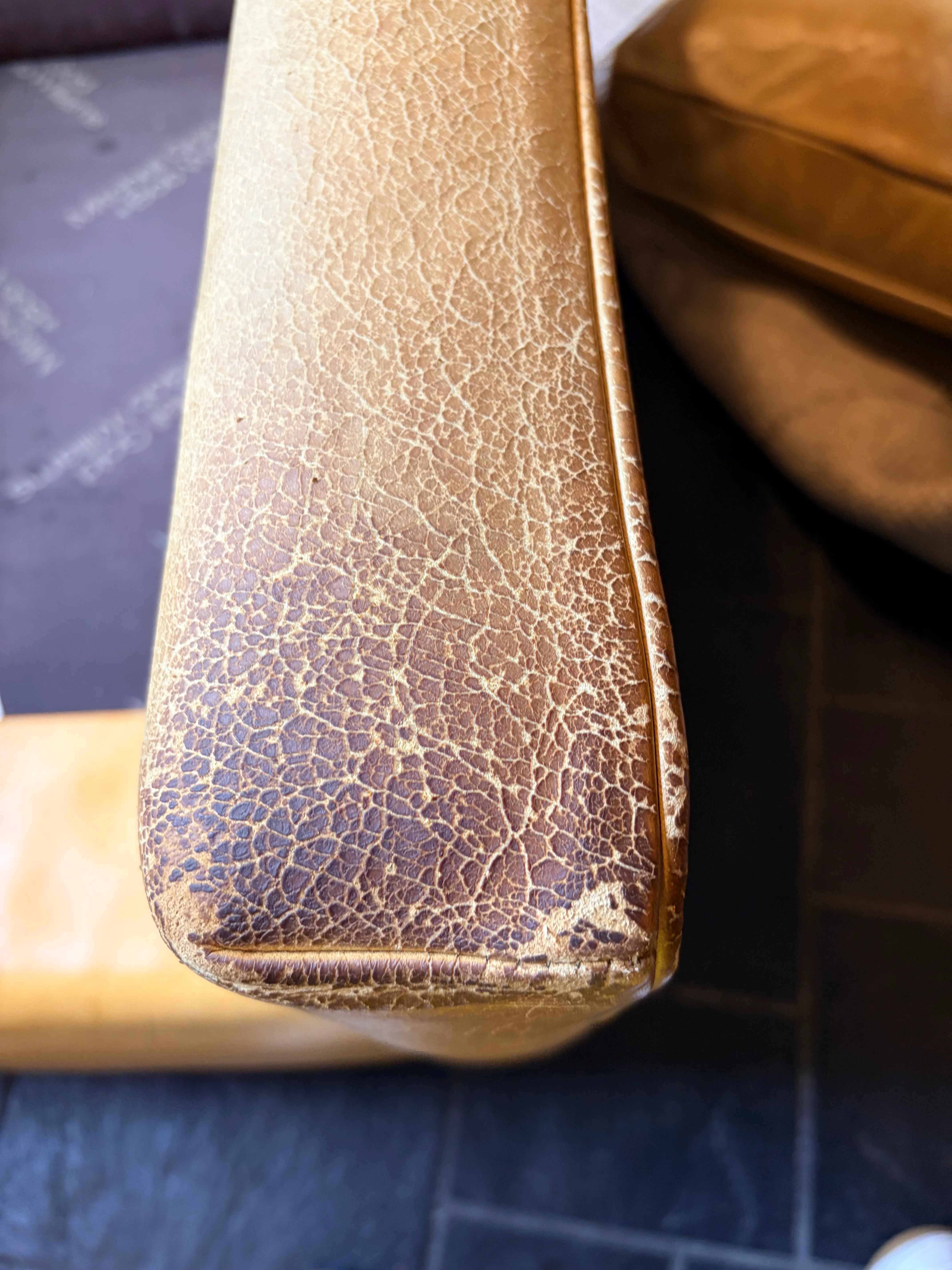
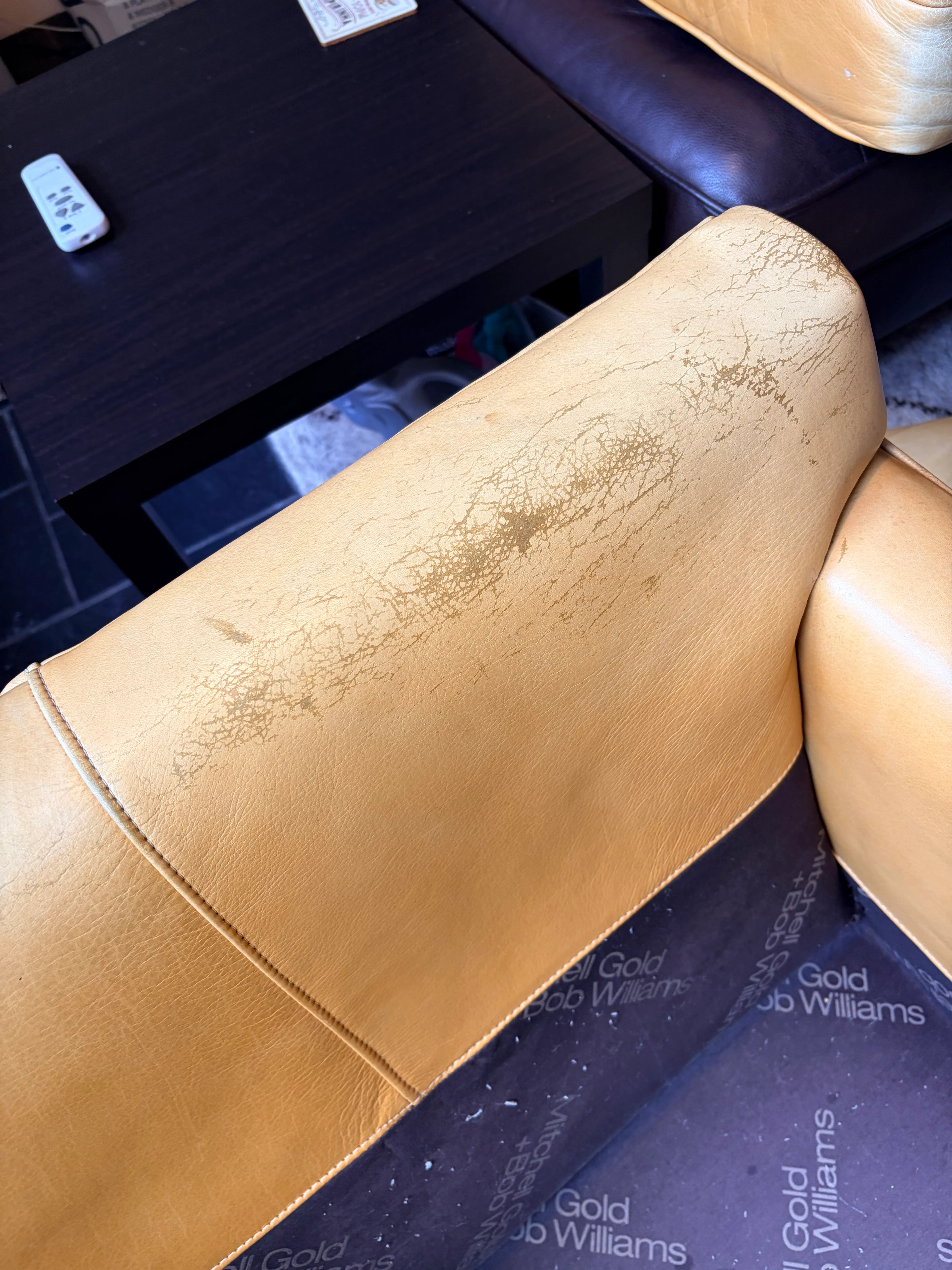
- Armrest surface failure: Both armrests showed severe, mosaic-like cracking — the leather finish had broken down into distinct segments separated by deep cracks. At the corner edges, the damage was most extreme: the original Saffron color was completely absent and the darker leather substrate was visible through the failed surface. This type of damage is caused by the finish layer drying out and losing flexibility over time, then fracturing under the stress of repeated use.
- UV fading across seat surfaces: The top-facing surfaces of the seat cushion and seat back panels had been bleached significantly by UV exposure. The original warm saffron had faded toward a pale cream-white in the most exposed areas. An amber-toned stain was also present on the seat cushion — likely from a beverage or body oils that had penetrated the already-compromised surface. UV damage of this type is gradual and often goes unnoticed until the contrast with less-exposed areas becomes stark.
- Generalized surface crazing: Across the seat back panels and the outer body of the chair, a finer network of surface cracks was visible across a large area — the kind of crazing that develops when leather is not regularly conditioned and the surface moisture content drops. Unlike the armrest failure, this crazing had not progressed to full color loss but was visually prominent and would have continued to worsen without treatment.
Restoration Process
The restoration was completed on-site in a single visit. The cushions were removed during the work to allow full access to all leather surfaces. Plastic sheeting protected the floor throughout.
Deep Cleaning & Degreasing
The chair was cleaned thoroughly before any restoration work began. Years of body oil buildup, surface contamination, and embedded grime were removed using professional leather cleaning compounds. Degreasing treatment followed to ensure the surface was fully prepared for the repair materials. Proper cleaning is critical — color applied over a contaminated surface will not bond correctly and will fail prematurely.
Surface Inspection & Preparation
After cleaning, each area was inspected in detail. The armrests showed the most significant damage — the surface finish had failed entirely in the corner areas, with the cracking pattern exposing the darker substrate underneath. The seat cushion surfaces showed advanced UV fading. The seat back panels showed extensive surface crazing across a large area. Affected surfaces were prepared to accept the filler and color applications.
Crack Filling & Surface Smoothing
The cracked and crazed surface areas — most severely on the armrests — were filled with a flexible leather compound to consolidate the surface and restore a smooth, even texture. This step is essential before recoloring: applying color directly to a cracked surface produces an uneven result. The filler is formulated to remain flexible after curing so it moves with the leather rather than cracking again.
Custom Saffron Color Formulation
Saffron is an uncommon leather color — a specific warm, saturated golden-yellow that sits between amber and mustard. It does not correspond to a standard industry pigment and required custom mixing on-site. The UV-faded areas of the chair had shifted significantly from the original tone, so the target color was the original factory shade rather than the existing faded leather. The match was tested and adjusted until correct before any application.
Full Leather Recoloring
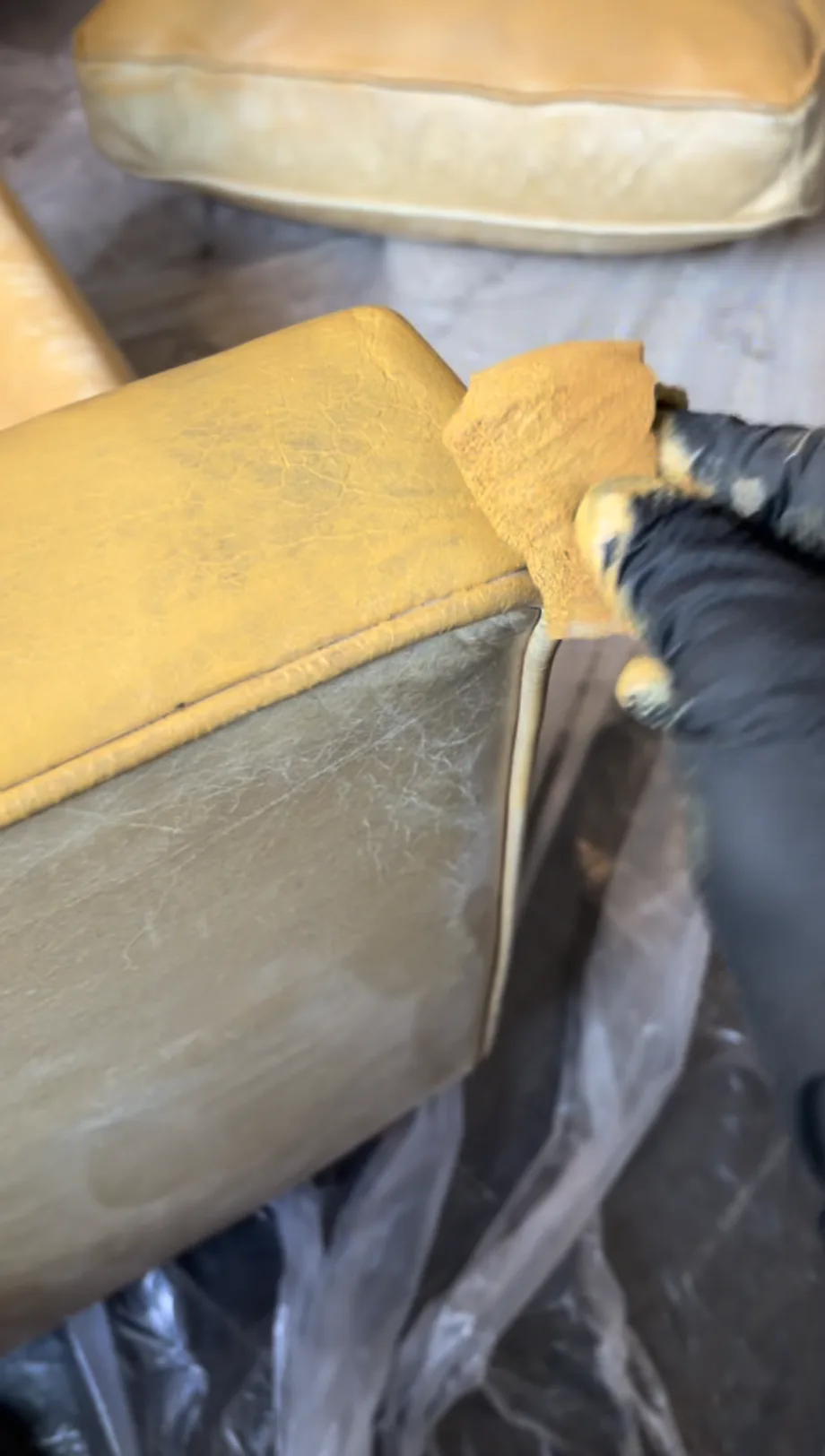
The custom saffron pigment was applied in controlled layers across all leather surfaces — armrests, seat cushions, seat back panels, and the surrounding body panels. The color was worked in gradually, building depth and evenness. The original leather grain texture was preserved throughout. The process photo shows this stage: a sponge applicator used in gloved hands to work the color into the armrest surface.
Protective Top Coat
A protective finish coat was applied over the recolored leather to seal the surface, establish the appropriate sheen level, and provide resistance to future wear and UV exposure. The finish is flexible and compatible with the leather's natural movement. It also makes the surface easier to maintain — regular conditioning keeps the leather supple and prevents the drying cycle that leads to cracking.
Custom Color Matching Saffron Leather
Saffron is not a color that has an off-the-shelf match. It occupies a specific place in the spectrum — a warm, saturated yellow-gold that is brighter than camel and more orange-leaning than mustard. Mitchell Gold + Bob Williams uses it as a signature color across several upholstery lines, but it is not commonly seen in the broader leather industry, which means there is no standard pigment that matches it.
An additional complication: the UV fading on this chair meant that the surviving surface color in the less-damaged areas was already somewhat lighter and cooler than the original factory shade. Matching to the faded leather would have produced a restoration that looked correct in the worn areas but incorrect relative to the original color. The target had to be the original Saffron specification.
The color was formulated on-site through incremental mixing — blending a warm golden base with amber and yellow components and testing against the original leather until the match was confirmed. A small test application was made and evaluated before the full restoration was committed. This step takes more time than working with common leather colors, but it is the step that determines whether the final result looks like a restoration or a repair.
The Final Result
The transformation is visible in the after photographs. The chair that arrived with bleached-out seat surfaces, catastrophically cracked armrests, and a visible stain left as a chair the owner was comfortable inviting into a living room again.
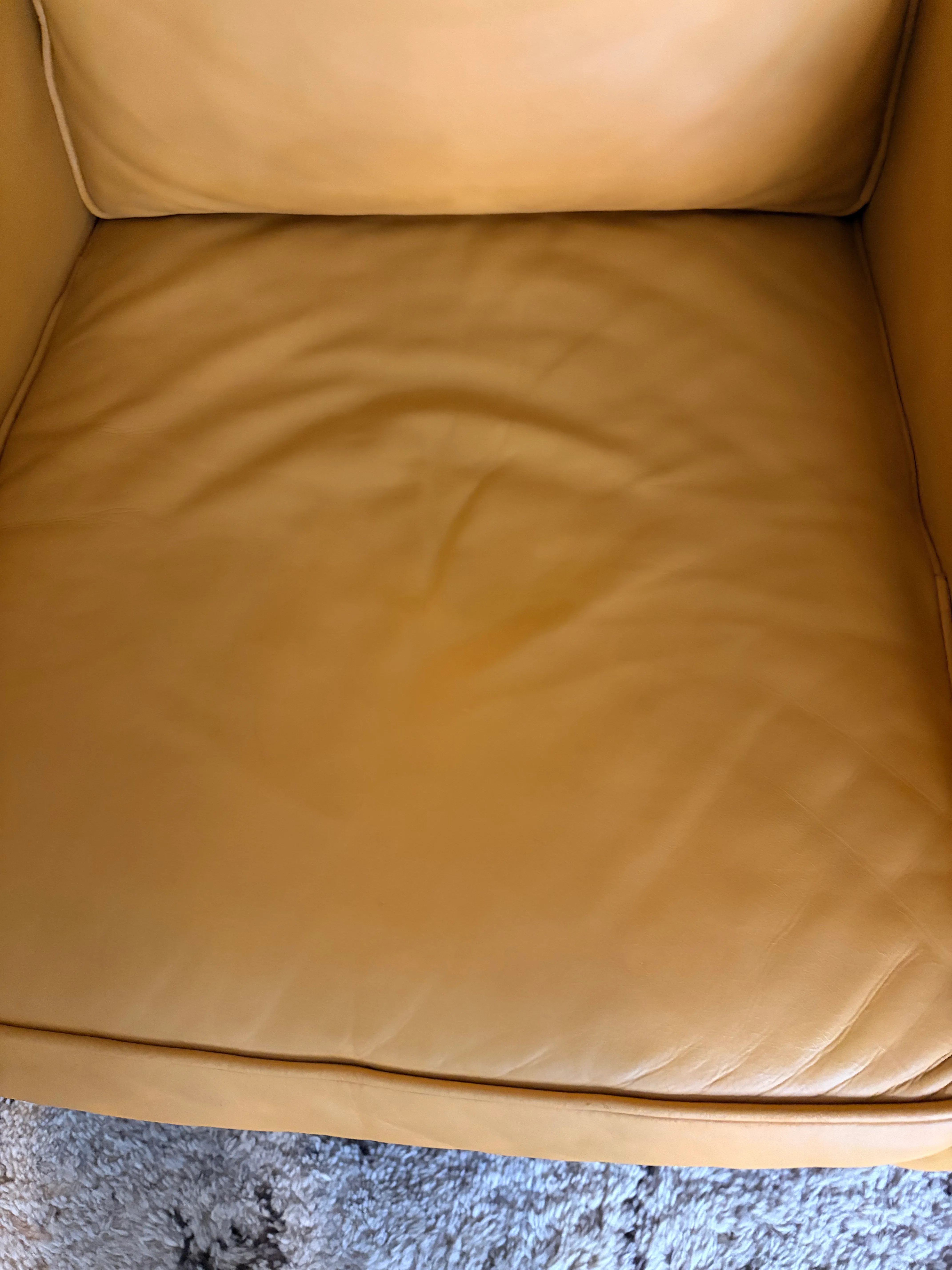
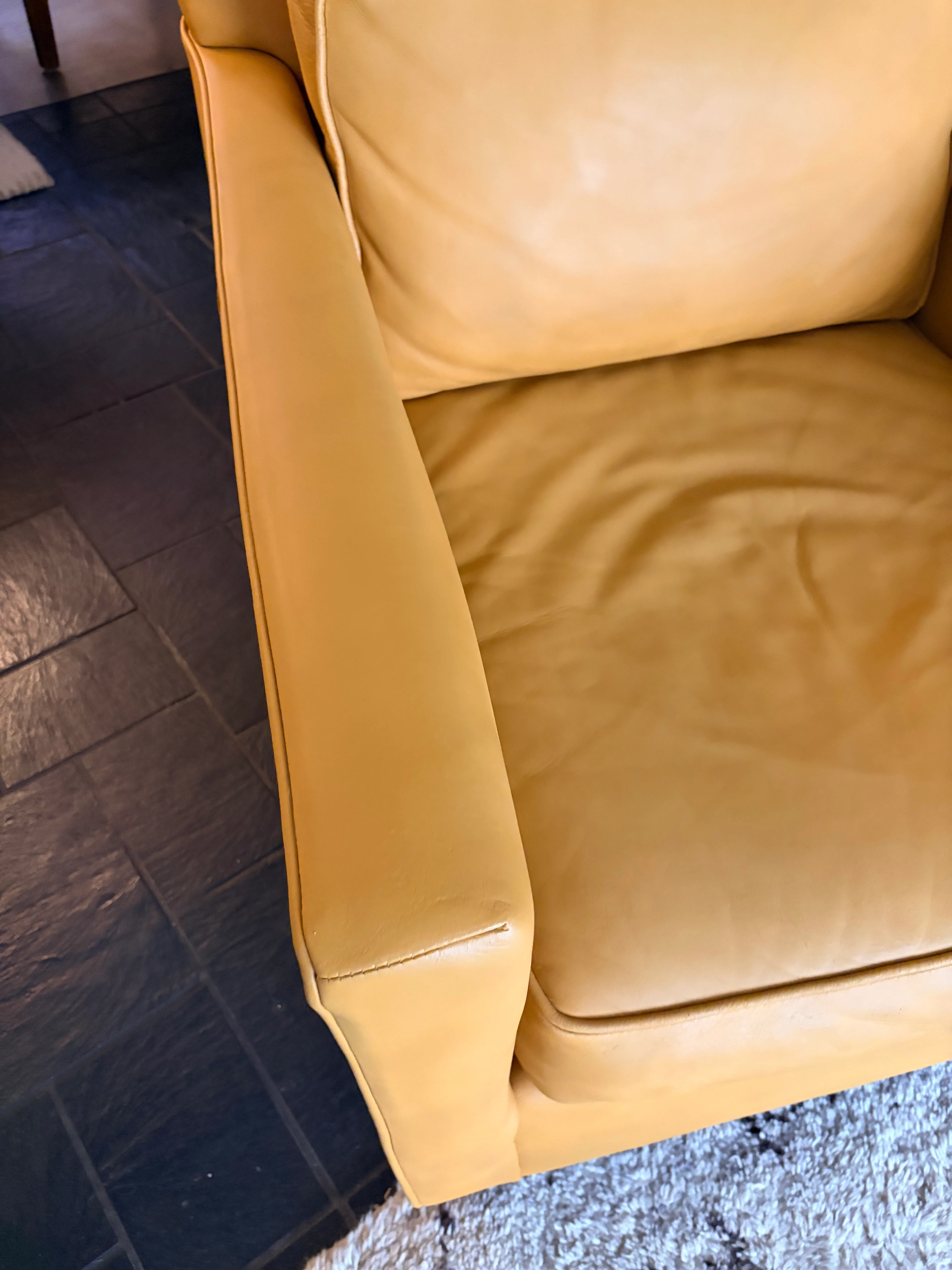
- Armrest surface failure corrected — cracking filled, Saffron color restored, color even across the full surface
- UV fading eliminated — seat cushion surfaces returned to full Saffron depth from near-white
- Seat stain no longer visible after cleaning and recoloring
- Seat back panel crazing filled and corrected
- Color consistent across all leather surfaces — cushions, arms, back panels, and body
- Protective finish applied — surface sealed and conditioned
Why Restoring Designer Furniture Often Makes Sense
Why Restoration Was a Practical Alternative
Comparable designer leather chairs — particularly those from established American manufacturers like Mitchell Gold + Bob Williams — can cost several thousand dollars to replace in leather. In many cases, professional leather restoration allows homeowners to keep furniture they already love at a fraction of that cost, while avoiding the inconvenience of shopping, ordering, and waiting for a replacement. For this Hunter Chair, restoration provided a straightforward way to retain a favorite, well-broken-in piece while dramatically improving its appearance. The customer was not left choosing between an embarrassing chair and an expensive replacement — they kept the chair, and it looks as it should.
Leather Chair Restoration Across NYC
Leather & Vinyl Care is a mobile service — we come to your home, bring the restoration to the furniture, and complete everything on-site. There is no furniture pickup, no shop visit, and no logistics for the customer to arrange. The chair stays in the room while we work.
We serve homeowners across all five boroughs and Long Island. Whether the piece is in a Manhattan apartment, a Brooklyn townhouse, a home in Queens, or a property on Nassau County or Suffolk County, we schedule a same-week appointment in most cases.
Designer furniture from Mitchell Gold + Bob Williams, Restoration Hardware, Knoll, Herman Miller, and other premium manufacturers — as well as custom and bespoke pieces — are all work we take seriously. The investment in quality deserves a restoration approach that matches it.
Related Services
- Leather Chair Repair → on-site repair and color restoration for designer and accent chairs
- Leather Re-dyeing & Color Restoration → custom pigment matching for faded, discolored, or worn leather
- Leather Cleaning & Conditioning → professional deep cleaning and conditioning to protect restored leather
- Antique Leather Furniture Restoration → careful restoration for heirloom and high-value leather pieces
Have a Leather Chair or Sofa That Needs Restoring?
The fastest way to find out what's possible is to send photos. Text us a few images of the damage and a brief description of the piece — we'll give you an honest assessment and a price estimate, usually within a few hours. Leather & Vinyl Care serves Brooklyn, Manhattan, Queens, the Bronx, Staten Island, and Long Island. All work is performed on-site at your location.
Maintaining Restored Leather
- Condition every 6–12 months: Apply a quality leather conditioner to keep the leather supple and prevent the moisture loss that leads to surface cracking. This is the single most effective thing an owner can do.
- Keep away from direct sunlight: UV exposure is what caused the seat fading on this chair. Positioning leather furniture away from south- or west-facing windows, or using UV-filtering window film, significantly extends the life of any leather surface.
- Wipe spills immediately: Blot with a clean dry cloth — do not rub, which spreads the liquid. Address spills before they penetrate the leather. The protective finish applied during restoration helps resist surface moisture, but prompt action is still important.
- Clean with leather-safe products only: Avoid household cleaners, solvents, or anything not designed for leather. A pH-balanced leather cleaner used sparingly as needed is all that is required between professional cleanings.
Frequently Asked Questions
Can a heavily worn leather chair be restored?
Yes, in most cases. Even leather that shows severe surface cracking, complete color loss on high-wear areas, and significant UV fading can be professionally restored — as long as the underlying hide is structurally intact. The restoration process addresses each type of damage in sequence: cleaning, surface preparation, crack filling, color matching, recoloring, and a protective finish coat. The result is a surface that looks dramatically refreshed without replacing any material.
Is it worth restoring designer leather furniture?
For high-quality designer pieces like Mitchell Gold + Bob Williams furniture, restoration is almost always worth considering before replacement. The original construction quality — solid hardwood frames, down-blend cushions, and full-grain or top-grain leather — is difficult to replicate at comparable cost. A professional restoration at a fraction of the replacement price returns the piece to a condition the owner can enjoy for many more years. It also avoids the environmental cost of sending a structurally sound piece to landfill.
Can faded leather be recolored?
Yes. UV-faded and discolored leather can be recolored using custom-blended pigments matched to the original shade. The process begins with thorough cleaning and surface preparation to ensure proper adhesion. A color match is developed on-site before any application, tested against undamaged areas, and then applied in controlled layers across all leather surfaces. A protective top coat is applied to seal the color and resist future fading.
How long does leather furniture restoration last?
With proper maintenance, a professional leather restoration using quality materials typically lasts 5–8 years under normal residential use. The most important factors are keeping the leather away from direct sunlight (which accelerates UV fading) and conditioning the leather every 6–12 months. The protective finish applied during restoration helps resist future color breakdown and surface cracking.
How much does leather chair restoration cost in NYC?
For a single leather chair requiring full recoloring and surface restoration — including cleaning, surface preparation, crack filling, color matching, and a protective finish — pricing in NYC typically ranges from $300 to $600 depending on the extent of damage, the leather type, and color complexity. Uncommon designer colors like saffron require additional custom formulation. We provide written estimates before any work begins. Contact us or text photos for a specific quote.
Can UV-damaged leather be repaired?
Yes. UV damage in leather presents as fading, surface dryness, and color loss — sometimes severe enough that the original color is almost unrecognizable. The leather itself is usually intact beneath the surface damage. Professional restoration removes the compromised surface layer, prepares the leather for new color, applies custom-matched pigments, and seals the surface with a UV-resistant protective finish that helps prevent the same damage from recurring.
Can cracked leather furniture be repaired without reupholstery?
Yes. Surface cracking — including severe mosaic-pattern finish failure on high-wear areas like armrests — can be repaired through professional restoration without reupholstery. Flexible leather filler compounds are used to consolidate and smooth the cracked surface, which is then recolored and sealed with a protective finish. Reupholstery, which involves physically removing and replacing the leather, is only necessary when the hide itself has structural tears or damage that cannot be corrected in place. Surface cracking is a finish failure, not a hide failure, and responds well to professional surface restoration at a fraction of the cost of reupholstery.
Related Reading
- White Leather Chair Restoration in Manhattan →
- Leather Kitchen Banquette Restoration in New York →
- Teal Leather Sofa Color Restoration in NYC →
- Vintage Chesterfield Chair Leather Restoration in NYC →
- Cat Scratch Leather Sofa Repair — Black Sofa Panel Replacement in NYC →
- How Much Does Leather Repair Cost in NYC? (2026 Price Guide) →