2008 Porsche 911 Carrera 4 Interior Restoration
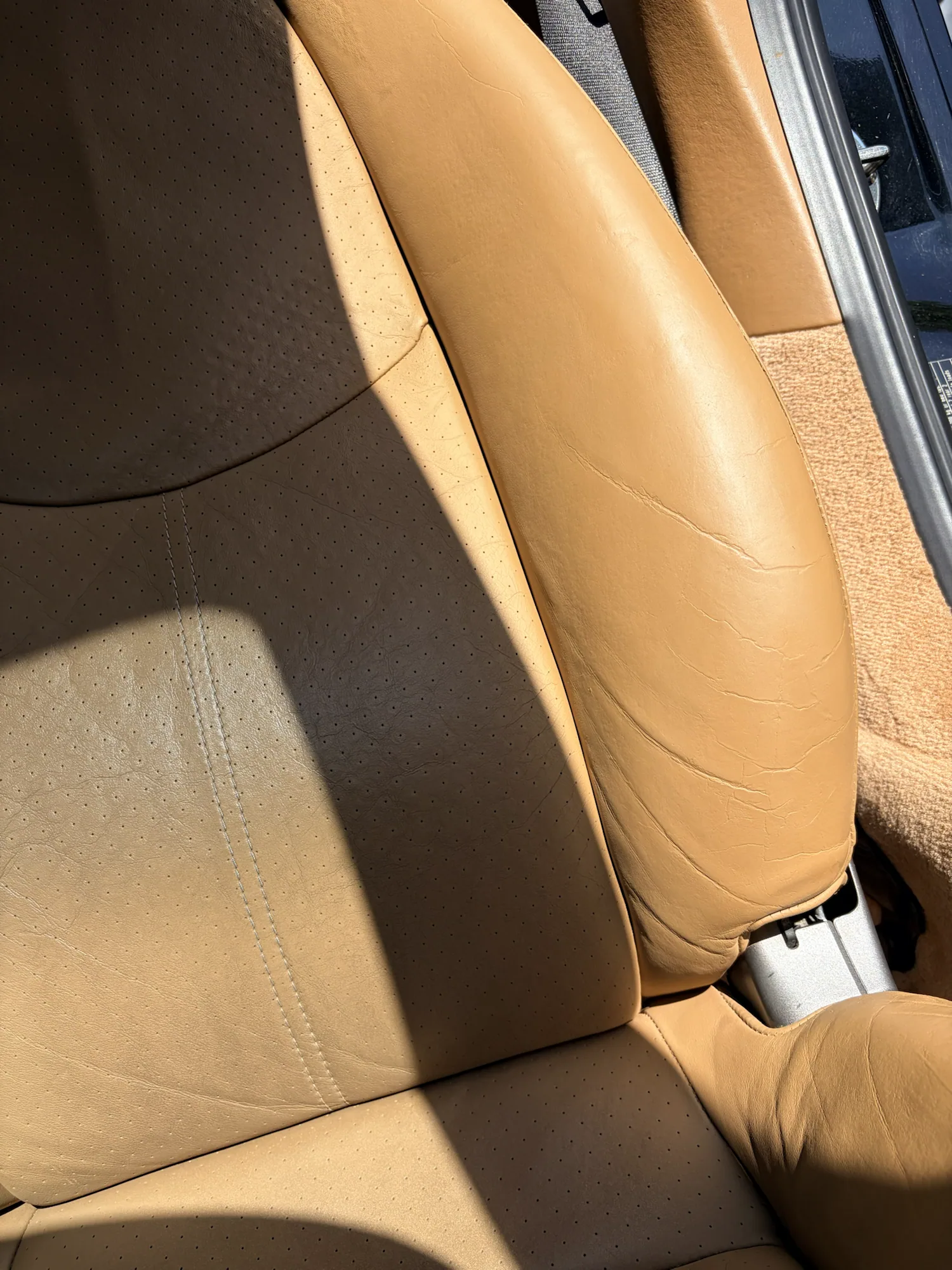
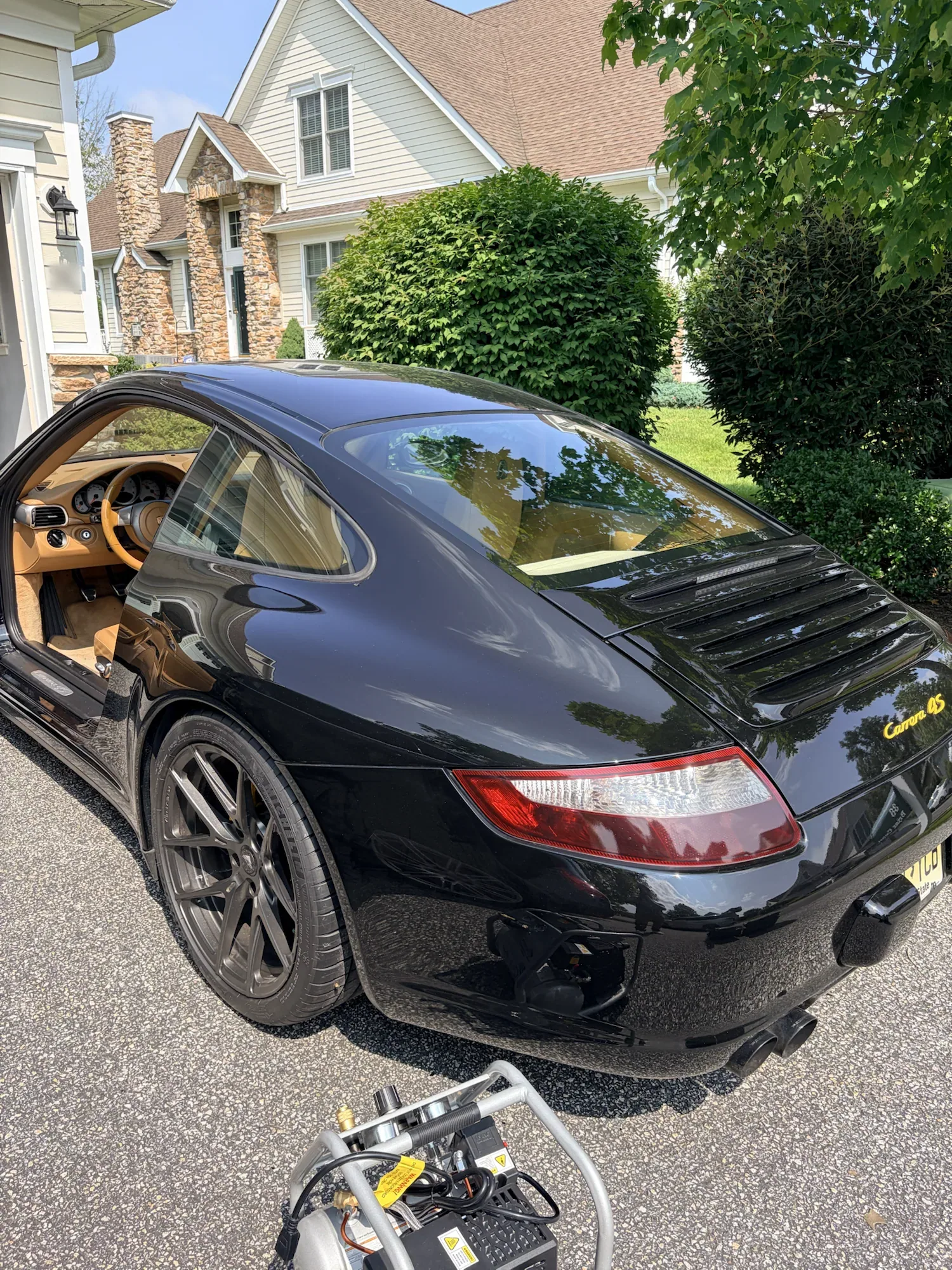
This 2008 Porsche 911 Carrera 4 had recently been purchased from a dealer. Its exterior presentation and mechanical condition were excellent, but age, high-contact wear, and inconsistent earlier cosmetic repairs had left the tan interior looking fragmented. The restoration corrected those repairs, rebuilt damaged leather surfaces, and restored lost finish throughout the cabin while retaining the character of the original leather.
Project Overview
A Cabin Worn in Many Small Places
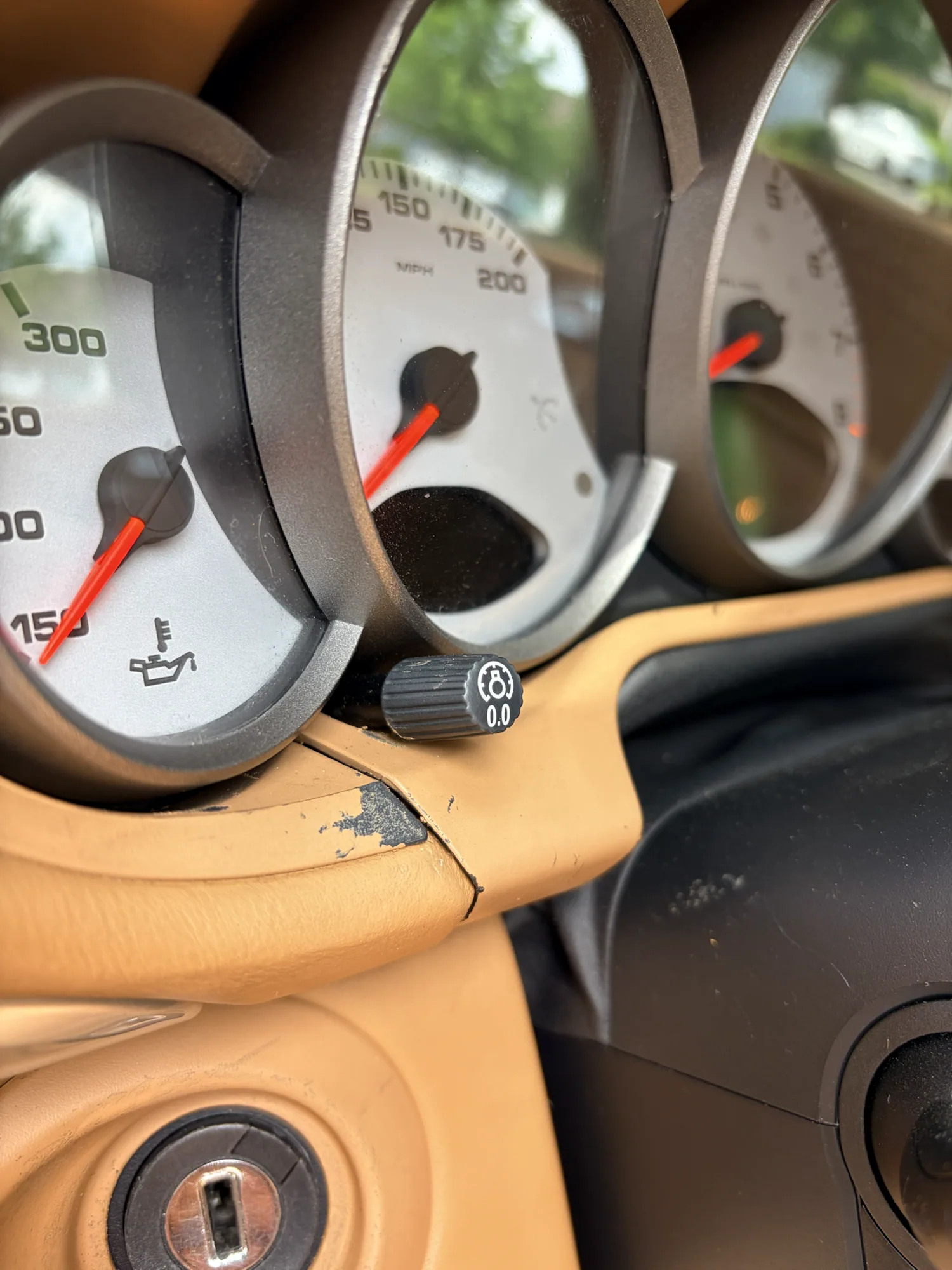
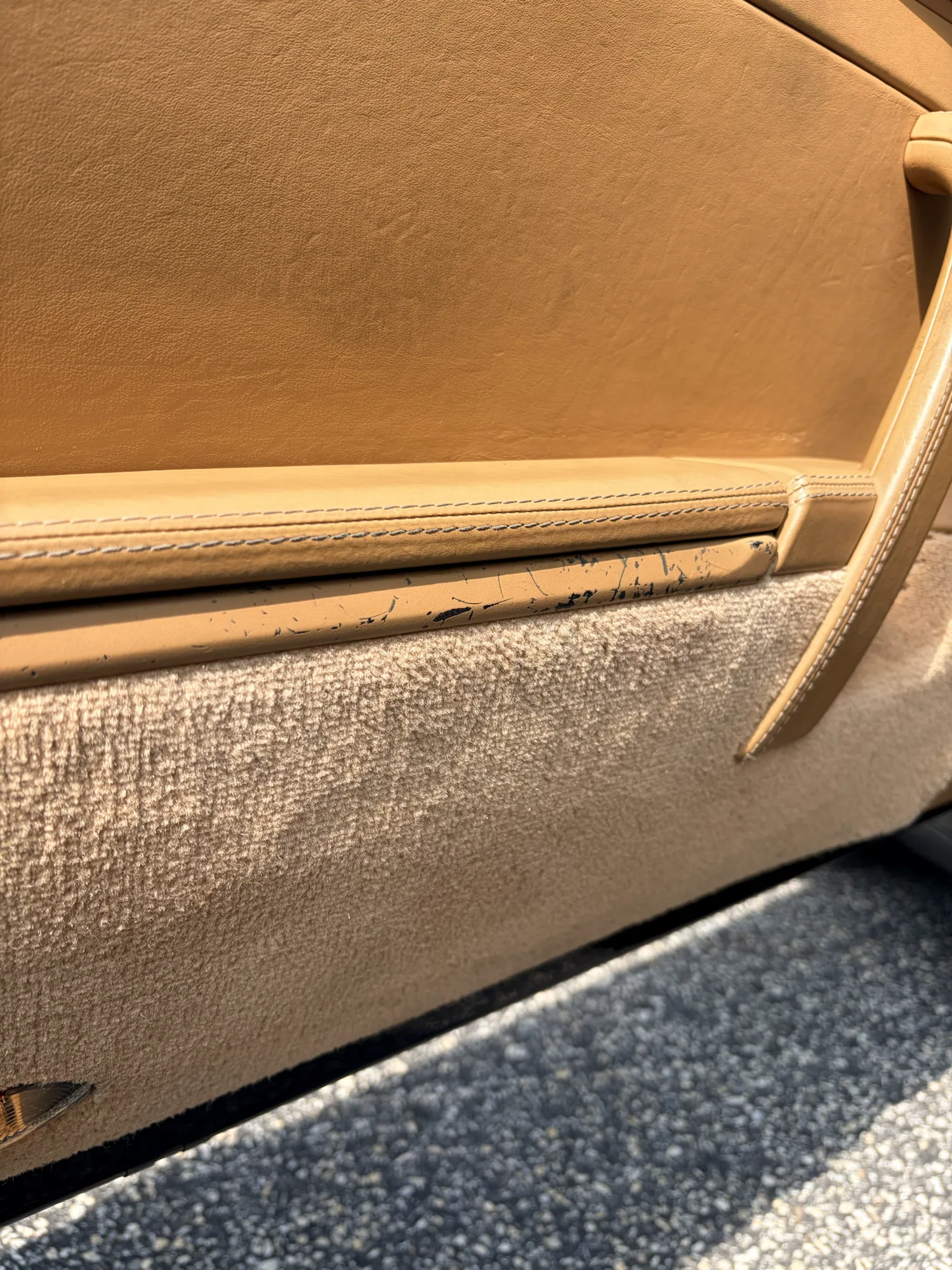
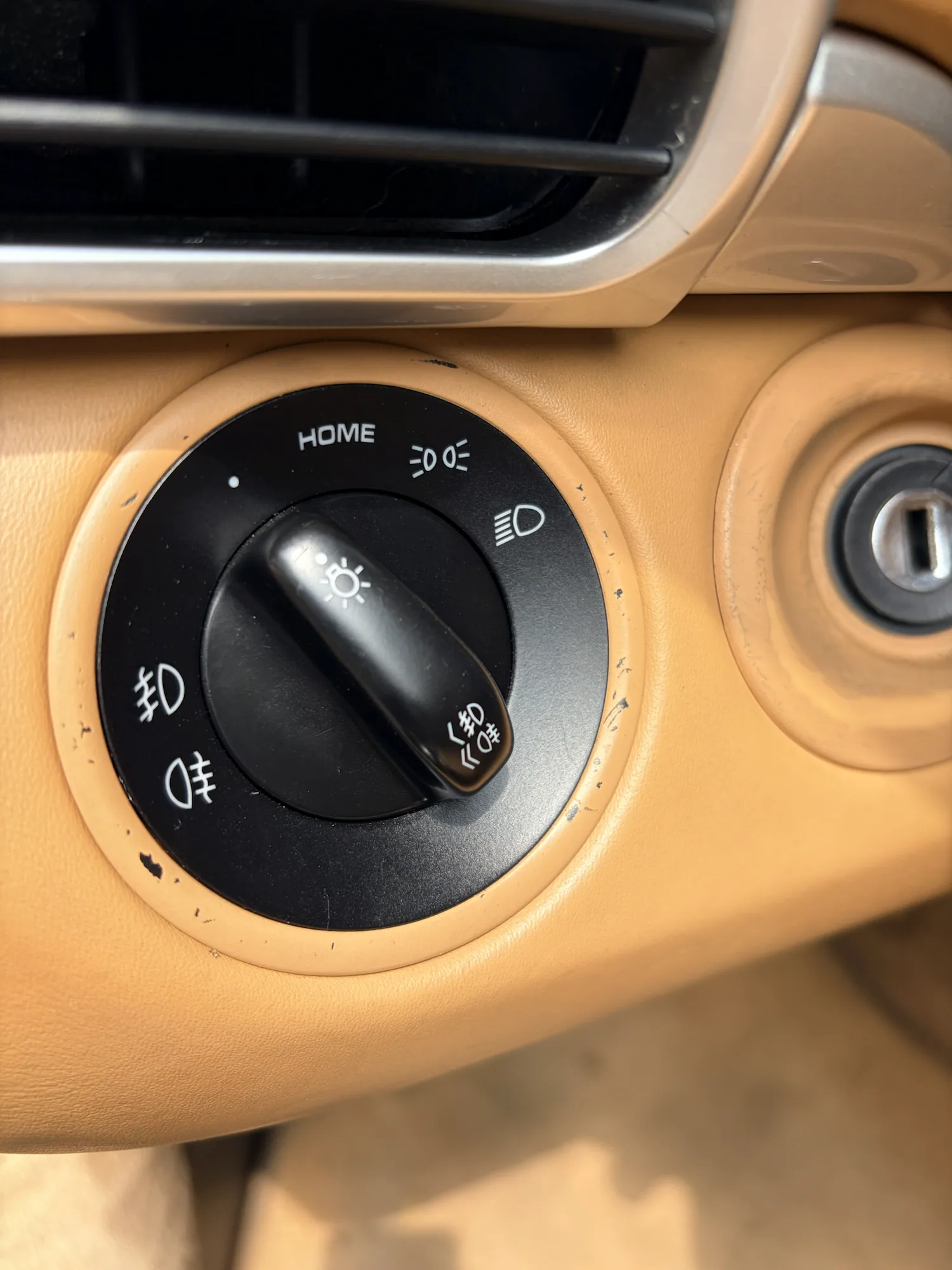
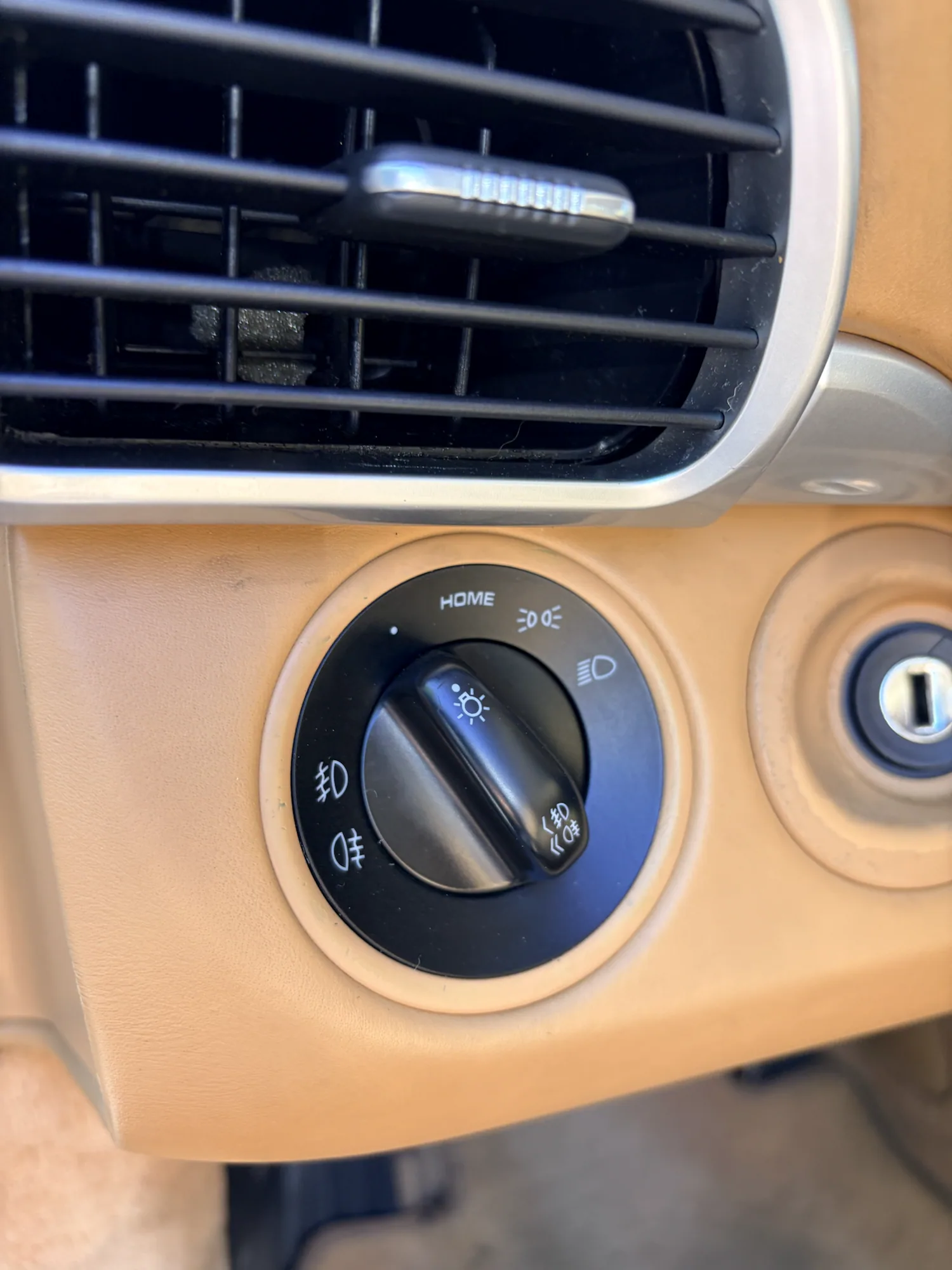
The seat bolsters carried the deepest damage, but they were only part of the problem. Finish loss around the instrument cluster and headlight control, abrasions along the door trim, and wear on the shifter, parking brake, and center console accumulated into an interior that looked tired as a whole.
Correcting the Steering Wheel
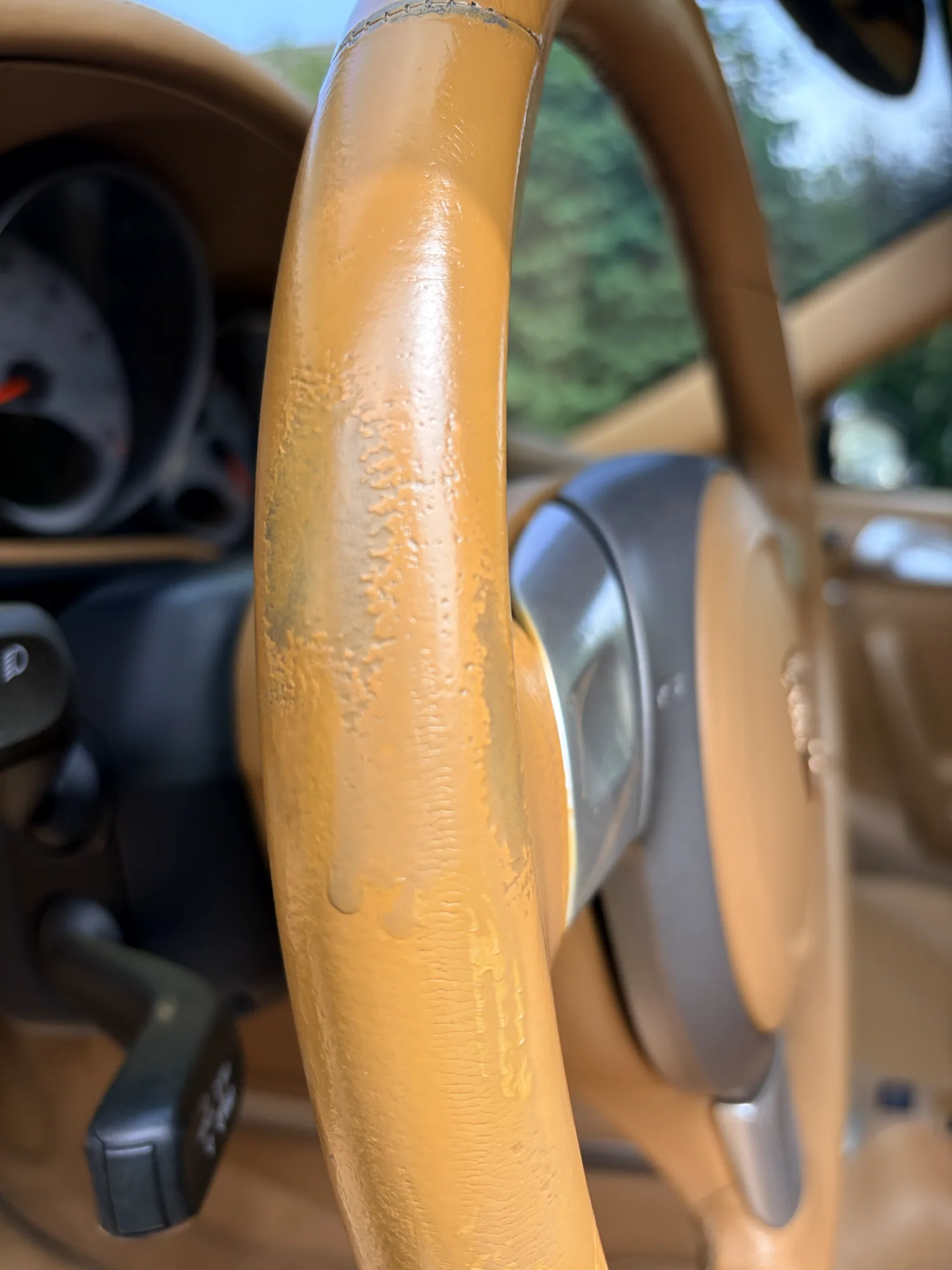
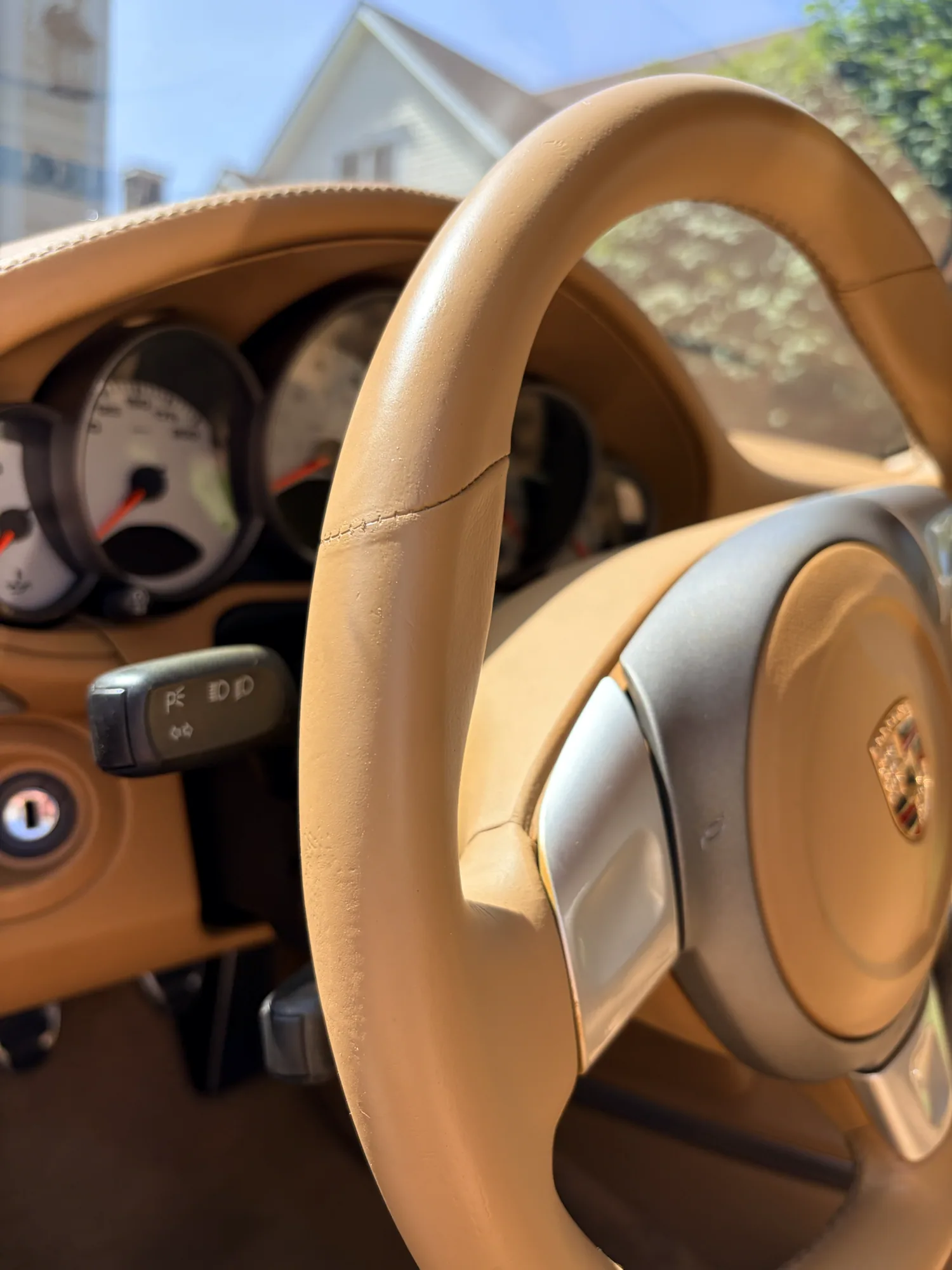
The steering wheel was the most obvious example of the earlier refinishing. Its color was too bright for the surrounding aged leather, the coating was uneven, and visible buildup and runs sat over damage that had not been properly corrected. The old finish was addressed, the surface prepared, worn areas restored, and a custom-matched color applied. A high-durability TC topcoat completed the repair for this constant-contact surface.
Seats: Repair Without Erasing Their Age
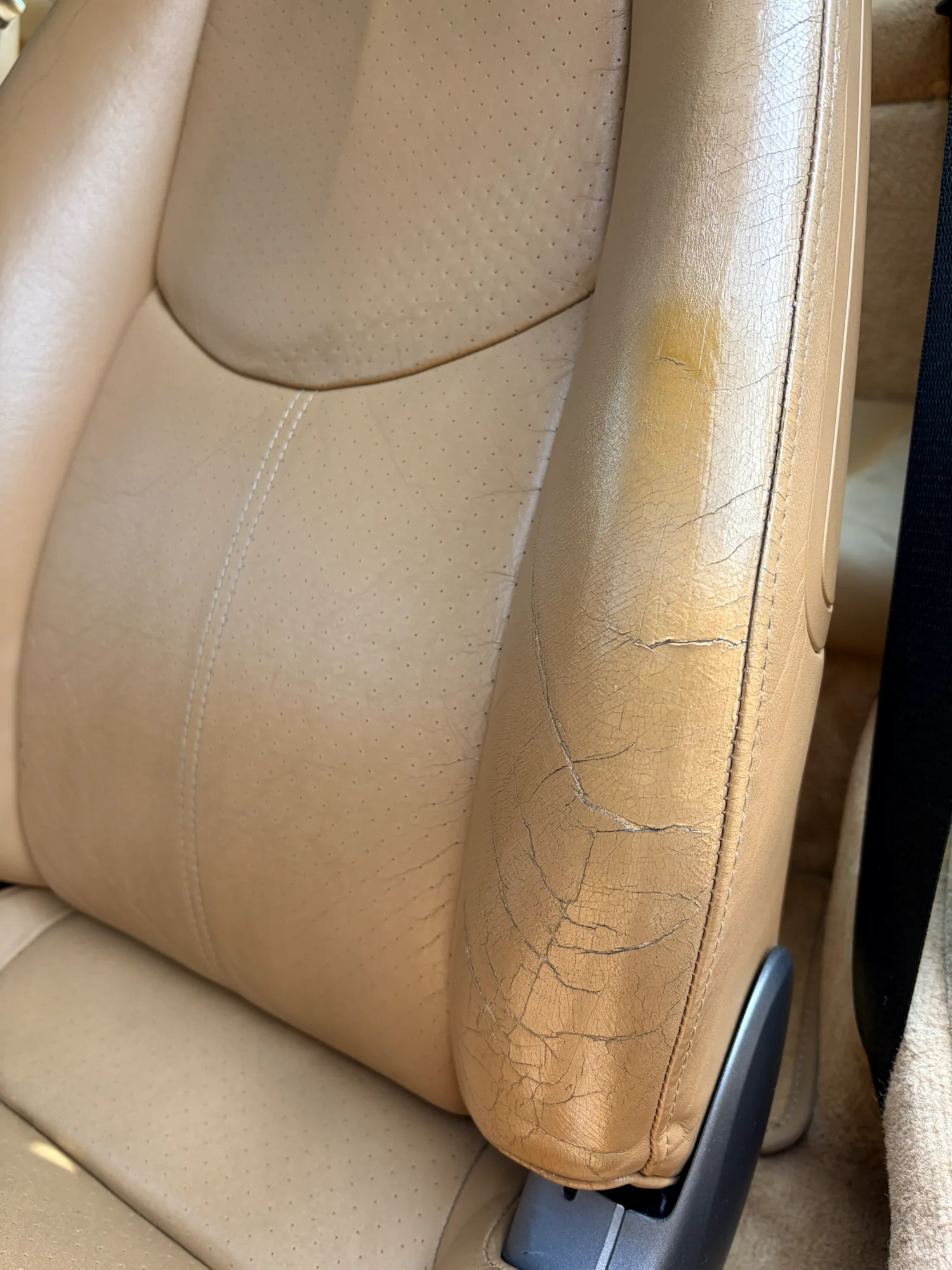
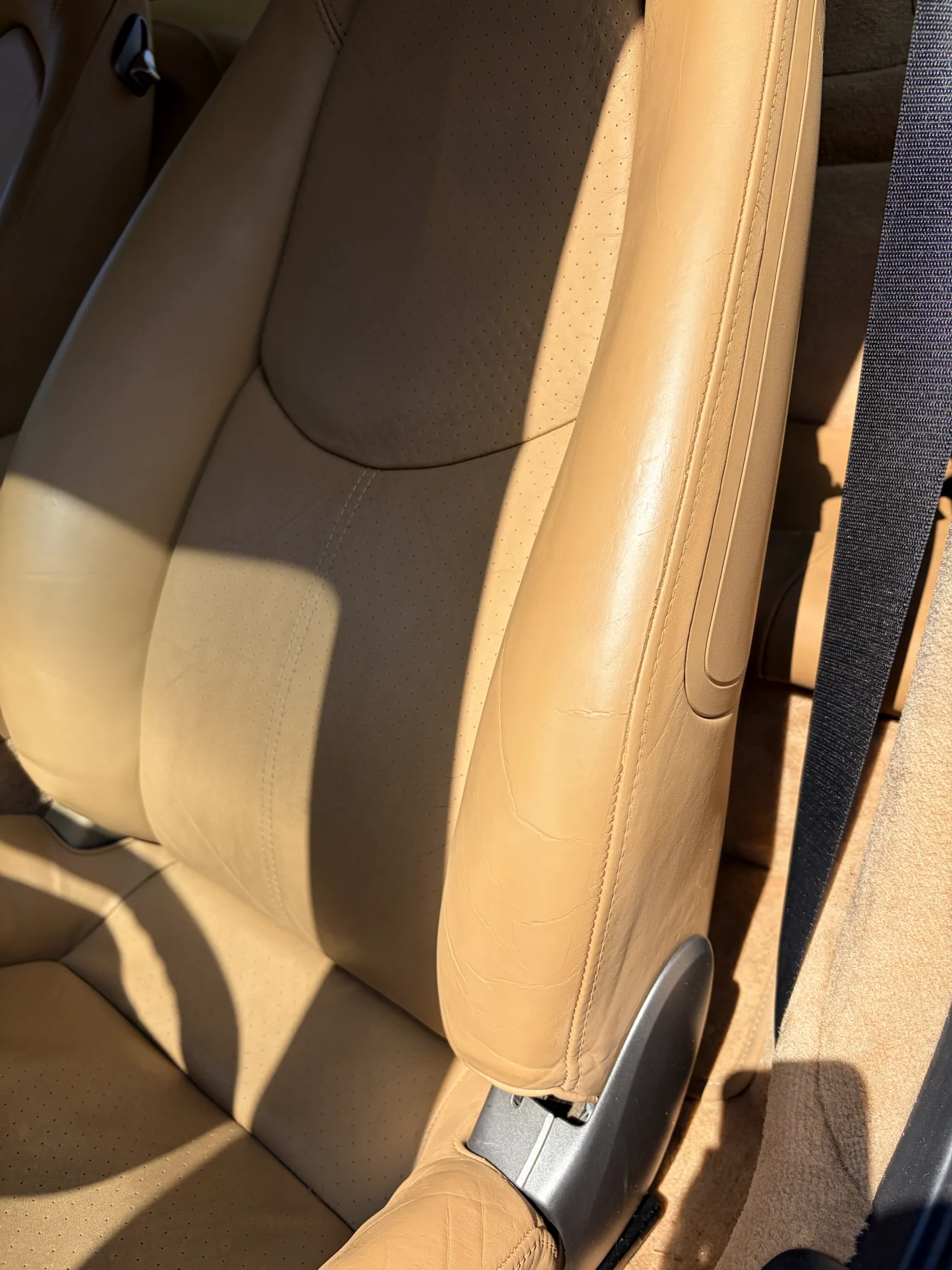
Multiple bolster areas had deep cracks, especially at the outer contact points. Some earlier repair work carried a noticeable greenish undertone. After cleaning and preparation, damaged leather was stabilized, deep cracks were repaired with flexible filler where required, and the incorrect prior color was corrected. The intent was not an artificially smooth, new surface: natural grain, creases, and age remain visible.
Matching the Leather as It Exists Today
A factory color reference alone would not have produced the right blend. Leather changes subtly with age, use, and exposure, so a custom color was mixed against the surrounding interior in its current state. This allowed restored areas to integrate with adjacent original surfaces instead of appearing as newly painted panels.
Restoration Process
Cleaning and preparation
The interior received a thorough cleaning and treatment before repair work began. Worn surfaces were prepared so failing finish and prior coating buildup would not compromise the new work.
Leather stabilization and crack repair
Damaged bolster areas were stabilized, with flexible filler used where required to address the deepest cracking. Previous repairs were corrected without filling away the leather’s natural grain and age.
Custom color matching
A color was mixed for the interior as it exists today—not simply from a factory color code. Matching the naturally aged surrounding leather kept the repaired areas from reading as freshly painted isolated panels.
Controlled refinishing
Color and finish were restored across the seats, steering wheel, dashboard and control surrounds, door trim, shifter, parking brake, center console, and other small contact areas.
High-contact protection
A high-durability TC topcoat was applied to the steering wheel and high-wear bolster areas to protect the restored finish where friction and handling are greatest.
High-Contact Controls and Trim
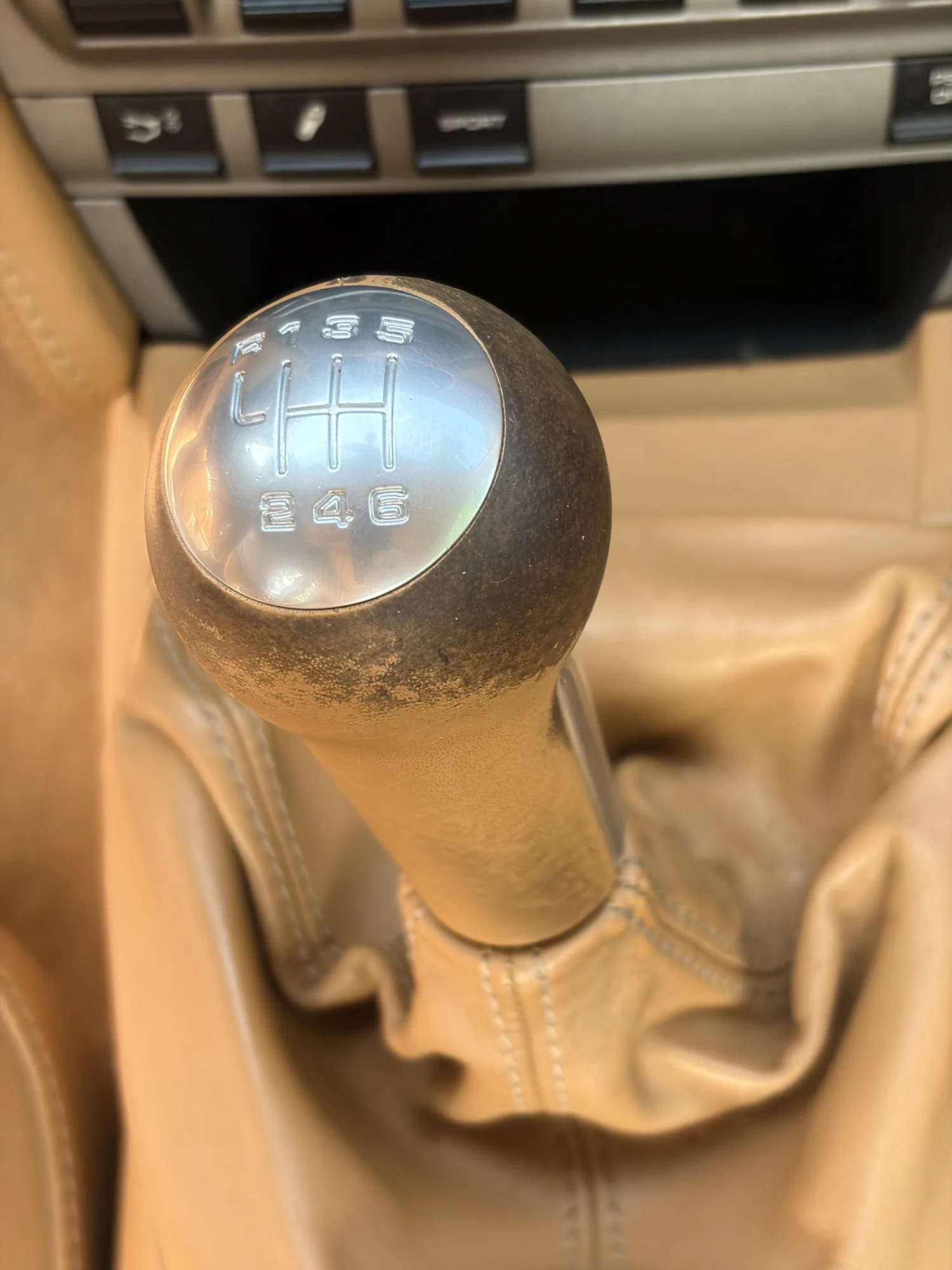
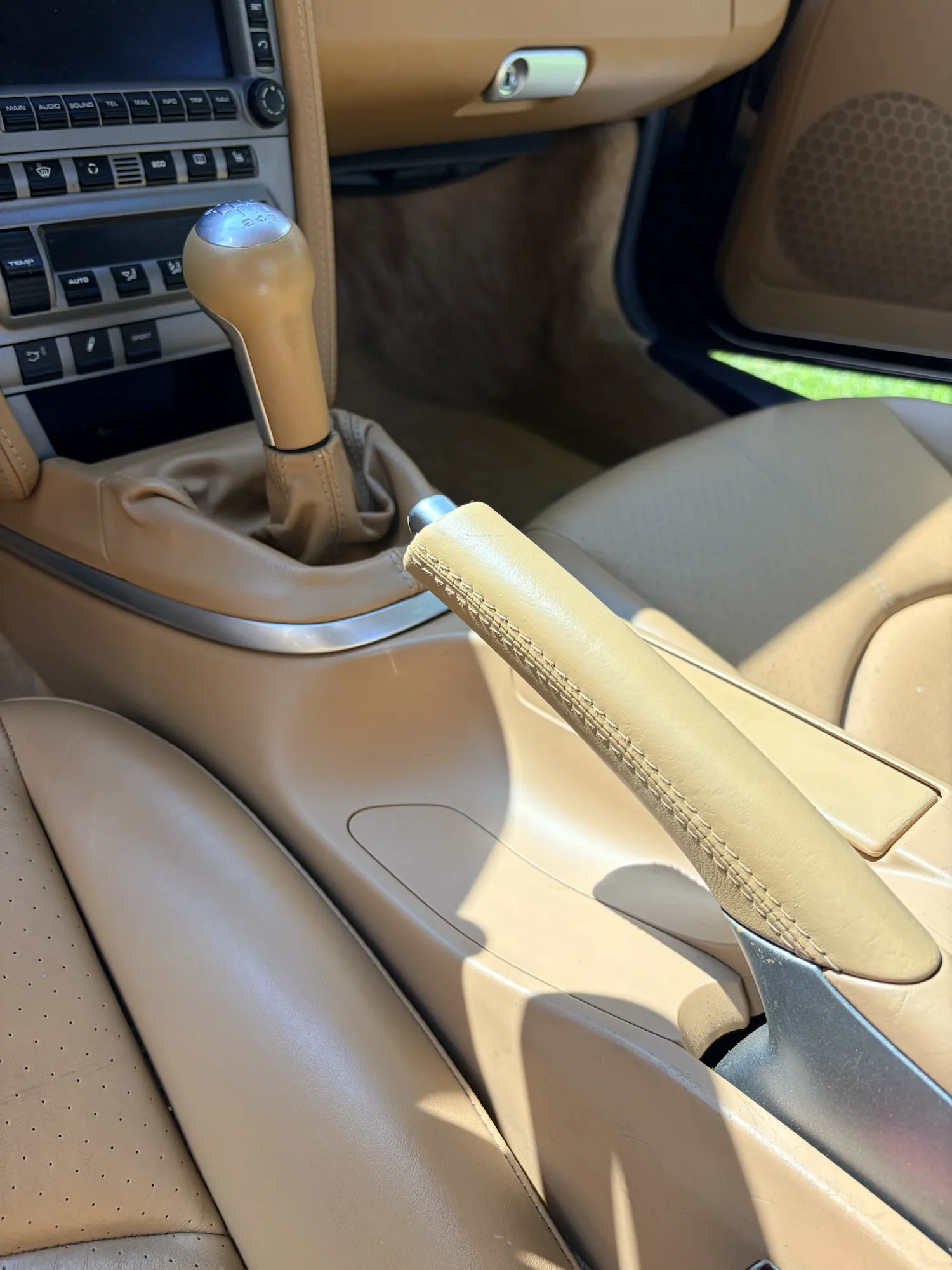
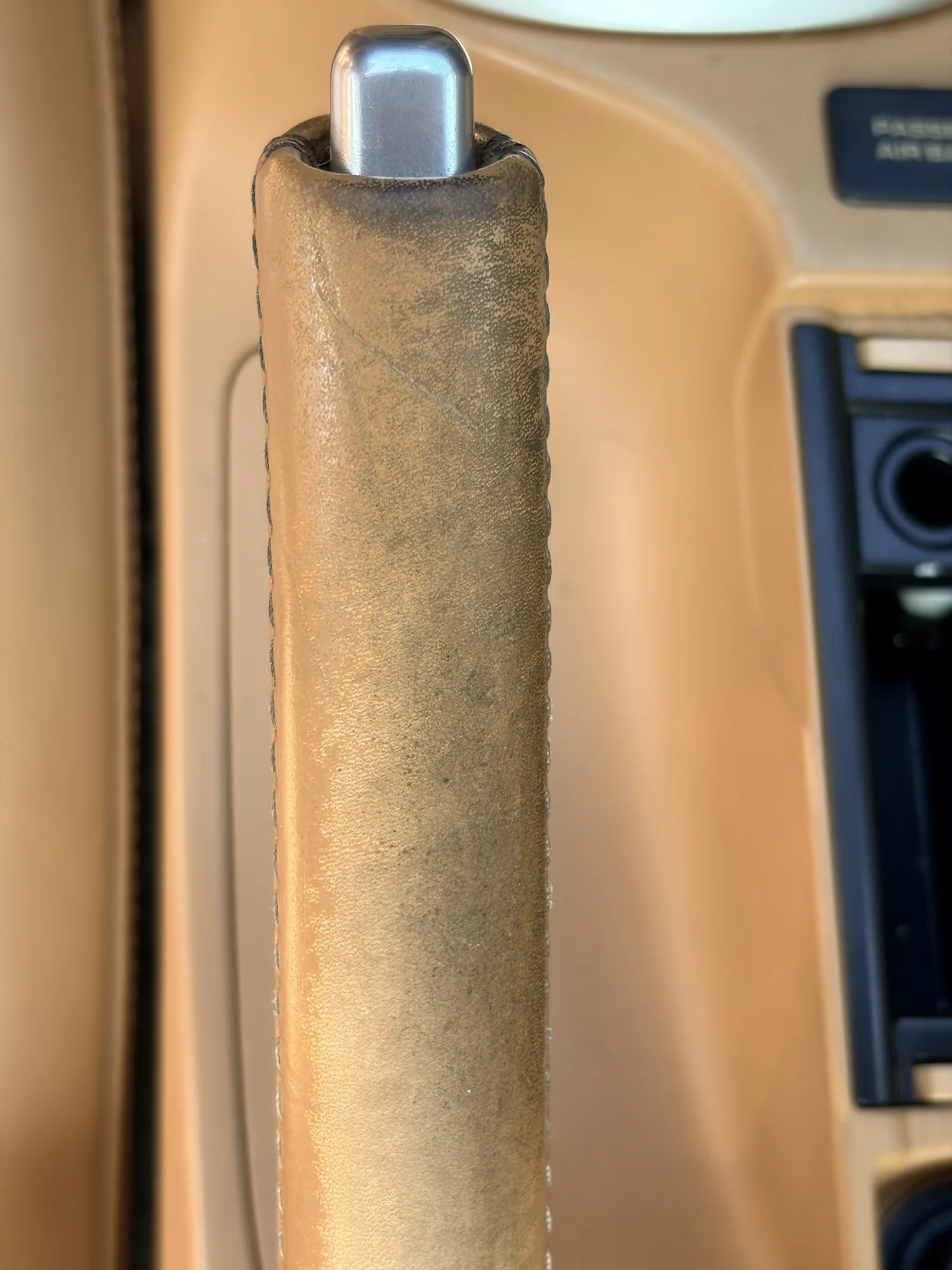
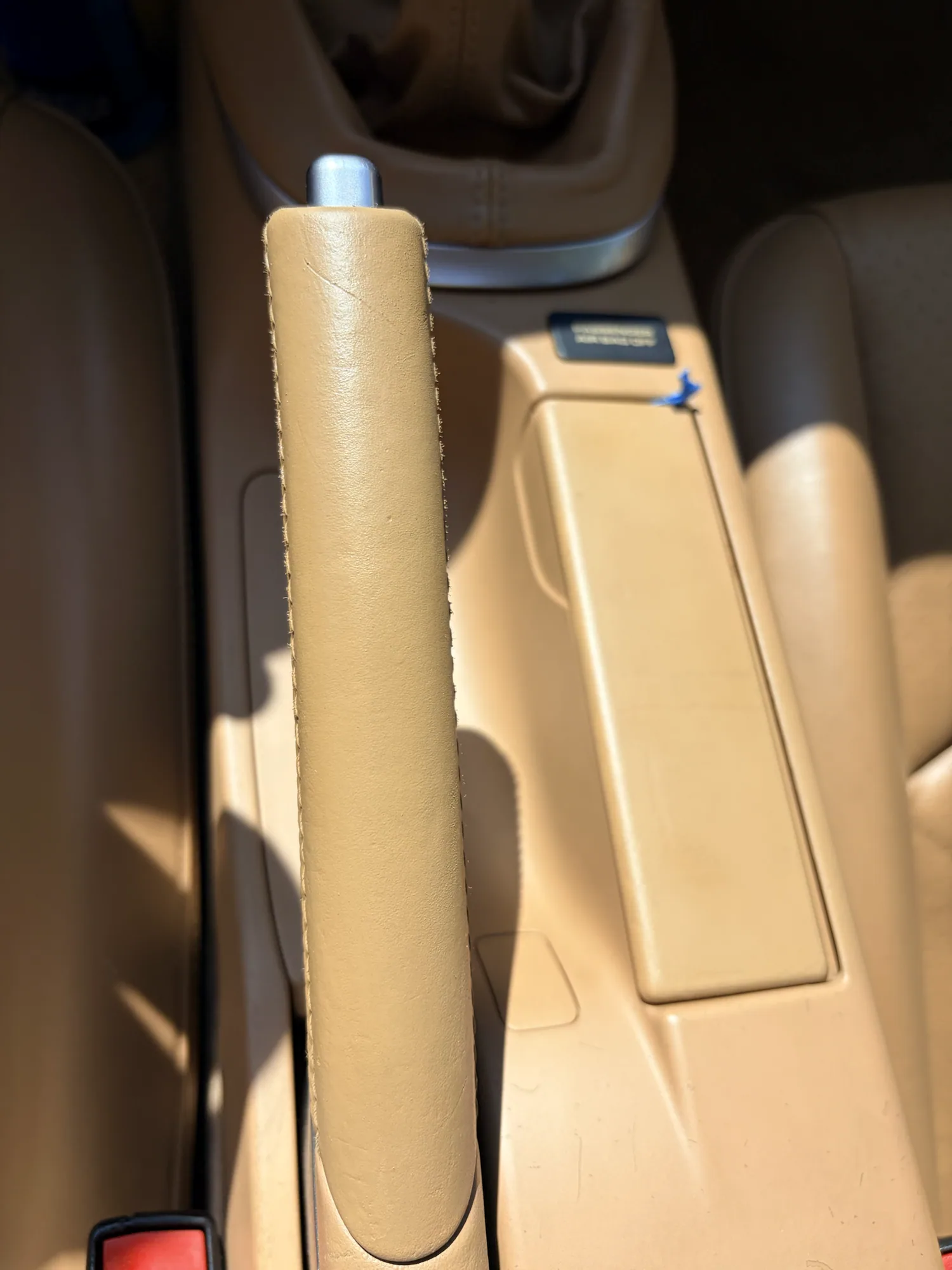
The gear shifter and parking brake showed substantial finish loss from regular use. Smaller dashboard and control-area defects received the same measured attention, restoring continuity without treating every surface as though it were new.
A Cohesive, Preserved Interior
With the conspicuous previous repairs corrected and the many smaller worn areas addressed, the cabin reads as one interior again. The final result preserves the original leather’s grain and honest age while removing the cracks, color conflicts, and finish loss that had dominated it.