2015 Buick LaCrosse Driver Seat Leather and Vinyl Restoration
This 2015 Buick LaCrosse is mechanically sound and clearly cared for — but its driver's seat told a different story. Years of daily use had left substantial color loss across the backrest and cushion, a tear in the central leather panel, and a separate tear in the vinyl panel at the lower left side of the seat. All of it was repaired and color matched on-site in Park Slope, Brooklyn, without replacing or reupholstering the original seat.
Project Overview
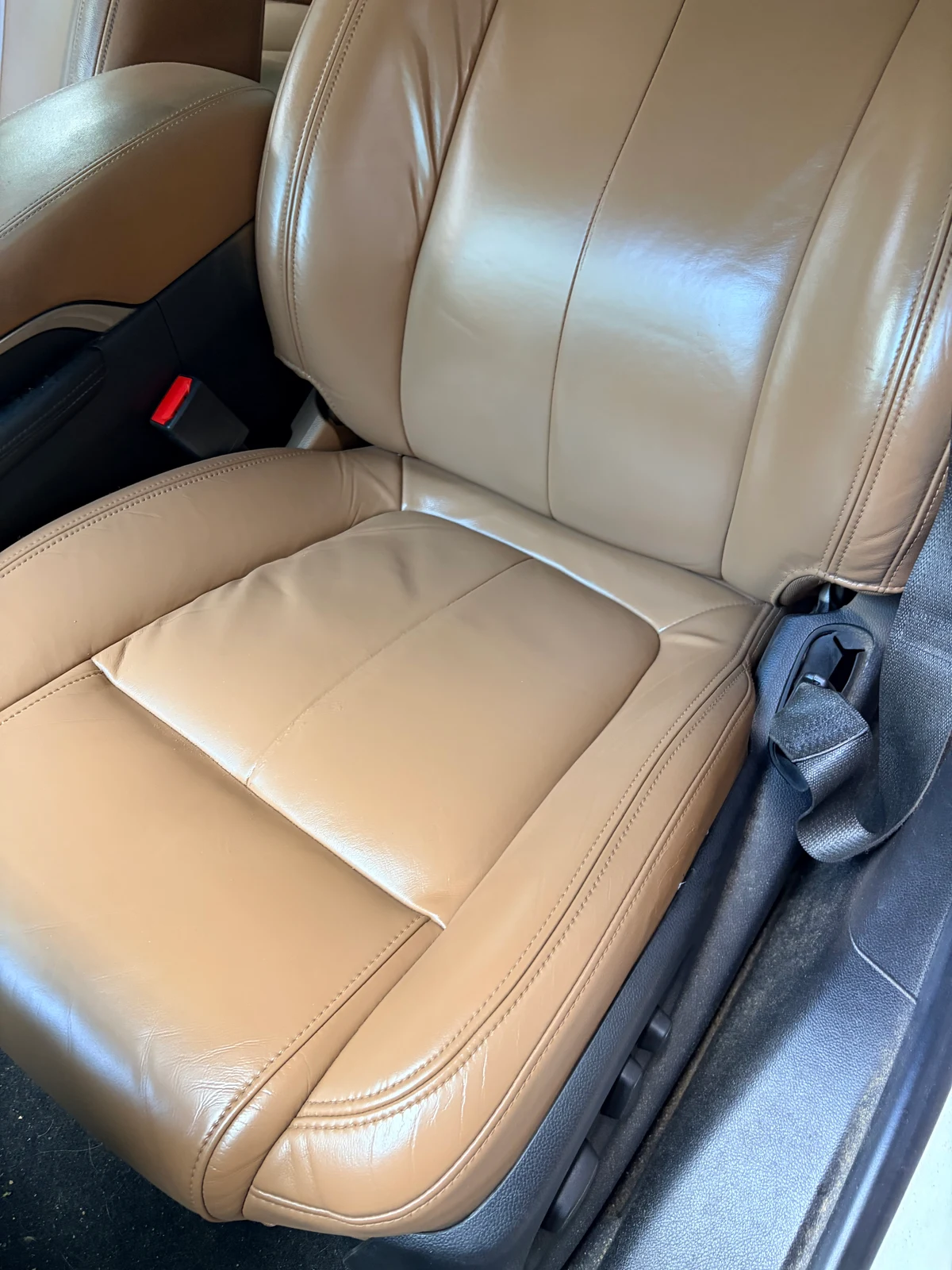
A Well-Maintained Car with a Worn Driver Seat
This Buick LaCrosse belongs to an owner who has kept it in genuinely good mechanical condition. It's the kind of car that gets driven regularly and looked after — which is exactly why the driver's seat stood out. A decade-plus of daily contact, sun exposure, and normal use had aged that one seat noticeably faster than the rest of the interior around it.
None of this reflects neglect. It's simply what happens to the surface a driver touches, sits on, and gets in and out of every single day. The goal of this project was straightforward: bring the driver's seat back into visual balance with the rest of a car the owner intends to keep.
Assessing the Leather and Vinyl Damage
The driver's seat combines leather seating surfaces in the main contact areas with a vinyl panel at the lower left side — a common construction on this type of seat. Each material had aged and failed differently, and each needed its own diagnosis before any repair work began.
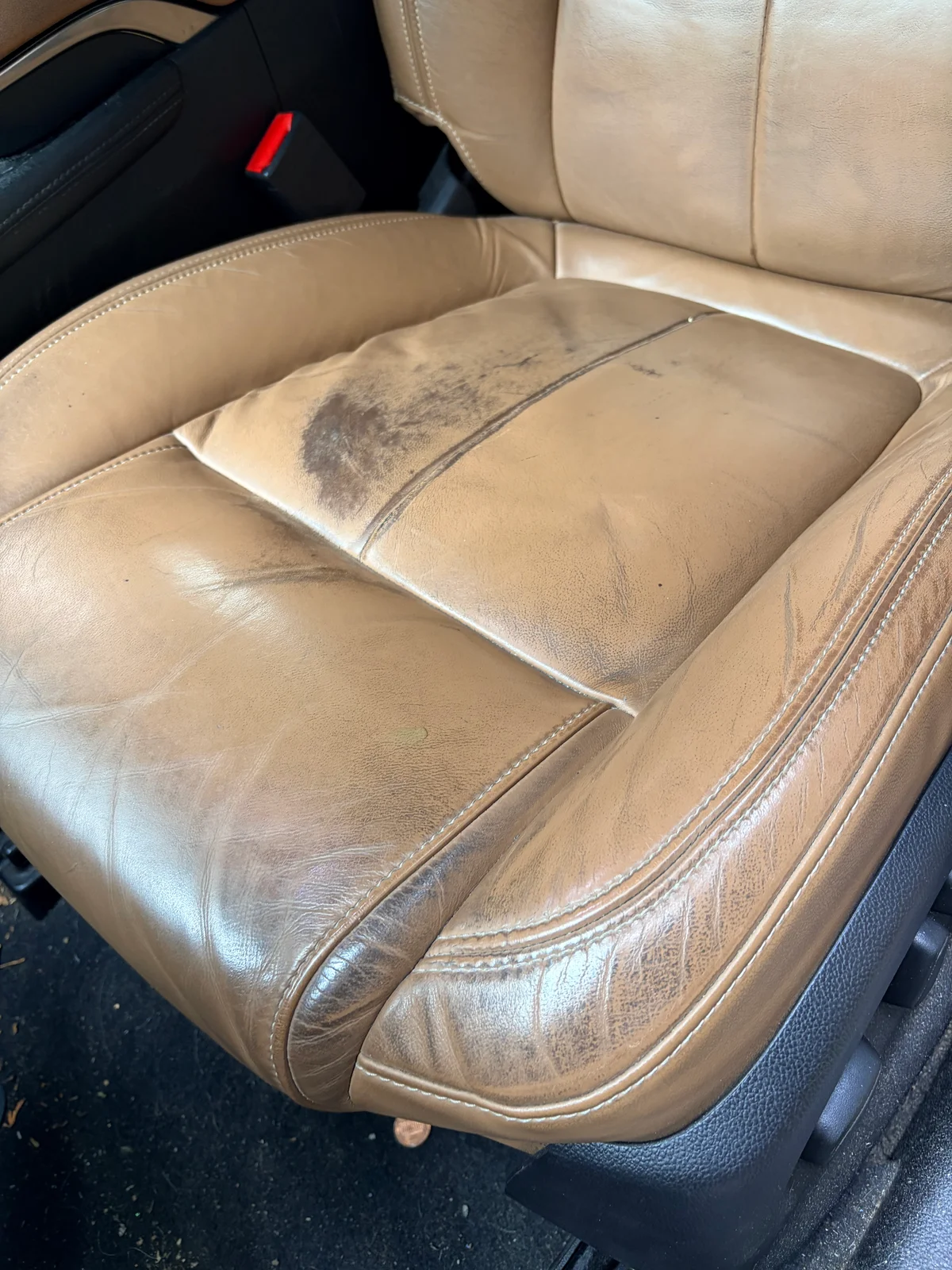
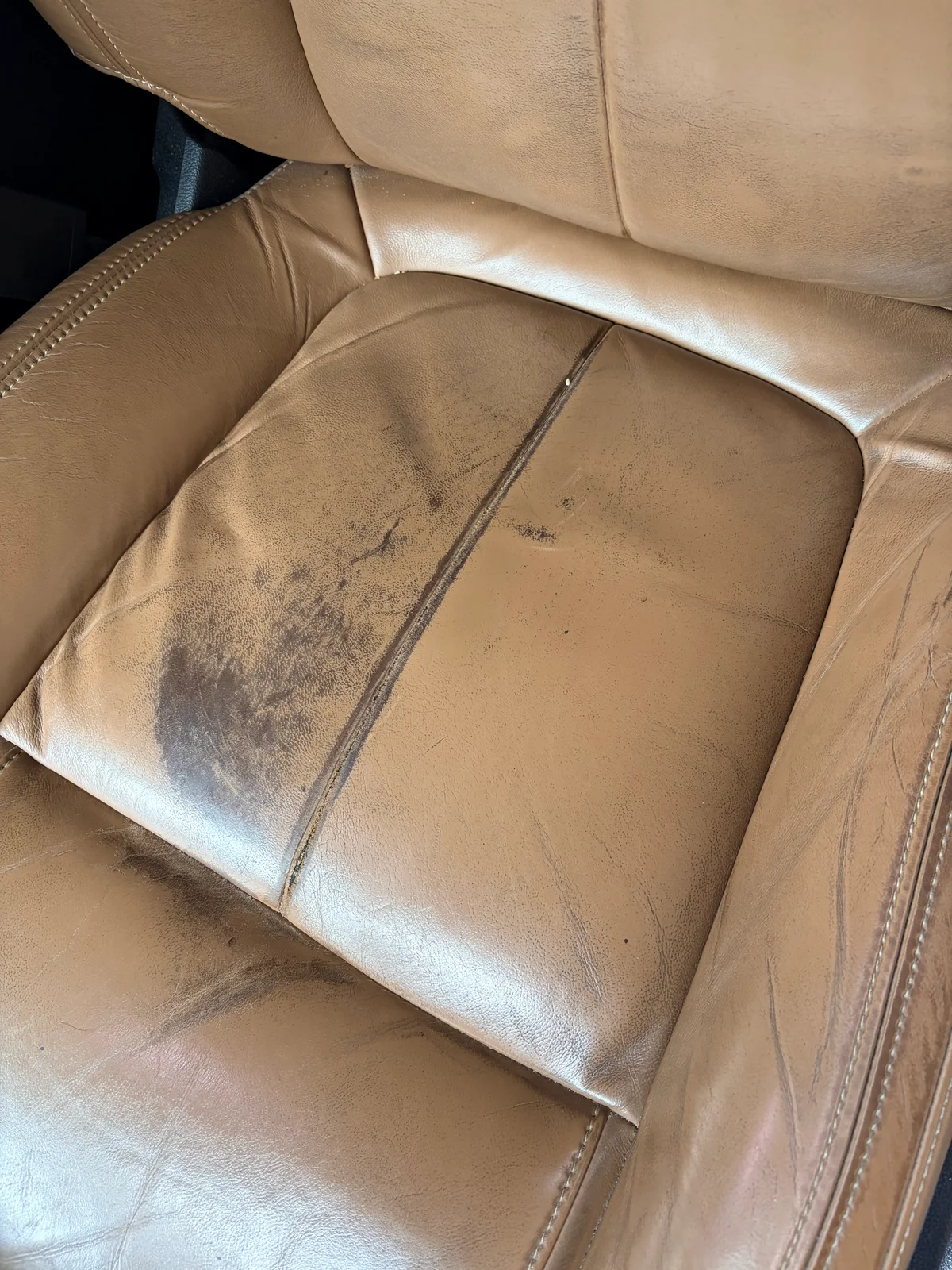
- Backrest and cushion — substantial color loss: The leather across the backrest and seat cushion had lost a significant amount of its original color and depth, with visible discoloration from age, body contact, and accumulated contamination.
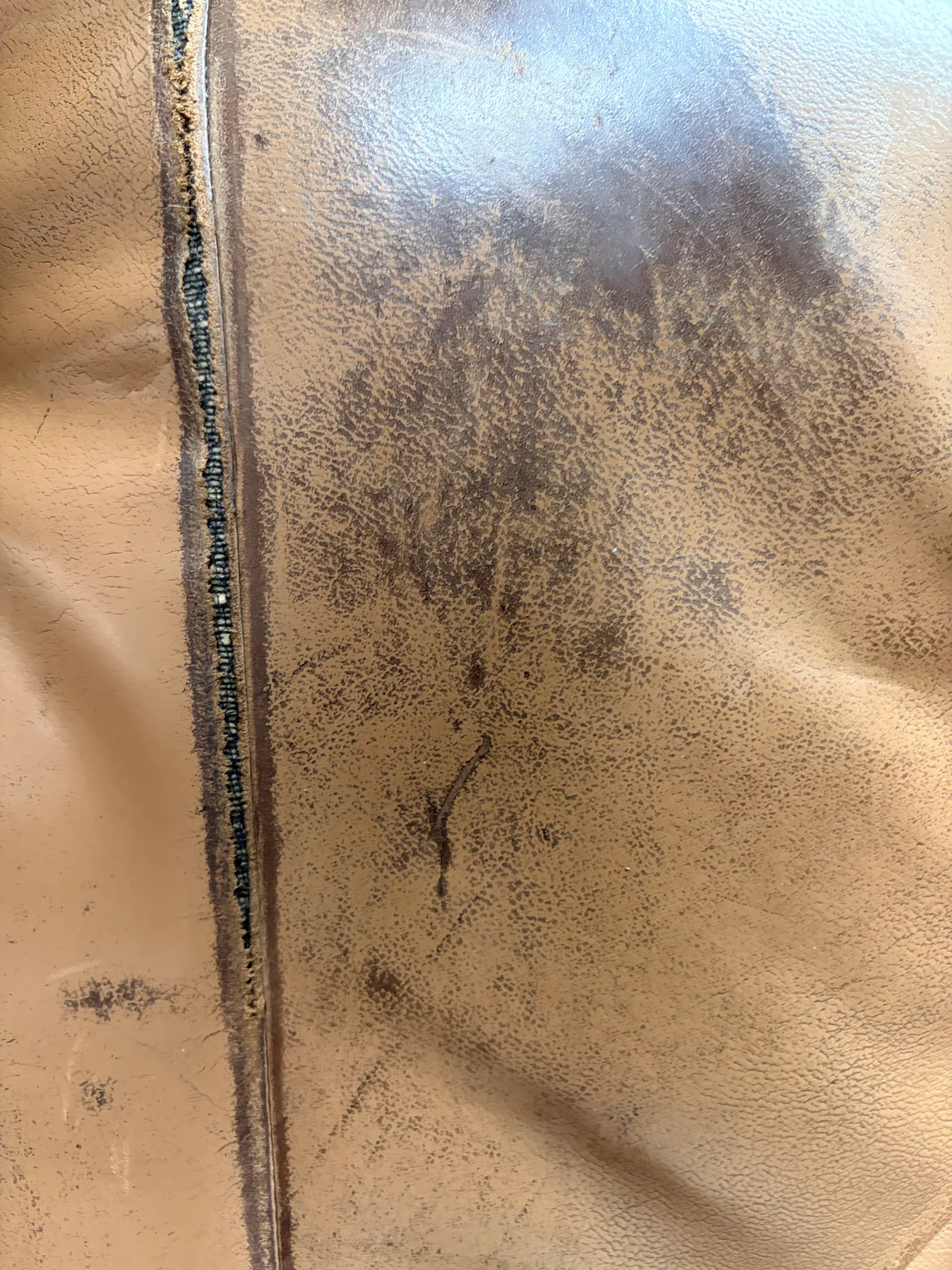
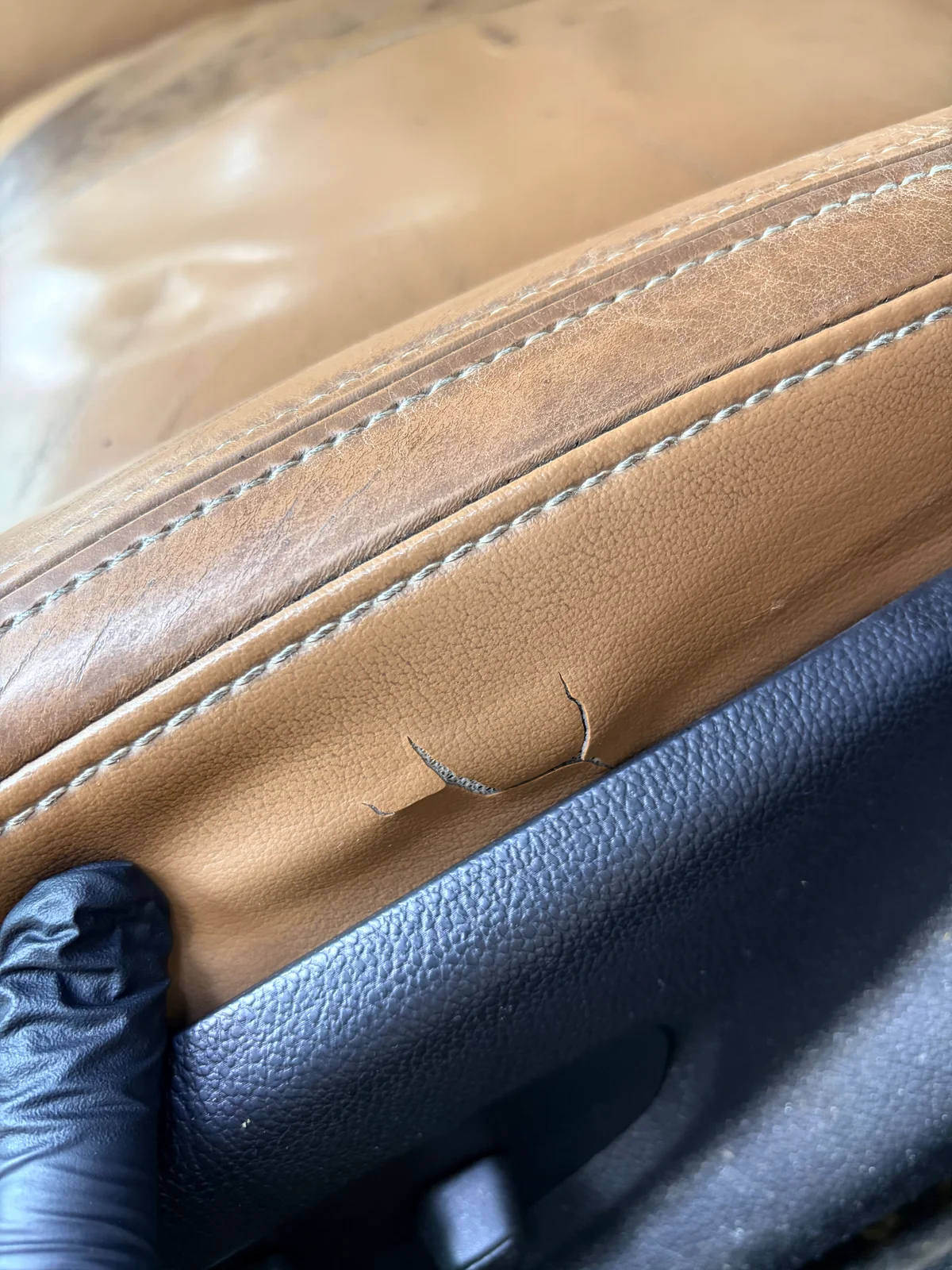
- Central leather panel — seam tear: The center seating area is made up of separate upholstered panels. A tear had opened along the seam in the middle panel, exposing the padding underneath — the most structurally significant damage on the seat.
- Lower left vinyl panel — separate tear: The vinyl panel at the lower left side of the seat had its own tear, unrelated to the central leather damage. Being vinyl rather than leather, it required a different repair approach.
Repairing the Central Leather Tear
The center seating panel is where the tear was most pronounced — the seam had separated enough to expose the padding beneath, with staining concentrated around the damaged area. Rather than cutting out the panel and sewing in a new leather insert, the damaged section was stabilized and rebuilt in place. This preserved the original seating surface and avoided introducing a new piece of leather that would never quite match the surrounding material's color and texture after a decade of use.
Restoring the Torn Lower Vinyl Panel
The lower left-side panel of the seat is vinyl, not leather, and it had its own separate tear near where it meets the seat's lower trim. Vinyl behaves differently than leather under stress and requires its own repair approach rather than being treated as an extension of the leather work. The torn section was reinforced and rebuilt to restore a continuous, intact surface.
Deep Cleaning Before Color Restoration
Before any color or repair work began, the seat was thoroughly cleaned to remove years of accumulated body oils, grime, and surface contamination — the kind of buildup that comes from ordinary daily use over a decade, not neglect. This step matters more than it might seem: color and protective coatings need a clean, properly prepared surface to bond to. Skipping it would have undermined the durability of everything applied afterward.
Custom Color Matching an Aged Interior
This Buick LaCrosse was already about eleven years old at the time of this restoration. Its leather has not stayed the same color it was when the car was new — UV exposure, body oils, repeated cleaning, friction, and ordinary wear all shift a leather interior's tone gradually over that kind of timeframe. A generic factory color chart wouldn't reflect any of that.
A custom color match was created against the surrounding aged interior so the restored seat would blend naturally with the rest of the cabin — not a perfect, invisible match, but a closely matched, visually consistent result that reads as part of the same seat rather than a distinct repaired patch.
Protective Finish for Daily Use
A protective topcoat suited to automotive seating was applied across the repaired and recolored areas. It improves wear resistance, evens out the sheen, and gives the seat a clean, finished feel that's easier to maintain going forward. It doesn't make the seat immune to future wear — a daily-driver seat will always be a daily-driver seat — but it gives the restored surface a meaningfully better starting point for the years ahead.
Final Result
The color loss across the backrest and cushion is corrected, with even, consistent tone restored across the seat. The central leather tear is stabilized and rebuilt, and the lower vinyl panel tear is repaired — both sections color matched to blend with the surrounding material rather than standing out as separate repairs. Nothing was replaced or reupholstered; the original seat, leather and vinyl alike, is still the one in the car.
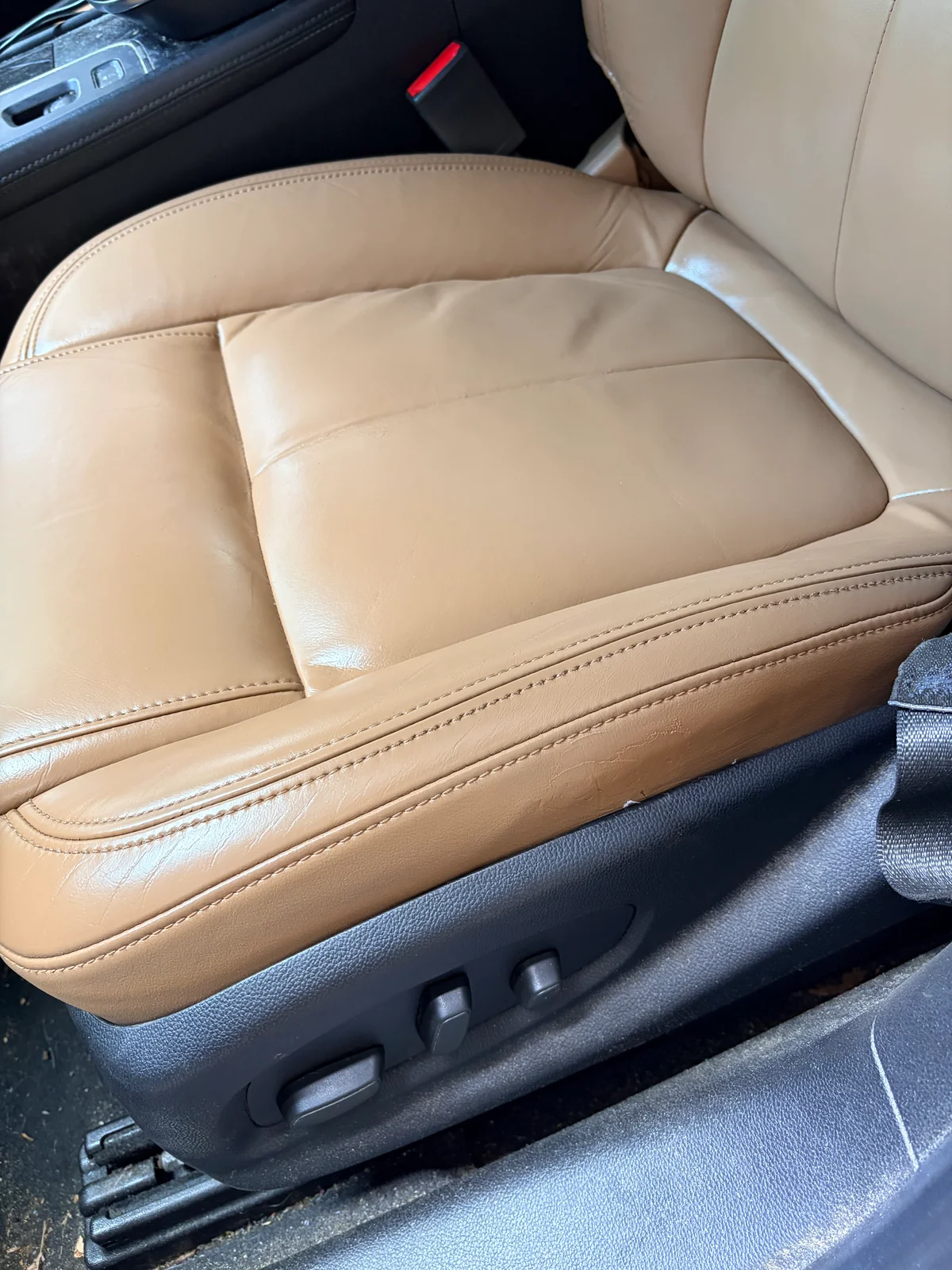
- Backrest and cushion — color loss corrected, even tone restored
- Central leather panel — tear stabilized and rebuilt without replacing the panel
- Lower vinyl panel — tear repaired and refinished to match the surrounding seat
- Custom color match blended against the interior's current, naturally aged appearance
- Protective topcoat applied for improved wear resistance under daily use
- Original seat preserved throughout — no reupholstery, no panel replacement
Why Restoration Made Sense
This isn't a collector car, and it doesn't need to be for restoration to be the right call. The LaCrosse is mechanically sound and clearly worth keeping — the kind of car where reupholstering the driver's seat would mean introducing new material that would never quite match a cabin that has aged naturally for over a decade. Repairing and color matching the original seat kept that consistency intact.
It's also a good example of why restoration isn't only for exotic or collectible vehicles. A well-maintained daily driver with one worn seat is exactly the kind of project where repair, cleaning, and color matching deliver real, practical value — extending the usable life of upholstery that had years of good service left in it.
Related Services
- Auto Interior Restoration → car seat repair, color matching, and surface restoration for all makes
- Leather Re-dyeing & Color Restoration → custom pigment matching for faded or discolored leather interiors
- Vinyl Restoration → repair and refinishing for torn or worn vinyl surfaces
- Leather Cleaning & Conditioning → professional deep cleaning and conditioning to maintain leather longevity
Car Seat Leather & Vinyl Repair — Brooklyn & NYC
If a worn or torn driver's seat is making an otherwise good car look older than it is, text us photos for a free estimate. We serve Brooklyn, the rest of New York City, and Long Island — all work performed on-site at your location.
Related Automotive Projects
Other driver-seat wear and color-restoration work completed by Leather & Vinyl Care.
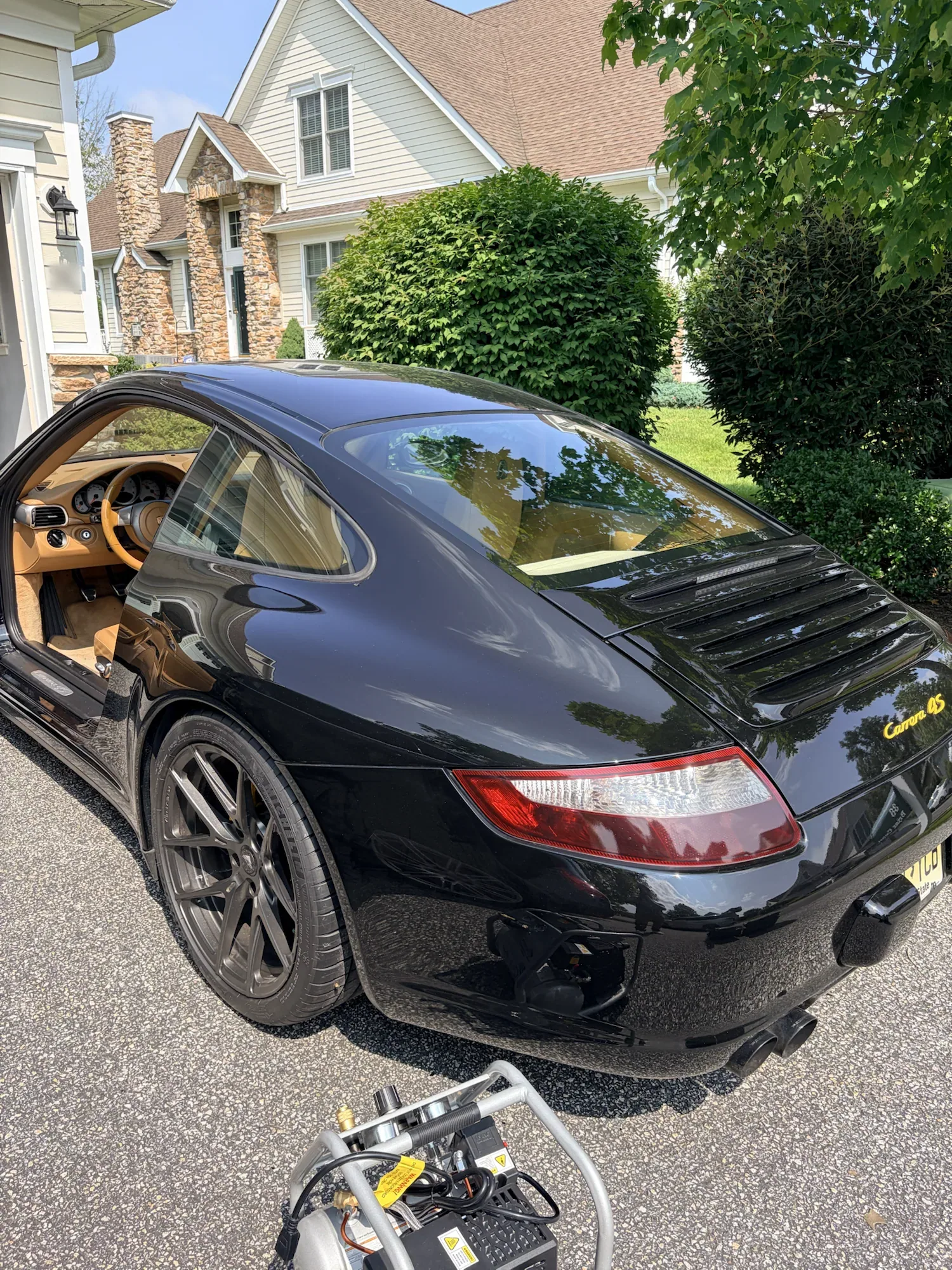
2008 Porsche 911 Carrera 4 Interior Restoration
Deep seat-bolster cracking and finish loss across high-contact cabin surfaces corrected with preservation-focused repairs and custom color matching.
View Case Study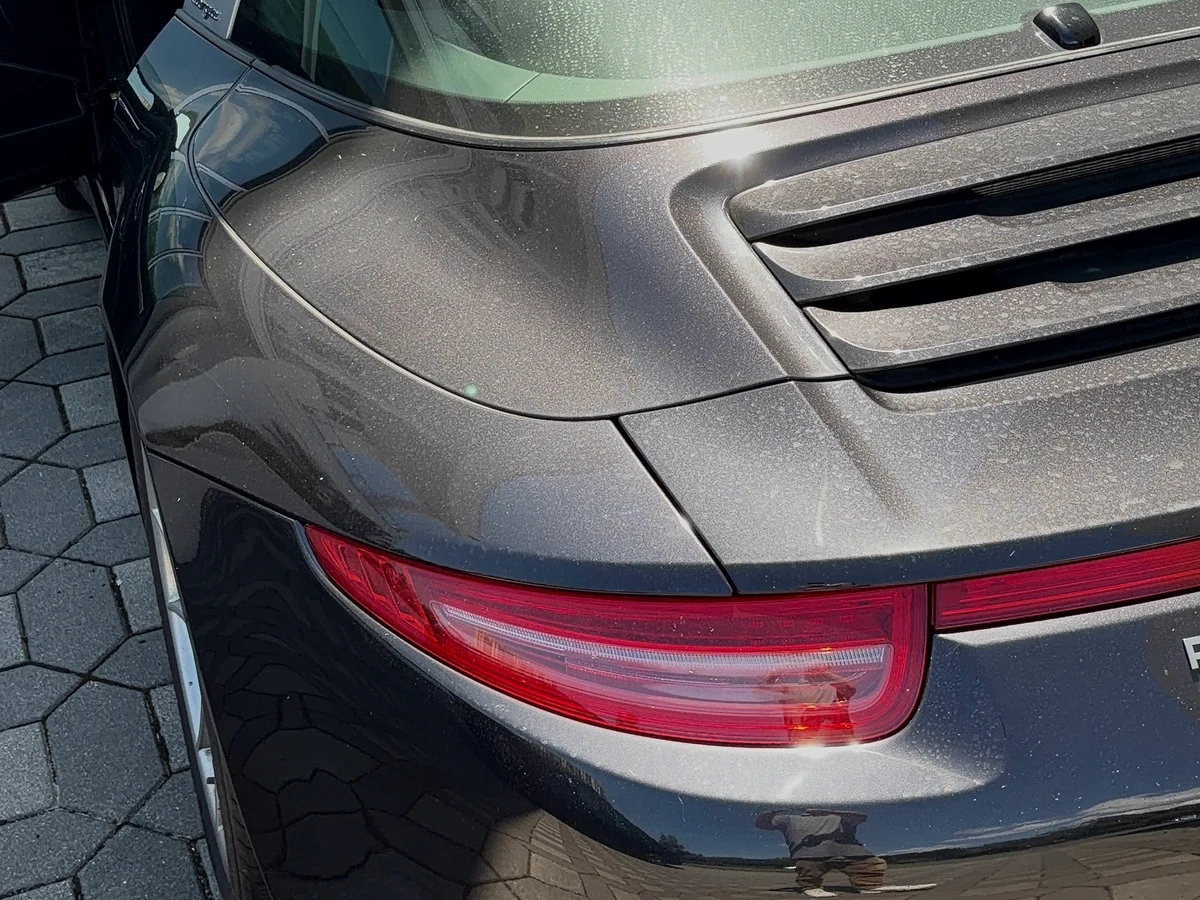
2014 Porsche 911 Targa 4 — Both Front Seats Restored
Complete restoration of both front leather seats — factory color restored, bolster cracks repaired, surfaces conditioned and protected on-site.
View Case Study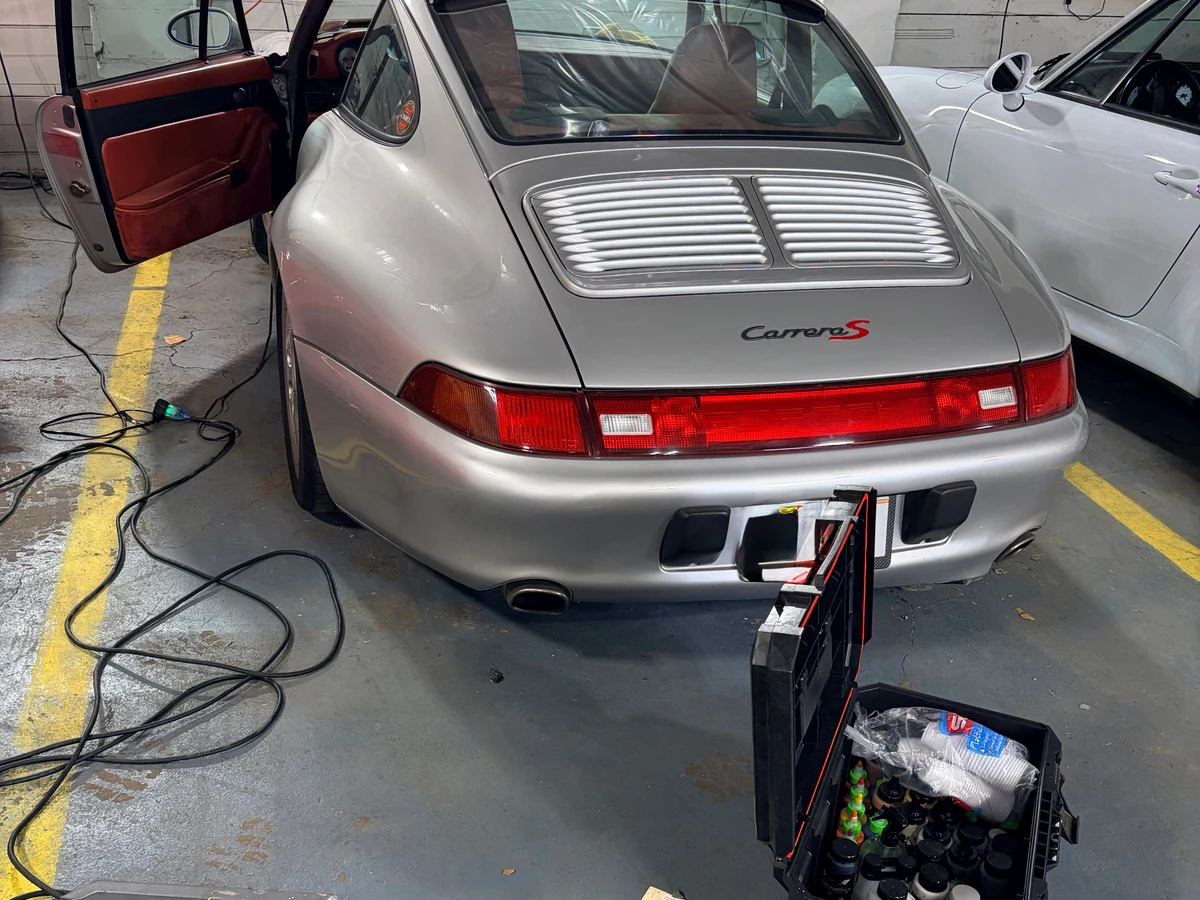
Porsche 993 Carrera S Leather Interior Restoration — New Jersey
Driver's seat bolster wear and door panel seam deterioration repaired and color-matched, original factory leather preserved.
View Case StudyFrequently Asked Questions
Can a torn leather car seat be repaired without replacing the panel?
In most cases, yes. A tear along a seam or panel — like the central tear on this Buick LaCrosse's driver's seat — can typically be stabilized and rebuilt in place rather than cut out and replaced. The original panel stays in the seat; the goal is to restore a sound, consistent surface without introducing a mismatched new insert.
Can leather and vinyl sections on the same seat be restored together?
Yes, but they're treated as separate materials. This driver's seat combined leather seating panels with a vinyl lower side panel, and each required its own repair approach and its own color and finish work before both were brought into visual consistency with each other.
Can an older automotive interior still be color matched?
Yes. An interior this age has changed color gradually through years of UV exposure, body oils, cleaning, and normal use, so the goal isn't matching a factory color chip — it's matching the leather as it looks today. We reference the vehicle's own surrounding material and build color in stages so the restored seat reads as consistent with the rest of the cabin.
Is cleaning necessary before leather refinishing?
Yes. Years of body oils, grime, and product residue sit on and in the surface of a driver's seat. Color and protective coatings need a clean, stable surface to bond to properly, so thorough cleaning is a required step before any repair or color work begins, not an optional add-on.
Does the seat need to be removed from the vehicle?
No. This restoration, like our other automotive work, was completed on-site with the seat in place in the vehicle. Removal is not typically required for cleaning, repair, or refinishing work of this kind.
Is restoration more practical than reupholstery for a daily-driver vehicle?
For a mechanically sound car like this Buick LaCrosse, restoring the original seat is typically the more practical route — it works with the existing material instead of introducing new upholstery that would need to be color and texture matched to the rest of a cabin that has aged naturally over the years. Reupholstery has its place, but it isn't automatically the better option for a seat that's still structurally sound.