Restaurant Booth Leather Repair in Midtown Manhattan, NYC
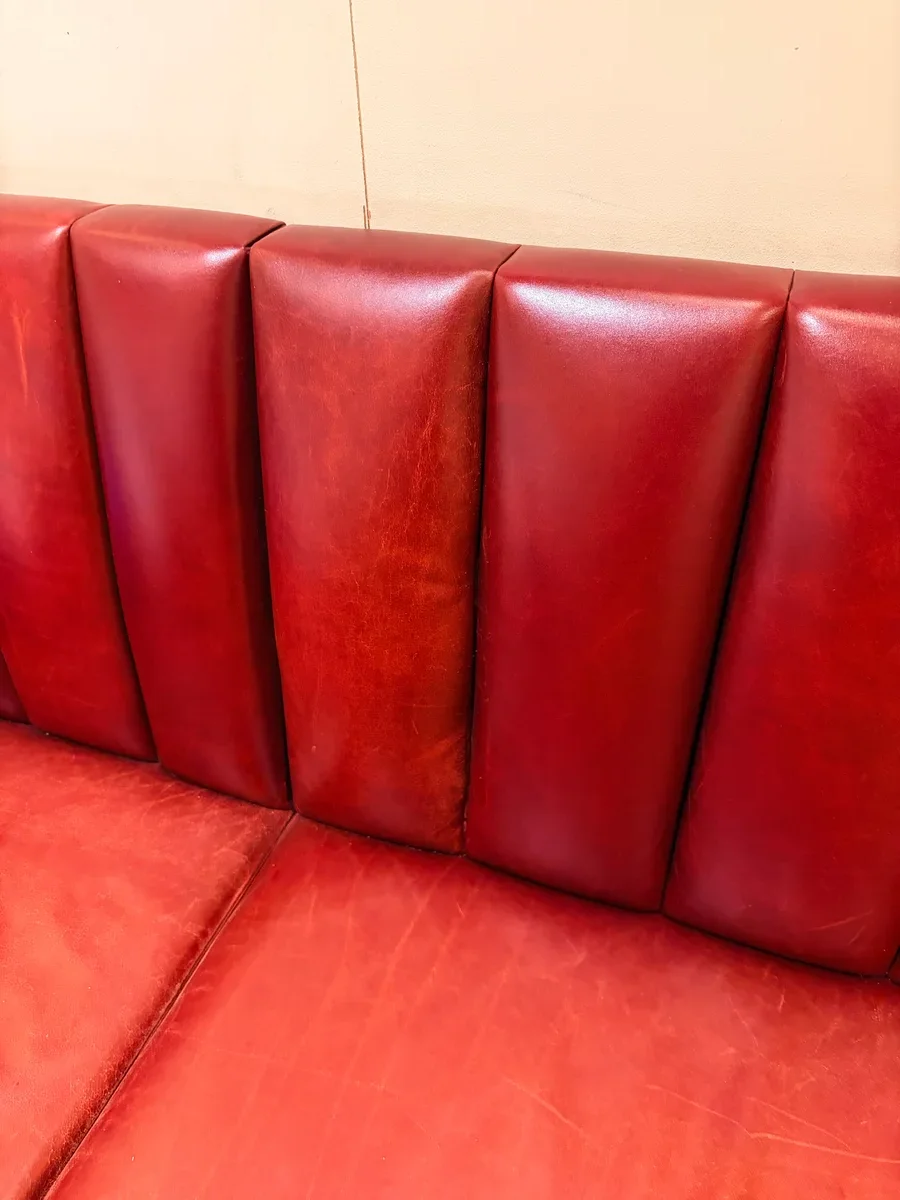
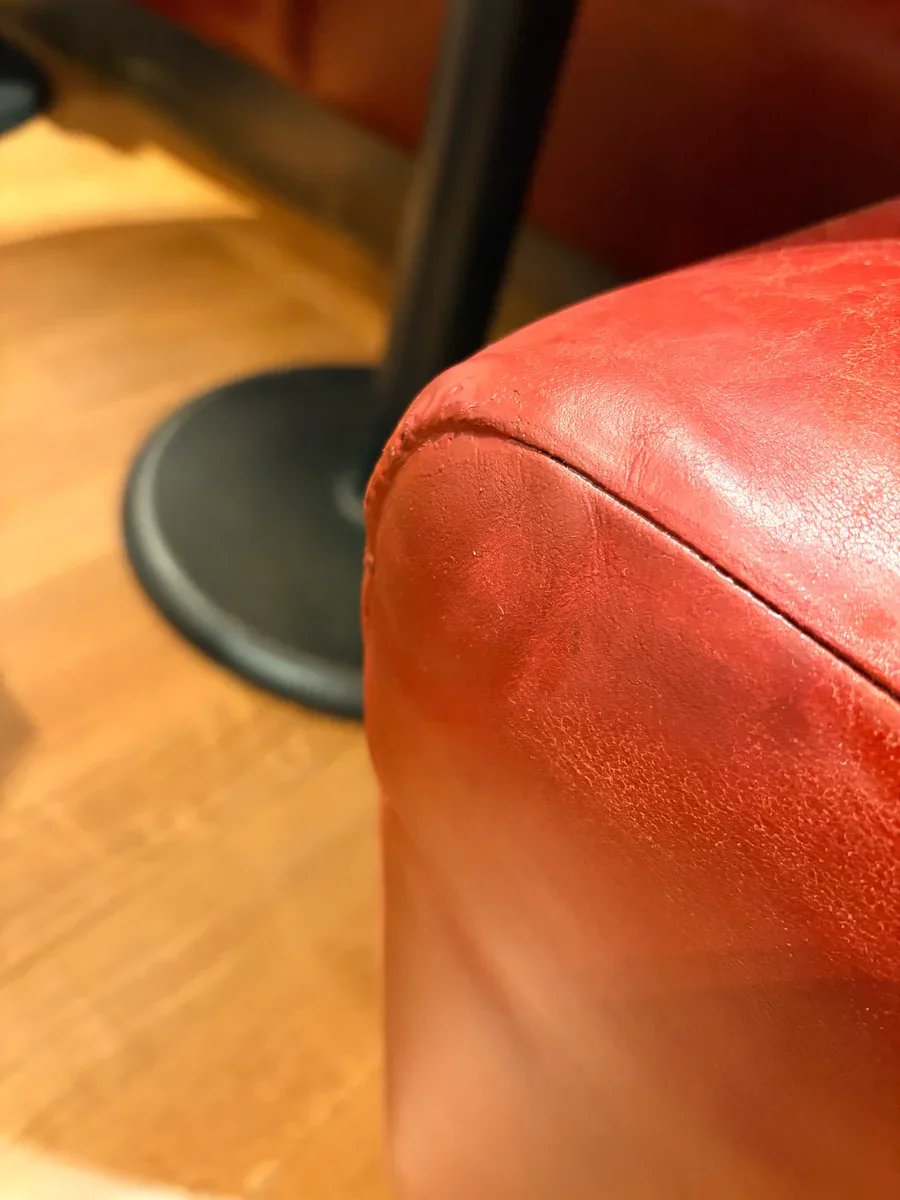
An upscale Midtown Manhattan restaurant, located inside a historic building, called us in to repair its genuine leather booth seating. Years of heavy dining service had worn the deep burgundy leather at exactly the points where guests make the most contact — the corners where the seat meets the side panel. The client was clear from the start: preserve the original leather, do not reupholster, and keep the dining room open. We reinforced the weakened leather, hand stitched the torn sections and the one section of backrest that had pulled loose, rebuilt the damaged corners in layered leather filler, and color-matched the repairs to the original burgundy finish on-site, booth by booth.
Project Overview
The Restaurant
The restaurant occupies a historic building in Midtown Manhattan, with an interior where the seating is part of the design statement, not an afterthought. The booths are upholstered in genuine leather in a deep, rich burgundy, built into the layout of the dining room the way a banquette or booth section usually is: fixed in place, not furniture that gets swapped out.
Restaurant leather lives a harder life than almost any residential piece. A dining room booth is not sat in once or twice a day — it turns over for every seating, every night, week after week, for years. That volume of contact is concentrated on specific parts of the seat, and it shows up as damage in very predictable places long before the leather as a whole looks worn.
Why Booth Corners Fail First
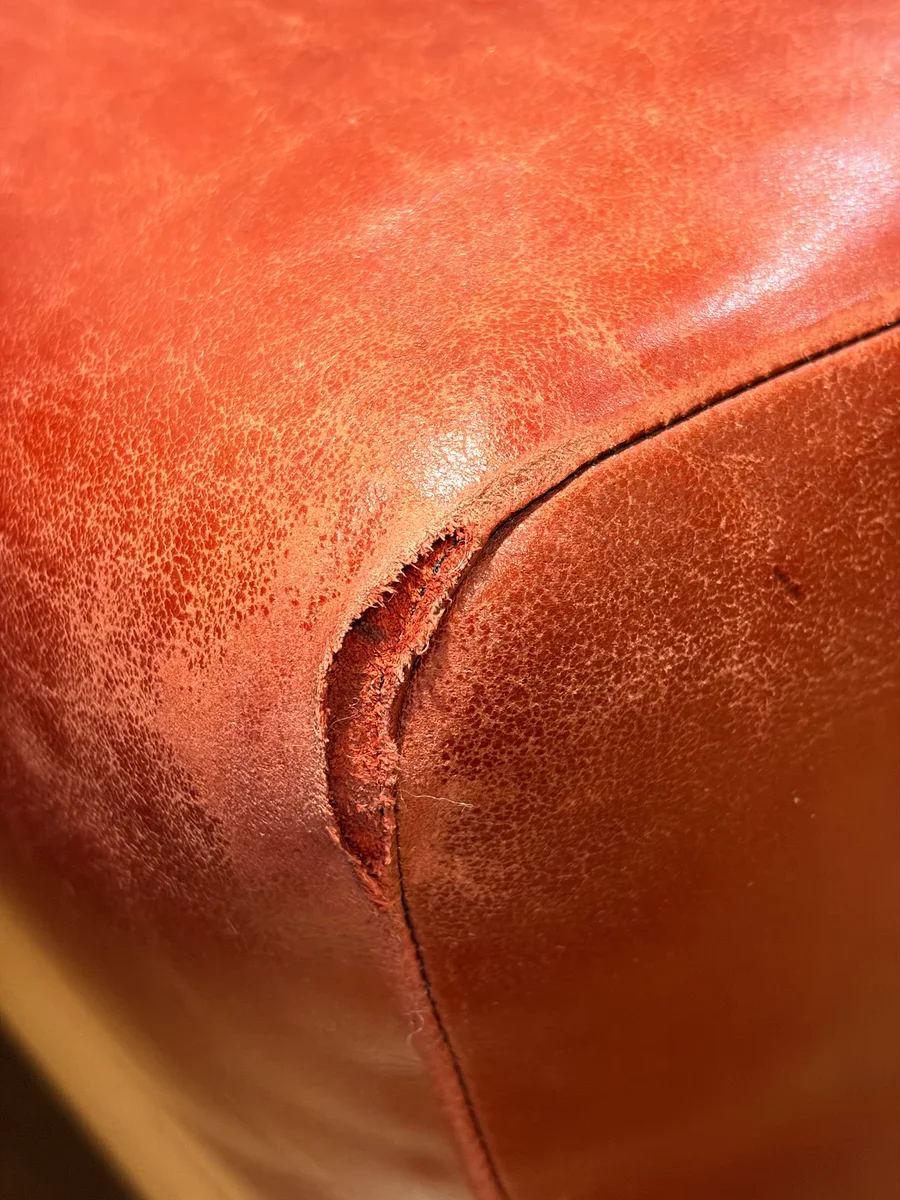
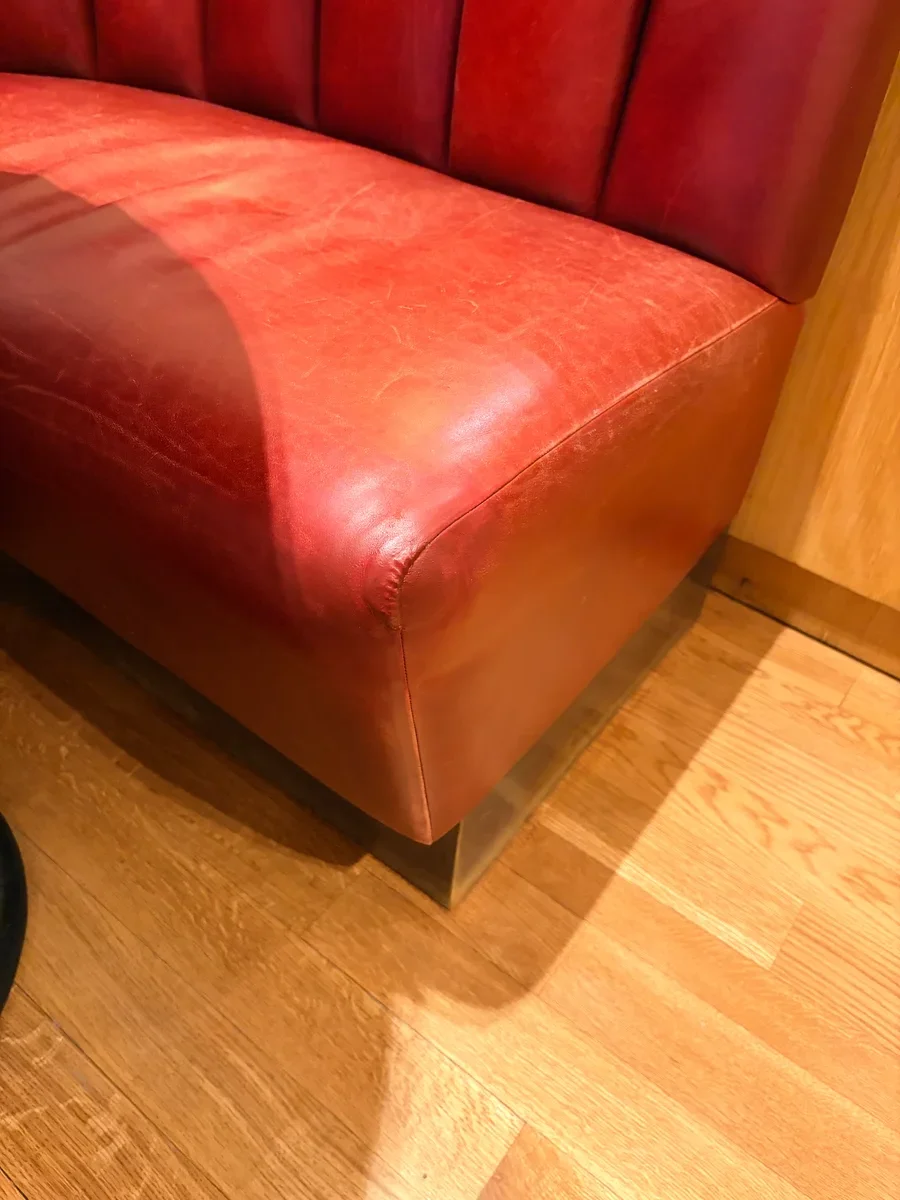
The damage on this booth was concentrated almost entirely at the seat/side transition — the corner where the seat cushion meets the side panel of the booth. That is not a coincidence. Every guest who slides into or out of a booth drags across that exact corner. Over a busy dinner service, that corner also takes repeated direct contact from shoes, bags, belt buckles, and knees in a way that a flat seat cushion or backrest simply does not.
A flat seating surface wears slowly and evenly across a large area. A corner concentrates the same amount of contact into a single narrow stress point, and leather has a limit for how much repeated flexing and abrasion it can absorb in one place before the fibers underneath the finish start to break down. On this booth, that showed up as a full range of failure at once: the finish had worn thin and abraded, the fibers beneath it had weakened, and in the most heavily used spots the leather had actually torn through or pulled away from the frame entirely.
This is the pattern we see on almost every commercial booth job — the flat cushion surfaces are dulled and lightly worn, but the corners are where structural repair is actually needed.
The Client's Goal: Preserve, Don't Replace
The client was specific about what they wanted before any work was scheduled: keep the original leather. Reupholstering the booths was not the preferred direction, even though the damage on some corners was significant enough that replacement would have been the easier path for a shop unwilling to do the more demanding repair work.
There were practical reasons behind that preference. Reupholstery on built-in restaurant seating means sourcing new leather, matching it to the rest of the dining room, and taking booths out of service for an extended stretch — none of which is simple in an operating restaurant. But there was also a material reason: the original leather had already developed the character, sheen, and hand-feel that comes from years of use, and a new material would not replicate that. Minimizing downtime for the dining room was the other constraint that shaped how the work was scheduled — the restaurant needed to stay open and seat guests throughout the project.
Restoration Process
The work moved booth by booth so seating stayed available throughout most of the project, scheduled around the restaurant's service hours. Each affected corner and seam went through the same sequence:
Inspection
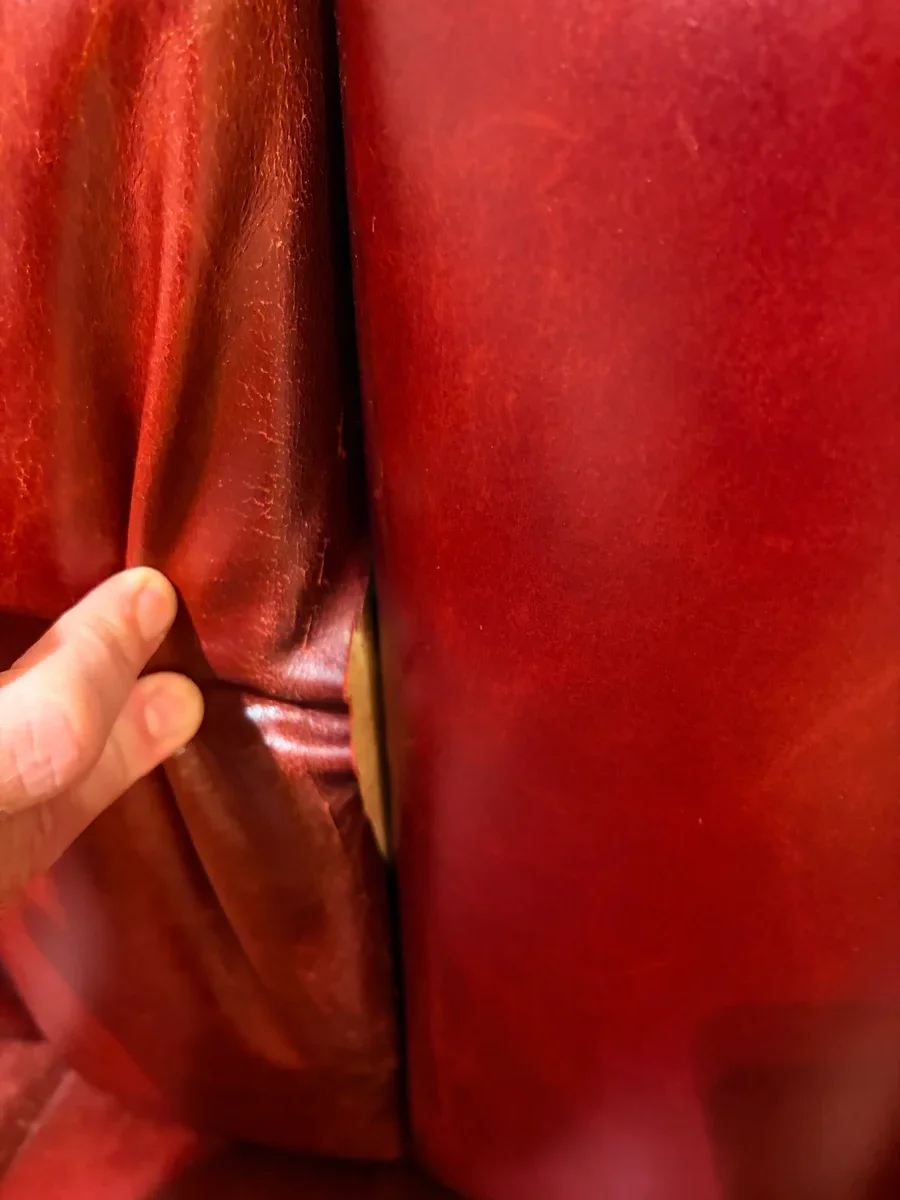
Each booth was assessed section by section to separate surface-level wear from structural damage. The seat/side transition corners showed the most advanced deterioration — thinning leather, stress cracks, and in one case a section of backrest leather that had partially pulled away from the frame. Understanding exactly where the leather was still structurally sound and where it had failed determined the repair sequence for each section.
Deep Cleaning
All leather surfaces were cleaned before any repair work began. Restaurant seating accumulates a heavier mix of contamination than residential furniture — food oils, cleaning product residue, and constant hand and clothing contact — and that buildup has to be fully removed before filler or color will bond correctly. Cleaning also made it possible to see the true extent of the damage under consistent light.
Preparation
Torn edges, cracked areas, and the separated backrest section were prepared for repair — loose fibers and compromised material at the edges of each tear were addressed so the repair materials would bond to sound leather rather than material that was still breaking down.
Fiber Binder Saturation
Weakened leather fibers around the tears and worn corners were saturated with a fiber binder to strengthen the material from within before any filling or stitching. This step is what separates a genuine repair from a cosmetic patch — the binder reinforces the existing leather structure rather than covering it, so the repaired area holds up the same way healthy leather does under the friction and flexing that caused the original damage.
Hand Stitching
The backrest section that had pulled loose from the frame was hand stitched back into place and resecured — the original leather was reattached, not recolored or replaced. Torn seams and corners elsewhere on the booths were also hand stitched closed before filling began. Stitching by hand allows the thread path to follow the specific tear and the existing seam lines rather than a fixed machine pattern, which keeps the repair consistent with the booth's original construction.
Leather Filler — Multiple Applications
Flexible leather filler was applied over the repaired seams and worn corners in multiple thin layers rather than a single heavy pass. Each coat was allowed to cure and was sanded smooth before the next was applied. Building the repair in layers, sanding between coats, is what restores the original contour of the corner and produces a surface that reads as leather rather than a raised patch — a single thick application would crack under the same stress that damaged the leather in the first place.
Custom Color Matching
The original finish was a deep burgundy that had dulled and thinned across the highest-wear areas. The color was mixed and tested on-site against the undamaged leather on each booth until it matched, since restaurant leather is viewed under mixed dining-room lighting where an off tone is immediately noticeable.
Blending Color Into the Repair
Color was built up across the repaired sections only — the seams and corners that had been filled and stitched — and blended into the edge of the surrounding original leather so the transition was not visible. The goal is a repaired area that reads correctly next to leather that was never touched, not just up close but at normal dining-room viewing distance.
Protective Top Coat
A protective finish was applied over the restored areas to seal the color and rebuild the surface sheen to match the rest of the booth. On seating that returns to full guest use immediately, the top coat also re-establishes the wear resistance the original finish had when the booths were new.
Final Inspection
Every repaired section was reviewed under normal dining-room lighting for color consistency, surface texture, and stitching integrity before the booths were returned to service.
Why This Approach Outperforms a Simple Patch
The fastest way to cover a hole or tear in leather is to glue a patch over it. It is also the least durable option on a piece that sees the kind of repeated stress a restaurant booth corner does. A glued patch sits on top of the leather rather than becoming part of it — it has its own edge, its own flex characteristics, and its own bond line that is under constant mechanical load every time a guest slides across that corner. On high-traffic commercial seating, that kind of patch typically fails again within months.
Saturating the weakened fibers with a fiber binder, hand stitching torn or separated sections back together, and then building the surface back up in multiple thin layers of leather filler — sanded smooth between coats — produces a repair that becomes structurally part of the leather rather than a layer stuck over it. It moves with the material instead of against it. That is the difference between a repair meant to last through years of nightly restaurant service and one meant to look acceptable for the next few photos.
Matching the Original Burgundy
The booths were finished in a deep, rich burgundy — closer to a wine red than a bright red — with enough depth to it that it reads almost brown-black in shadow and glows warm red under direct light. That kind of complex, dark tone is unforgiving to match: too flat and it looks painted on, too bright and it looks nothing like the surrounding leather under the restaurant's dining-room lighting.
The color was mixed and tested directly against the undamaged leather on each booth before it was applied to the repaired corners and seams, then built up gradually so the transition from original to restored leather disappeared rather than showing as a visible patch. On a piece the whole dining room sees under varying light throughout service, that consistency is the difference between a repair and a restoration.
Final Result
Every repaired corner and seam was rebuilt to match the surrounding leather in color, texture, and sheen, with the deep burgundy finish blended into each repair so it reads consistently with the untouched leather around it. The torn seat/side transitions were closed and reinforced rather than patched over. The section of backrest leather that had pulled from the frame was hand stitched back into place — reattached, not recolored. The client kept the original leather they wanted to preserve, and the dining room stayed open throughout the project.
Commercial Leather Repair Across Midtown Manhattan and NYC
Leather & Vinyl Care is a mobile service — we bring the restoration to the restaurant, not the other way around. For a working dining room, that is the only practical approach: booths stay in place, work is scheduled around service hours, and sections can be completed one at a time so the space stays open to guests.
We serve restaurants, hotels, offices, and other commercial properties throughout Manhattan, including Midtown, alongside Brooklyn, Queens, the Bronx, Staten Island, and Long Island. Restaurant booth repair, leather banquette restoration, and other commercial leather repair work is quoted by unit count so multi-booth restaurant projects receive volume pricing.
Related Services
- Leather Furniture Repair → on-site repair for sofas, chairs, banquettes, and upholstered furniture
- Commercial Leather Repair → restaurant booth repair, hotel and office seating, multi-unit volume pricing
- Leather Re-dyeing & Color Restoration → custom pigment matching for faded, worn, or repaired leather
- Leather Cleaning & Conditioning → deep cleaning to prepare commercial leather for repair and color work
Have Restaurant Booths or Commercial Seating That Needs Restoring?
The fastest way to get a scope and price is to send photos of the damage. We'll give you an honest assessment, a written estimate, and a schedule built around your service hours — usually within a few hours. We serve restaurants, hotels, and offices throughout Manhattan, the other NYC boroughs, and Long Island.
Frequently Asked Questions
Can restaurant booths be repaired instead of replaced?
In most cases, yes. Restaurant booth damage — worn finish, torn corners, cracked seams, and even holes from years of guests sliding in and out — is typically confined to the leather surface and the seat/side transition points, not the underlying frame or foam. When the structure is sound, on-site restoration repairs the existing leather rather than reupholstering the booth, which preserves the original material and avoids the cost and downtime of replacement.
How durable is leather booth repair?
A properly executed repair — fiber binder saturation to strengthen the leather from within, hand stitching where the material has separated, and multiple layers of flexible leather filler built up and sanded between coats — is significantly more durable than a surface patch. Because the repair restores the leather's own structure instead of gluing a new layer on top, it holds up under the same repeated flexing and contact that caused the original damage. Under normal restaurant traffic, a professional repair holds well for years, though high-wear corners will always need more frequent attention than flat seating areas.
Can damaged booth corners be reinforced?
Yes. Booth corners at the seat/side transition take more mechanical stress than any other part of a restaurant banquette — guests slide across them, and they get struck repeatedly by shoes, bags, and knees. Reinforcing a damaged corner starts with fiber binder saturation to consolidate the weakened leather fibers, followed by hand stitching if the material has torn or pulled from the frame, then flexible filler built up in layers to restore the shape before color and a protective top coat are applied.
Can commercial leather seating be color matched?
Yes. Commercial leather color, including deep or dark tones like burgundy, can be custom matched and blended on-site so repaired sections read consistently with the surrounding, undamaged leather under normal restaurant lighting. The pigment is mixed and tested against the existing material before it is applied across the repaired areas, rather than matched to a generic swatch.
Does the restaurant need to close?
No. Commercial leather restoration is scheduled around service hours — before opening, between meal periods, or after close — and can typically be done booth by booth or section by section so most of the dining room stays available throughout the project. The goal is always to minimize disruption to normal operations.
How much does restaurant booth leather repair cost in NYC?
Pricing depends on the number of booths, the extent of the damage, and whether full color restoration is needed across the piece. Isolated corner and seam repairs on a single booth section typically start around $150 to $300; a full booth or banquette with widespread wear and full recoloring runs higher. Multi-booth restaurant projects receive volume pricing. We provide a written estimate after reviewing photos or an on-site assessment.
Why do restaurant booth corners wear out faster than the rest of the seat?
The seat/side transition — the corner where the seat cushion meets the side panel — absorbs more repeated contact than any other part of a booth. Every guest who slides into or out of the seat drags across that corner, and it takes the brunt of contact from shoes, bags, belt buckles, and knees throughout service. Flat seating areas wear evenly over years; corners concentrate that same wear into a single stress point, which is why cracking, thinning, and tears typically appear there first.