Foam Cushion Replacement for Two Dining Chairs in Brooklyn, NY
A Brooklyn customer contacted Leather & Vinyl Care because two dining chairs had become noticeably less comfortable over time. The chairs — French carved hardwood frames with nailhead trim — were structurally sound and visually attractive, but years of daily use had compressed the original seat foam. The cushions had lost their support and proper shape. Both chairs were serviced on-site in Brooklyn, with the existing upholstery retained and seat comfort restored through high-density foam replacement.
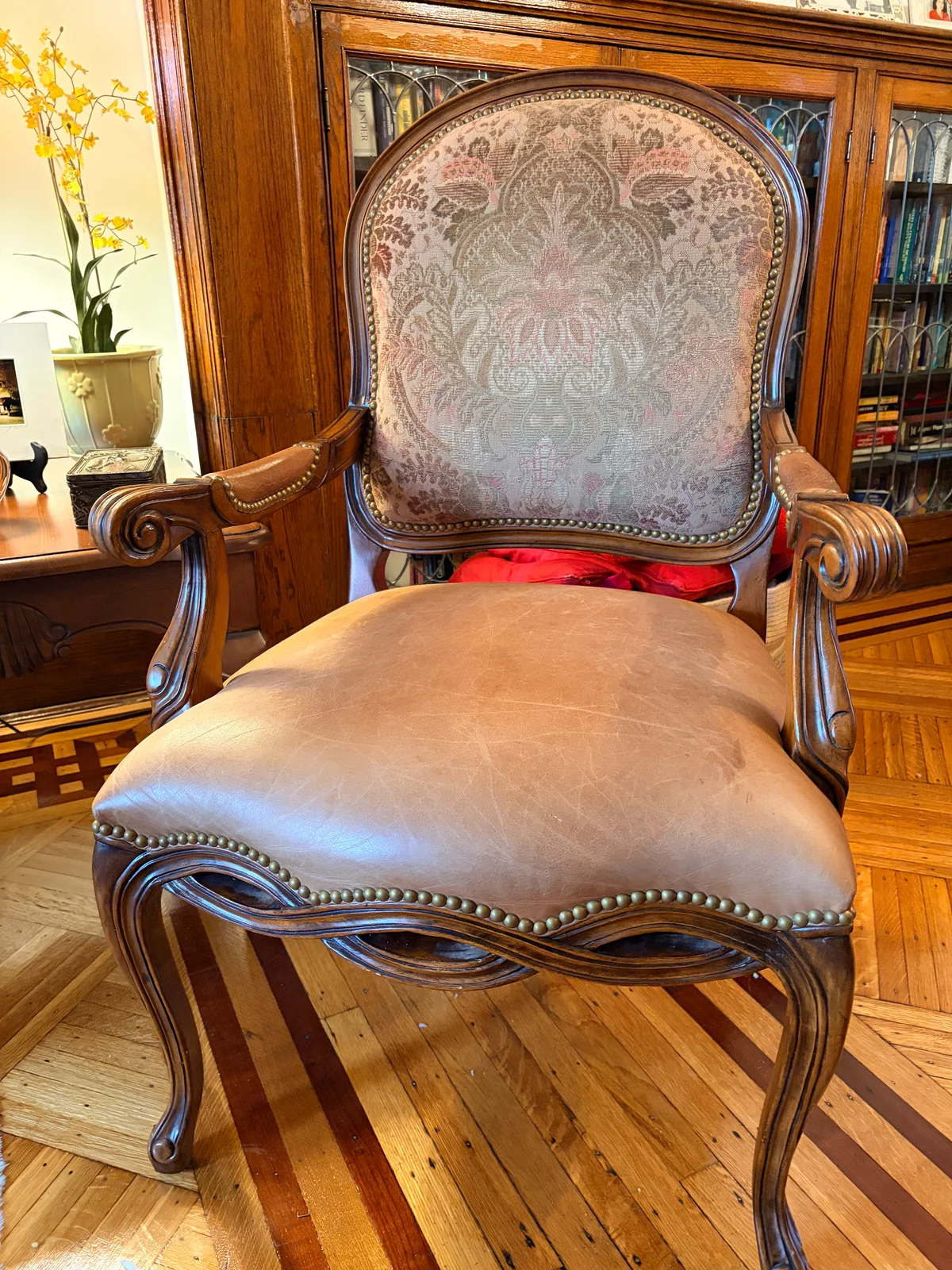
Project Overview
The Problem: Compressed Foam, Lost Comfort
Dining chairs take a particular kind of daily punishment. Unlike a sofa — which distributes weight across a large surface and sees intermittent use — dining chairs concentrate full body weight on a relatively small seat area, multiple times a day, every day. Even high-quality upholstery foam compresses under those conditions over a period of years.
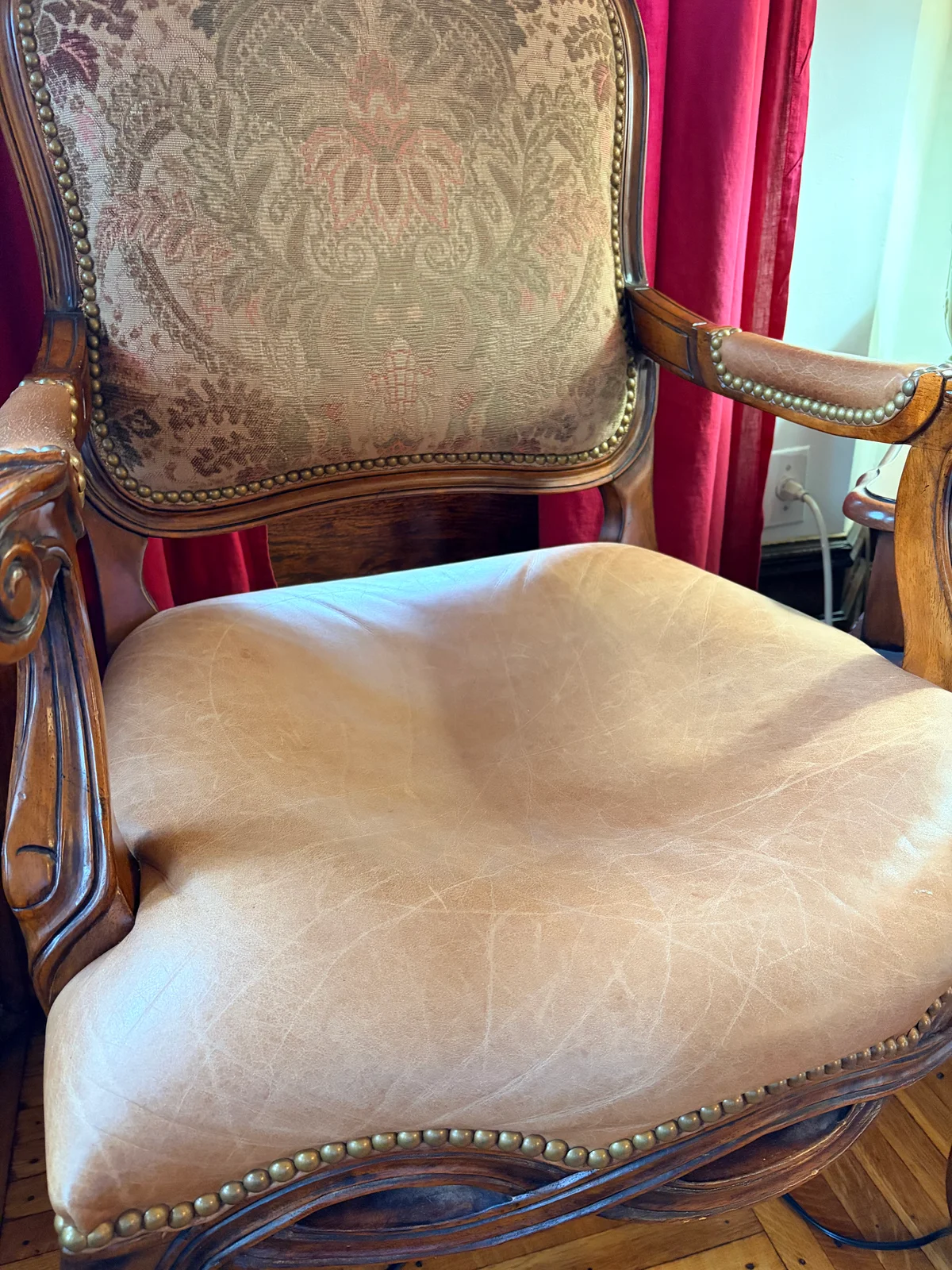
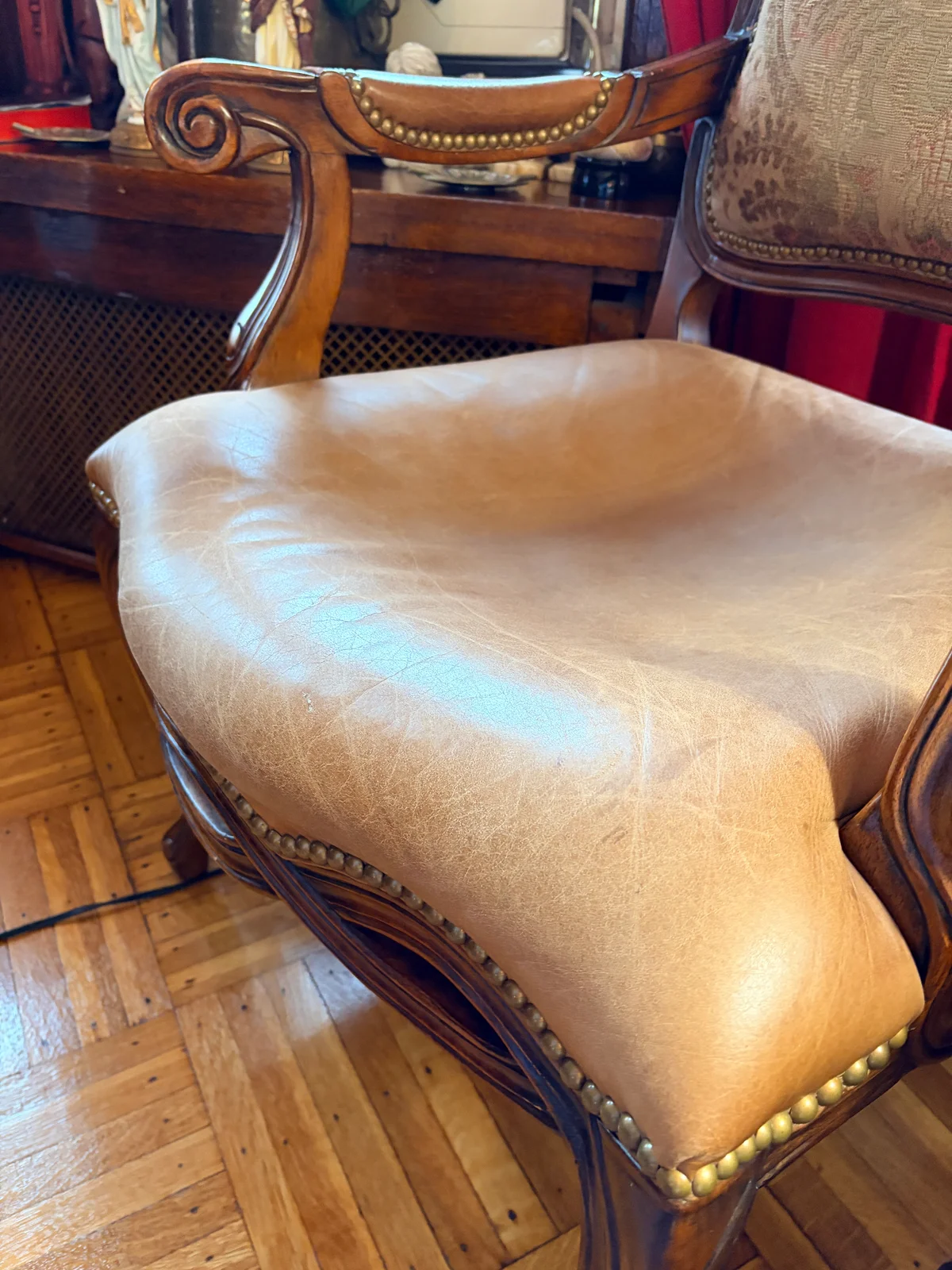
By the time the customer reached out, the seat cushions on both chairs had compressed to the point where the foam offered almost no resilience. Sitting in either chair meant settling directly onto the board beneath the padding rather than being supported by the cushion. The seats appeared slightly sunken, and the discomfort was noticeable enough that the chairs were being used less than they had been.
- Seat foam fully compressed — virtually no resilience remaining
- Cushions felt flat and unsupportive under body weight
- Seats appeared visibly sunken compared to original height
- Sitting comfort had deteriorated significantly over time
- Customer wanted to preserve the existing chairs rather than replace them
Before: The Condition of the Seat Cushions
The photographs below show both seats before the foam was replaced. In the wide view, both chairs are visible side by side — the contrast between the two confirms the extent of the collapse. Looking at the leather-covered seat from the side makes the degree of compression clear: the cover is simply draped over what has become an almost empty frame.
Inspection: What We Found
Before any work began, both chairs were inspected in full. The hardwood frames were structurally sound — no loose joints, no cracking, no structural issues of any kind. The chairs were simply well-made furniture that had been well used. The upholstery on both seats was also in good condition. The fabric covering showed normal age and light surface wear but was intact, properly attached, and did not need replacement.
The foam was the only component that had failed. It had compressed to a fraction of its original thickness and had lost all meaningful resilience. This is a straightforward mechanical failure — foam is a consumable material, and even quality upholstery foam has a service life. The good news is that it is also entirely replaceable without disturbing any other part of the chair. No reupholstery was required. No frame repair was needed. The scope of work was clear: remove the old foam, install new high-density foam, and restore both seats to proper comfort and support.
The Foam Replacement Process
Removal of Seat Sections
Both dining chair seats were removed from the frames to allow full access to the cushion interiors. The seats on these chairs were designed for clean removal, which made the process straightforward without risk to the frame or upholstery.
Inspection of Existing Materials
The existing foam and support materials were inspected. The foam had fully compressed — it had lost virtually all of its original resilience and provided no meaningful support. The upholstery, however, was intact and in good condition, confirming that the covering would be retained.
Removal of Worn Foam
The deteriorated foam was carefully removed from each seat. In both chairs, the foam had compressed to a fraction of its original height — what had once been firm, supportive cushioning had become a flat, ineffective layer.
Foam Selection
High-density upholstery foam was selected to match the original seat specification. The density was chosen to provide firm, supportive seating appropriate for a dining chair — comfort for daily use without the softness that leads to rapid compression over time.
Precision Cutting and Shaping
The replacement foam was cut to the exact dimensions of each seat. Dining chair seats are often not perfectly uniform, so each piece was measured and cut individually to ensure a clean fit within the upholstery cover.
Installation and Fitting
The new foam was installed into each seat cover, positioned to sit correctly within the frame. The cushion profile was checked to confirm the seat had the proper height and shape before the covers were closed.
Reassembly and Testing
Both dining chairs were reassembled. Each seat was tested for proper support, even weight distribution, and correct sitting height. The finished chairs felt firm, supportive, and consistent with each other.
Before & After Comparison
The difference between the before and after state is visible in the photographs. The seat that previously sat nearly flat within the frame — the leather cover draped over what had become an empty cavity — now sits high and properly domed. The original upholstery is unchanged. Only the foam is new.
Foam fully compressed — no support remaining
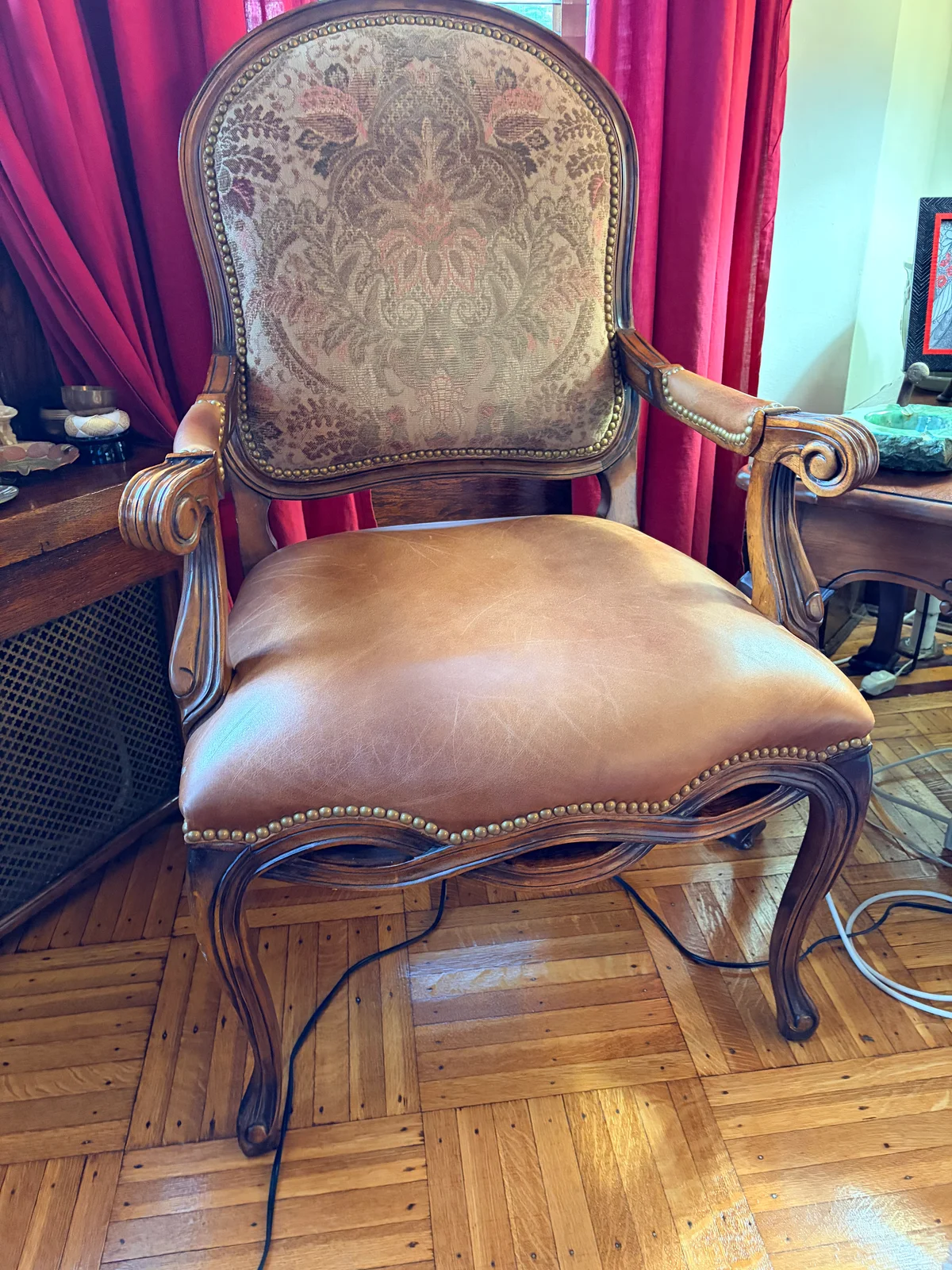
High-density foam installed — shape and support restored
Results
Both dining chairs were returned to proper comfort and support. The seat height was restored to the original level, and the cushions now provide the firm, even support that quality dining chairs are designed to deliver. The original upholstery was untouched — the fabric and nailhead trim are exactly as they were.
- Seating comfort significantly improved — firm, even support restored
- Seat height returned to original level — no visible sinking
- Weight distribution even across both cushions
- Original upholstery retained — fabric and nailhead trim unchanged
- Both chairs now consistent with each other in feel and appearance
- Furniture lifespan extended without replacement
Why Replace Foam Instead of Buying New Furniture?
Foam cushion replacement is one of the most overlooked furniture repair options. Most people assume that when a chair or sofa stops feeling comfortable, the only solution is replacement. In practice, when the frame is solid and the upholstery is intact, foam replacement restores the furniture at a fraction of the cost of buying new.
Foam Cushion Replacement in Brooklyn & NYC
Leather & Vinyl Care provides mobile foam cushion replacement throughout Brooklyn and the wider New York City area. We come to your home — dining chairs, sofas, recliners, and sectionals are all serviced on-site without any need to move or transport heavy furniture. Most foam replacement jobs are completed in a single visit.
This project was completed in Brooklyn as part of our ongoing mobile furniture restoration service. We serve all five NYC boroughs, Nassau County, and Suffolk County on Long Island. If your dining chairs, sofa cushions, or recliner seats have lost their comfort and support, text us photos for a free estimate.
Related Services
- Foam Cushion Replacement → sagging sofa, chair, and recliner cushions restored with high-density foam
- Leather Chair Repair → scratches, tears, and surface damage on dining and accent chairs repaired on-site
- Leather Color Restoration → faded or discolored leather restored to original color with custom pigment matching
- Leather Upholstery Repair → our full range of on-site leather and vinyl furniture repair services
Dining Chair Cushions Lost Their Comfort?
Text us photos of the seats. We will let you know whether foam replacement is the right solution and provide a free written estimate. Leather & Vinyl Care serves Brooklyn, Manhattan, Queens, the Bronx, Staten Island, and Long Island — all work completed on-site at your home.
Frequently Asked Questions
How do I know when chair foam needs replacement?
The clearest signs are seats that have sunk noticeably from their original height, cushions that feel soft and unsupportive rather than firm and resilient, and weight that distributes unevenly when sitting. If the chair used to feel supportive but now feels like compressed padding rather than a proper cushion, the foam has likely deteriorated past the point where it can recover. Some foams also develop lumps or uneven areas over time rather than simply compressing uniformly.
Can foam be replaced without replacing the upholstery?
Yes — in most cases. When the upholstery fabric or leather is still in good condition, there is no reason to replace it. We access the seat foam through the existing upholstery cover, replace the deteriorated foam with new high-density material, and restore the seat without disturbing the covering. That is exactly what was done on these Brooklyn dining chairs — the original upholstery was retained throughout.
How long does replacement furniture foam last?
High-density upholstery foam used in quality furniture applications typically lasts 10 to 15 years or more under normal residential use. The longevity depends on the density and quality of the foam selected, the frequency of use, and how well the furniture is maintained. With proper care, replacement foam will often outlast the original factory foam.
What type of foam is best for dining chairs?
Dining chairs benefit from medium-to-high density foam — firm enough to provide good posture support during meals without being uncomfortable for extended sitting. We select upholstery foam based on the seat dimensions, the original firmness specification, and any preference the customer has for slightly softer or firmer seating. The foam is precision-cut to fit the exact seat dimensions.
Is replacing seat foam cheaper than buying new chairs?
In nearly every case, yes. A set of quality dining chairs with a solid hardwood frame can cost $800 to $2,000 or more to replace. Foam replacement for a pair of dining chairs typically runs significantly less, depending on seat size and foam specification. If the frame and upholstery are still in good condition, foam replacement is the clear economic choice — and you keep the furniture that already matches your dining room.
Do you provide mobile furniture repair services in Brooklyn?
Yes. Leather & Vinyl Care provides mobile on-site furniture repair and restoration throughout Brooklyn and all five NYC boroughs, as well as Nassau County and Suffolk County on Long Island. We come to your home — there is no need to transport heavy furniture. Most foam replacement jobs are completed in a single on-site visit.
Related Projects
Other furniture restoration projects completed by Leather & Vinyl Care across NYC.
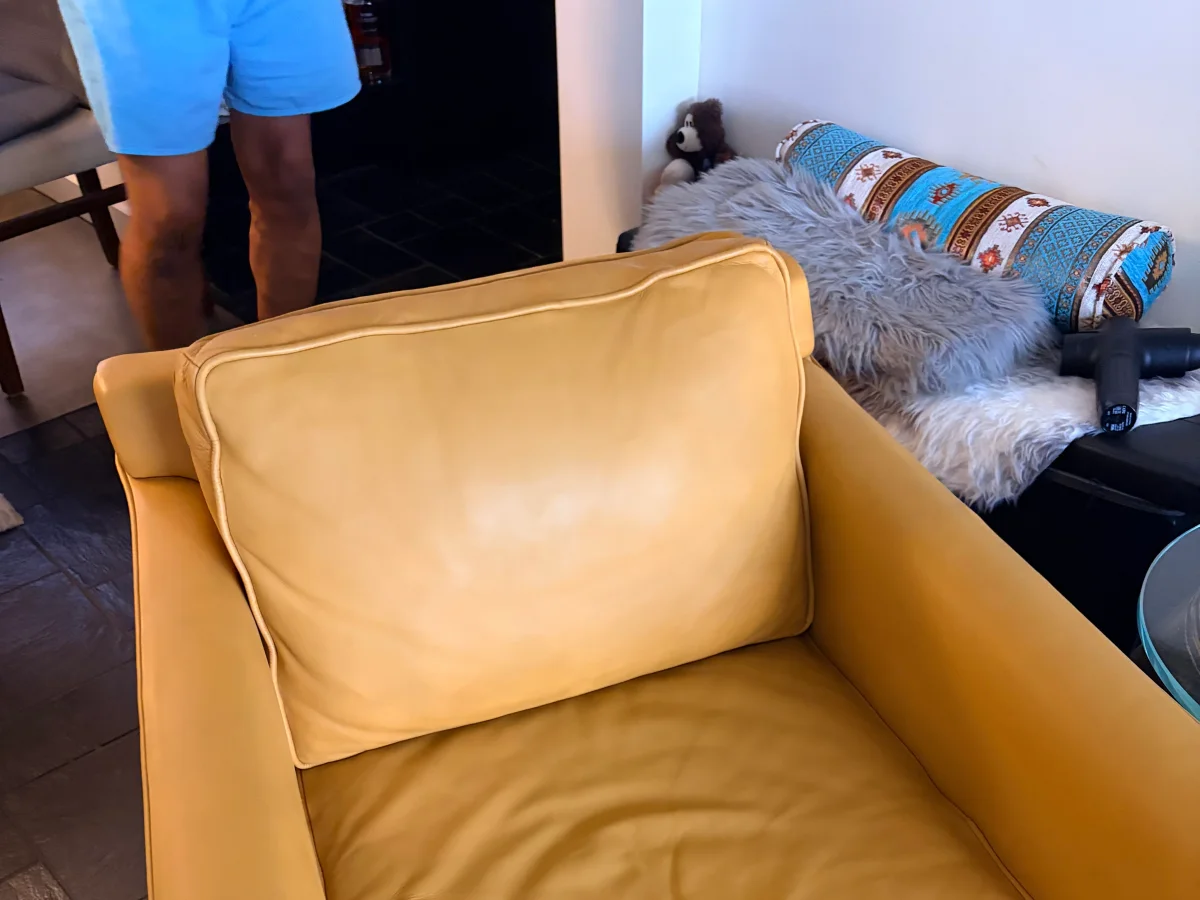
Mitchell Gold + Bob Williams Hunter Chair
Saffron leather with UV fading, armrest cracking, and full color loss restored on-site.
View Project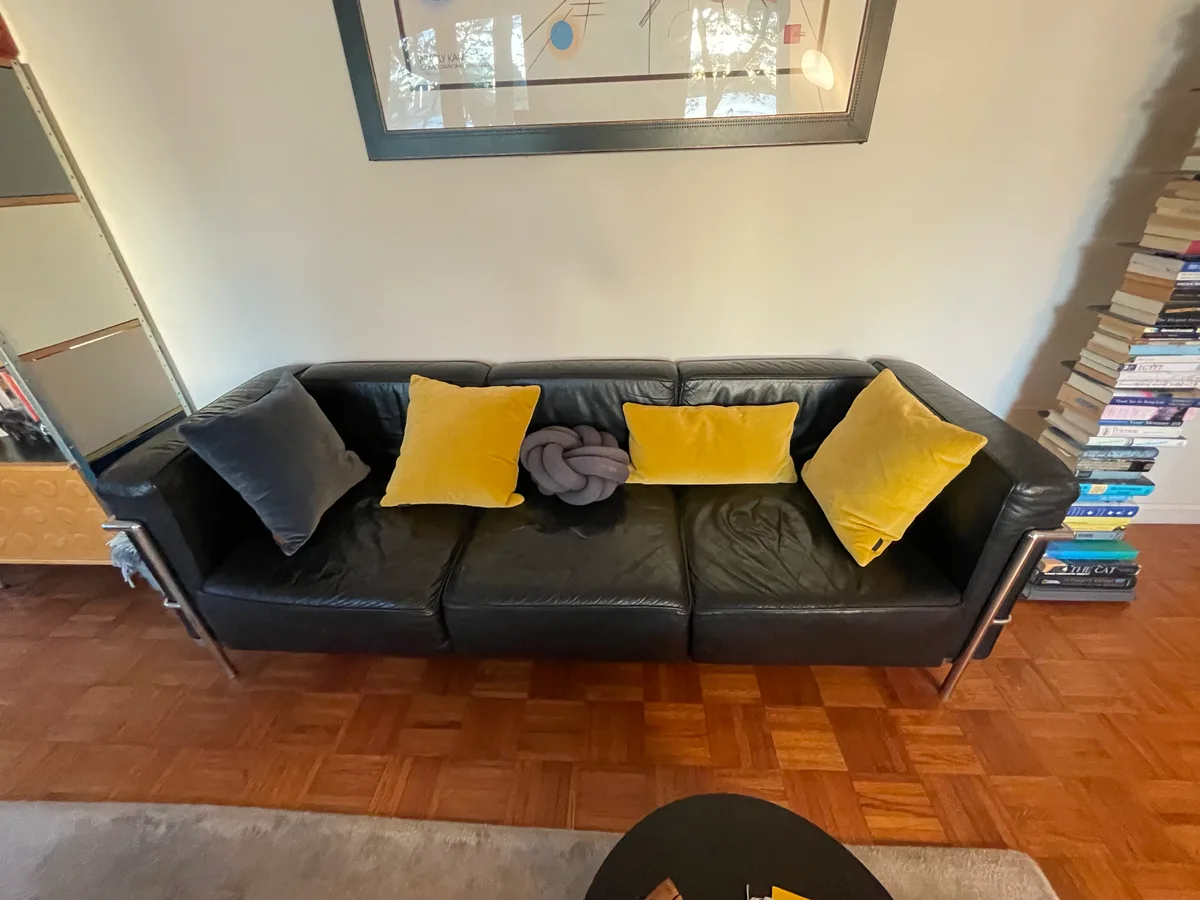
Cat Scratch Leather Sofa Repair
Two seat panels shredded through by cat claws replaced and color-matched in Brooklyn.
View Project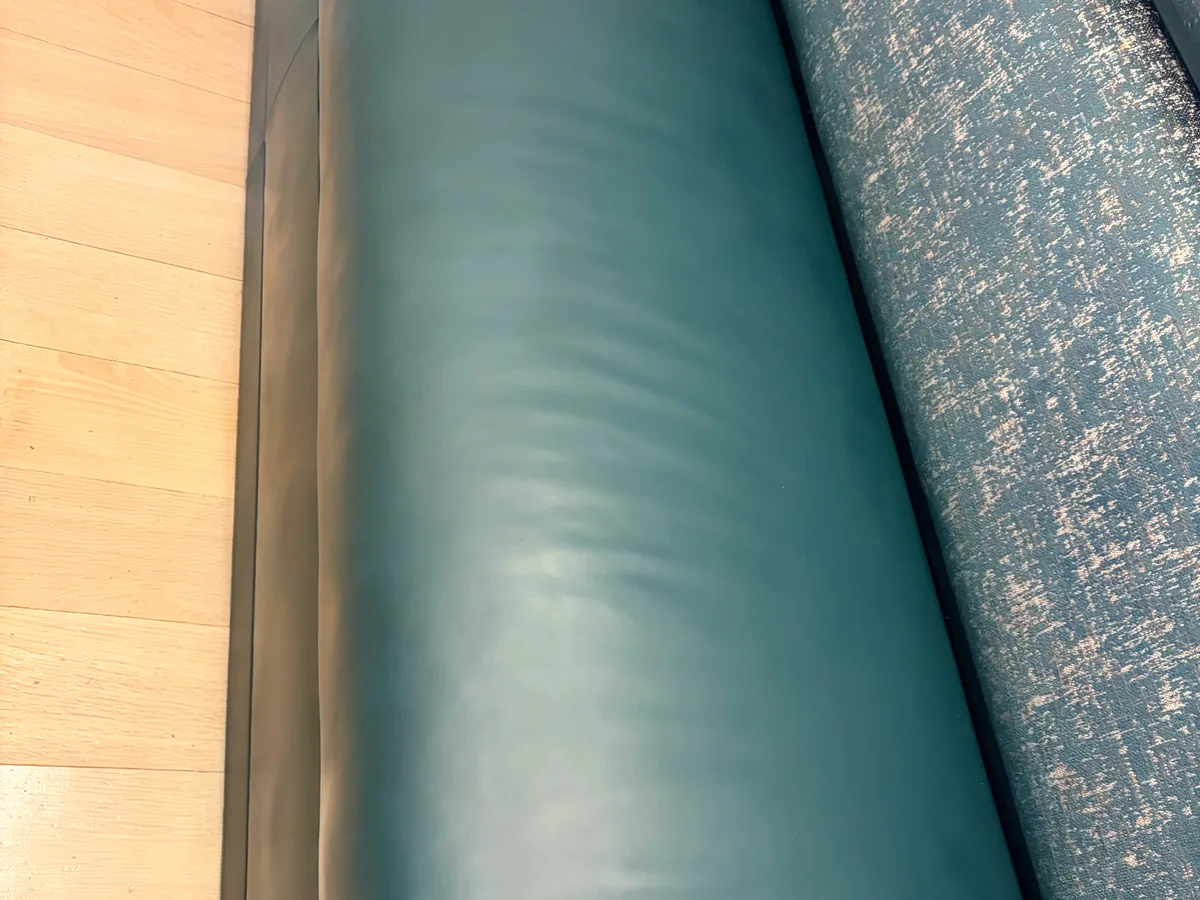
Teal Leather Sofa Color Restoration
Severe age-related discoloration and surface crazing corrected with full recoloring.
View Project